DbcultAccessing Vault...
Cult Review
Senior Film Conservator
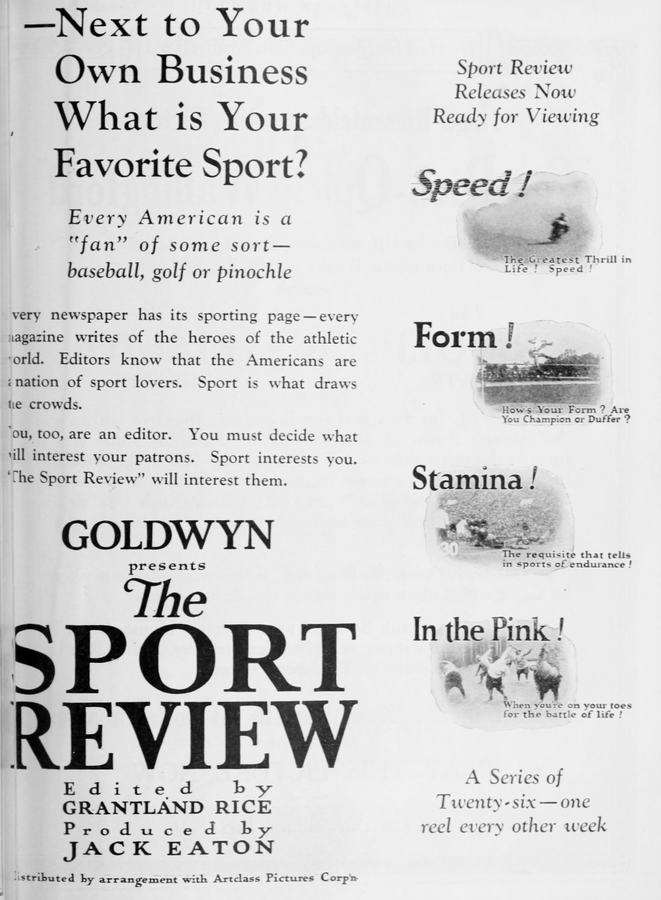
In the pantheon of early 20th-century cinema, few works attempt the peculiar synthesis of pedagogical instruction and aesthetic rapture as successfully as In the Pink. Directed by Jack Eaton and penned by the legendary sportswriter Grantland Rice, this film is far more than a historical curiosity regarding the 'reducing classes' of the era. It is a profound meditation on the human machine, captured at a moment when the camera was first learning to perceive the nuances of velocity and the subtle undulations of the physique. While films like Up in Betty's Bedroom focused on the domestic interiorities of the female experience, Eaton takes his subjects into the blinding light of the outdoors, demanding a confrontation with the elements and the limits of endurance.
The film’s centerpiece, the so-called 'Savage School' games, presents a fascinating contradiction. The name implies a regression to primal states, yet the execution is one of extreme discipline and modern scientific observation. Unlike the melodramatic posturing found in The Warfare of the Flesh, where the body is a site of moral conflict, *In the Pink* treats the body as a site of optimization. The slow-motion sequences are not merely technical flourishes; they are ontological revelations. By slowing the frame rate, Eaton allows the viewer to witness the exact moment of tension and release in a leap, or the aerodynamic stability of a diver. This is not the eerie, supernatural distortion one might find in Eerie Tales; rather, it is a hyper-realist celebration of the corporeal.
The 'reducing class' segments, which might seem quaint to a contemporary audience accustomed to high-intensity interval training, are filmed with a reverence that borders on the religious. There is a rhythmic synchronization to the movements that echoes the industrial precision of the age. However, Eaton infuses these scenes with a lightness of spirit that prevents them from becoming cold or mechanical. There is a joy in the collective exertion, a sense of shared purpose that is often missing from the more individualistic narratives of films like Lure of Ambition. Here, the ambition is not for social standing, but for physical autonomy.
Grantland Rice, known for his ability to elevate sports to the level of epic myth, brings a unique narrative texture to the proceedings. His writing provides a framework that justifies the visual experimentation. Where a film like Always Audacious might rely on conventional plot beats to sustain interest, Rice understands that the drama of *In the Pink* lies in the struggle against gravity and the pursuit of equilibrium. His influence ensures that the film never feels like a mere instructional reel. Instead, it feels like an essay on the potential of the human form, a visual companion to the burgeoning philosophy of physical culture that swept through the post-war world.
The beach sports sequences offer a stark contrast to the structured 'reducing classes.' On the sand, the movements are more erratic, more spontaneous, and arguably more 'savage' in the sense of being uninhibited. The interaction between the athletes and the crashing waves provides a naturalistic backdrop that rivals the scenic beauty of Close to Nature. Eaton uses the sun as a secondary character, its harsh light carving deep shadows into the musculature of his subjects, creating a high-contrast aesthetic that emphasizes the three-dimensionality of the frame.
We must address the technical audacity of the slow-motion photography. In the 1920s, this was a frontier of cinematic language. By extending the duration of a single second of action, Eaton invites a contemplative gaze. We are forced to look longer and harder than our natural eyes would allow. This temporal expansion creates a dreamlike quality, reminiscent of the surreal atmospheres in At the End of the World, yet the subject matter remains firmly grounded in the tangible. It is a subversion of the 'long arm of the law'—the law here being the relentless forward march of time, which the camera momentarily arrests.
Consider the comparison to The Arrival of Perpetua. While that film deals with the arrival of a character into a new social sphere, *In the Pink* deals with the arrival of the body into a new state of being. The 'reducing' aspect of the class is not just about weight loss; it is about the reduction of the self to its most essential, functional components. It is a stripping away of the Victorian layers of clothing and social pretense, revealing the kinetic truth beneath. In this regard, the film shares a thematic DNA with Ashes of Embers, though its outlook is far more optimistic, focusing on the fire of life rather than the remains of a burnt-out past.
The historical context of 'reducing classes' is vital for understanding the film's resonance. In an era before the commodification of the fitness industry, these classes represented a radical shift in how women, in particular, viewed their physical selves. *In the Pink* captures this shift with a dignity that avoids the slapstick humor found in Father's Close Shave or the domestic anxieties of Two A.M. instead, it presents physical health as a prerequisite for modern life. The 'Savage School' games serve as a graduation ceremony of sorts, a demonstration that the lessons learned in the studio can be applied to the rigors of the world at large.
The film's pacing is deliberate, perhaps even challenging for those used to the rapid-fire editing of modern sports media. But this deliberateness is intentional. It mirrors the patience required for physical transformation. Like the slow, steady progression seen in The Child Thou Gavest Me, *In the Pink* rewards the patient observer. It asks us to find beauty in the repetition of a stroke or the steady rhythm of a breath. It is a film that demands to be felt as much as seen, a tactile experience rendered in silver halide.
Jack Eaton’s legacy is often overshadowed by the giants of narrative silent film, but *In the Pink* proves that his eye for composition and motion was second to none. His collaboration with Grantland Rice resulted in a piece of work that is as much a historical document as it is a piece of art. It stands in contrast to the more exoticized depictions of physical prowess in Beyond the Great Wall, offering a more immediate and accessible vision of athleticism. It is a film about the 'here and now,' about the potential inherent in every limb and the grace available to every person who chooses to pursue it.
As we look back on *In the Pink*, we see the seeds of the modern sports documentary and the fitness movement. But more than that, we see a film that understood the unique power of the camera to reveal the hidden rhythms of the world. It is a testament to the idea that motion is life, and that by capturing that motion, we capture something eternal. Unlike the fleeting homecoming of Bobby Comes Marching Home, the vitality captured in this film remains vibrant, pulsing with the same energy that Eaton and Rice first observed on those sun-drenched beaches a century ago. It is, quite simply, a masterpiece of the kinetic spirit.
The final sequences, featuring the athletes returning to their daily lives after the 'Savage School' games, suggest a lasting transformation. This isn't just about a temporary escape into sport; it's about the integration of physical excellence into the fabric of existence. The slow-motion becomes a metaphor for a life lived with greater awareness and intentionality. In a world that often feels as though it is moving too fast—much like the frantic pace of The Long Arm of the Law—*In the Pink* offers a necessary slowing down, a chance to appreciate the sheer, unadulterated beauty of being alive and in motion.
In an age of digital artifice, returning to the organic, grain-heavy reality of Eaton's work is a refreshing reminder of cinema's original promise: to show us the world as we have never seen it before, even when it is right in front of us.
IMDb 8
1934
Community
Log in to comment.