DbcultAccessing Vault...
Cult Review
Senior Film Conservator
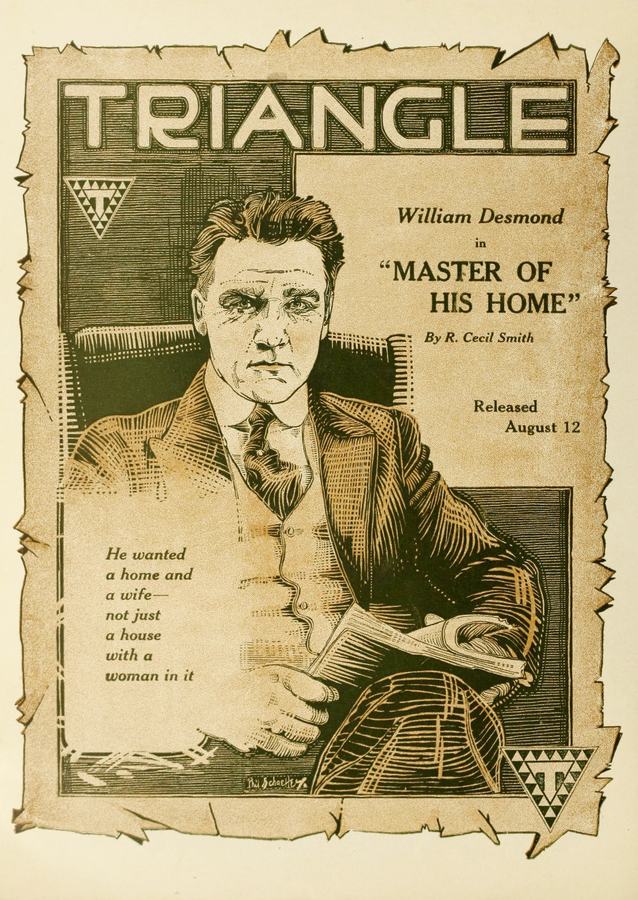
Stepping back into the annals of early cinema, one often discovers narratives that, despite their age and the constraints of their medium, resonate with a surprising contemporary vigor. Master of His Home, a cinematic artifact from an era when stories unfolded without spoken words, is one such compelling discovery. It's a film that masterfully navigates the treacherous waters of societal expectation versus individual desire, a theme as pertinent today as it was a century ago. This isn't merely a quaint relic; it's a potent drama, etched in shadows and light, exploring the foundational conflicts of love, family, and the insidious influence of external pressures on the sanctity of marriage. R. Cecil Smith’s narrative, brought to life by a dedicated cast, offers a poignant glimpse into the social fabric of its time, while simultaneously crafting a timeless tale of redemption and self-discovery.
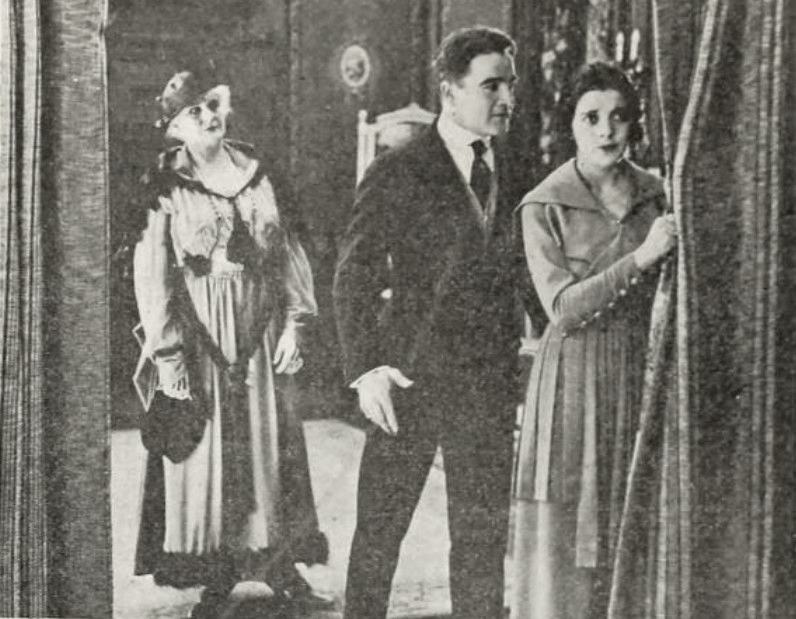
At its core, Master of His Home is a story of liberation – not from physical chains, but from the invisible bonds of social ambition. Our protagonist, Millicent Drake, portrayed with nuanced vulnerability by Alma Rubens, finds herself ensnared in the elaborate social machinations of her mother. Mrs. Drake, a character embodying the era's relentless pursuit of status, has meticulously charted Millicent’s course towards a union with the eminently 'suitable' Van Tyle. This arranged trajectory, however, is dramatically derailed when Millicent encounters Carson Stewart, a gold miner whose rugged individualism and genuine spirit stand in stark contrast to the polished artifice of her intended fiancé. It's a classic clash between the natural and the cultivated, between instinct and imposed convention. The mountain lodge, initially a stage for Van Tyle's courtship, becomes the crucible where Millicent's true affections are forged, leading to a passionate, albeit socially transgressive, marriage with Stewart. This initial defiance sets the stage for the domestic drama that follows, a drama intensified by the relentless interference of Millicent’s mother.
The film then delves into the insidious ways external forces can erode the foundation of a marriage. Mrs. Drake, far from accepting her daughter’s choice, becomes an architect of discord, subtly poisoning Millicent’s mind against Stewart’s earnest desire for a family. This psychological manipulation, a precursor to many modern domestic dramas, highlights the vulnerability of nascent unions to persistent, well-meaning but ultimately destructive, counsel. The climax of this marital strife arrives with the revelation of Millicent's pregnancy and the shocking discovery of Mrs. Drake's abhorrent suggestion of abortion. This moment is a profound turning point, not just for the characters, but for the narrative's moral compass. Stewart, played with a compelling blend of strength and wounded pride by William Desmond, is driven to a breaking point, abandoning a home that has become synonymous with betrayal and manipulation. His departure, however, serves as a catalyst for Millicent's long-overdue awakening. It forces her to confront the true cost of her mother's influence and to finally claim agency over her own life and destiny. Her subsequent journey westward, baby in tow, is a powerful visual metaphor for her emotional and spiritual pilgrimage towards self-reliance and reconciliation. This arc, from passive obedience to active pursuit of happiness, makes Master of His Home a surprisingly progressive narrative for its time, echoing themes of female empowerment that would become more explicit in later decades.
In the silent era, the burden of conveying complex emotions fell squarely on the shoulders of the actors, whose every gesture, facial expression, and bodily posture had to speak volumes. Alma Rubens, as Millicent Drake, delivers a performance that transcends mere melodrama. Her initial portrayal captures the vacillation of a young woman torn between filial duty and burgeoning love. Later, her transformation from a compliant daughter to a determined wife and mother is genuinely affecting. Rubens navigates the emotional landscape with a delicate touch, allowing the audience to witness her internal struggle and eventual resolve. Her eyes, often the most expressive tool in a silent film actor's arsenal, convey a depth of regret and then fierce determination that is truly captivating.
William Desmond, as Carson Stewart, projects an image of rugged masculinity tempered by a profound sensitivity. He embodies the 'master of his home' not through authoritarianism, but through a quiet strength and a deep desire for a loving, honest family. His pain upon discovering the plot against his child is palpable, a testament to Desmond's ability to convey heartbreak without a single spoken word. His departure is not an act of weakness but of righteous indignation, a man driven from his sanctuary by forces he cannot control but refuses to condone. The eventual reconciliation is made all the more powerful by the sincerity he brings to the role, suggesting a man ready to forgive and rebuild.
Joseph J. Dowling, though perhaps in a smaller role, often anchors scenes with a quiet dignity. The supporting cast, including Susie Light Moon, Will H. Bray, Elinor Hancock, and Robert McKim, contribute to the film's rich texture, each performance adding a layer to the societal backdrop against which Millicent's drama unfolds. It is particularly Mrs. Drake, though, whose presence looms largest, even when not physically on screen. Her manipulative influence is a constant, almost unseen antagonist. The film's success in conveying this insidious power without dialogue speaks volumes to the skill of the actors and the clarity of R. Cecil Smith's script, which provided them with a robust framework for their non-verbal storytelling.
The thematic richness of Master of His Home extends far beyond its surface narrative. It is, first and foremost, a searing critique of the societal pressures that dictate personal happiness. The relentless pursuit of 'suitability' and social standing, personified by Mrs. Drake, is depicted as a destructive force, capable of shattering genuine affection and familial bonds. This theme resonates strongly even today, in an age where external validation and curated personas often overshadow authentic connection. The film implicitly asks: at what cost do we pursue societal approval, and what truly constitutes a 'good' marriage?
Another pivotal theme is the concept of true autonomy and self-realization. Millicent's journey is one of shedding the shackles of maternal control and societal expectations to embrace her own desires and responsibilities. Her decision to follow Stewart, to seek reconciliation and build a life on her own terms, is a powerful statement of female agency, especially noteworthy for a film of its era. This resonates with other films of the period that explored women challenging conventional roles, much like the spirited protagonists found in Playing with Fire or the moral dilemmas faced in The Folly of Desire. The 'West' in this context is not merely a geographical location but a symbolic space of freedom, a frontier where new identities can be forged, unburdened by the rigid class structures of the East. It is a place where a man like Carson Stewart, a gold miner, can be valued for his character rather than his lineage, and where a woman like Millicent can redefine her role outside the strictures of polite society.
The film also delves into the sacredness of family and the profound desire for progeny. Stewart's yearning for a child is depicted as a fundamental aspect of his identity and his vision of a complete home. Mrs. Drake's attempt to thwart this desire, especially through the dark suggestion of abortion, highlights a profound clash of values and a stark moral divide. This particular plot point, handled with surprising gravity for the period, underscores the film's willingness to tackle sensitive issues, albeit through the interpretive lens of silent cinema. The eventual reconciliation is not just a happy ending but a reaffirmation of the core values of love, forgiveness, and the enduring power of family, hard-won through struggle and self-discovery. It reminds one of the deep familial themes explored in films like The Sundowner, where the harsh realities of life often bring families closer.
Beyond its compelling narrative and strong performances, Master of His Home is also a fascinating study in the visual storytelling techniques of the silent era. The cinematography, while perhaps lacking the sophisticated camera movements of later decades, effectively uses composition, lighting, and intertitles to convey mood and narrative progression. Close-ups are employed strategically to emphasize emotional beats, allowing the audience to connect intimately with the characters' inner turmoil and triumphs. The contrast between the opulent, stifling interiors of the East and the vast, open landscapes of the West is particularly striking, serving as a visual metaphor for Millicent's spiritual journey from confinement to freedom. The director, often relying on established visual grammar, ensures that every frame contributes to the emotional arc, making the lack of spoken dialogue a strength rather than a limitation. The editing, too, maintains a steady rhythm, allowing scenes to breathe and emotions to register fully before moving on, a delicate balance crucial for silent films to avoid either rushing or dragging.
R. Cecil Smith's screenplay, even without the luxury of dialogue, must have provided a clear and robust framework for these visual interpretations. The pacing of revelations, the build-up of tension, and the carefully orchestrated emotional beats are all testament to a well-structured script. It’s a reminder that even in the absence of spoken words, compelling storytelling relies on strong foundational writing. The film's ability to engage an audience today, a century removed from its original context, speaks volumes about the universality of its themes and the effectiveness of its craft. Comparing it to other character-driven silent dramas like Body and Soul, one sees a shared commitment to exploring the human condition through evocative visuals and powerful, non-verbal performances.
Master of His Home, while perhaps not as widely known as some of its more celebrated silent contemporaries, stands as a valuable example of early American cinema's capacity for complex dramatic storytelling. It’s a film that bravely tackles themes of parental manipulation, marital discord, and personal liberation, all within the stylistic confines of the silent era. The performances by Alma Rubens and William Desmond are particularly commendable, anchoring the film with genuine emotion and making their characters' struggles feel deeply personal and relatable. The film's exploration of the clash between societal expectation and individual desire, and the transformative power of self-discovery, ensures its continued relevance. It serves as a powerful reminder that true mastery of one's home begins not with external control, but with internal resolve and the courage to forge one's own path.
For enthusiasts of silent film, or anyone interested in the evolution of cinematic storytelling, Master of His Home offers a compelling and emotionally resonant experience. It’s a testament to the enduring power of a well-told story, proving that the language of emotion transcends the spoken word and the passage of time. It prompts us to reflect on the enduring struggles of individuals against the currents of social convention and celebrates the ultimate triumph of love and personal authenticity. Much like the journeys of self-discovery in films such as Moondyne or the moral awakening in Was He a Coward?, Millicent's odyssey is a powerful, human narrative that continues to resonate.
IMDb —
1926
Community
Log in to comment.