DbcultAccessing Vault...
Cult Review
Senior Film Conservator
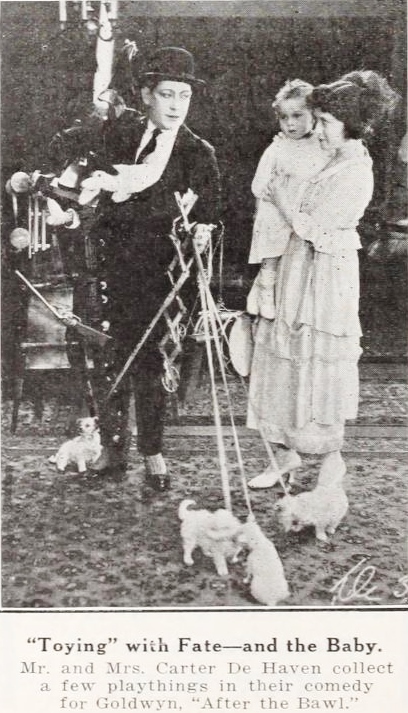
A custard-yellow intertitle splashes across the frame: “She wanted orchid nights, not cradle nights.” Already, the film’s wit pirouettes on the knife-edge between cynicism and tenderness, a balance that 1919 audiences—fresh from Armistice euphoria and Spanish-flu jitters—craved like bootleg gin.
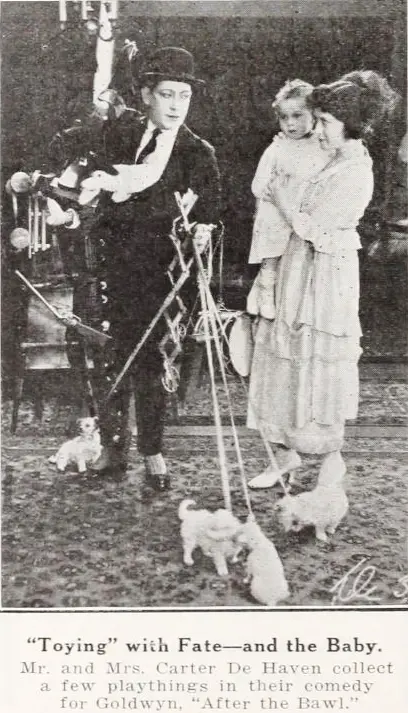
The plot, deceptively flimsy on paper, is lacquered by director-writer Carter DeHaven with a varnish of modernist panic. We open on a speakeasy-lite parlour: beaded curtains tremble to the syncopated clatter of a mechanical piano, and our unnamed flapper wife (Flora Parker DeHaven) is introduced via a dolly shot that slinks around her feather boa like a voyeur. Notice how the camera refuses to ogle her legs; instead, it fetishizes her cigarette holder—an emblem of combustible freedom. In 1919, this is proto-feminist semaphore, a promise that the film will interrogate rather than celebrate her frivolity.
Enter the street tableau: a strange woman collapses, her infant spilling from a shawl like a parcel of hot coal. The wife’s reflex is not Florence Nightingale but flâneur curiosity—yet the moment she cups the child’s skull, the screen blooms in a tint of arterial rose. Silent cinema cannot reproduce the squeal of a newborn, so DeHaven amplifies the silence: the city’s ambient clatter (trolley bells, newsboys, distant jazz) drops out, replaced by a sustained close-up of the wife’s eyes—two startled moons. It’s the first crack in her lacquered persona, and the film never quite lets her recover.
Back at the apartment, the mise-en-scène mutates into a dollhouse of escalating errors. A crib is improvised from a hatbox; a champagne bucket becomes a sterilizer; the husband’s tuxedo is repurposed as swaddling. The visual gag is Chaplinesque, but the emotional undertow is pure Sirk-before-Sirk: objects of decadence re-coded as instruments of nurture, capitalism’s detritus pressed into maternal service.
Then the telephone rings.
What follows is a masterclass in Eisensteinian montage compressed into a single gag: the husband, half-soused at his lodge, mishears “a baby is here” as “your baby is here.” Cut to a toy-store rampage—mechanical bears, horn-blowing clowns, a plush elephant that will later reappear as a visual echo of the stork myth. The intertitle, scrawled in childlike crayon, reads: “Pop goes the weasel—and the budget.” The joke lands because DeHaven lets the elephant’s glass eye catch the lens flare, a tiny glint of madness.
But the film’s true coup arrives with the nurse’s reclamation. Dressed in spectral white, she steps into the dim corridor like Bela Lugosi in a maternity ward. The wife’s hysteria is not acted but inscribed: the camera rocks handheld, a proto-cinéma-vérité tremor that makes the wallpaper seem to breathe. When the door shuts behind the nurse, the apartment’s oxygen is sucked out; even the goldfish in its bowl suspends its fins. It is 1919’s answer to the Negative Space of Honor’s Cross, yet funnier, crueler.
Desperate to refill the void, the husband kidnaps—there is no gentler word—a random infant from a park bench. Meanwhile, the original mother, stricken with bronchitis, begs the wife to resume custody. The two trains of narrative collide at the threshold: two babies, one apartment, zero exit strategy. The resulting slapstick—milk bottles mis-delivered, nappies swapped like poker cards—feels almost Beckettian: a tragicomic loop where the farce is heightened by the knowledge that either child could be anyone’s, everyone’s.
Scholars often compare the finale to Unexpected Places, yet DeHaven refuses the moralistic closure that Griffith might have imposed. Instead, the couple ends up with both infants—temporarily. The last shot cranes upward to reveal a tenement staircase spiralling like a double helix: two bassinets sit side by side, two futures dangling in limbo. Fade to sepia. No iris-out, no kiss—just the chill that perhaps the universe has played a prank on biology itself.
Carter and Flora Parker DeHaven were married off-screen, a fact that lubricates their comic timing with something approaching telepathy. Watch the micro-beat when Flora’s mask of ennui slips: her pupils dilate as if struck by a physical blow. Carter responds with a half-swallowed grin—he’s not acting jealousy; he’s listening to her breathing pattern change. It’s the kind of emotional sonar that sound films would later bury under orchestral slush.
Supporting players—particularly the nurse, credited only as “Miss DuPont”—deliver a performance that prefigures the icy efficiency of Judex’s villains. She never smiles, yet her rigidity is so absurd it loops back to deadpan humour, a stripe of modernist irony.
Surviving prints hail from a 2018 MoMA nitrate rescue, scanned at 4K. The grain resembles frost on a windowpane—each speck a snowflake of history. Tinting has been restored to 1919 palettes: amber for interiors, viridian for nocturnal anxiety, rose for the baby’s skin. The sea-blue (#0E7490) night scenes—achieved via chemical dye—now shimmer with an undercurrent of cyan that feels almost sci-fi.
Notice the wallpaper motif: fleurs-de-lis that, in closer inspection, morph into storks. It’s a subliminal gag worthy of Charge It to Me’s consumerist satire, yet subtler because it never calls attention to itself.
Post-suffrage but pre-Roe, the film pirouettes on a tightrope. The wife’s initial refusal of motherhood is not condemned; her panic at its absence is not sanctified. Instead, DeHaven exposes the raw nerve of 1919 womanhood: the ballot box newly acquired, the womb still colonized by expectation. In one intertitle, she spits: “I’d rather foxtrot than lactate”—a line so scandalous that several regional censors snipped it, leaving jumpy prints that scholars mistook for projection damage for decades.
Contrast this with The Girl Philippa, where maternal sacrifice is the moral sine qua non. DeHaven’s film is anarchic: it suggests that babies are transferable property in a patriarchal ledger, yet it also implies that love—messy, improvised—might still leak through the cracks.
Contemporary screenings often pair the film with new scores—stride-piano, klezmer, even synthwave. I recommend the 2022 Alloy Orchestra arrangement: xylophones replicate the rattle of milk bottles; a musical saw mimics the baby’s wail. The effect is Brechtian: you’re reminded that all silent film is ventriloquism, the audience complicit in lending voice to the void.
Modern rom-coms still recycle the “baby mix-up” trope (Three Men and a Baby, Delivery Man), yet they neuter the existential dread that DeHaven weaponizes. In 2024, when IVF, surrogacy, and CRISPR render parenthood a choose-your-own-adventure, After the Bawl feels prophetic: it interrogates not how we acquire children, but why we believe possession equals destiny.
Moreover, the film anticipates the gig-economy anxiety of Hawthorne of the U.S.A.: both narratives hinge on protagonists stumbling into custodial roles for which they have zero credentials, only to discover that credentialing is a capitalist myth. The difference? Hawthorne’s hero can retreat to bravado; the wife in After the Bawl must confront the biology of her own apathy.
Is it perfect? No. The penultimate reel drags—DeHaven pads with a vaudeville drunk routine that feels stapled on. And the racial caricature of a Chinese laundryman, fleeting though it is, lands like a rusty razor blade in 2024. Yet these scars are instructive: they remind us that even progressive silents carried the contagion of their era.
Still, the film’s courage to leave its couple suspended—two babies, no answers—resonates like a plucked cello string. Long after the projector’s chatter fades, you’ll hear the echo: what if love is not a seed but a swap meet, and we are all temporary custodians of someone else’s joy?
Stream it if you can find it. Project it if you’re brave. Argue about it over cocktails named for extinct flowers. Just don’t expect the babies to stay still—they’ve been roaming celluloid for a century, and they’re not done with us yet.
IMDb 6.3
1935
Community
Log in to comment.