DbcultAccessing Vault...
Cult Review
Senior Film Conservator
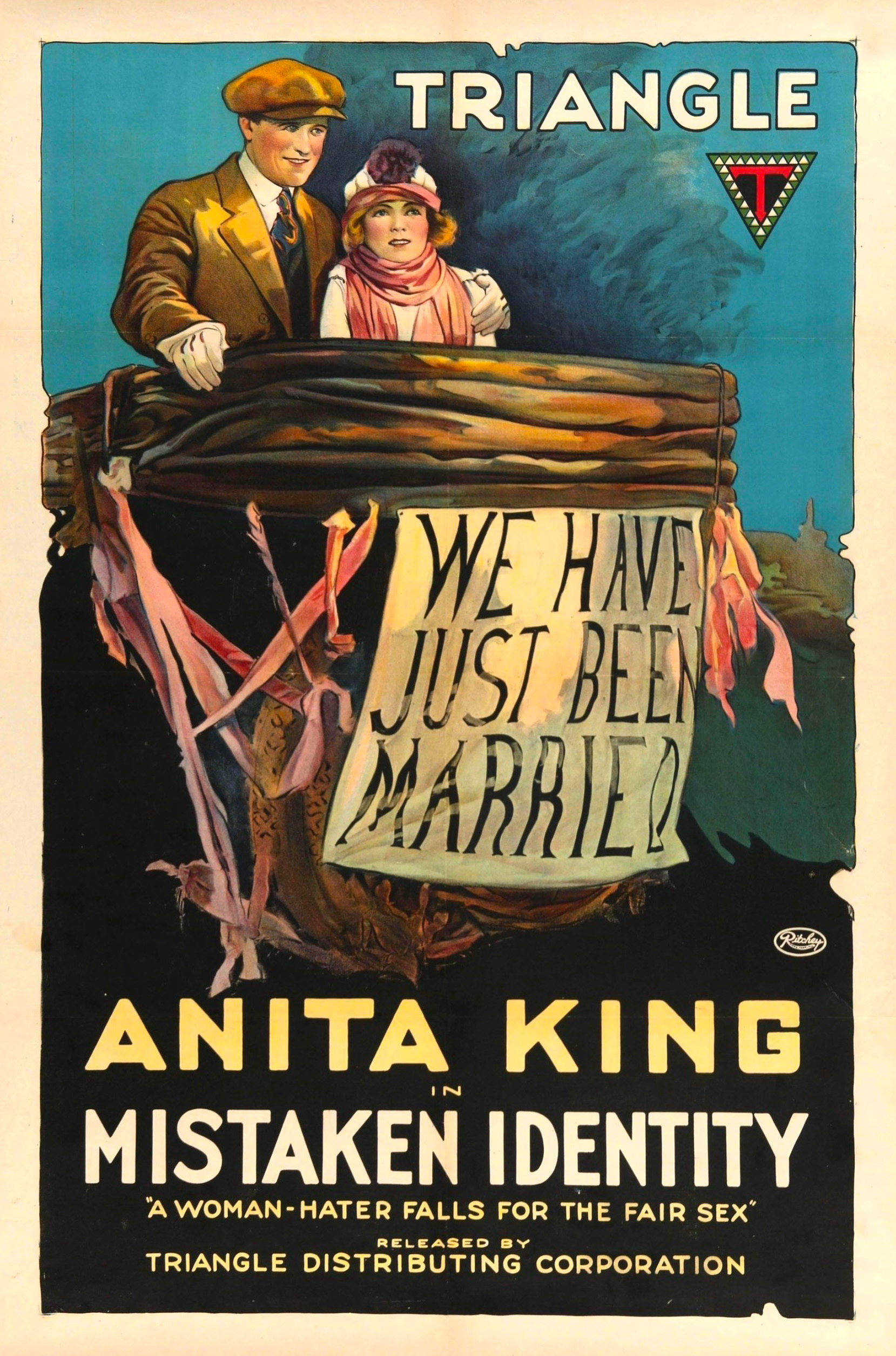
The annals of early cinema are replete with narratives that, despite their age, resonate with an uncanny prescience, and Mistaken Identity stands as a poignant testament to this enduring power. While often overshadowed by more boisterous spectacles of its era, this film, featuring the incandescent Anita King, offers a meticulously crafted exploration of societal stratifications, the precarious nature of truth, and the human spirit's indomitable quest for authenticity. It's a cinematic relic that, upon rediscovery, reveals layers of thematic complexity and a sophisticated grasp of visual storytelling, challenging contemporary perceptions of what silent films could achieve.
At its core, Mistaken Identity masterfully weaves a tale of mistaken circumstance, thrusting its protagonist, Maeve O'Malley, into a world utterly alien to her humble origins. The narrative doesn't merely present a simple case of mistaken resemblance; rather, it constructs an elaborate scaffold of events that compel Maeve to inhabit the life of Eleanor Vance, a missing heiress whose absence casts a long shadow over the city's gilded elite. This isn't merely a plot device; it's a crucible for character development, forcing Maeve to confront not only the external pressures of maintaining a complex charade but also the internal turmoil of losing her own identity in the process. The film meticulously builds tension, drawing the audience into Maeve's increasingly desperate attempts to blend seamlessly into a world of lavish balls, whispered scandals, and cutthroat social maneuvering. The stakes are perpetually escalating, fueled by the genuine affection she develops for Detective Rhys Morgan, whose pursuit of the truth ironically brings him closer to the very woman concealing it.
The screenplay, while adhering to the dramatic conventions of its time, exhibits a remarkable foresight in its psychological underpinnings. It delves into the moral quandaries inherent in Maeve's deception, never painting her as a villain, but rather as a victim of circumstance, propelled by a desperate desire for survival and, perhaps, a fleeting taste of a life she could only dream of. The silent film's reliance on visual cues and expressive performances becomes its greatest strength here, allowing the audience to project their own understanding onto Maeve's internal struggles, making her journey all the more compelling. The intricate dance between Maeve and the various figures in Eleanor's life—the manipulative distant cousin, the doting but oblivious aunt, the suspicious family lawyer—creates a rich tapestry of human interaction, each thread pulling Maeve deeper into the elaborate illusion.
No discussion of Mistaken Identity would be complete without reverential acknowledgment of Anita King's mesmerizing performance. King, a trailblazer in her own right—often celebrated as the first woman to drive a car across the United States—translates her adventurous spirit and innate charisma onto the silver screen with breathtaking efficacy. As Maeve, she delivers a masterclass in silent acting, conveying a vast spectrum of emotions with a subtlety that belies the often-exaggerated theatricality of the era. Her eyes, luminous and expressive, speak volumes, shifting from wide-eyed innocence to calculating resolve, from burgeoning hope to profound despair, without the need for a single spoken word. The tremor of her lip, the slight slump of her shoulders, the fleeting smile that barely reaches her eyes—these are the tools of her craft, wielded with a precision that draws the viewer into Maeve's innermost world.
King's portrayal of Maeve is particularly compelling in its dichotomy. She effortlessly embodies both the gritty determination of the working-class girl and the fragile elegance of the heiress. This duality is not merely superficial; King allows us to see the internal conflict, the constant negotiation between who Maeve is and who she pretends to be. Her scenes with Detective Morgan are charged with an unspoken tension, a delicate ballet of attraction and apprehension, where every stolen glance and hesitant touch is imbued with profound meaning. One cannot help but draw parallels to the nuanced performances seen in other silent era dramas, perhaps even finding echoes of the quiet strength displayed by stars in films like The Eternal Magdalene, where female protagonists navigate complex moral landscapes with similar grace under pressure. King's presence elevates the material, transforming a potentially melodramatic plot into a deeply affecting human drama.
The film's direction, though often anonymous in the historical records of the period, demonstrates a keen understanding of cinematic language. The framing is deliberate, often utilizing deep focus to emphasize the stark contrast between Maeve's two worlds – the cramped, shadowed backrooms of the department store versus the expansive, ornate drawing-rooms of the Vance estate. The use of light and shadow, a hallmark of early cinema, is particularly effective here, casting Maeve in chiaroscuro when she is most conflicted, or bathing her in an almost ethereal glow when she momentarily forgets her deception in moments of genuine connection. There's a particular sequence involving a grand staircase and a descending shadow that perfectly encapsulates the looming threat of exposure, a visual metaphor as potent as any dialogue.
The pacing, too, is remarkably assured. The narrative builds gradually, allowing the audience to become fully invested in Maeve's plight before accelerating into a series of thrilling near-misses and dramatic revelations. The intertitles, rather than merely relaying dialogue, are often employed with poetic brevity, adding to the film's evocative atmosphere and propelling the emotional arc forward. One can observe a certain kinship with the grand visual storytelling found in epics like 20,000 Leagues Under the Sea, albeit on a more intimate scale, in the way Mistaken Identity uses its mise-en-scène to convey complex ideas and emotions without relying on spoken words. The director's ability to orchestrate such a compelling visual experience, particularly given the technical limitations of the era, speaks volumes about the burgeoning artistry of film at the time.
Mistaken Identity is more than just a captivating drama; it functions as a fascinating social document, reflecting the anxieties and aspirations of the early 20th century. The stark class divide, a recurring motif in films of this period, is central to Maeve's predicament. Her initial desperation to escape poverty is palpable, making her eventual plunge into the world of wealth both a dream realized and a nightmare unfolding. The film subtly critiques the superficiality of high society, where appearances often trump character, and where true identity can be easily obscured or manipulated for personal gain. This theme resonates strongly with other contemporary works that explored the complexities of social standing and identity, such as A Lady of Quality or even the biting social commentary present in Wives and Other Wives, both of which delve into the roles women were expected to play within rigid societal structures.
The film also touches upon the nascent feminist stirrings of the era. Maeve, despite her vulnerability, exhibits remarkable resilience and agency. She's not merely a passive pawn in a larger game; she actively makes choices, however misguided, to navigate her difficult circumstances. Her journey, while fraught with peril, ultimately becomes a powerful statement about self-discovery and the intrinsic value of one's true identity, irrespective of social standing. The underlying message is clear: true worth is not found in inherited wealth or assumed titles, but in the integrity of one's character. This enduring thematic relevance ensures that Mistaken Identity transcends its historical context, offering insights that remain pertinent even today.
The narrative builds to a breathtaking crescendo as the threads of Maeve's deception begin to unravel. The climax is a masterclass in suspense, skillfully orchestrating multiple converging plotlines – the true heiress's unexpected return, the detective's nearing discovery of the truth, and the villain's desperate final gambit. The tension is almost unbearable, punctuated by King's raw, visceral performance as Maeve confronts the inevitable collapse of her borrowed reality. The emotional stakes are incredibly high, as the audience has become deeply invested in her fate, despite her initial deception. The resolution, while providing a sense of catharsis, doesn't shy away from the lingering consequences of Maeve's choices, adding a layer of poignant realism to an otherwise dramatic tale. This kind of high-stakes, character-driven drama, where individuals battle overwhelming forces, can be glimpsed in the adventurous spirit of films like Burning Daylight, albeit with a more introspective focus here.
Ultimately, Mistaken Identity is a compelling cinematic experience that deserves a wider audience. It's a testament to the power of silent film as an art form, showcasing exquisite performances, intelligent storytelling, and a profound understanding of the human condition. Anita King's luminous presence alone makes it a must-see, her ability to convey complex emotional landscapes without dialogue serving as a powerful reminder of the unique artistry of the era. For aficionados of classic cinema, or indeed anyone seeking a narrative rich in drama, suspense, and timeless themes, this film offers a journey into the heart of identity that remains as captivating and relevant today as it was upon its initial release. It solidifies its place not just as a historical curiosity, but as a genuinely affecting piece of cinematic art, a vibrant echo from an era of profound artistic innovation. Its quiet brilliance speaks volumes, inviting us to look beyond the surface, much like its own compelling narrative, to discover the true essence within.
IMDb —
1923
Community
Log in to comment.