DbcultAccessing Vault...
8/10
Senior Film Conservator
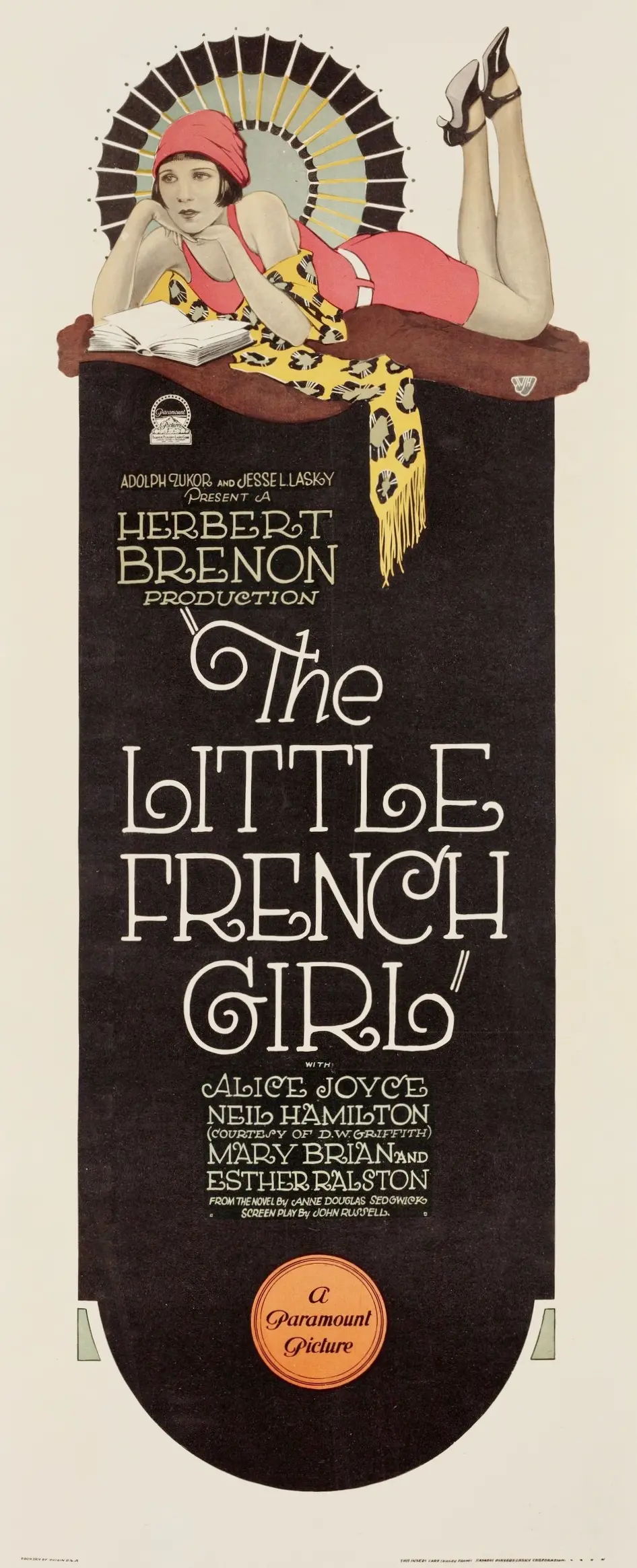
A definitive 8/10 rating for a film that redefined the boundaries of cult cinema. The Little French Girl remains a cornerstone of transgressive art.
Stepping back into the hallowed halls of silent cinema often feels like unearthing a forgotten treasure, and such is the case with the 1925 drama, The Little French Girl. Directed with a delicate hand and penned by John Russell and Anne Douglas Sedgwick, this film is a profound exploration of love, deceit, and the long shadows cast by wartime indiscretions. It's a narrative that, even without spoken dialogue, resonates with an emotional depth rarely achieved, a testament to the power of visual storytelling and the nuanced performances of its stellar cast. Far from a simple romance, it’s a complex moral tableau, challenging perceptions of honor, loyalty, and the redemptive power of truth.
At its core, The Little French Girl is a saga of interconnected lives irrevocably altered by a single, profound betrayal. The story commences with Owen Bradley, a man whose wartime service becomes a convenient veil for his moral failings. Pleading a fabricated cancellation of his leave, he forsakes his dutiful English fiancée, Toppie, and his familial obligations, instead succumbing to the siren call of Madame Vervier in France. This clandestine affair, born of infatuation and deceit, sets in motion a chain of events that will ripple through the lives of everyone associated with the Bradley family. Owen’s subsequent death in action, while tragic, serves less as a resolution and more as the catalyst for the narrative's true complexities to unfold.
Bound by a promise made to his deceased brother, Giles Bradley finds himself tasked with the unenviable duty of escorting Madame Vervier’s daughter, Alix, to his family home in England. This act of familial loyalty inadvertently introduces a foreign element into the rigid societal structures of English aristocracy. Alix, portrayed with captivating grace by Esther Ralston, is not merely a passive recipient of charity; she quickly ingratiates herself with Giles’s mother, winning hearts with her charm and vivacity. Her ascent culminates in an engagement to a viscount, a seemingly idyllic future secured, shielded from the shadows of her mother's past. This arc, from a foreign ward to an engaged noblewoman, speaks volumes about the societal fluidity possible, yet also the precariousness of a life built on partial truths.

Meanwhile, Giles, played by the earnest Neil Hamilton, navigates his own emotional labyrinth. He has long harbored a quiet, unwavering affection for Toppie (Mary Brian), Owen's jilted fiancée. His persistent attempts to win her heart are, however, repeatedly rebuffed, pushing Toppie towards a life of monastic devotion, a path that symbolizes her retreat from a world that has caused her immense pain. This subplot adds a poignant layer of unrequited love and spiritual seeking, contrasting sharply with the more worldly ambitions and deceptions playing out elsewhere.
The narrative reaches its dramatic crescendo when Alix, witnessing Toppie’s despair and Giles’s unfulfilled love, makes a courageous and profoundly self-sacrificing decision. In a desperate bid to prevent Toppie’s entry into the convent and, by extension, to aid Giles, Alix divulges the devastating truth about her mother’s scandalous past to Toppie. This revelation is not merely a confession; it is an explosion of long-buried secrets. Toppie, reeling from the impact, denounces Madame Vervier, brilliantly portrayed by Alice Joyce, as a woman of ill repute. The irony is palpable: Alix’s act of truth-telling, intended to heal, inadvertently shatters her own carefully constructed world. Giles, having already learned that his brother Owen was but one of many with whom Madame Vervier had affairs, finds his suspicions grimly confirmed. The truth, once unleashed, cannot be contained. Its public disclosure in England shatters Alix's engagement, stripping her of her newfound status and casting her into the same societal opprobrium that haunted her mother.
The final act is one of profound emotional reckoning. As Toppie embraces the convent, finding solace in spiritual devotion, Giles experiences a powerful epiphany. He realizes that his true affections lie not with the unattainable Toppie, but with Alix, whose courage and vulnerability have touched him deeply. His return to France is tinged with urgency, only to find another suitor, Andre, attentive to Alix. Yet, through heartfelt confession, Giles soon learns of Alix’s reciprocal and unwavering devotion. Their entangled fates, forged through deceit, societal judgment, and personal sacrifice, finally culminate in a tender, redemptive embrace, a hard-won peace amidst the wreckage of wartime lies and the complexities of human connection.
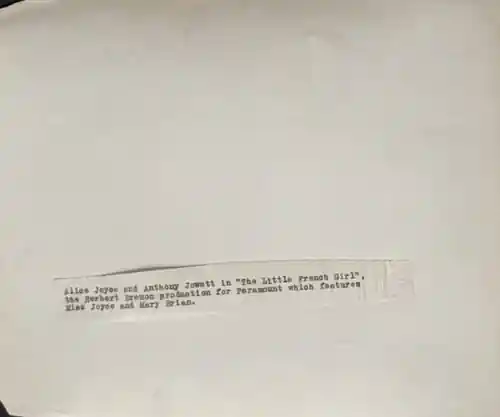
The success of The Little French Girl rests heavily on the shoulders of its exceptional cast, who, through the art of silent acting, convey a spectrum of emotions with remarkable clarity. Esther Ralston as Alix is particularly luminous. Her portrayal captures the delicate balance of innocence, resilience, and quiet strength. She navigates Alix’s journey from a naive French girl to a woman burdened by her mother’s past, then redeemed by her own integrity, with a subtlety that belies the theatricality often associated with silent film. Her expressions, gestures, and overall demeanor speak volumes, making her character’s internal struggles palpable to the audience.
Alice Joyce, as Madame Vervier, delivers a nuanced performance that is crucial to the film’s moral landscape. She isn't merely a villain; she is a woman of complex past, her actions having profound, often unintentional, consequences. Joyce imbues Madame Vervier with a certain world-weariness and an underlying sorrow that hints at the difficult choices she may have made, preventing her from becoming a one-dimensional antagonist. This complexity adds significant depth to the film's exploration of judgment and forgiveness.
Neil Hamilton’s Giles is the quintessential earnest hero, torn between duty, societal expectations, and his own heart. His portrayal of unrequited love for Toppie and his gradual realization of his true feelings for Alix is handled with a sincerity that grounds the more melodramatic elements of the plot. Mary Brian, as Toppie, embodies the wounded innocence and spiritual yearning of a woman deeply affected by betrayal. Her decision to enter the convent, far from being a defeat, feels like a deliberate choice for inner peace, a powerful statement in an era when such choices carried immense social weight.
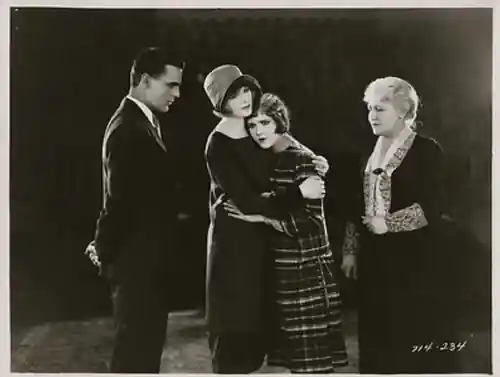
The supporting cast, including Mario Majeroni, Jane Jennings, Mildred Ryan, Maude Turner Gordon, Maurice de Canonge, Anthony Jowitt, Julia Hurley, Paul Doucet, and Eleanor Shelton, all contribute to the rich tapestry of characters, each adding authenticity to the bustling English and French settings. Their collective efforts ensure that the emotional stakes remain high throughout the film, drawing the audience into their intricate world of secrets and revelations.
The art of silent filmmaking, often underestimated in today's sound-saturated world, is on full display in The Little French Girl. The director masterfully employs visual cues, intricate set designs, and expressive cinematography to convey the narrative's complexities. The use of intertitles, far from being a mere convenience, becomes an integral part of the storytelling, providing necessary exposition and character thoughts with poetic brevity. The pacing of the film, allowing for lingering close-ups on the actors' faces, gives the audience ample opportunity to interpret and connect with their emotional states, fostering a deeper empathy than rapid-fire dialogue sometimes allows.
The writing by John Russell and Anne Douglas Sedgwick, adapting the novel, is particularly commendable for its intricate plotting and character development. They craft a narrative where consequences are not immediate but ripple through generations and across borders, reflecting a sophisticated understanding of human nature and societal pressures. The moral dilemmas presented are not simplistic; they force characters, and by extension the audience, to grapple with difficult questions of forgiveness, truth, and the nature of love. The film avoids easy answers, preferring to explore the messy, often contradictory, realities of human relationships.
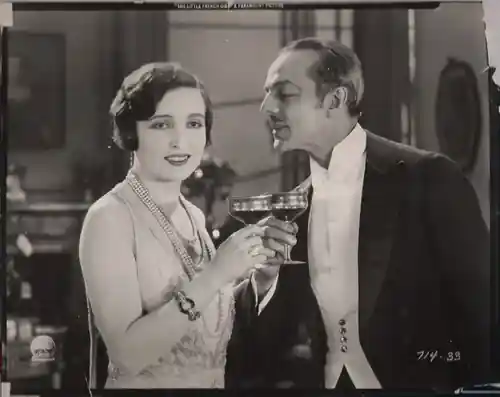
The visual aesthetic of the film, characteristic of the mid-1920s, features a blend of naturalism and carefully constructed melodrama. The settings, from the war-torn landscapes of France to the stately homes of England, are rendered with an attention to detail that immerses the viewer in the period. Lighting, a crucial element in silent film, is used effectively to create mood and emphasize emotional states, from the stark shadows of betrayal to the soft glow of burgeoning affection.
Released in 1925, The Little French Girl sits firmly within the Golden Age of silent cinema, a period characterized by its exploration of grand emotional narratives and evolving social mores. The film’s themes—wartime trauma, societal hypocrisy, the plight of women, and the search for personal integrity—were highly resonant with post-World War I audiences. The moralistic undertones, particularly concerning Madame Vervier’s past, reflect the prevailing societal judgments of the era, where a woman’s reputation was paramount and deviation from prescribed norms could lead to social ostracization. Yet, the film also subtly challenges these norms through Alix’s eventual redemption and Giles’s acceptance of her, suggesting a nascent shift towards more compassionate understanding.
The portrayal of characters like Toppie, seeking solace in a convent, also speaks to the limited options available to women seeking autonomy and peace outside of marriage or conventional societal roles during that time. Her choice, while seemingly a retreat, can also be interpreted as a powerful act of self-preservation and spiritual liberation in a world that offered few alternatives for a woman wronged.
When considering The Little French Girl within the broader context of silent film, certain thematic and narrative echoes become apparent. The exploration of hidden pasts and their disruptive impact on present lives finds a compelling parallel in films like Sumerki zhenskoy dushi (Twilight of a Woman's Soul), where the psychological weight of secrets drives much of the drama. Both films delve into the profound consequences of personal histories, particularly for female protagonists, in societies that often judged harshly.
The melodramatic flourishes and the focus on moral dilemmas, especially concerning marital fidelity and societal expectations, can be seen in conversation with films such as Why Divorce?. While the latter directly addresses the institution of marriage, The Little French Girl implicitly critiques the societal structures that necessitate deceit and secrecy in romantic relationships, particularly when a woman's reputation is at stake. The societal judgment leveled against Madame Vervier and, by extension, Alix, is a powerful reminder of the era's rigid moral codes.
Furthermore, the journey of a character navigating a new, often hostile, environment and proving their worth, akin to Alix's initial reception in England, resonates with the spirited resilience seen in films like Sally of the Sawdust, albeit with vastly different comedic and dramatic tones. Both films feature protagonists who, despite their backgrounds, manage to forge connections and carve out a place for themselves, often through sheer force of character. While Sally's struggles are more overtly class-based, Alix's are rooted in social acceptance based on lineage and reputation.
The intricate web of romance, misunderstanding, and eventual resolution, where true love emerges from a labyrinth of complications, also shares a spiritual kinship with films like Love Letters (1924). Both narratives hinge on the eventual clarity of emotional truths, often delayed by external circumstances or internal conflicts, ultimately leading to a satisfying, if hard-won, romantic conclusion. The slow burn of Giles's realization of his love for Alix, rather than Toppie, is a classic romantic trope, handled here with compelling sincerity.
In conclusion, The Little French Girl stands as a poignant and powerful testament to the enduring appeal of silent cinema. It is a film that, despite its age, speaks volumes about the human condition, exploring themes of deceit, honor, societal judgment, and the transformative power of love and truth. The masterful direction, coupled with the compelling performances of Esther Ralston, Alice Joyce, Neil Hamilton, and Mary Brian, ensures that this intricate drama remains deeply affecting. It's a reminder that true artistry transcends technological limitations, proving that a story told with passion, nuance, and visual eloquence can resonate across generations. For enthusiasts of classic film, or anyone seeking a rich, emotionally complex narrative, The Little French Girl is an essential viewing experience, a cinematic gem that continues to shine brightly, its silent whispers echoing with timeless truths.
IMDb —
1929
Community
Log in to comment.