DbcultAccessing Vault...
Cult Review
Senior Film Conservator

In an era when cinema was a nascent art, still finding its voice in the absence of spoken dialogue, films like Delivering the Goods emerged as delightful capsules of everyday life, imbued with a simplicity and sincerity that often eludes the cacophony of modern storytelling. This particular gem, a testament to the collaborative vision of writers Leslie Goodwins and Edward Ludwig, transports us back to a time when community grocers were the very pulse of neighborhoods, and the bond between boy and dog was, perhaps, one of the purest forms of companionship imaginable. It’s a film that, despite its brevity and seemingly humble premise – the daily routine of a young boy and his canine helper in a grocery store – manages to etch itself into the viewer's memory with an indelible warmth.
The film’s central figures, Spec O'Donnell and his remarkable four-legged co-star, Pal the Dog, form a duo whose onscreen chemistry is nothing short of captivating. Spec, portraying a diligent young lad assisting his father, presumably Garry O'Dell, in the local grocery, embodies the industrious spirit of youth. His earnest expressions, often a blend of youthful mischief and burgeoning responsibility, speak volumes without uttering a single word. He is the quintessential boy-next-door, navigating the world of commerce with an innocence that is both endearing and occasionally, comically clumsy. Pal, on the other hand, is a revelation. Animal actors in the silent era often stole scenes, but Pal’s performance here transcends mere cuteness; there's an intelligent, almost sentient quality to his actions, suggesting a deep understanding of his role within Spec's daily adventures. This isn't just a dog performing tricks; it’s a character, with motivations and reactions that feel genuinely organic to the unfolding narrative.
The setting itself – the father's grocery store – is more than just a backdrop; it's a vibrant character in its own right, a veritable time machine to an age where local shops were the social hubs of towns and cities. The meticulous set design, capturing the essence of a general store with its overflowing bins of produce, towering shelves of dry goods, and the ubiquitous counter where transactions and gossip intertwined, contributes significantly to the film's immersive quality. One can almost smell the freshly baked bread, the spices, and the sawdust that might have graced the floors. This authentic depiction is crucial for grounding the story, allowing the audience to appreciate the simple charm of Spec's daily grind, from weighing out flour to arranging apples in a pyramid – tasks that, though seemingly mundane, were vital cogs in the community's machinery. The presence of other cast members like Marjorie Marcel and Henry Murdock, even if in supporting roles, fills out this world, hinting at the tapestry of customers and neighbors who frequented such establishments, each with their own minor dramas and desires that might briefly intersect with Spec’s delivery route.
The genius of Leslie Goodwins and Edward Ludwig's screenplay lies in its ability to extract humor and heartwarming moments from the seemingly unremarkable. The plot, while straightforward – Spec and Pal delivering goods – becomes a framework for a series of delightful vignettes. Imagine a scenario where a particularly stubborn package refuses to stay put in Spec's wagon, requiring Pal’s ingenious intervention, perhaps by nudging it back with his nose or even carrying a smaller item himself. Or perhaps a delivery to a fussy customer, portrayed with a delightful exaggeration typical of silent comedies, is complicated by Pal's accidental antics, leading to a comical chase or a misunderstanding that Spec must deftly resolve. These small, often visual gags, are the lifeblood of silent film comedy, relying on impeccable timing and the expressive capabilities of the actors, both human and animal. The film doesn't aim for grand dramatic arcs; instead, it revels in the microscopic adventures that define a child’s world, particularly one intertwined with the responsibilities of a family business.
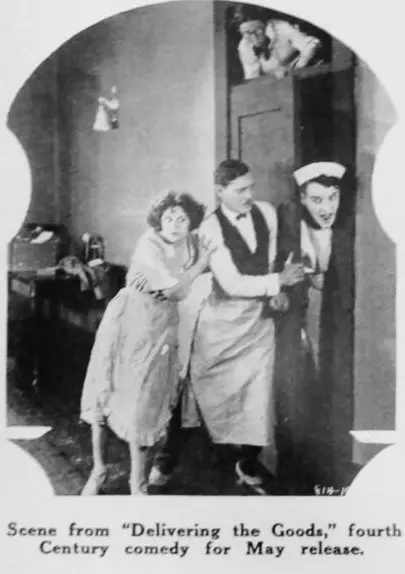
The directorial choices, whether from Goodwins or Ludwig, or a collaborative effort, are evident in the film's crisp visual storytelling. Without dialogue, every gesture, every facial expression, every camera angle becomes paramount. The filmmakers understand this intrinsically, employing wide shots to establish the bustling environment of the store or the street, and then zooming in for close-ups to capture Spec's worried brow or Pal's curious gaze. The intertitles, sparse but impactful, serve as narrative guideposts, offering just enough context to propel the story forward without interrupting the visual flow. This delicate balance is a hallmark of effective silent cinema, allowing the audience to engage actively in deciphering the emotions and intentions of the characters through their actions alone.
Spec O'Donnell's performance is particularly noteworthy. As a child actor, he possesses an unforced naturalism that makes his character instantly relatable. His interactions with Pal are especially poignant; there’s a palpable sense of trust and affection between them, a bond that feels utterly authentic. Pal, in turn, responds with an intelligence that suggests hours of training, yet never feels overtly staged. The dog’s ability to follow complex commands, often integrated seamlessly into the narrative as if he were spontaneously reacting, is a testament to the animal trainers of the era and the film’s careful direction. This synergy between human and animal is what elevates Delivering the Goods beyond a simple short film; it becomes a study in interspecies camaraderie.
When considering the broader landscape of silent cinema, Delivering the Goods finds its place among a delightful subgenre of films that celebrated childhood, animals, and the simple pleasures of life. One cannot help but draw a parallel to works featuring other iconic child stars, such as Jackie Coogan in My Boy. While Coogan’s films often carried a more pronounced emotional weight or dramatic arc, the underlying charm of a child navigating a complex adult world, often with a loyal companion, resonates strongly. Both films tap into a universal appeal: the innocence of youth juxtaposed with the challenges, big or small, of daily existence. The capacity of these young protagonists to inspire empathy and amusement, often through their earnest efforts and occasional missteps, is a shared strength.
Similarly, the film's focus on a specific trade or daily routine, albeit in a more lighthearted vein, brings to mind films that explored the dignity and humor in working-class life. While not a direct comparison in theme, the meticulous portrayal of a specific occupation, much like one might find in a film like Once a Plumber, highlights the early cinema's fascination with depicting the fabric of society through its everyday professions. Delivering the Goods, however, infuses this with a distinct youthful exuberance, making the grocery store deliveries feel less like a chore and more like a series of mini-quests for Spec and Pal.
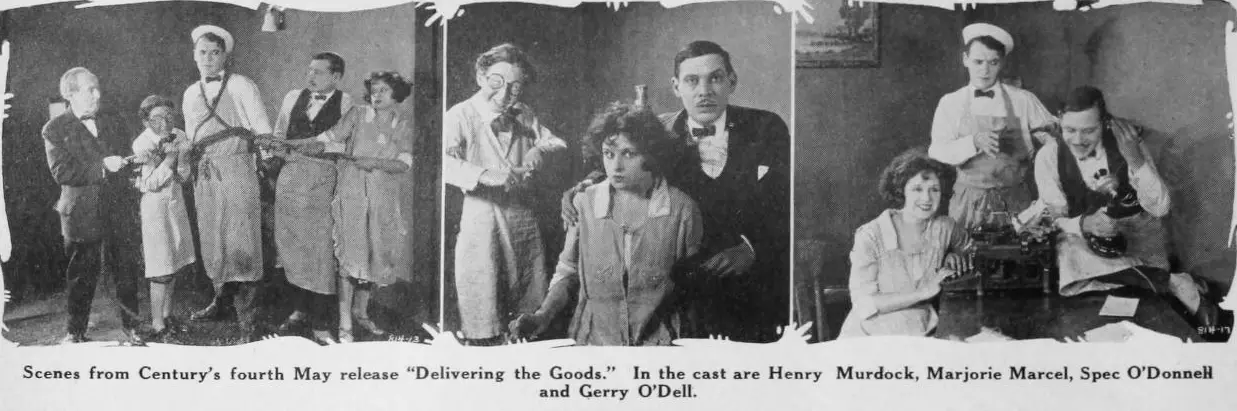
The comedic elements, often derived from Pal’s 'helpful' interventions or Spec’s attempts to maintain decorum amidst minor chaos, align with the broader tradition of visual gags prevalent in films of the era. These aren't the slapstick explosions of a Keaton or Chaplin, but rather gentle, character-driven humor that elicits smiles rather than belly laughs. It's a quieter form of comedy, born from observation and the relatable foibles of everyday life. This understated approach allows the emotional core of the film – the bond between Spec and Pal – to shine through with greater clarity, making the humorous moments feel earned and organic rather than forced.
What truly makes Delivering the Goods endure, even for modern audiences accustomed to elaborate CGI and complex narratives, is its unadulterated heart. It’s a film that speaks to the universal themes of responsibility, loyalty, and the innocent joys of childhood. The relationship between Spec and Pal is, in many ways, the emotional anchor of the entire piece. Pal isn't merely a prop; he's an active participant, a confidant, and a source of both assistance and occasional, gentle exasperation for Spec. Their dynamic transcends the screen, inviting viewers to recall their own cherished memories of childhood pets or friendships forged in the crucible of shared experiences, no matter how small.
The film's exploration of nascent responsibility, as Spec diligently carries out his duties, offers a subtle but profound message. He’s learning the value of work, the importance of fulfilling obligations, and the satisfaction that comes from a job well done. These are timeless lessons, presented not through didactic pronouncements, but through the lived experience of a young boy navigating his world. The grocery store, therefore, becomes a training ground, a miniature arena where character is forged through daily interactions and minor challenges. Garry O'Dell, as the father, likely portrays a figure of quiet authority and perhaps, even a source of gentle pride in his son’s growing independence, further enriching the film's familial subtext.
The beauty of a film like Delivering the Goods lies in its unpretentious charm. It doesn't strive for grand statements or revolutionary cinematic techniques. Instead, it perfects the art of the simple, well-told story. It’s a snapshot of a moment in time, a slice of life rendered with affection and skill. The performances, the setting, and the understated narrative combine to create a viewing experience that is both nostalgic and surprisingly fresh. For those interested in the evolution of cinema, or simply in rediscovering the unadulterated joy of early filmmaking, this short stands as a captivating example of how much could be conveyed with so little, and how enduring the appeal of a boy and his dog truly is. It's a delightful reminder that sometimes, the most profound stories are found in the most ordinary of circumstances, elevated by the magic of human – and canine – connection and the artistry of dedicated filmmakers.
In conclusion, Delivering the Goods is far more than just a historical curiosity. It’s a vibrant, heartwarming piece of silent cinema that continues to deliver on its promise of simple, genuine entertainment. It invites us to slow down, to appreciate the details, and to revel in the timeless bond between a boy and his best friend, all set against the charming backdrop of a bygone era. A truly delightful watch for anyone with an appreciation for the foundational artistry of film and the enduring power of a well-told, unassuming tale.
IMDb —
1914
Community
Log in to comment.