DbcultAccessing Vault...
Cult Review
Senior Film Conservator
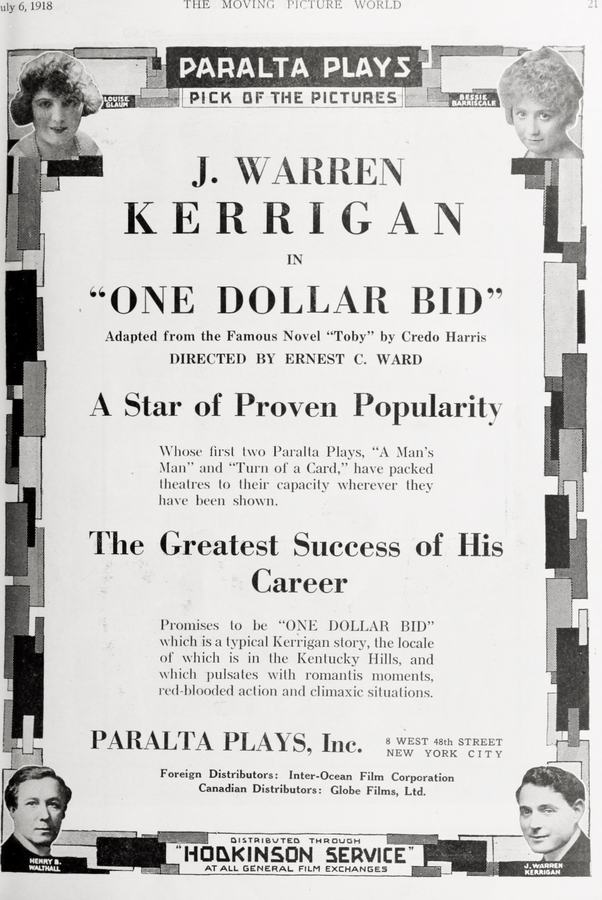
In the annals of silent cinema, where grand gestures and emotive visages often spoke volumes beyond spoken dialogue, certain films emerge as compelling testaments to the era's storytelling prowess. Among these, the 1921 drama One Dollar Bid, featuring the magnetic John Gilbert, stands as a fascinating exploration of societal ostracization, personal redemption, and the unexpected avenues through which justice can be found. It’s a narrative tapestry woven with threads of rural American life, moral ambiguity, and the enduring power of human connection, inviting us to peer into a world both distant and surprisingly resonant.
Our journey begins in the rustic, unyielding landscape of the Kentucky hills, a setting that immediately imbues the film with an air of rugged authenticity and isolation. Here, we encounter Toby, a character masterfully embodied by John Gilbert. Gilbert, known for his later stardom as a romantic lead, delivers a performance that is nuanced and deeply affecting, portraying Toby not merely as a drunkard but as a soul adrift, finding solace in the amber glow of moonshine and purpose in the simple act of carving wooden toys for the local children. This initial depiction is crucial; it establishes Toby as an outsider, a figure simultaneously endearing and unsettling to the entrenched community. His peculiarity, his very existence outside conventional norms, becomes a source of collective anxiety for the villagers. This fear, often born of misunderstanding and prejudice, drives them to revive an antiquated statute – a legal relic that allows for an individual to be sold into servitude. The sheer barbarity of this act, even within its historical context, is starkly presented, laying bare the fragility of individual liberty when confronted by communal fear.
The scene of Toby's impending auction is a powerful moment, a silent scream against injustice. It evokes a chilling resonance with other cinematic portrayals of societal condemnation, though perhaps less overtly dramatic than the grand societal clashes seen in later epics. In this quiet, rural tableau, the stakes feel intensely personal. This initial predicament of Toby's echoes themes found in films like Pawn of Fate, where characters find themselves at the mercy of circumstances beyond their control, often entangled in the web of societal judgment or unfortunate turns of fortune. The silent era, in particular, excelled at conveying such emotional weight through visual storytelling, and One Dollar Bid is no exception.
It is at this nadir of Toby's existence that Virginia Dare, portrayed with grace and conviction by Lois Wilson, enters the narrative as a force of moral clarity. Her intervention is not merely an act of charity but a profound statement against the dehumanization inherent in the villagers' actions. Purchasing Toby for a symbolic one dollar, Virginia offers him not just freedom from servitude, but a chance at genuine redemption. This act of compassion is the pivotal turning point, setting Toby on a path of self-discovery and transformation. Wilson’s portrayal of Virginia is understated yet powerful, embodying the strength and empathy required to see beyond Toby’s outward appearance and recognize his intrinsic worth.
The relocation to Uncle Poindexter's tobacco plantation serves as a crucible for Toby's metamorphosis. The structured environment, coupled with the burgeoning affection he develops for Virginia, acts as a powerful catalyst. He forsakes his whiskey habit, a testament to his burgeoning self-respect and the profound influence of love. The diligent labor he undertakes on the plantation is not merely a task but a tangible expression of his commitment to Virginia and to his own newfound sense of purpose. This transformative journey, driven by love and a desire for a better life, is a classic narrative arc, yet it feels fresh and authentic in Gilbert's hands. It’s a testament to the enduring power of human connection, a theme that resonates across cinematic history, reminding us that even the most seemingly lost souls can find their way back through the kindness of others.
Just as Toby's new life begins to solidify, the specter of his past reappears in the form of Dink Wallerby, a moonshiner and old friend. Dink's desperate plea for Toby's help to care for his sick daughter, Nell, pulls Toby back into the world he had so earnestly tried to leave behind. This subplot introduces a moral dilemma, forcing Toby to reconcile his new identity with his loyalties to his former life. The ensuing tragedy—Dink’s desperate act of stabbing a revenue officer with Toby’s knife while seeking medicine—propels the narrative into a gripping legal drama. The immediate suspicion falls upon Toby, highlighting the precariousness of his rehabilitated image and the societal tendency to judge based on past associations.
The courtroom scenes are where the narrative truly shines, demonstrating the keen writing of Thomas J. Geraghty and Credo Fitch Harris. The tension is palpable as Toby faces the very real threat of conviction. However, Dink’s confession, delivered just before Toby is sentenced, is a crucial turning point, shifting the focus from Toby's potential guilt to the complex circumstances surrounding Dink's crime. What follows is perhaps the most unexpected and satisfying revelation: Toby, the peculiar recluse, was once a lawyer. This twist is not merely a convenient plot device but a profound statement about hidden talents and forgotten pasts. Gilbert's portrayal of Toby transforming from a humble plantation worker into a sharp, articulate legal mind is captivating, showcasing his range as an actor.
Toby's successful defense of Dink is a masterclass in silent film legal drama. Without spoken words, the intensity of the arguments, the weight of the evidence, and the emotional appeals are conveyed through facial expressions, body language, and carefully crafted intertitles. This segment of the film could certainly draw parallels with other legal dramas of the era, such as A Case at Law or Between Men, which also navigated the complexities of justice and the courtroom. However, One Dollar Bid adds a unique layer by making the defender a character whose past is as much on trial as the accused's actions.
The climax of the film brings another startling disclosure: a visiting judge, deeply impressed by Toby's legal acumen and moral fortitude, proclaims Toby as his long-lost son. This revelation, while perhaps bordering on melodramatic by modern standards, perfectly aligns with the narrative conventions of the silent era, providing a satisfying resolution to Toby’s mysterious past and cementing his reintegration into a respectable societal position. It’s a moment of profound recognition, not just of Toby’s legal talent but of his inherent good character, which had been obscured by circumstance and self-neglect. Having regained his good name, his familial ties, and his self-worth, Toby is finally free to propose to Virginia, bringing the narrative to a heartwarming and well-deserved conclusion.
John Gilbert's performance as Toby is undoubtedly the anchor of One Dollar Bid. He navigates Toby’s complex arc with remarkable subtlety for the silent screen. From the initial portrayal of a moonshine-addled recluse, with weary eyes and a slumped posture, to the invigorated plantation worker, and finally, the sharp, confident lawyer, Gilbert’s transformation is utterly convincing. His ability to convey internal conflict and eventual triumph without uttering a single word is a testament to his skill. The shift in his gaze, the straightening of his shoulders, the newfound assertiveness in his gestures—all contribute to a powerful visual narrative of redemption. This kind of nuanced acting was crucial in the silent era, distinguishing truly great performers from those who merely mugged for the camera.
Lois Wilson, as Virginia Dare, provides the film with its moral compass and emotional heart. Her portrayal is one of quiet strength and unwavering compassion. She is not a passive damsel but an active agent of change, her belief in Toby serving as the catalyst for his transformation. Her scenes with Gilbert crackle with an understated chemistry, building a believable romantic connection that feels earned rather than forced. The supporting cast, including Arthur Allardt, Jess Herring, Clifford Alexander, J. Warren Kerrigan, Joseph J. Dowling, Leatrice Joy, and Elvira Weil, each contribute to the film’s rich tapestry, creating a believable community and supporting the central narrative without overshadowing the leads. Joseph J. Dowling, in particular, as the benevolent Uncle Poindexter, provides a grounding presence, while the intensity of the villains or the desperation of Dink Wallerby (played by Jess Herring) are conveyed with appropriate gravitas.
Thomas J. Geraghty and Credo Fitch Harris, as the writers, crafted a narrative that, while adhering to some melodramatic conventions of the time, offers surprising depth. The exploration of societal prejudice against outsiders, the transformative power of love, and the complex path to justice are handled with a thoughtful hand. The pacing of the story, from the slow burn of Toby's initial existence to the rapid escalation of the legal drama, is well-managed, ensuring that the audience remains engaged. The use of the antiquated Kentucky statute is a particularly clever plot device, providing a unique catalyst for the central conflict and highlighting the potential for legal systems to be weaponized by fear or ignorance.
While specific directorial credits are often less emphasized in early cinema analyses, the overall execution demonstrates a clear understanding of silent film aesthetics. The cinematography effectively captures the rugged beauty of the Kentucky hills, providing a strong sense of place. The framing of shots, the use of close-ups to emphasize emotional moments, and the construction of the courtroom scenes all contribute to a compelling visual experience. The film avoids excessive theatricality, instead opting for a more grounded approach that allows the emotional weight of the story to resonate.
At its core, One Dollar Bid is a powerful treatise on redemption. Toby’s journey from societal outcast to respected individual is a testament to the belief that individuals can change, given the right circumstances and motivation. It also serves as a poignant commentary on the dangers of snap judgments and the inherent prejudice against those who deviate from societal norms. The villagers’ fear of Toby, leading them to revive an archaic law, is a stark reminder of how easily fear can erode compassion and justice. This theme of societal judgment and the struggle for acceptance can be seen in various forms across cinematic history, from the more dramatic struggles in films like Ashes of Love to the more nuanced portrayals of outsiders in communities.
Furthermore, the film subtly touches upon the rural American experience, particularly the culture of moonshining in the Kentucky hills. It doesn't glorify or condemn it outright but presents it as a part of Toby's former world, a world that he must leave to embrace a new, more respectable existence. The conflict with the revenue officer, though tragic, grounds the story in a specific cultural and historical reality. The legal proceedings, too, offer a glimpse into the justice system of the era, highlighting its potential for both fairness and severe misjudgment. This blend of personal drama with broader societal themes elevates One Dollar Bid beyond a simple romance or melodrama.
For modern audiences, One Dollar Bid offers a valuable window into the narrative techniques and emotional power of the silent film era. It reminds us that compelling storytelling does not require dialogue, but rather relies on strong visual composition, expressive performances, and well-structured plots. The film’s ability to build suspense, convey deep emotion, and deliver satisfying resolutions through purely visual means is a testament to the artistry of its creators. While comparisons to more overtly action-packed or grand historical dramas like The Battle of the Ancre and the Advance of the Tanks or even the biblical epic The Chosen Prince, or the Friendship of David and Jonathan might seem disparate, One Dollar Bid demonstrates that intimate character studies could be just as impactful within the silent format, proving that the human drama, regardless of scale, resonates universally.
The film also showcases the early career of John Gilbert, a star who would later achieve immense popularity before facing the challenges of the sound transition. Watching him in One Dollar Bid provides insight into the foundations of his craft, revealing a talent for subtle emotional expression that was perfectly suited to the silent screen. His performance here is a compelling argument for his lasting legacy as more than just a romantic idol.
One Dollar Bid is more than just a historical artifact; it is a captivating drama that holds up remarkably well. It succeeds in weaving together disparate elements—rural folklore, legal intrigue, and a deeply personal journey of transformation—into a cohesive and emotionally satisfying whole. The film’s strengths lie in its compelling narrative, the nuanced performances of its lead actors, particularly John Gilbert, and its ability to convey profound themes without the aid of spoken dialogue. It's a testament to the enduring power of silent cinema to tell human stories with both grace and intensity. For enthusiasts of early American film, and for anyone interested in the evolution of cinematic storytelling, One Dollar Bid is a rewarding watch, a compelling narrative of how a single act of compassion can ignite a journey of profound personal and societal redemption. It’s a dollar well spent, indeed.
IMDb 5.2
1934
Community
Log in to comment.