DbcultAccessing Vault...
Cult Review
Senior Film Conservator
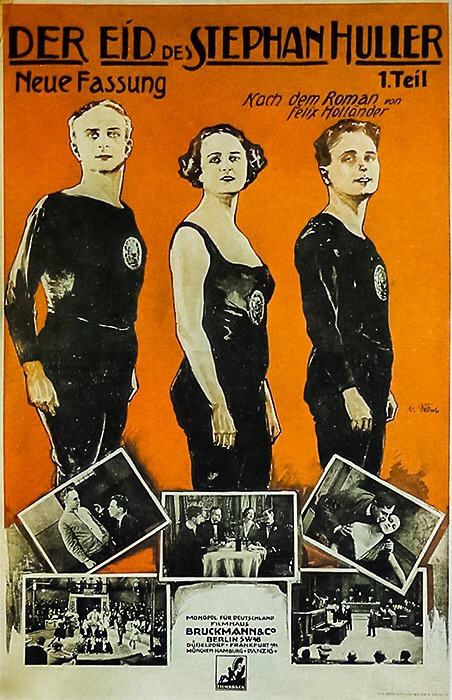
Stepping back into the nascent days of cinema, a period often dismissed as mere prologue to the sound era, one occasionally unearths a gem that challenges such facile categorization. "Der Eid des Stephan Huller," a German silent film of remarkable depth and thematic resonance, stands as a testament to the profound storytelling capabilities of its time. Directed by the prolific Viggo Larsen, who also embodies the titular character, this cinematic endeavor transcends its historical context, offering a compelling narrative rich with moral complexity and psychological nuance. It’s a film that demands our attention, not merely as an artifact, but as a vibrant piece of dramatic art.
The film plunges us into the world of Stephan Huller, a brilliant, if somewhat ascetic, inventor whose life is irrevocably altered by a deathbed promise. His mentor, a visionary scientist, entrusts Huller with the guardianship of a revolutionary energy device—a source of limitless power, but one fraught with danger if wielded by malevolent hands. This oath, this sacred commitment to safeguard humanity from its own destructive impulses, becomes the very axis around which Huller’s existence revolves. Larsen’s portrayal of Huller is a masterclass in understated intensity, conveying the immense weight of his vow through subtle gestures and piercing gazes. He is not a hero of grand, sweeping gestures, but one of quiet, agonizing resolve.
The narrative, penned by Felix Hollaender and Viggo Larsen himself, is a meticulously crafted descent into a moral maelstrom. It introduces us to Herr Kroll, brought to life with chilling efficacy by Fritz Schroeter, an industrialist whose ambition knows no bounds. Kroll is the archetypal antagonist, a man driven by insatiable greed, viewing the mentor’s invention not as a boon for mankind but as a tool for unparalleled profit and dominance. His methods are as insidious as they are effective, weaving a web of deceit that ensnares those around him, most notably the unsuspecting Clara (Wanda Treumann).
Clara, a figure of delicate beauty and inherent goodness, finds herself unwittingly implicated in Kroll’s grand scheme. Her connection to Huller, a nascent romance blossoming amidst the shadows of industrial intrigue, makes her a vulnerable pawn. Wanda Treumann imbues Clara with a heart-wrenching fragility, her expressions oscillating between hope, confusion, and despair as she navigates the treacherous currents of Kroll’s manipulations. Her plight serves as a poignant counterpoint to Huller's stoicism, highlighting the personal cost of his unwavering dedication to his oath. The film skillfully explores the ethical dilemmas faced by individuals caught between personal affection and a higher moral calling, a theme that resonates even with modern audiences accustomed to complex narratives.
Adding another layer to this intricate tapestry is Helene Voß as Frau Schmidt, the mentor’s steadfast housekeeper. Frau Schmidt is more than a background character; she is a silent guardian of the past, holding crucial information about the energy device—perhaps a hidden flaw, a safeguard, or even a prophecy of its potential misuse. Voß’s performance, though perhaps less overtly dramatic than her co-stars, is foundational, her presence lending an air of gravitas and quiet wisdom to the unfolding tragedy. Her role subtly underscores the idea that knowledge, like power, can be a double-edged sword, capable of both salvation and destruction.
As a silent film, "Der Eid des Stephan Huller" relies heavily on visual storytelling, and here it excels. Larsen’s direction, while perhaps lacking the overt theatricality of some contemporaries, demonstrates a keen understanding of cinematic rhythm and composition. The use of light and shadow, characteristic of early German cinema, is employed to great effect, particularly in conveying Huller’s internal turmoil and Kroll’s sinister machinations. The industrial settings, with their imposing machinery and stark lines, serve as a visual metaphor for the cold, calculating forces threatening to overwhelm humanistic ideals.
The film’s pacing is deliberate, allowing the audience to absorb the emotional weight of each scene. Unlike the often rapid-fire editing of today, "Der Eid des Stephan Huller" embraces longer takes, compelling the viewer to scrutinize the actors’ facial expressions and body language, which are, after all, the primary vehicles for conveying emotion in a silent medium. This approach fosters a deeper engagement with the characters’ psychological states, drawing us intimately into their struggles. The absence of spoken dialogue is not a limitation but an invitation to a more contemplative, visually driven experience. This contrasts sharply with some of the more action-oriented early films like The Corbett-Fitzsimmons Fight or Jeffries-Sharkey Contest, where the spectacle of movement was paramount; here, it is the spectacle of the soul.
At its core, "Der Eid des Stephan Huller" is a profound meditation on the nature of an oath and the burdens it imposes. Huller’s commitment is not merely a spoken promise but a foundational principle that dictates his every action, even when it leads to personal suffering and the potential loss of love. This theme of unwavering integrity in the face of immense pressure is timeless. It echoes through the ages, reminding us of the enduring human struggle to uphold ideals amidst a world often driven by baser instincts. The film challenges us to consider what we would sacrifice to honor our word, to protect a principle we deem sacred.
Furthermore, the film grapples with the nascent anxieties surrounding technological progress. The energy device, a symbol of humanity’s boundless ingenuity, is simultaneously a harbinger of potential catastrophe. This prescient examination of technology’s dual nature—its capacity for both immense good and devastating harm—is remarkably forward-thinking for its era. It’s a concern that remains acutely relevant today, as we continually navigate the ethical implications of artificial intelligence, genetic engineering, and environmental stewardship. In this regard, it shares a philosophical lineage with other early works that explore societal impact, though perhaps less overtly than a historical epic like The Independence of Romania or a social commentary like The Prodigal Son.
The climax of the film is a masterstroke of tension and emotional release. Set within the pulsating, intimidating heart of Kroll’s industrial complex, the activation of the device becomes a race against time, a desperate struggle between Huller’s oath and Kroll’s avarice. The visual spectacle of the machinery, combined with the raw performances, creates an atmosphere of palpable dread and impending doom. Huller's final, agonizing decision to uphold his oath, even at the cost of personal ruin and perhaps even Clara’s happiness, is depicted with a tragic grandeur that lingers long after the final frame. It is a moment of profound sacrifice, a testament to the idea that true heroism often resides not in victory, but in unwavering adherence to one's moral compass.
The ensemble cast, under Larsen's guidance, delivers performances that are both period-appropriate and universally affecting. Viggo Larsen, a titan of early Danish and German cinema, brings a compelling gravitas to Stephan Huller. His eyes, often downcast in thought or burning with conviction, speak volumes. He masterfully conveys the internal conflict of a man torn between his personal desires and a higher duty, a portrayal that elevates Huller beyond a mere stock character into a figure of tragic nobility. His performance here, much like his work in other significant early European productions, solidifies his reputation as an actor capable of conveying immense emotional depth without uttering a single word.
Wanda Treumann, as Clara, provides the emotional core of the film. Her vulnerability and expressive face are crucial in eliciting audience sympathy. She navigates Clara's journey from innocent affection to bewildered despair with a naturalism that belies the theatrical conventions of the era. Treumann’s ability to convey complex emotions – love, fear, confusion, and ultimate heartbreak – without dialogue is truly remarkable. Her scenes with Larsen are particularly poignant, illustrating the profound connection and inevitable tragedy that binds their characters.
Fritz Schroeter, as the avaricious Kroll, is perfectly cast as the villain. He embodies the ruthless industrialist with a cold, calculating demeanor, his very presence exuding menace. Schroeter avoids caricature, instead crafting a character whose ambition, while destructive, feels grounded in a recognizable human flaw. His performance provides the necessary foil for Huller’s idealism, driving the central conflict with chilling efficiency. Helene Voß, in her more restrained but equally vital role as Frau Schmidt, adds a layer of quiet dignity and hidden knowledge, her subtle reactions often hinting at deeper truths.
"Der Eid des Stephan Huller" emerges from a fascinating period in cinematic history, a time of rapid innovation and artistic experimentation. German cinema of this era was beginning to forge its distinct identity, moving beyond simple captured events towards more sophisticated narrative structures and psychological depth. While not as widely known as later Expressionist masterpieces, this film lays crucial groundwork, demonstrating an early commitment to thematic weight and character-driven drama. Its sophisticated narrative, particularly given the technical limitations of its time, positions it as an important precursor to the golden age of German silent film.
The film’s exploration of moral dilemmas, the corrupting influence of power, and the sanctity of an oath remains profoundly relevant. These are not themes confined to a specific historical epoch but rather universal human struggles that resonate across generations. In a world increasingly complex and morally ambiguous, the unwavering conviction of Stephan Huller, even in the face of overwhelming personal loss, offers a compelling, if tragic, example of integrity. It's a stark reminder that some promises, once made, can dictate the entire trajectory of a life, demanding sacrifices that transcend the immediate and personal.
One might compare its thematic seriousness to films like The Black Chancellor or The Eternal Law, which also delved into weighty moral and political questions. However, "Der Eid des Stephan Huller" distinguishes itself through its intimate focus on the individual’s internal battle, making the grander societal implications feel deeply personal. It’s less about epic historical events and more about the quiet, devastating battles fought within the human heart. The film serves as an important document of early European narrative cinema, showcasing a nascent industry grappling with complex themes and pushing the boundaries of visual storytelling.
In conclusion, "Der Eid des Stephan Huller" is far more than a historical curiosity. It is a powerful, poignant, and intellectually stimulating drama that speaks to the enduring human condition. Its meticulous plot, compelling performances, and profound thematic depth make it a compelling watch for anyone interested in the foundational works of cinema. It reminds us that even in silence, stories can resonate with thunderous emotional impact, leaving an indelible mark on the soul long after the flickering images fade from the screen.
IMDb —
1917
Community
Log in to comment.