DbcultAccessing Vault...
Cult Review
Senior Film Conservator
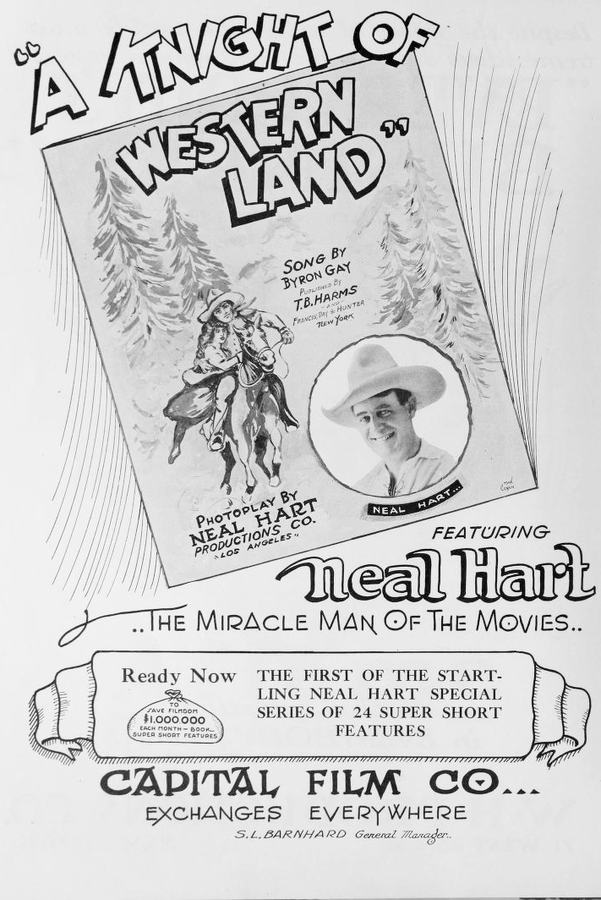
Stepping into the spectral glow of a silent film, particularly one as evocative as A Knight of Western Land, is akin to unearthing a forgotten saga etched in celluloid. This cinematic artifact, starring the indelible Joe Rickson, Neal Hart, and Janis June, transports us to an era where narrative relied on the poetry of gesture and the power of the panoramic frame. It's a journey into the foundational myths of the American West, presented with a stark authenticity that few contemporary productions manage to recapture. From the moment the lone rider, Caleb Thorne, silhouetted against the vast, indifferent sky, makes his entrance into Harmony Gulch, an immediate sense of impending drama permeates the screen. The film doesn't merely tell a story; it paints a vivid mural of human struggle against the backdrop of an untamed wilderness, where the very land dictates destiny.
Joe Rickson, as Caleb Thorne, embodies the archetypal Western hero with a nuanced restraint that is utterly captivating. His performance isn't one of flamboyant heroics, but rather a masterclass in silent stoicism. Every deliberate movement, every piercing gaze, communicates volumes without the need for a single intertitle. Rickson projects an aura of quiet strength, a man burdened by an unseen past yet driven by an unwavering moral compass. He is the 'Silent Rider,' a moniker that perfectly encapsulates his enigmatic nature and his profound impact on the beleaguered community of Harmony Gulch. We witness his character's evolution from a detached observer to an active agent of justice, a transformation subtly conveyed through his interactions and his increasing engagement with the town's plight. His presence is a simmering fuse, promising an inevitable explosion of righteous indignation against the tyranny that grips the land.
The antagonist, Silas Kincaid, brought to menacing life by Neal Hart, is a study in unbridled avarice. Hart eschews cartoonish villainy, instead crafting a portrait of a man consumed by a hunger for power and land. His Kincaid is not just a bully; he is a shrewd manipulator, a force of nature as destructive as any prairie fire or flash flood. The visual cues of his character—the set jaw, the calculating eyes, the dismissive wave of a hand—are potent signifiers of his oppressive reign. He represents the corrosive force of unchecked capitalism in a nascent society, a predatory instinct that threatens to devour the very soul of the West. Hart’s performance creates a palpable tension, a constant undercurrent of dread that makes Thorne’s eventual stand all the more impactful. The dynamic between Rickson's controlled power and Hart's ruthless ambition forms the central axis around which the entire narrative revolves, a classic struggle between good and evil, articulated through the visceral language of the silent screen.
Janis June, in the role of Mary Belle, provides the emotional heart of the film. Her portrayal is one of spirited resilience, a young woman grappling with profound loss and the encroaching shadow of Kincaid's tyranny, yet never succumbing to despair. Mary Belle is not a passive damsel; she is a fierce protector of her family's legacy, a symbol of the enduring spirit of the homesteader. June's ability to convey a wide spectrum of emotions—from quiet grief to fiery determination—without dialogue is truly remarkable. Her expressive eyes and graceful, yet firm, gestures imbue Mary Belle with a compelling agency. She is the catalyst for Thorne's deeper involvement, the embodiment of the innocence and hope that Kincaid seeks to crush. The burgeoning, unspoken romance between Thorne and Mary Belle is handled with a delicate touch, a testament to the power of suggestion in silent cinema, making their eventual connection feel earned and deeply resonant. It's a love story born not of grand declarations, but of shared adversity and mutual respect, much like the understated romance in A Woman's Triumph, where quiet strength defines the female lead's journey.
The cinematography of A Knight of Western Land is a character in itself, utilizing the vast, untamed landscapes to underscore the themes of isolation, struggle, and freedom. The wide-open vistas of the Western plains are not merely backdrops; they are active participants in the drama, reflecting the characters' internal states and the monumental challenges they face. The dusty trails, the sun-baked mesas, and the life-giving rivers are all imbued with symbolic weight. The stark contrasts between the arid, Kincaid-controlled lands and the verdant oasis of Mary Belle’s ranch are visually striking, reinforcing the central conflict. The use of natural light, the long shots that emphasize man's diminutive place in the grand scheme of nature, and the close-ups that focus on the raw emotion of the actors, all contribute to a rich tapestry of visual storytelling. The editing, while perhaps rudimentary by modern standards, possesses a rhythmic quality that propels the narrative forward with an almost lyrical urgency, particularly during the more intense action sequences.
The film's thematic depth extends beyond simple good-versus-evil dichotomies. It delves into the very essence of justice in a land where formal law is often distant or corrupted. Thorne's character embodies a form of chivalry reimagined for the rugged West, a knight not in shining armor, but in dusty leather, wielding not a sword, but a six-shooter. His quest is not for a Holy Grail, but for the restoration of balance and fairness. The film explores the idea that true heroism often arises from a deep-seated empathy for the oppressed and a willingness to stand against overwhelming odds. It also touches upon the fragility of community and the importance of collective resistance against tyranny. In an era where many Westerns were simplistic shoot-em-ups, A Knight of Western Land dares to imbue its narrative with a more profound moral inquiry, echoing the thematic weight seen in more complex dramas of the time, even if from different genres, like the moral quandaries explored in The Guilt of Silence or the grand epic scope of duty in Chûshingura (albeit a distinct cultural context).
The pacing is a masterful blend of contemplative moments and thrilling action sequences. The initial establishment of Harmony Gulch and Kincaid’s oppressive rule is deliberate, allowing the audience to fully grasp the stakes involved. Thorne’s slow integration into the community and his gradual understanding of its struggles build a powerful sense of anticipation. When the action ignites, it does so with a raw, visceral energy that is both exciting and believable. The horse chases are exhilarating, the fistfights gritty and impactful, and the final showdown—a meticulously choreographed ballet of tension and release—is nothing short of spectacular. It's a testament to the filmmakers' understanding of visual rhythm and dramatic escalation, ensuring that the audience remains captivated from the first frame to the last. The narrative avoids unnecessary detours, maintaining a laser-like focus on its central conflict and character arcs.
The sound design, or rather, the lack thereof, in a silent film necessitates a heightened appreciation for the accompanying musical score (which would have been live or pre-recorded for screenings). While we can only speculate on the original musical accompaniment, the film’s visual narrative is so strong that it almost provides its own internal rhythm. The clatter of hooves, the creak of leather, the rustle of wind through dry grass—these are all implied by the visuals, allowing the audience to fill in the auditory blanks, creating a uniquely immersive experience. This reliance on visual cues demands a more active participation from the viewer, fostering a deeper connection to the unfolding drama. It’s a sensory engagement that differs significantly from modern cinema, yet holds a profound power of its own.
Comparing A Knight of Western Land to its contemporaries, one observes its distinct blend of classic Western tropes with a more character-driven narrative. While films like The Fight might have emphasized pure action, A Knight of Western Land grounds its excitement in the moral struggles of its protagonists. It shares a common thread with films that explore the individual's battle against powerful, corrupt forces, reminiscent of the themes of justice and retribution found in narratives like The Great Diamond Robbery, albeit in a vastly different setting. The film’s portrayal of the Western landscape as both beautiful and brutal, a place of both opportunity and peril, is particularly well-executed, contributing to its enduring appeal. It’s a vision that predates and informs many of the iconic Westerns that would follow, establishing a visual and thematic vocabulary for the genre.
The meticulous attention to period detail further enhances the film's authenticity. From the costuming of the cowboys and homesteaders to the architecture of Harmony Gulch, every element feels carefully considered. These details, though subtle, contribute significantly to the immersion, allowing the audience to suspend disbelief and fully inhabit this bygone era. The practical effects, particularly in the action sequences involving horses and stunts, showcase the ingenuity and daring of early filmmakers. There’s a raw, unpolished quality to these scenes that adds to their realism, a stark contrast to the polished CGI of today. It’s a reminder of the sheer physicality involved in producing cinema in its nascent stages, a testament to the dedication of the cast and crew.
The cultural impact of a film like A Knight of Western Land, though perhaps not as widely known today as some of its more famous peers, cannot be overstated. It contributed to the evolving mythology of the American West, shaping perceptions of heroism, villainy, and the struggle for civilization against the wilderness. It helped solidify the archetypes that would define the Western genre for decades to come, influencing countless filmmakers and storytellers. The enduring appeal of the lone hero, the damsel in distress (who is anything but helpless here), and the ruthless antagonist, all find powerful expression within its frames. It’s a film that speaks to universal themes of justice, courage, and the innate human desire for a fair fight, resonating across generations.
In its climax, A Knight of Western Land delivers a resolution that is both satisfying and profoundly symbolic. The final confrontation between Thorne and Kincaid is more than just a physical battle; it is a clash of ideologies, a definitive statement about the triumph of moral integrity over unbridled greed. The restoration of peace to Harmony Gulch, and the burgeoning hope for its future, is a powerful affirmation of the values the film champions. Thorne, having fulfilled his role as the reluctant savior, finds a new purpose, embracing his place within the community he has protected. It’s a conclusion that feels earned, a culmination of all the emotional and dramatic threads woven throughout the narrative. The final image of Thorne, no longer a solitary figure but a man rooted in community, suggests a new chapter, a testament to the transformative power of both love and justice.
Ultimately, A Knight of Western Land stands as a compelling testament to the power and artistry of silent cinema. It is a film that transcends its historical context, offering a timeless narrative of courage and conviction. Joe Rickson, Neal Hart, and Janis June deliver performances that are not only exemplary for their era but continue to resonate with a profound emotional truth. For aficionados of classic cinema, and indeed for anyone interested in the foundational narratives of American mythology, this film is an essential viewing experience. It reminds us that stories of heroism, even when told without spoken words, can echo across time with an unwavering clarity, proving that true artistry needs no dialogue to speak directly to the soul.
The film’s legacy lies not just in its individual merits but in its contribution to the broader tapestry of cinematic history. It’s a powerful reminder of how early filmmakers, with limited technological means, managed to craft narratives of immense emotional depth and visual grandeur. It’s a work that encourages us to look beyond the surface, to appreciate the subtleties of non-verbal communication, and to engage with cinema on a more profound, interpretive level. Its influence can be subtly traced in subsequent Westerns, in the way heroes are portrayed, in the landscape’s role, and in the enduring appeal of justice prevailing against all odds. It truly is a gem of the silent era, deserving of renewed appreciation and study.
IMDb —
1920
Community
Log in to comment.