DbcultAccessing Vault...
Cult Review
Senior Film Conservator
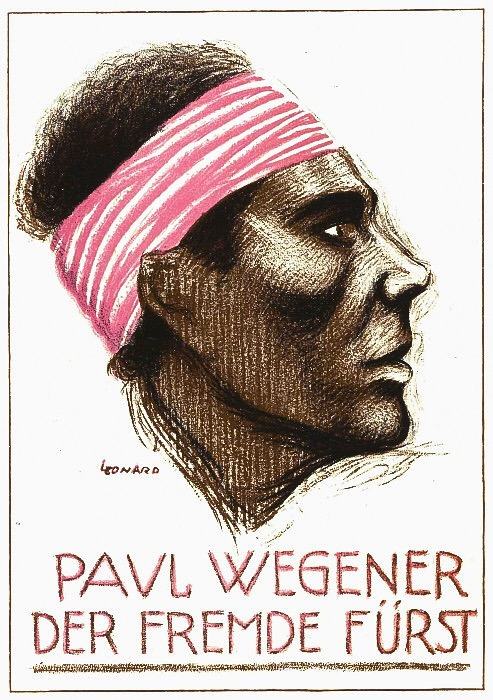
The flickering phantoms of early cinema often leave an indelible mark, not just for their pioneering spirit but for their audacious storytelling. Among these, Paul Wegener’s 1918 opus, Der fremde Fürst (The Strange Prince), stands as a testament to the era’s capacity for profound psychological drama cloaked in an aura of exotic mystery. This is not merely a film; it is a meticulously crafted fable, a somber dissection of human susceptibility, and a vibrant canvas for the nascent art of German Expressionism. Wegener, a titan of the silent screen, not only pens the narrative but also embodies its central enigma, creating a work that resonates with an unsettling prescience.
The cinematic landscape of the late 1910s was fertile ground for allegories, reflecting a Europe grappling with unprecedented change and the psychological scars of war. Der fremde Fürst emerges from this crucible, offering a narrative that, while seemingly straightforward, pulsates with layers of symbolic meaning. We are transported to a remote, almost mythical corner of Eastern Europe, a landscape of craggy peaks and isolated hamlets, where life unfolds according to ancient rhythms and deeply entrenched superstitions. Here, under the anachronistic, if benign, rule of Baron von Kahlenberg (Adolf E. Licho), a weary tranquility prevails. The Baron, a figure of fading authority, embodies the old world’s resistance to modernity, clinging to tradition with a quiet desperation.
Into this insular world descends the titular Strange Prince, Vladi, brought to life with mesmerizing intensity by Wegener himself. Vladi is an outsider in every conceivable sense – his attire, his mannerisms, his very presence exudes an air of the exotic, the unknown. He arrives not with an army, but with an entourage of carefully chosen companions: a silent, imposing bodyguard (Hans Stürm), whose stoic vigilance hints at unseen dangers, and a wizened oracle (Margarete Kupfer), whose unsettling pronouncements further shroud Vladi in an aura of preternatural power. Wegener’s portrayal of Vladi is a masterclass in controlled charisma; his eyes, often shadowed, convey both profound wisdom and a chilling detachment, a potent combination that disarms and enthralls in equal measure.
Vladi’s mission, as he articulates it, is one of transformation. He promises progress, enlightenment, and a liberation from the perceived stagnation of the Baron’s rule. His rhetoric is intoxicating, appealing to the villagers’ latent desires for a better life, for a future unburdened by the past. The initial skepticism of the populace quickly erodes, replaced by a fervent admiration, bordering on reverence. This rapid ascent to influence is facilitated by a series of 'miracles' – seemingly impossible feats that Vladi orchestrates with a cunning brilliance. These acts, whether they be the sudden appearance of bountiful harvests or the dispelling of local ailments, serve to cement his divine-like status, a testament to the power of perception and the human inclination to believe in the extraordinary.
At the heart of Vladi’s insidious campaign lies Ilona, the Baron’s daughter, portrayed with poignant vulnerability and spirited defiance by Lyda Salmonova. Ilona is a woman caught between worlds – tethered to the traditions of her father’s house, yet longing for an escape, for an adventure that transcends the monotony of her existence. Vladi, with his worldly charm and promises of a grander destiny, represents everything she craves. Salmonova imbues Ilona with a palpable sense of yearning, making her susceptibility to Vladi’s allure not merely a plot device, but a deeply human response to manipulation. Their romance, initially blossoming with all the intoxicating fervor of forbidden love, gradually reveals its darker hues. Vladi’s affection is less genuine passion and more calculated conquest, a means to solidify his control over the Baron’s domain. The subtlety with which this manipulation unfolds, often conveyed through fleeting glances and carefully modulated gestures, speaks volumes about the sophisticated acting prevalent in silent cinema.
The film’s thematic depth is one of its most compelling attributes. Der fremde Fürst explores the seduction of power, the fragility of truth, and the dangerous allure of the charismatic demagogue. Vladi is not just a con artist; he is a symbol of the deceptive forces that promise salvation while delivering subjugation. His character resonates with the anxieties of a post-war society, where disillusionment could easily pave the way for radical ideologies and strongmen. This exploration of manipulation and its psychological toll finds echoes in other films of the era, though perhaps with less overt mystical trappings. One might draw a thematic parallel to the insidious influence at play in a film like The Devil's Toy, where dark forces, whether supernatural or purely human, prey on the vulnerabilities of their targets. However, Wegener's Vladi operates on a grander, almost mythical scale, making his deception a societal rather than purely individual tragedy.
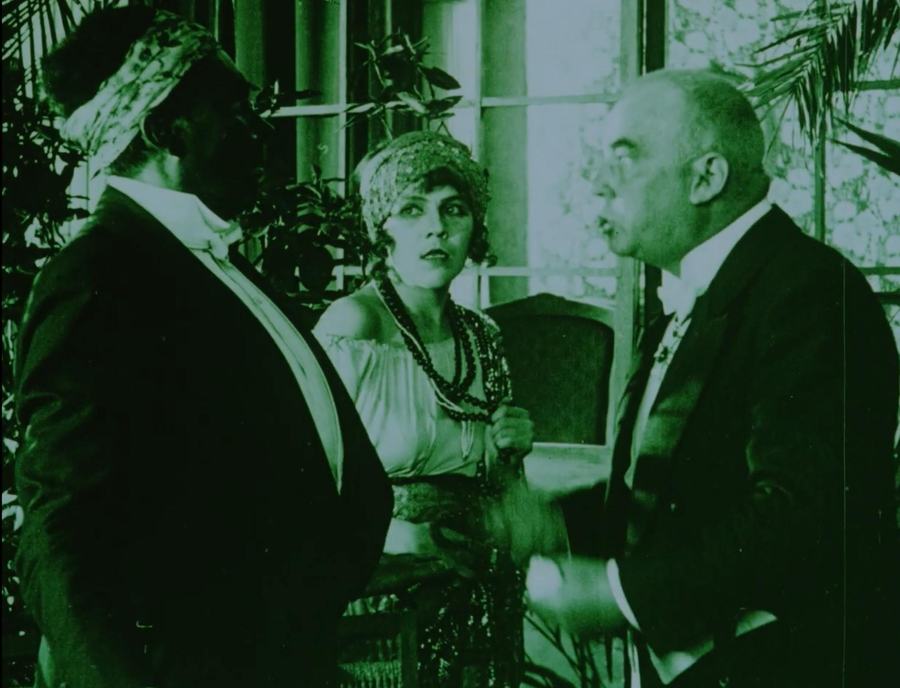
Visually, the film is a striking example of early German Expressionist aesthetics, though perhaps predating the more pronounced stylization seen in later works like The Cabinet of Dr. Caligari. Director Paul Wegener, along with his cinematographers, employs stark contrasts of light and shadow, creating an atmosphere that is both dreamlike and foreboding. The sets, while not as overtly distorted as some Expressionist efforts, are designed to enhance the sense of isolation and the psychological state of the characters. The remote village, with its ancient stone buildings and winding paths, feels almost claustrophobic, trapping its inhabitants in a web of tradition and fear. The visual language reinforces the narrative’s themes, particularly the sense of an ancient, perhaps malevolent, force encroaching upon a vulnerable community. The use of close-ups on Vladi’s face, especially his hypnotic eyes, effectively conveys his manipulative power, drawing the audience into his spell alongside Ilona and the villagers.
The supporting cast, while perhaps overshadowed by Wegener and Salmonova’s central performances, contribute significantly to the film’s rich tapestry. Adolf E. Licho’s Baron von Kahlenberg is a sympathetic figure, his initial wariness gradually giving way to a weary acceptance, then desperate resistance, showcasing the slow erosion of an established order. Gustav Botz, as the skeptical scholar, serves as the voice of reason, the intellectual counterpoint to Vladi’s mystical charade. His methodical investigation and eventual unmasking of the 'prince' provide the narrative’s crucial turning point, representing the triumph of empirical truth over manufactured illusion. Even minor characters, such as Walter Norbert or Paul Passarge, contribute to the tapestry of the village, creating a believable community that is both fascinated and ultimately threatened by the outsider’s arrival.
Wegener’s dual role as writer and lead actor is particularly noteworthy. It allowed for a singular vision, ensuring that the nuances of Vladi’s character were fully realized both on the page and on screen. His understanding of the character’s psychological depths is evident in every gesture, every subtle shift in expression. This kind of creative control, while not uncommon for pioneering filmmakers of the era, allowed Der fremde Fürst to achieve a remarkable coherence between its narrative ambition and its visual execution. His ability to craft a compelling story and then embody its most complex figure speaks volumes about his artistic genius and his profound impact on early German cinema.
The film’s climax is a masterclass in dramatic tension, as the scholar’s meticulous research culminates in the public exposure of Vladi’s true identity. The grand feast, intended as Vladi’s moment of ultimate triumph, transforms into a scene of chaos and revelation. Ilona, caught between her lingering infatuation and the horrifying truth, faces a profound moral and emotional dilemma. Salmonova’s portrayal of this inner turmoil is heartbreaking, her silent screams more potent than any spoken dialogue. The unraveling of Vladi’s elaborate charade is swift and brutal, exposing not a divine prince, but a master manipulator, perhaps even a demonic force preying on human desires and fears. The 'strangeness' of the prince is ultimately revealed to be his profound cunning, his amorality, and his ability to weaponize hope and superstition.
Comparing Der fremde Fürst to other films of its time offers further insight into its unique position. While films like Magda or Bondwomen might explore themes of social constraint and female agency, Wegener’s film imbues its narrative with a distinctly mythical quality, elevating the personal struggle to an allegorical plane. The deception at its core is not merely human trickery but feels almost supernatural in its scope, touching upon the ancient fears of shape-shifters and malevolent spirits that haunt folklore. This blend of psychological realism and folkloric mysticism sets it apart, making it a precursor to the darker, more fantastical elements that would later define German Expressionist horror.
The enduring legacy of Der fremde Fürst lies in its profound exploration of human nature. It serves as a potent reminder of how easily societies can be swayed by charismatic figures who promise utopia while harboring sinister agendas. The film's message, delivered with stark visual poetry and powerful performances, transcends its historical context, remaining relevant in any era susceptible to the siren call of false prophets. It’s a testament to the fact that silent cinema, far from being a primitive form, possessed a sophisticated language capable of articulating complex ideas and emotions with astonishing clarity and impact. The film, sadly, is not as widely known or discussed as some of Wegener's other works, such as The Golem, but it deserves its place in the pantheon of early cinematic achievements. Its intricate plot, its compelling characterizations, and its evocative visual style combine to create an unforgettable experience, a dark jewel in the crown of German silent film. For enthusiasts of early cinema, particularly those drawn to the psychological depth and atmospheric power of German Expressionism, rediscovering Der fremde Fürst is an essential journey, a descent into a world where charm masks malevolence and truth battles illusion for the very soul of a community.
IMDb 6
1917
Community
Log in to comment.