DbcultAccessing Vault...
Cult Review
Senior Film Conservator
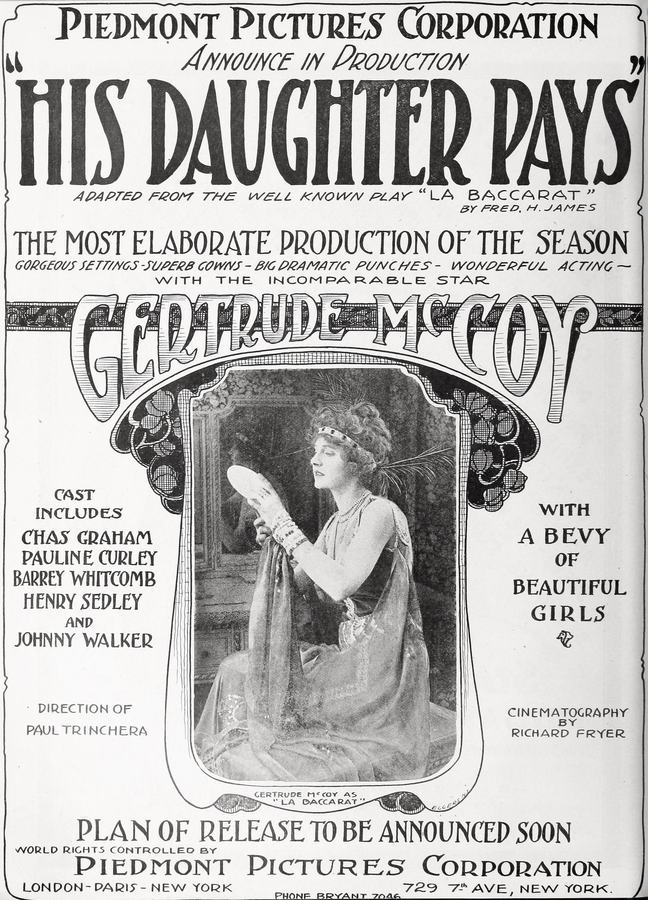
Frederick H. James’ *His Daughter Pays* (1925) is a masterclass in silent cinema’s emotional economy, a film that thrives on the unspoken and the lurid. Set against a backdrop of post-war disillusionment, it follows Armand La Tour, a man whose hubris and financial ruin lead him to betray his country for survival. Played with weary gravitas by Henry Sedley, Armand becomes a cautionary figure, his moral compromise rippling through his family like a stone cast into a pond. The film’s true tragedy, however, lies in its portrayal of Louise, Armand’s eldest daughter, whose innocence is weaponized by the criminal Ben Hassan, portrayed with chilling magnetism by Barry Whitcomb.
Central to the film’s narrative is the motif of captivity—both physical and psychological. Louise’s transformation into 'La Baccarat,' a performer in Hassan’s cabaret, is rendered with haunting visual poetry. James employs tight close-ups to emphasize her isolation, her eyes reflecting a soul ensnared. The cabaret itself, a grotesque parody of artistry, becomes a stage for exploitation, where beauty is reduced to a commodity. This mirrors Armand’s own entrapment in a system that values loyalty only in exchange for profit.
Contrast this with the character of Margery (Pauline Curley), whose journey is one of resilience and moral clarity. Her investigation into Louise’s fate—a subplot rife with suspense—serves as the film’s moral backbone. Margery’s determination to redeem her sister, despite the personal cost to her engagement, is portrayed with a stoic grace that elevates the film beyond mere melodrama. Her arc intersects with Sedley’s (also played by Henry Sedley), a duality of father and suitor that adds layers of complexity to the narrative.
Pauline Curley’s portrayal of Louise is a silent film triumph. Her performance oscillates between vulnerability and defiance, her body language conveying a world of suppressed anguish. In the cabaret scenes, her dance—a stylized, almost mechanical motion—serves as a metaphor for the dehumanization of women in a patriarchal and profit-driven society. Henry Sedley, though doubling as both Armand and Sedley, differentiates the roles with subtle physicality: Armand’s slumped shoulders and hunched posture contrast with the upright, confident bearing of the gambler, a testament to the era’s reliance on actor versatility.
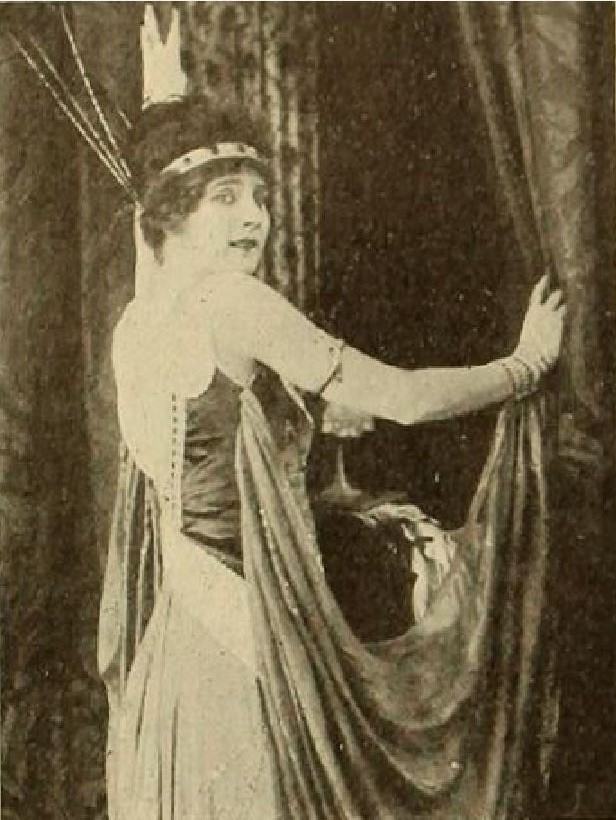
Barry Whitcomb’s Ben Hassan is a villain of calculated menace. His interactions with Louise are marked by a disturbing blend of charm and menace, a duality that makes his character unforgettable. The tension between him and Armand in the club’s dimly lit interiors is palpable, their verbal sparring underscored by James’ use of shadow and light to amplify the stakes.
James’ direction is steeped in visual metaphor. The cabaret’s neon-lit stage, with its garish colors, contrasts sharply with the muted tones of the La Tour family’s home, symbolizing the clash between artifice and authenticity. The use of deep focus in key scenes—such as Margery’s confrontation with Hassan—creates a sense of claustrophobia, as if the characters are trapped within the frame itself. These techniques, reminiscent of German Expressionism’s influence on early Hollywood, ground the film in a stylistic lineage that prioritizes mood over narrative expediency.
Notably, the film’s climax—a rescue operation orchestrated by the police after Armand’s confession—is staged with a stark realism that eschews the operatic flourishes of its predecessors. The final scenes, where Louise returns to her father and Margery marries her fiancé, are tinged with bittersweet resolution. There is no triumph here, only the weary acceptance of survival in a world that demands sacrifice.
When considered alongside contemporaries like *Liberty Hall* (1925) or *Black Friday* (1929), *His Daughter Pays* stands out for its unflinching examination of familial loyalty amid systemic corruption. Unlike the more overtly romantic *A Florida Enchantment* (1920), which leans into escapism, James’ film is grounded in the grit of everyday despair. Its themes of moral compromise also echo in *The Warrior* (1927), though *His Daughter Pays* diverges by centering female agency in its resolution.
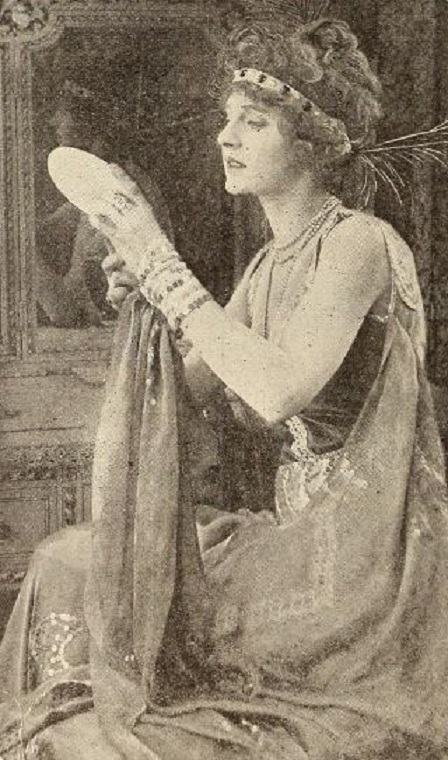
The film’s exploration of identity theft—Louise’s forced reinvention as a cabaret performer—parallels the plight of characters in *Gefangene Seele* (1921), where personal freedom is similarly eroded by external forces. Yet, where *Gefangene Seele* leans on psychological introspection, *His Daughter Pays* opts for a more linear, action-driven narrative, making it accessible to a broader audience despite its thematic heft.
Though largely forgotten in modern cinephile circles, *His Daughter Pays* remains a compelling artifact of interwar cinema. Its unapologetic focus on the intersection of personal ethics and societal decay resonates with late 20th-century neo-noirs like *Chinatown* (1974), though its silent medium grants it a unique emotional resonance. The film’s emphasis on the cyclical nature of debt and betrayal—Armand’s initial transgression, Louise’s entrapment, and Margery’s redemption—offers a timeless meditation on the costs of ambition.
For contemporary viewers, the film raises questions about the commodification of art and the exploitation of marginalized voices. Louise’s transformation from daughter to entertainer mirrors modern debates about the ethics of performance and consent, a discourse that remains urgent. Its historical context—shot during a period of economic uncertainty—adds another layer, positioning it as a mirror to the anxieties of its time.
*His Daughter Pays* is a film that rewards patience and attention. Its pacing is deliberate, its characters complex, and its themes as resonant today as they were nearly a century ago. Frederick H. James crafts a world where morality is fluid and survival is the only victory. While it may lack the technical innovation of later sound-era films, its emotional depth and narrative ambition secure its place as a hidden gem of silent cinema.
For those intrigued by the interplay of duty and desire, this film is a must-watch. And if you’ve enjoyed the likes of *Liberty Hall* or *Black Friday*, you may find echoes of similar struggles within *His Daughter Pays*’s shadowy corridors. Its legacy, though understated, is a testament to the enduring power of storytelling in the face of darkness.
IMDb 7.8
1932
Community
Log in to comment.