DbcultAccessing Vault...
5.6/10
Senior Film Conservator
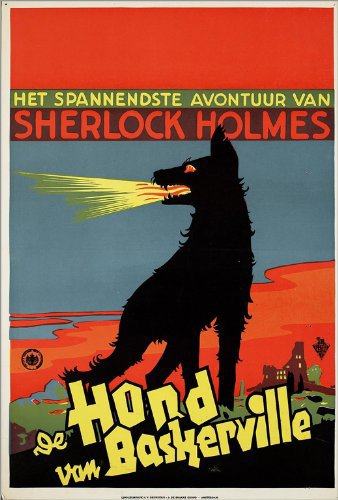
A definitive 5.6/10 rating for a film that redefined the boundaries of cult cinema. Der Hund von Baskerville remains a cornerstone of transgressive art.
Moor, Mirror, Mechanism: the triad that devours this film.
Richard Oswald’s Der Hund von Baskerville is less an adaptation than a séance gone feral: Conan Doyle’s prose exhaled through a nickelodeon fun-house, emerging as nitrate ectoplasm. The familiar Devonshire fog is here, yes, but electrified—each tendril twitching like a severed telegraph wire. And somewhere inside that humming murk you will find not one consulting detective but two, both wearing the same hawk-profile, both tipping identical walking-canes, both convinced the other is the final mask to be torn away.
Oswald and co-scenarist Julius Philipp perform narrative surgery with a butcher’s gusto: they excise Watson—amputate the audience’s moral compass—then cauterize the wound with a doppelgänger conceit that turns subtext into thunderclap. Without the good doctor’s incredulous gaze, the film forfeits cosy Victorian rationalism and hurtles head-first into German Expressionism’s fever dream. The result is a detective story that distrusts detection itself, where clues are booby-trapped signposts and every revelation spawns a deeper imposture.
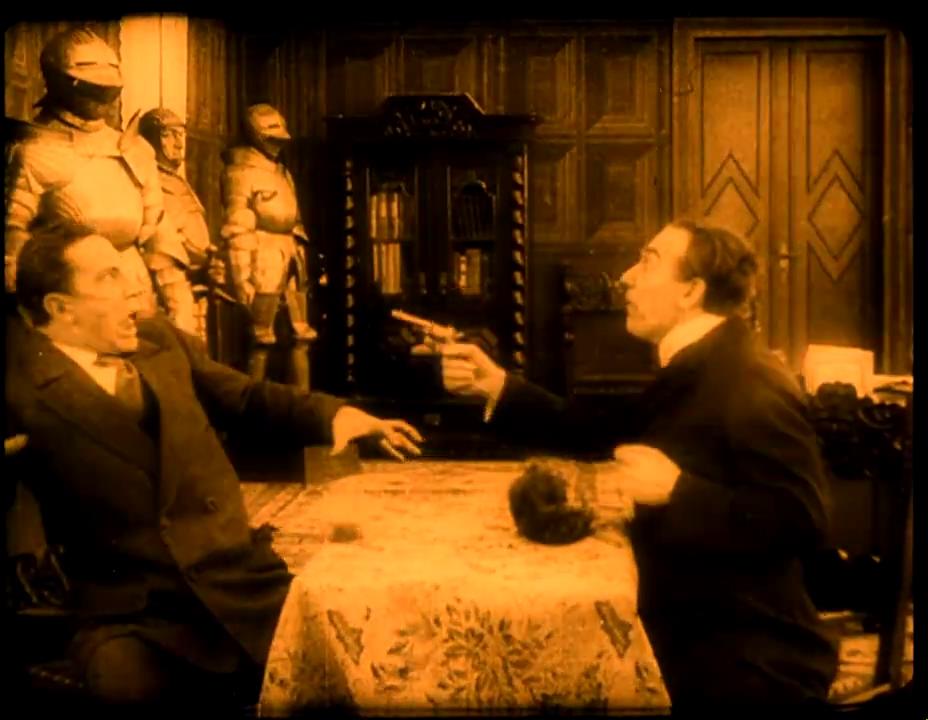
Alwin Neuß’s Stapleton is no mere entomologist with a grudge; he is a pulp Lucifer who rewrites reality in real time. By counterfeiting Holmes he vandalizes the concept of authorship—Conan Doyle becomes a ventriloquist dummy, Holmes a ventriloquist dummy of a dummy. When Stapleton dons the deerstalker, the silhouette we have been trained to trust becomes menace incarnate, and the entire detective genre wobbles on its axis. The performance is calibrated at the intersection of matinee idol and marionette: eyebrows arched like circumflexes of doom, smile a half-moon scythe.
Hanni Weisse’s Laura refuses the imperiled-ingénue template. She deciphers ciphered love-letters, brandishes pistols with élan, and, in one delirious tableau, waltzes across the banquet hall while an automaton hound jerks after her in mechanical lust. Her engagement to Lord Henry is less a romantic anchor than a red herring; the true electricity arcs between her and the twin Holmeses—a triangulation of intellect, skepticism and desire that makes the moor seem claustrophobic.
Friedrich Kühne plays the baronet like a man who suspects his own lineage is a misprint. Every rustle of ancestral portrait becomes a whispered accusation; every creak of armor in the corridor suggests the family tree is collapsing upward into its own roots. His feverish soliloquy inside the portrait gallery—faces of dead Baskervilles flickering in candlelight—ranks among silent cinema’s most exquisite hauntings, rivaling even The Bells for guilt-ridden delirium.
The titular beast is no phosphorescent specter but a wind-up contraption of brass ribs and rubber hide, loping across the moor with the gait of a broken metronome. Its innards whirr like sewing machines; its eyes are head-lamps that slice the night into cinematic frames. Thus the Gothic sublime becomes gadget-era kitsch, and the audience confronts a primal terror mechanized—modernity chewing on folklore and spitting out clockwork.
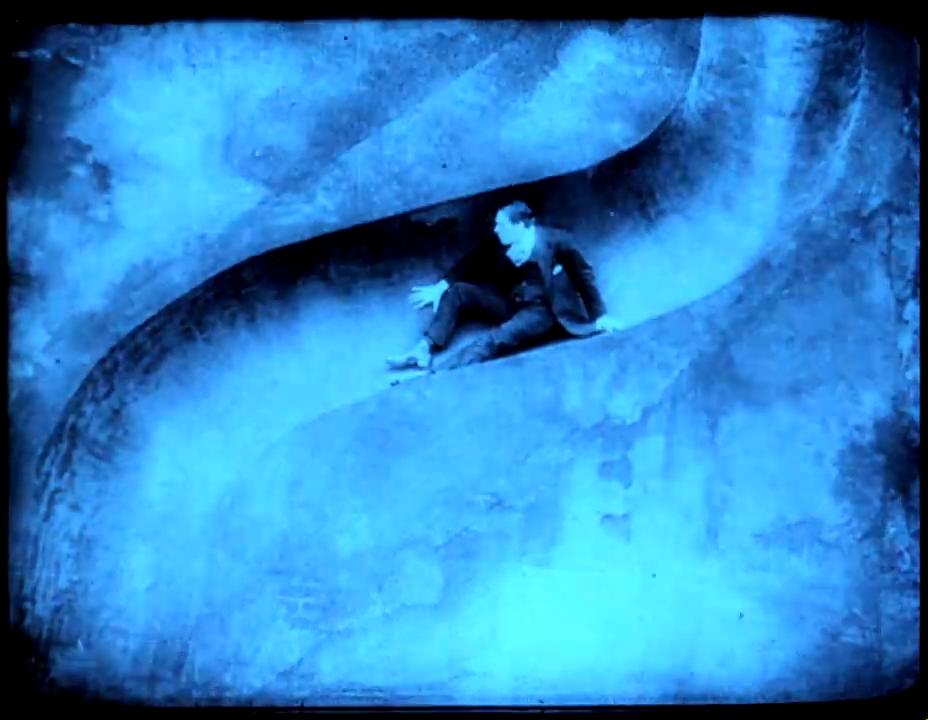
Oswald’s camera glides through sliding bookcases, spiral staircases corkscrewing into abysses, and trapdoors yawning like plot-holes. Explosive packets—little modish grenades—pop with comic timing, sending extras somersaulting into haystacks. The tonal whiplash is intentional: each detonation punctures the viewer’s growing complacency, reminding us that detection here is a carnival spook-house, not a drawing-room parlor game.
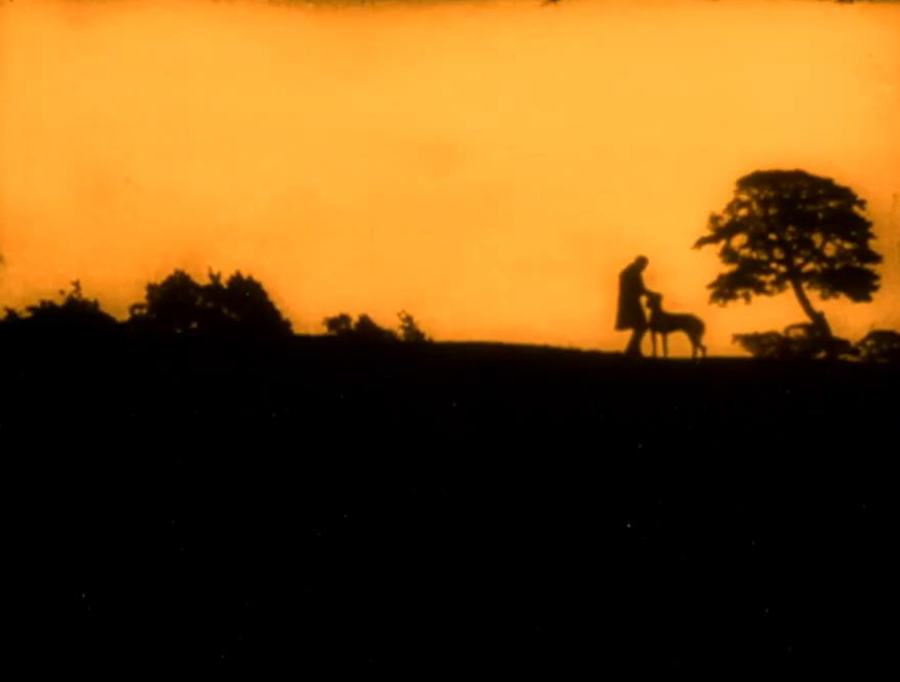
Cinematographer Max Fassbender paints chiaroscuro so thick you could slice it with a paperknife. Blacks swallow light; whites flare like magnesium. The moor at dusk resembles a charcoal sketch soaked in petrol, waiting for the merest spark of plot. Intertitles arrive sparingly, often in rhymed couplets that mock the very exposition they deliver: “Two minds, one mask—who cracks, who asks?”
No original score survives, but contemporary exhibitors reportedly accompanied screenings with Wagner snippets chopped into ragtime—an aural equivalent of the film’s identity slippage. Modern restorations favor atonal strings and distant gongs, evoking the same uncanny valley the narrative mines when a face you trust becomes the face of peril.
Released mere months before Europe immolated itself, the film’s obsession with doubling, forgery and civilized façades rotting from within feels prophetic. The German industry, still outside the later Weimar golden age, already sensed the tectonic cracks. In that light, Stapleton’s bomb-throwing anarchism is less villainy than a rehearsal for the coming mass detonation.
If you crave more continental fever, see The Student of Prague for doppelgänger romanticism, or Fantômas for pulp criminality that likewise weaponizes the cityscape. For Arthurian bombast filtered through Expressionism, revisit Der Andere. None, however, fuses detective fiction and identity panic quite this brazenly.
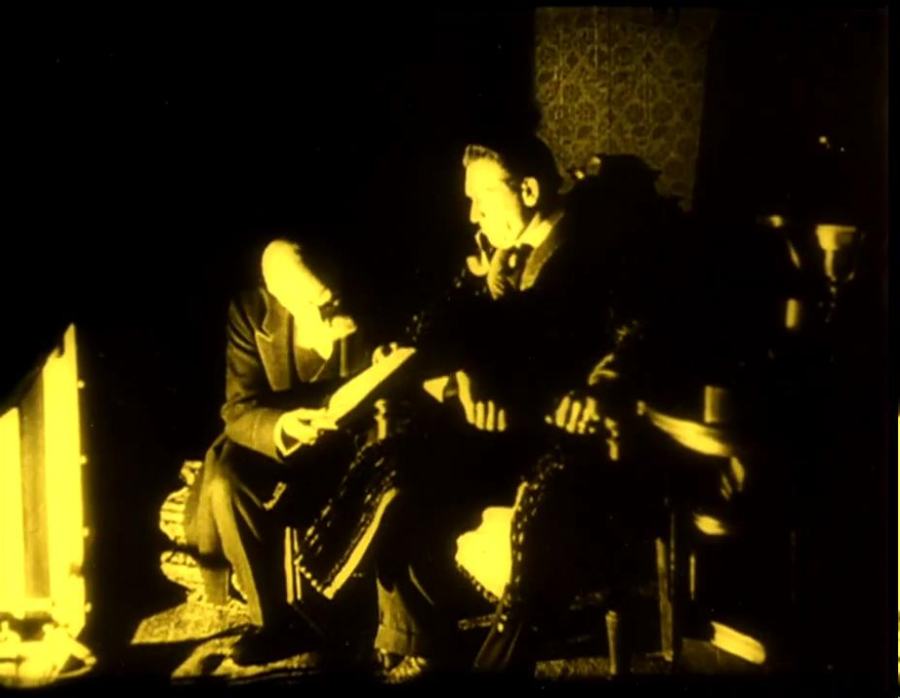
Alwin Neuß had already played Holmes in earlier German shorts; here he fractures the persona into mirrored shards. Erwin Fichtner, the “other” Holmes, moves with stiffer joints, as though assembled from garden wire—an apt foil. Weisse crackles—her eyes semaphore intelligence even when the intertitles consign her to distress. Andreas van Horn’s Lord Henry exudes pampered fragility; watch him wilt when confronted by his own portrait, a moment prefiguring both Wilde and Murnau.
Originally released in four chapters, the picture still feels breathless. Cliff-hangers arrive every fifteen minutes: a rope bridge sagging above a quarry, a lantern hurled into a powder keg, a love-letter revealed to be a death-warrant. Yet Oswald refuses mere pulp momentum; he inserts languid, almost hypnotic passages where fog coils around empty cloaks and the camera meditates on absence. The dialectic between frenzy and stillness is the film’s hidden engine.
Laura’s agency flares brightest when she commandeers the mechanical hound’s control lever, turning predator into puppet. For a 1914 audience, such technological mastery by a woman borders on sacrilege, and the film relishes the transgression. Marriage, the closing intertitle hints, may domesticate her—yet the final shot lingers on her sly sideways glance, implying the real marriage is between intellect and illusion, not man and wife.
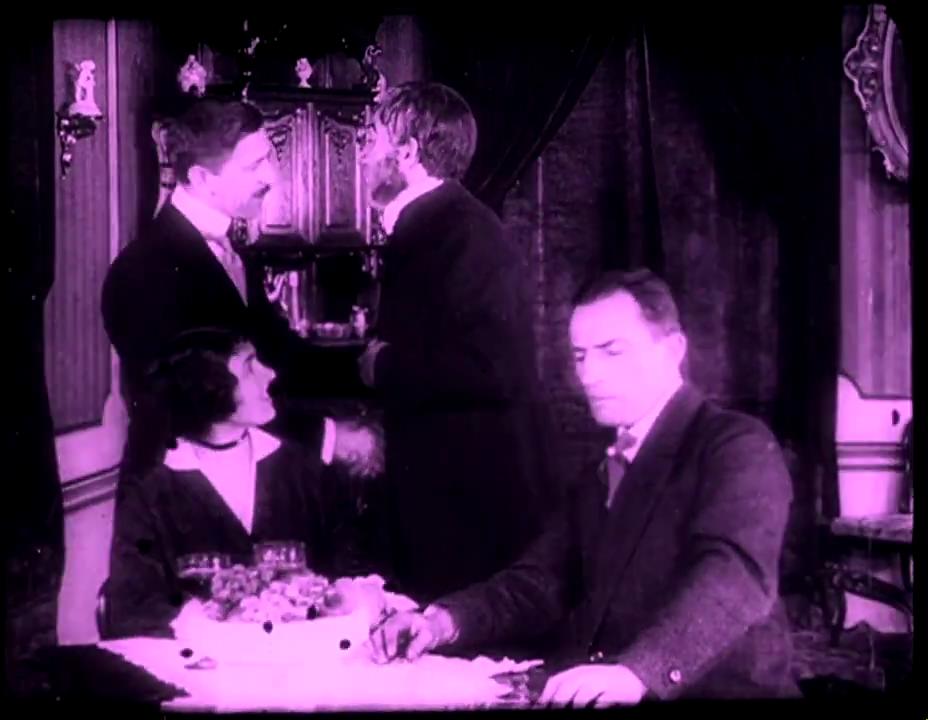
Conan Doyle purists dismissed the film as heresy; Expressionist scholars hail it as missing link between Caligari and Mabuse. Both camps are right. Oswald’s mutation prefigures the coming decade’s appetite for masked vigilantes, criminal masterminds and urban labyrinths. Every modern superhero split-personality trope owes it a sly nod; every prestige-TV Holmes owes it a debt for proving the detective can fracture into antagonist without losing narrative traction.
Only fragments survive in Bundesarchiv: roughly 42 minutes of the original 75. Yet what remains is so visually luxuriant, so narratively unhinged, that the gaps feel intentional—like a jigsaw designed to remain eternally incomplete. Digital reconstructions splice publicity stills, censored postcards, even Oswald’s own storyboard sketches, creating a living palimpsest that mirrors the film’s obsession with replication and loss.
I have screened this relic in a damp Berlin arthouse at midnight, flanked by students clutching dog-eared Doyle, and watched their certainties evaporate like magnesium flares. I have seen the mechanical hound’s shadow spill across the wall, and for a heartbeat it felt more alive than any biological cur. That is the sorcery of Der Hund von Baskerville: it turns detection inside-out until the viewer becomes the final doppelgänger—hunted by reflections, chased by meanings that dissolve into fog the instant you grasp them.
Final whisper: Approach expecting fidelity and you will leave rabid. Approach expecting phantasmagoria and you will leave baptized in nitrate fire.
IMDb 6.8
1930
Community
Log in to comment.