DbcultAccessing Vault...
6.3/10
Senior Film Conservator
A definitive 6.3/10 rating for a film that redefined the boundaries of cult cinema. The Woman of Mystery remains a cornerstone of transgressive art.
Step into the dimly lit annals of early cinema, and you'll occasionally stumble upon a forgotten gem that sparkles with an almost audacious prescience. Such is the case with The Woman of Mystery (the-woman-of-mystery), a film that, despite its age, unfurls a narrative so intricate and thematically rich it often feels ahead of its time. It's a fascinating blend of detective procedural, exotic thriller, and psychological drama, all wrapped in a package that dares to dabble in the supernatural before such concepts were commonplace on screen. This isn't merely a quaint historical artifact; it's a testament to the boundless imagination of its creators, particularly writer Alice Guy, who crafted a tale that challenges conventional notions of identity and agency with remarkable ambition.
The film commences with an unsettling act of terror: Norma, a dancer whose life seems to be one of ephemeral beauty and public adoration, becomes the unwitting target of a malevolent force. The delivery of a peculiar box, from which spring forth several poisonous snakes, is a chilling harbinger of the chaos to come. This initial scene immediately establishes a tone of sinister intrigue, casting a long shadow over the seemingly glamorous world of its protagonist. It's a stark, visceral opening, designed to shock and to propel the audience directly into the heart of the enigma. The choice of snakes, ancient symbols of both healing and treachery, adds a layer of primal fear that transcends mere mystery, hinting at something more profound and ancient at play.
Enter Nelson, the detective, a figure of stoic resolve and rational thought. He's called upon to untangle this serpentine puzzle, and his initial approach is one of meticulous observation. The peculiar trademark he discovers on the box becomes his first tangible clue, a thread leading him into an unexpected labyrinth. His investigation, initially grounded in the concrete world of evidence, soon veers into the esoteric. The discovery that the mark is linked to a Hindu curio shop, and subsequently to a mysterious Hindu woman, begins to blur the lines between the mundane and the mystical. This transition from a straightforward crime to one steeped in foreign customs and beliefs is a bold narrative choice, expanding the film's scope beyond a simple whodunit.
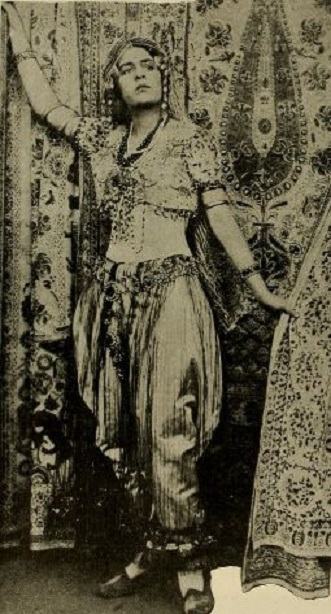
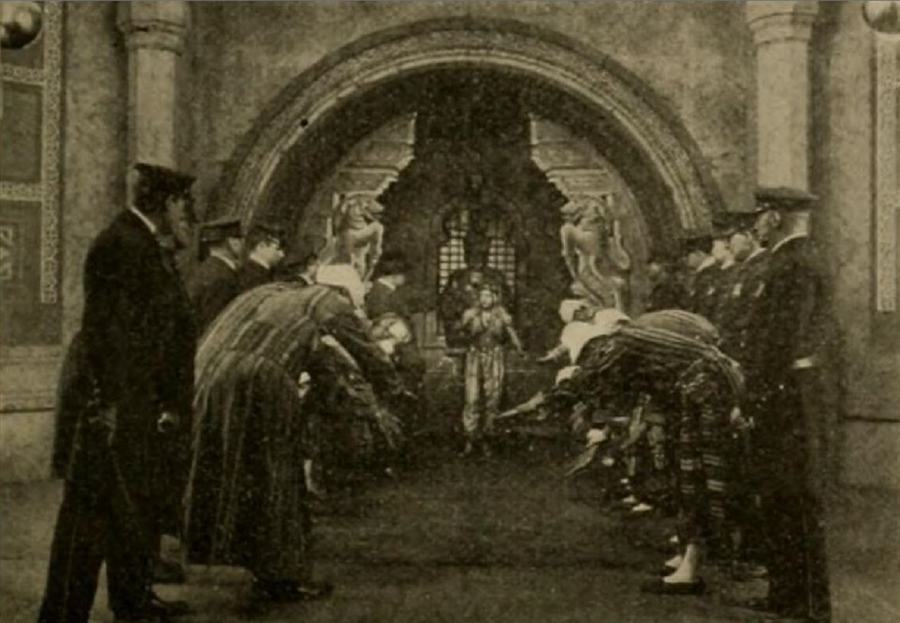
The revelation that the woman is, in fact, a Priestess of Buddhism marks a pivotal shift. Here, The Woman of Mystery fully embraces its spiritual and exotic elements. The Priestess, a character imbued with both beauty and menace, attempts to bewitch Nelson, first with her physical allure, then with a more insidious method: dropping a mind-altering powder into an incense burner. The ensuing fumes are meant to subdue him, to cloud his judgment and paralyze his will. This scene is a masterclass in building tension, showcasing the Priestess's cunning and the vulnerability of the rational mind against unseen forces. Nelson's desperate struggle to fight off the stupor, his frantic blowing of a police whistle, and the subsequent attack by three giant Hindu attendants underscore the very real danger he faces, culminating in a timely police rescue and the Priestess's arrest. This initial confrontation is a thrilling set-piece, establishing the Priestess not just as a criminal, but as a powerful, almost supernatural antagonist.
The drama, however, is far from over. In a stroke of narrative genius that elevates the film beyond a simple crime story, the Priestess, even from the confines of her prison cell, orchestrates a chilling act of psychic projection. Her soul, freed from its earthly form, appears before Nelson in his study, initiating a profound and terrifying transformation. His very nature is immediately altered, his face contorting into that of a hardened criminal. This concept of a dual personality, induced by mystic influence, is remarkably advanced for its era, foreshadowing later psychological thrillers and explorations of the fractured self. It's a bold leap into the realm of the fantastic, presenting a protagonist who is simultaneously hero and villain, victim and perpetrator.
Under this malevolent thrall, Nelson's moral compass is utterly inverted. He sheds his detective's garb for the rough suits of the underworld, infiltrating a den of crooks and aiding them in a bank robbery. The cruel irony is palpable: he uses his professional knowledge, entrusted to him to protect the very institution, to facilitate its downfall. Later, in a truly disorienting sequence, his original personality resurfaces, and he is called to investigate the very robbery he helped commit. Unaware of his own complicity, he diligently searches for clues, only to find his own scarf among the scattered papers from the safe. This internal conflict, though not consciously experienced by Nelson, provides immense dramatic tension, placing the audience in a uniquely privileged, yet unsettling, position. The film expertly plays with the audience's knowledge, creating a sense of dread as Nelson unknowingly closes in on himself. This narrative device finds echoes in later, more sophisticated noir films, where protagonists often grapple with their own compromised morality, though rarely through such overtly supernatural means.
Amidst this escalating madness, Norma, the dancer, emerges as a beacon of unwavering loyalty and strength. Her attraction to Nelson, initially sparked by his bravery, deepens into a fierce protectiveness. When she sees a threatening letter from the Priestess's followers, her concern for his safety overrides all else, leading her to accept his marriage proposal not out of romantic impulse, but out of a desperate desire to protect him. This portrayal of a female character as an active, courageous participant in the hero's salvation is refreshing and progressive for its time, moving beyond the typical damsel-in-distress trope. Norma is not merely a love interest; she is an essential, proactive force in the narrative.
The insidious influence of the Priestess continues to weave its destructive web. Nelson's aged mother, a figure of domestic normalcy, observes her son's increasingly erratic behavior, particularly his strange habit of leaving his own house through the window. This seemingly minor detail underscores the profound disruption to his life, a visual metaphor for his fractured psyche. The Priestess's spirit again possesses him, compelling him to aid the same criminal gang in robbing his own home. This act of self-violation, albeit involuntary, represents the nadir of his moral descent, a complete subjugation of his will. The juxtaposition of his mother's innocent bewilderment with the sinister reality of his actions creates a poignant tension.
When his true personality briefly reasserts itself, Nelson awakens in his office, disoriented and dressed in his old clothes, discovered by his worried mother. The realization that his home has been robbed is a crushing blow, yet he remains oblivious to his own role. He calls the chief of police, unwittingly sealing his fate with his criminal associates, who, upon seeing him, mistakenly believe he is an agent provocateur, betraying them. This misinterpretation of his actions, born from his dual existence, adds another layer of tragic irony to his predicament. The narrative masterfully manipulates perspective, allowing the audience to understand the full scope of Nelson's tragedy while he remains trapped in his own internal struggle.
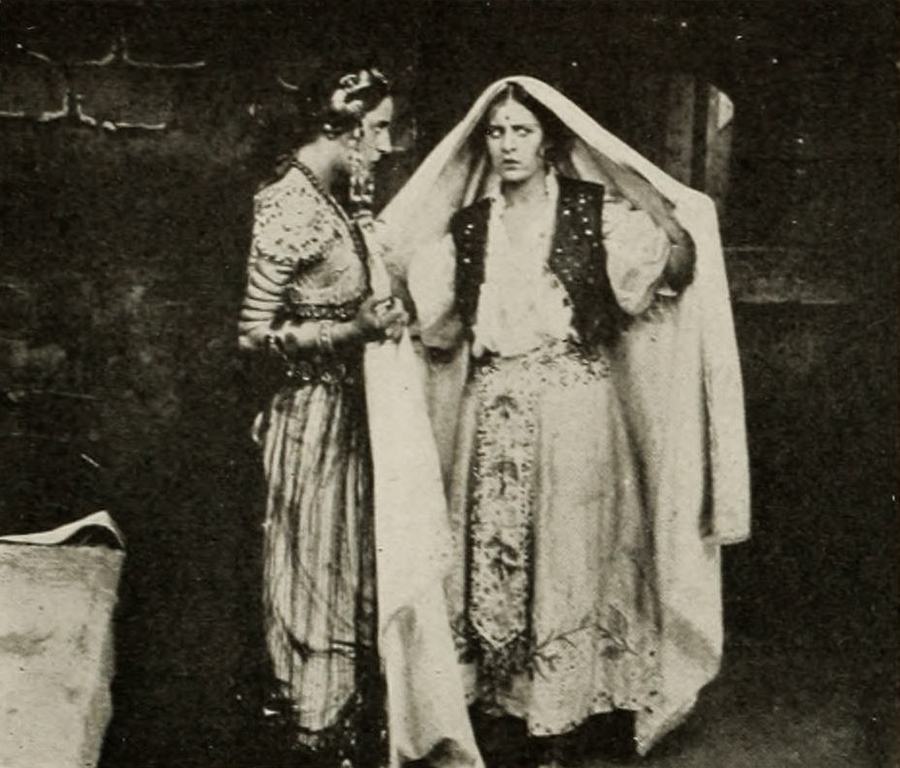
The situation grows dire when the Priestess's spirit again transforms him, and he returns to the thieves' den. Now, regarded as a spy, he is bound, gagged, and left in the care of an old hag, while the crooks celebrate his supposed capture. This moment of extreme vulnerability highlights the complete loss of his agency. However, Norma, ever watchful and resourceful, follows him to the den. Her courage shines through as she overpowers the old woman, a testament to her fierce determination, and helps Nelson escape. Her heroism here is undeniable, cementing her role as the true driving force behind his salvation. This sequence of pursuit and rescue injects a much-needed jolt of dynamic action, reminiscent of serials popular during this era, though with a deeper emotional core.
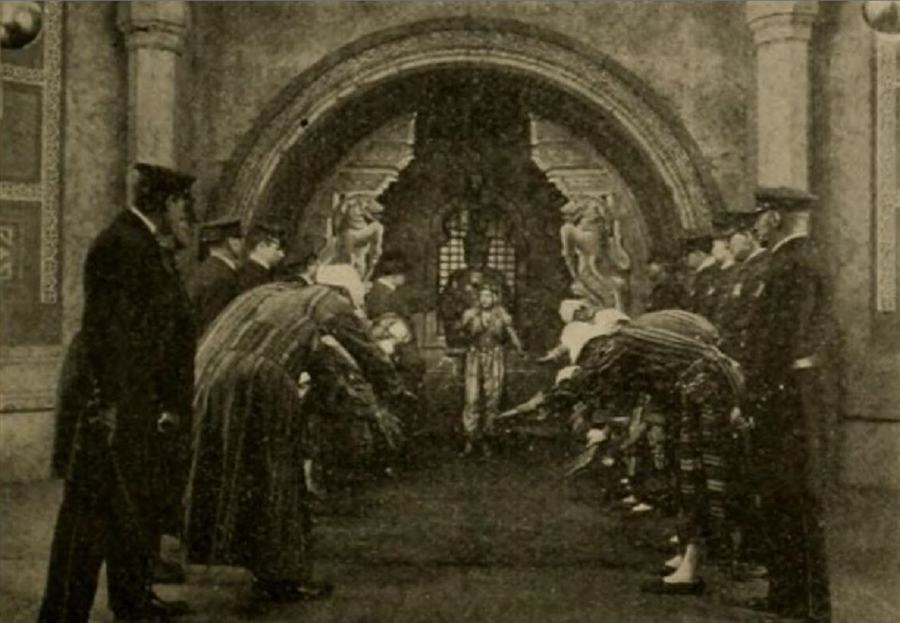
Meanwhile, the Priestess's followers succeed in freeing her from prison, whisking her away in an automobile. In a twisted twist of fate, Nelson, still under his criminal persona, encounters them and, believing them to be allies, asks for their assistance in escaping the pursuing crooks. This unwitting plea places both himself and Norma directly into the Priestess's power, as they are made prisoners in a temple of Buddha. The narrative deftly uses dramatic irony, as Nelson's attempt at self-preservation leads him directly into the lion's den. Norma faints from the shock, and when Nelson's true personality finally returns, he finds himself bound hand and foot in the exotic, yet menacing, temple.
Norma, quickly regaining consciousness, lucidly explains their perilous situation. Her presence of mind is remarkable. With an ingenious act, she utilizes the fire from an incense burner to burn the ropes binding Nelson's wrists, enabling him to free both himself and her. Their escape from the temple is a thrilling display of resourcefulness, using a heavy chain from a large oriental lamp to reach the roof and then a large tree to descend to the ground. This sequence, filled with physical action and quick thinking, provides a cathartic release after the psychological torment. It shows the power of human ingenuity against seemingly insurmountable odds, contrasting sharply with the earlier mystical subjugation.
The climax culminates with the arrival of the chief of police, summoned by Nelson's worried mother, who finally overtakes the crooks after a desperate struggle. Justice, in its more conventional form, is served. However, the Priestess, ever defiant, cheats the majesty of the law through a final, dramatic act: she uses a poisoned ring to take her own life during one of her wild, fanatical dances. Her death is not merely an end to her physical being, but a symbolic severing of her psychic influence over Nelson. With her final breath, the malevolent spell is broken, and Nelson is at last truly free to embrace his own identity and a future with Norma. The film concludes on a note of triumphant liberation, celebrating the enduring power of love and personal resilience against the darkest of influences.
The Woman of Mystery is a remarkable piece of early cinematic storytelling, showcasing an ambition that stretched the boundaries of its medium. Its exploration of dual identity and psychic influence predates many more famous psychological thrillers, offering a unique blend of Eastern mysticism and Western detective narrative. While some elements might now seem melodramatic or rooted in orientalist tropes common to the era, its sheer narrative audacity and the complexity of its plot are undeniable. The film challenges its audience to consider the fragility of the self and the enduring strength of human connection. It stands as a testament to the pioneering spirit of filmmakers like Alice Guy, who dared to weave such intricate and fantastical tales, demonstrating that even in cinema's nascent years, there was a profound desire to explore the deepest mysteries of the human condition. For those interested in the evolution of genre cinema, particularly the thriller and the psychological drama, this film offers invaluable insights into the foundational narratives that would come to define these forms. It's a journey into the uncanny, a dance between reason and the ethereal, and ultimately, a powerful affirmation of identity reclaimed. One might even draw parallels to the early explorations of grand narratives and complex character arcs seen in films such as The Student of Prague, which similarly delves into themes of the fragmented self, or the exotic allure and danger found in tales like Cleopatra, though with a distinctly mystical rather than historical focus. Its intricate plotting also brings to mind the layered mysteries of films like Fantômas: In the Shadow of the Guillotine, showcasing a similar commitment to weaving a complex web of intrigue and suspense. Ultimately, The Woman of Mystery remains a compelling, albeit often overlooked, artifact that continues to resonate with its audacious vision.

IMDb —
1917
Community
Log in to comment.