DbcultAccessing Vault...
Cult Review
Senior Film Conservator
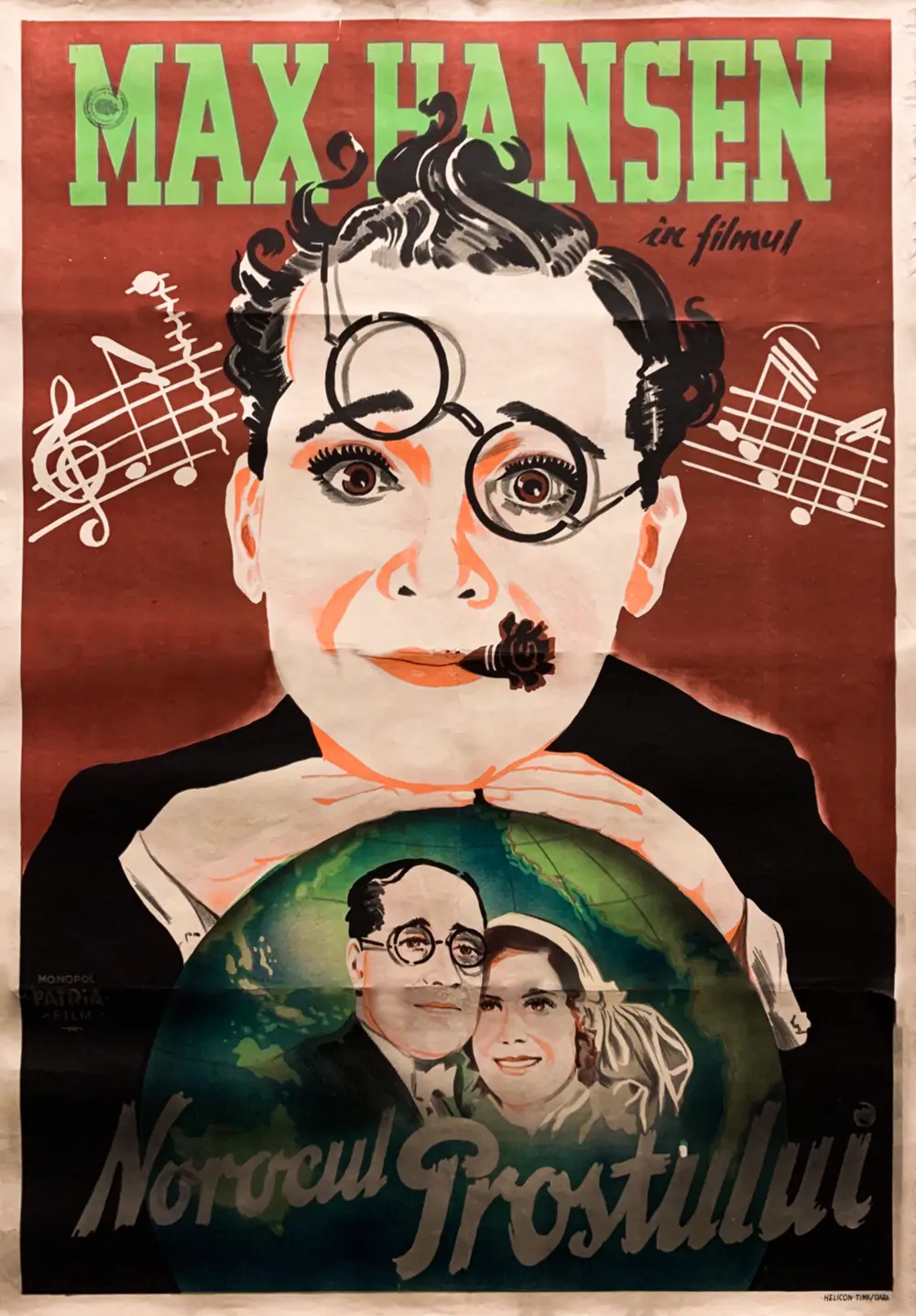
Is Der lachende Ehemann worth watching today? Short answer: only if you are a dedicated student of Weimar cinema or a completist of Hans Albers’ early filmography.
This film is specifically for those who enjoy the transition of stage operettas to the silent screen, but it is definitely not for viewers who require modern pacing or a logical narrative structure. It is a frantic, often exhausting exercise in physical comedy that relies heavily on the charisma of its ensemble cast rather than the strength of its script.
1) This film works because it captures the manic, desperate energy of 1920s German high society, using Max Hansen’s comedic timing to paper over the gaps in the silent format.
2) This film fails because it attempts to adapt a musical operetta without the benefit of sound, leaving the audience to imagine the melodies while watching actors over-gesticulate to compensate for the missing audio.
3) You should watch it if you want to see a young Hans Albers before he became the definitive icon of German cinema, or if you are interested in how silent directors handled complex, dialogue-heavy farces.
Adapting an operetta into a silent film is inherently a strange choice. Usually, the draw of Edmund Eysler’s work is the music. Without it, director Rudolf Walther-Fein is forced to rely on visual rhythm. In Der lachende Ehemann, this results in a pacing that feels like a runaway train. The characters don't just walk; they bounce. They don't just talk; they vibrate. It’s a style of acting that feels dated even when compared to more grounded 1926 releases like The Oath of Stephan Huller.
Take, for instance, the scene in the lawyer's office. The sheer volume of intertitles required to explain the legal misunderstandings should be a slog. However, Max Hansen’s performance turns it into a choreographed dance. He uses his entire body to express the frustration of a man caught in a bureaucratic nightmare. It’s effective, but it highlights the film's primary weakness: it is a story told through frantic movement because it cannot be told through song.
The cinematography by Rudolf Pfenninger is functional but lacks the expressionistic flair found in other German productions of the era. While films like The Chauffeur experimented with lighting to convey mood, this film stays firmly in the brightly lit, flat aesthetic of the stage. This isn't necessarily a failure of craft, but a choice to remain loyal to the theatrical roots of the source material. It makes the film feel like a filmed play, which is a common pitfall for early adaptations.
The real reason to revisit this film is the cast. Hans Albers, even in a supporting role, commands the screen with a confidence that borders on arrogance. You can see the seeds of his later stardom here. He has a way of leaning against a doorframe or lighting a cigarette that makes everyone else in the frame look like they are trying too hard. He is the cool counterpoint to the frenetic energy of Charlotte Ander.
Charlotte Ander herself is a whirlwind. Her portrayal of Hella is a masterclass in the 'flapper' archetype—independent, slightly mischievous, and perpetually bored with the stuffy traditions of her class. Her chemistry with Carl Auen is serviceable, but she truly shines when she is playing off the more eccentric members of the cast, like Paul Heidemann. The film thrives in these small, character-driven moments rather than its overarching plot.
Compared to the slapstick found in American imports of the same year, such as Behind the Front, the comedy here is more sophisticated and rooted in social satire. It’s not about people falling down; it’s about people falling out of social favor. It’s a subtle distinction, but one that makes the film uniquely European. The humor is found in the irony of the 'laughing husband' who is secretly miserable—a trope that would be explored with much more depth in later sound films.
For the casual viewer, the answer is no. The narrative is too thin to support its runtime without the original music to carry the emotional weight. However, for the historian, it is a fascinating document. It shows a cinema in transition, trying to figure out how to translate the most popular art form of the day—the operetta—into a visual language that was still evolving.
The film lacks the emotional resonance of something like A Boy of Flanders, but it makes up for it with sheer, unadulterated energy. It is a loud film that happens to be silent. If you can get past the initial jarring nature of the over-acting, there is a certain charm to its relentless cheerfulness. It is a relic of a time when Berlin was the center of the creative world, and even a 'minor' comedy like this was produced with a high level of technical competence.
Pros: Vibrant ensemble cast; high production values for the era; fascinating look at 1920s social mores; energetic pacing that never drags.
Cons: Narrative relies too heavily on intertitles; acting can be excessively theatrical; lack of musical accompaniment hurts the source material's intent.
The pacing of Der lachende Ehemann is its most controversial feature. In a modern context, it feels hyperactive. However, in 1926, this was likely seen as a 'modern' and 'kinetic' approach to storytelling. The editors were clearly trying to mimic the 2/4 and 3/4 time signatures of Eysler’s music. You can almost hear the waltz in the way the scenes are cut. This is a sophisticated level of editing that often goes unnoticed in silent comedies, which are usually dismissed as simple slapstick like Andy's Hat in the Ring.
The tone is equally slippery. It begins as a light farce but occasionally dips into a more cynical territory regarding the nature of fidelity and the performance of gender roles. Ottokar is not just a laughing husband; he is a man who has weaponized his good humor to avoid dealing with the reality of his crumbling marriage. It’s a dark subtext that the film doesn't quite have the courage to fully explore, but it’s there if you look for it. This underlying bitterness makes it more interesting than a standard romantic comedy.
Der lachende Ehemann is a fascinating failure. It fails as an adaptation because it loses the music, but it succeeds as a showcase for the incredible talent bubbling in the Berlin film scene of the mid-20s. It is a film of 'too much'—too much movement, too much smiling, too much plot. But in that excess, it captures the spirit of an era that was itself defined by 'too much' before the crash of the 1930s. It works. But it’s flawed. Watch it for the history, stay for Albers, but don't expect a masterpiece.
IMDb 4.1
1925
Community
Log in to comment.