DbcultAccessing Vault...
Cult Review
Senior Film Conservator
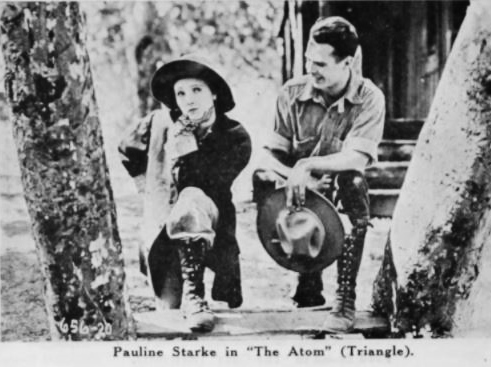
In the annals of silent cinema, few films capture the visceral intersection of physical degradation and spiritual ascension as effectively as The Atom (1918). Directed by the legendary Frank Borzage, who also graces the screen, this work serves as an early testament to his obsession with the transformative power of love amidst the squalor of the human condition. The film is less a traditional melodrama and more a psychological study of identity stripped of its aesthetic armor. We are introduced to Jennie, portrayed with a haunting, wide-eyed vulnerability by Pauline Starke, whose role as a 'slavey'—a term dripping with the class-based exhaustion of the era—positions her as the invisible foundation upon which the egos of actors rest.
The first act meticulously constructs the world of the theatrical boarding house, a space where artifice is the only currency. Montague Booth, played with a necessary arrogance by Harry Mestayer, represents the pinnacle of this world. To Jennie, he is not merely a man but a celestial body. However, Borzage quickly dismantles this hierarchy. The accident that disfigures Booth is handled with a restraint that heightens the psychological horror; we see not just the loss of a face, but the total annihilation of a self-concept. This thematic preoccupation with the 'mask' mirrors the social anxieties found in contemporary works like The Web of Desire, where the external appearance dictates one's moral and social standing.
When Booth attempts suicide, the intervention of Jennie is not framed as a grand romantic gesture, but as a desperate act of preservation. She is saving the 'atom' of his soul, the part that remains when the stage lights are extinguished. This sequence highlights Catherine Carr's sharp writing, which avoids the saccharine pitfalls of the period, opting instead for a gritty, almost nihilistic realization of Booth's despair.
The transition to the medicine show provides the film’s most fascinating cultural commentary. Here, the 'theater' is stripped of its prestige and reduced to a predatory commerce of cure-alls and cheap thrills. Booth, now a lecturer, is forced to use his voice—the only part of his instrument left untarnished—to sell illusions to the masses. The contrast between his former Shakespearean aspirations and this hucksterism is palpable. Borzage uses the road life to test Jennie’s endurance, illustrating that her devotion is not a passive trait but an active, exhausting labor. It is a thematic cousin to the rural struggles depicted in A föld embere, though transposed into the nomadic American landscape.
The visual language here shifts from the claustrophobic interiors of the city to the dusty, sprawling uncertainty of the trail. The cinematography captures the isolation of the pair, two outcasts clinging to a wagon that carries their entire world.
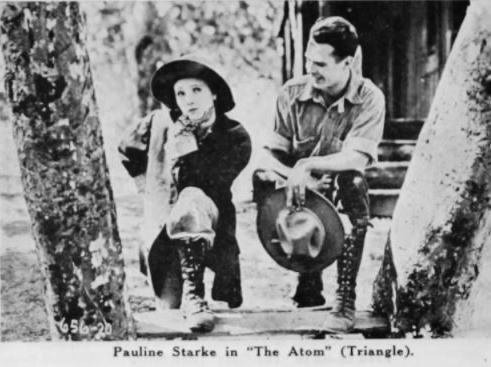
The final act’s shift to a homestead claim represents the quintessential American myth of reinvention. By retreating to the land, Booth and Jennie attempt to excise the theatrical poison from their veins. This 'return to the earth' is a recurring motif in silent-era narratives of redemption, yet Borzage imbues it with a specific domestic tension. The arrival of Belle Bennett’s character, the former flame sent to lure Booth back to the city, acts as the ultimate catalyst. Belle represents the siren call of the old world—the world of mirrors, applause, and superficiality. Her failure to break the bond between Booth and Jennie is not just a victory for the protagonists, but a rejection of the urban decadence that defined the film's opening.
Unlike the more cynical resolutions found in Sins of Great Cities, *The Atom* posits that the human spirit can indeed be rebuilt if the foundation is shifted from vanity to utility. The 'atom' of the title refers to Jennie herself—small, seemingly insignificant, yet possessing the concentrated energy required to hold a shattered man together. Starke’s performance in these final scenes is masterful, conveying a quiet strength that renders the flamboyant Belle entirely obsolete.
From a technical standpoint, the film benefits immensely from the collaborative synergy between Carr and Borzage. The pacing is deliberate, allowing the emotional beats to breathe in a way that many 1918 productions lacked. While it shares some DNA with the social dramas of the time, such as The Unwelcome Mother, it distinguishes itself through its focus on internal transformation rather than external scandal. The use of light and shadow during Booth's moments of contemplation foreshadows the Expressionist influences that would later dominate the decade, yet the film remains firmly rooted in a distinctively American naturalism.
In comparison to other films of the era like Fior di male, which deals with the inevitable tragedy of the fallen woman, *The Atom* offers a more hopeful, albeit hard-won, resolution. It suggests that while the scars of the past are permanent, they do not have to be defining. The film’s legacy lies in its refusal to look away from the 'disfigured' reality of life, finding beauty not in the absence of flaws, but in the resilience required to live with them.
Ultimately, The Atom is a vital piece of cinematic history that demands re-evaluation. It is a film that understands the theater of the mind is far more complex than the theater of the stage. For those seeking a narrative that explores the depths of loyalty and the harsh beauty of survival, this Borzage gem remains an essential watch. It stands as a precursor to the director’s later masterpieces, containing the raw, unpolished heart of his cinematic philosophy.
IMDb 6.9
1933
Community
Log in to comment.