DbcultAccessing Vault...
Cult Review
Senior Film Conservator
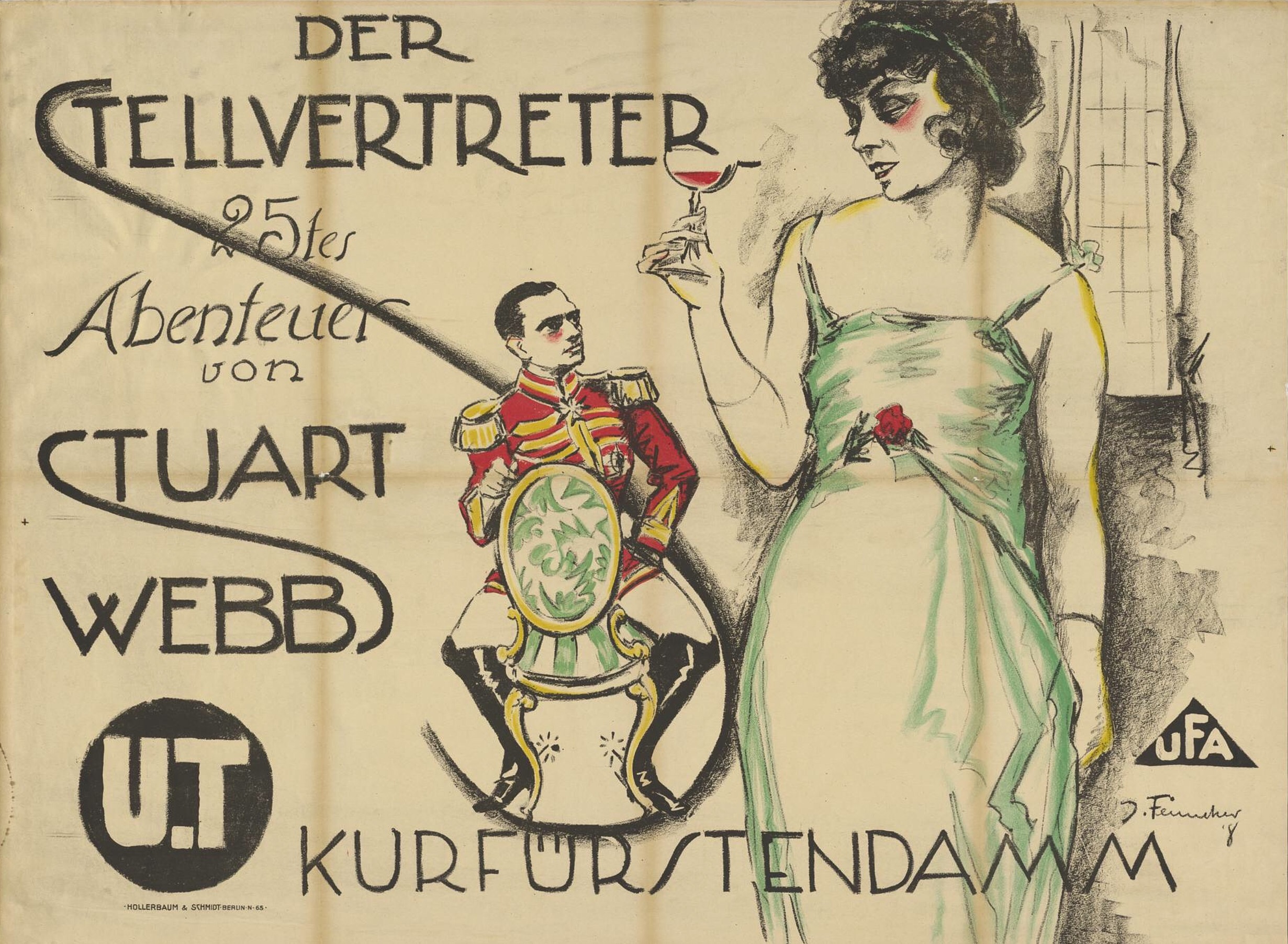
The silent era, a crucible of cinematic innovation, often excelled in crafting narratives that, stripped of dialogue, relied entirely on the compelling power of visual storytelling and the nuanced artistry of performance. Among these fascinating relics, "Der Stellvertreter" (The Stand-in), a German production from an indeterminate early period, emerges as a particularly intriguing specimen, offering a rich tapestry woven with threads of identity, deception, and the precariousness of social roles. It's a film that demands an audience’s full engagement, not merely for its plot mechanics but for the subtle psychological currents that flow beneath its surface. Here, the very essence of personhood becomes a malleable construct, a costume donned and shed with calculated precision, revealing a keen, almost philosophical, inquiry into what truly defines a ruler or, indeed, any individual within the rigid hierarchies of society.
At its core, "Der Stellvertreter" pivots on a premise that is both audacious and timeless: the substitution of a prominent figure by an uncanny double. Prince Damilo of Cardania, a man whose reputation is evidently as sprawling as his romantic entanglements, finds himself at a critical juncture. The call of his homeland, a realm meticulously shielded and perpetually under surveillance, beckons him to assume the regency. Yet, his return cannot be a straightforward affair; it must be cloaked in secrecy, a silent maneuver to bypass unseen obstacles or perhaps, simply, to indulge his own wanderlust unencumbered by the weight of royal scrutiny. This need for clandestine travel precipitates the film's central conceit: the hiring of Stuart Webbs, a detective of apparent renown, to impersonate Damilo. This isn't merely a plot device; it's a profound exploration of performativity, demanding that Webbs not only look the part but inhabit the very aura of royalty, a task made infinitely more complex by the prince's own ambiguous character.
The narrative, rather than simply recounting events, delves into the sheer psychological strain and logistical complexities inherent in such an elaborate deception. Webbs, as the titular "stand-in," is immediately thrust into a whirlwind of princely duties and social obligations, each interaction a potential pitfall. The film masterfully portrays his struggle to maintain the illusion, a constant, silent battle against the myriad individuals eager to flock around the supposed prince. This includes not just the expected courtiers and supplicants, but also the unexpected complication of a fellow detective, Sanftlieb, whose presence introduces an element of professional scrutiny that could unravel the entire charade. The tension is palpable, a silent thrum beneath every gesture, every guarded glance. How does one feign intimate knowledge of a life never lived, respond with princely gravitas to unfamiliar faces, or parry the probing inquiries of a peer? These are the questions the film poses, not through dialogue, but through the expressive power of its actors and the strategic framing of its scenes. The concept of a stand-in, a proxy taking the place of another, resonates with the thematic undercurrents found in films like A Wife by Proxy, where identity is fluid and assumed for strategic gain, or even the more dramatic shifts in fortune seen in A Modern Monte Cristo, though "Der Stellvertreter" maintains a more grounded, albeit theatrical, approach to its central deceit.
The genius of the plot lies in its relentless pressure on Webbs. He is not merely a passive recipient of instructions but an active participant in a high-stakes performance, constantly adapting, improvising, and employing his detective's acumen to navigate the treacherous waters of royal impersonation. The envoy Cartagi emerges as a crucial ally, a silent orchestrator working behind the scenes to lend credibility to Webbs's portrayal, to smooth over potential missteps, and to ensure the princely facade remains impervious. Cartagi's role highlights the collaborative nature of grand deceptions, underscoring that even the most brilliant individual performance requires a network of support to succeed. Without this carefully constructed scaffolding, Webbs's charade would undoubtedly crumble under the weight of its own ambition. The film thus becomes a study in controlled chaos, a delicate balance between exposure and sustained illusion, all unfolding against the backdrop of a society seemingly eager to believe in the spectacle of its royalty, regardless of who is truly wearing the crown.
Ernst Reicher, embodying Stuart Webbs, delivers a performance that is nothing short of captivating, a testament to the power of silent acting. His portrayal transcends mere mimicry; he imbues Webbs with a palpable sense of internal struggle, a constant tension between the detective's analytical mind and the prince's expected demeanor. Reicher's physical presence is commanding, yet he injects subtle nuances that betray the impostor beneath the regal robes. A flicker in the eyes, a momentary hesitation in a gesture, a carefully calibrated smile – these are the tools of his trade, expertly wielded to convey the precariousness of his position. He manages to project both authority and a hidden vulnerability, making the audience complicit in his deception, rooting for his success against seemingly insurmountable odds. This kind of nuanced, multi-layered characterization, where an actor must portray a character playing another character, is a rare feat in any era, and Reicher executes it with remarkable finesse. One might draw parallels to the intricate psychological performances required in films centered on double lives or secret identities, perhaps even to the quiet intensity seen in some of the more dramatic turns in films like The Innocent Lie, where hidden truths drive the narrative.
Loo Hardy, though perhaps in a less central role, contributes to the film's texture, her presence adding another layer to the social fabric Webbs must navigate. Her interactions, however brief, serve to further complicate the detective's task, reminding us of the human element in this grand charade. The supporting cast, through their reactions and conventional portrayals of courtiers and hangers-on, effectively amplify Webbs's challenge, creating a believable world against which his extraordinary deception unfolds. The film doesn't rely on broad comedic strokes or overt melodrama; instead, it finds its drama in the quiet, internal struggle of its protagonist and the constant threat of exposure. This focus on psychological realism, even within a fantastical premise, elevates "Der Stellvertreter" beyond a simple adventure tale, positioning it as a more sophisticated piece of early cinema. The film effectively uses the limitations of the silent medium to its advantage, forcing a reliance on visual cues and expressive acting that, in turn, deepens the audience's connection to Webbs's predicament.
Visually, "Der Stellvertreter" is a compelling example of early German cinema's aesthetic sensibilities. While specific details of its cinematography might be lost to time or limited by available prints, the film's success in conveying its intricate plot without spoken words speaks volumes about its visual direction. The use of sets and costumes, though perhaps not as lavish as later Weimar-era productions, would have been crucial in establishing the royal milieu and differentiating Webbs's dual identity. Lighting, a powerful tool in silent film, would have been employed to heighten suspense, to cast shadows that mirror the deception, and to illuminate the moments of tension and relief. The film's pacing, critical for maintaining audience engagement in the absence of dialogue, must have been carefully modulated, building gradually towards climaxes of near-exposure and the eventual triumph of the ruse. This visual storytelling, where every gesture, every prop, and every camera angle contributes to the narrative, is a hallmark of the era and is executed here with a clear understanding of its potential. One can imagine the subtle interplay of light and shadow emphasizing Webbs's isolation even amidst a crowd, or highlighting the calculating gaze of Cartagi as he orchestrates the deception.
The directorial choices, though uncredited in the provided information, would have played a pivotal role in shaping the film's atmosphere and ensuring its narrative clarity. The ability to convey complex motivations and emotional states through purely visual means requires a director with a keen eye for detail and an understanding of human psychology. The film avoids the pitfalls of over-explanation, relying instead on the intelligence of its audience to piece together the implications of each scene. This trust in the viewer is a defining characteristic of effective silent cinema, distinguishing it from later, more didactic forms. The visual language of "Der Stellvertreter" likely emphasizes the contrast between the opulent, public face of royalty and the clandestine, often tense, reality of Webbs's undercover operation. This dichotomy is a rich vein for cinematic exploration, allowing for dramatic irony and a heightened sense of suspense. The meticulous attention to detail in creating the illusion of royalty, juxtaposed with the constant threat of discovery, makes for a truly engaging viewing experience.
Situating "Der Stellvertreter" within the broader context of early German cinema reveals its alignment with, and perhaps subtle divergence from, contemporary trends. The era was ripe with detective stories, reflecting a burgeoning public fascination with crime, mystery, and the intellectual prowess of the sleuth. Stuart Webbs, as a character, was part of a popular tradition of cinematic detectives, much like other intrepid figures of the screen. However, this film elevates the detective narrative by placing its protagonist in an utterly unique predicament, forcing him to become the very thing he usually unmasks – an illusion. This meta-narrative layer adds considerable depth, distinguishing it from more straightforward crime thrillers. The film's exploration of identity, particularly the malleability of public perception, finds echoes in later German Expressionist works that delved into fragmented selves and subjective realities, though "Der Stellvertreter" approaches these themes with a lighter, more adventurous touch. It’s a fascinating precursor to the more psychological dramas that would define the Weimar Republic's cinematic output.
While it might not share the overt melodramatic sensibilities of films like Love and Hate or the social commentary of a film like The Reclamation, "Der Stellvertreter" carves its own niche through its clever premise and execution. It’s less about grand passions or societal injustices and more about the intricate dance of human perception and the art of performance. The film's enduring appeal, for those fortunate enough to encounter it, lies in its capacity to transport the viewer to a world where appearances are everything, and the true self is a carefully guarded secret. It stands as a testament to the ingenuity of early filmmakers who, despite technological limitations, managed to craft narratives of surprising sophistication and psychological insight. Its narrative of a commoner temporarily assuming the mantle of royalty, and the challenges that ensue, shares a thematic thread with the classic "Prince and the Pauper" trope, albeit filtered through the lens of early 20th-century espionage and social drama.
Ultimately, "Der Stellvertreter" is more than just an early detective film; it’s a nuanced exploration of what it means to perform a role, whether on a stage or in the grand theater of life. Prince Damilo seeks a temporary escape from his identity, while Stuart Webbs must fully embrace an identity that is not his own. This duality, this constant shifting of masks, makes the film particularly compelling. It invites us to consider the facades we all present, the roles we play in various contexts, and the thin line that often separates the authentic self from the carefully constructed persona. The film doesn't offer easy answers but rather revels in the complexity of its central conceit, proving that a narrative, even without spoken words, can delve into profound psychological territory. Its success in sustaining the illusion, not just within the narrative but for the audience, is a remarkable achievement.
In an era when cinema was still finding its voice, "Der Stellvertreter" stands as a vibrant example of its early expressive power. It reminds us that the fundamental elements of compelling storytelling – suspense, character development, and thematic depth – were present from the very beginning. For enthusiasts of silent film, or anyone with an interest in the evolution of narrative cinema, this film offers a richly rewarding experience, a window into a past where the absence of sound only amplified the visual and emotional impact. It is a subtle masterpiece of deception, a testament to the enduring allure of a well-crafted mystery, and a celebration of the human capacity for both elaborate charades and astute observation. The film, despite its age, feels remarkably current in its exploration of identity and perception, themes that continue to resonate deeply in our increasingly performance-driven world. Its quiet brilliance ensures its place as a noteworthy entry in the annals of early cinematic history, a film that, like its protagonist, performs its role with understated elegance and profound impact.
IMDb —
1929
Community
Log in to comment.