DbcultAccessing Vault...
6.6/10
Senior Film Conservator
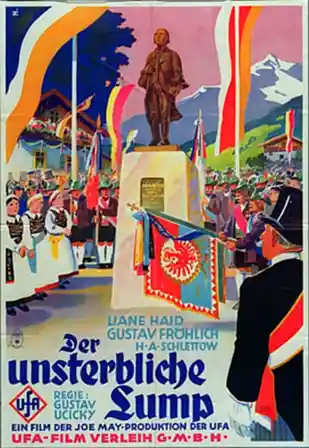
A definitive 6.6/10 rating for a film that redefined the boundaries of cult cinema. Der unsterbliche Lump remains a cornerstone of transgressive art.
Alright, so you’ve got a Sunday afternoon, maybe it’s raining, and you’re scrolling for something a little… different. Der unsterbliche Lump might just be that peculiar find. It’s not for the action junkies, definitely not for folks who need everything spelled out. But if you appreciate a certain kind of quiet, wistful storytelling from a bygone era, especially German cinema, you might actually enjoy this. Anyone looking for a fast pace or modern sensibilities, though? You’ll probably be checking your watch.
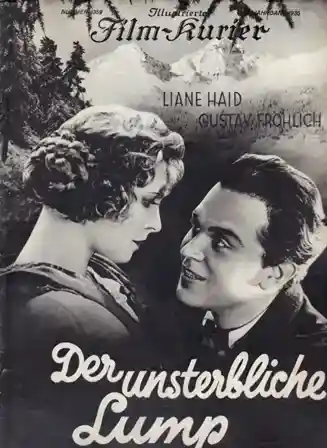
The whole thing starts off in this pretty Tyrol village. Our guy, a schoolteacher, is head over heels for the postman’s daughter. You can see it in his eyes, a real pure sort of love. Her dad, though, he’s got other ideas. Wants her to marry a farmer, someone ‘stable’. It’s an old story, right? Family pressure messing up young love. I guess some things never change. 🤷♀️
It’s *that* rejection that pushes him to Vienna, to become something. An opera composer. And he actually does it! His opera gets picked up, it’s a big deal. You’d think this would be the happy ending, wouldn’t you? The moment he finally gets everything he ever wanted. But it’s not. There’s a scene, I think it’s after the premiere, where he’s just… standing there. Amidst all the applause and congratulations, he just looks so incredibly hollow. It’s a really subtle shot, but it tells you everything you need to know about what’s going on inside him. The world just feels a bit too loud for him then.
And that’s when he becomes the ‘Lump’ – the hobo, the tramp. It’s a drastic shift, but it feels earned, somehow. He’s not running *from* something, exactly, but running *to* a kind of freedom, or maybe just a quiet where the expectations aren't so crushing. The shots of him wandering, sometimes with just a few belongings, they’re really evocative. You can almost feel the dust on his coat.
There’s a small detail, I can’t quite shake it. A moment where he’s eating something simple, just bread, by a river. And he smiles. A real, genuine smile. It’s so different from the forced polite smiles he had in Vienna. It makes you wonder, you know? What does true happiness look like for us?
The pacing, it’s definitely of its time. It takes its sweet time getting where it needs to go. Sometimes you just wish they’d get on with it, especially in the early scenes with the family arguments. But then, the quiet moments hit harder because of it. It’s a slow burn, but there’s a payoff in the mood it creates.
Rudolf Meinhard-Jünger as the teacher, he carries a lot of the film on his shoulders. His journey from wide-eyed romantic to disillusioned artist, and then to this peaceful wanderer, is quite something. You really feel for the guy, even when you want to shake him and say, 'Just talk to her!'
Compared to something more straightforward, like The Sheriff, where everything is just *boom, action, plot point*, this movie really just sits with its feelings. It’s almost a character study, disguised as a simple story. The way the seasons change in the background as he wanders, it’s not flashy CGI, just simple, effective filmmaking for the period.
Is it a perfect film? Nah. Some of the dramatic turns feel a little… well, *dramatic* for modern tastes. And the idea of an 'immortal hobo' title, it feels a bit grander than the actual journey. But there’s an honesty to it, a melancholic beauty in his eventual peace. It’s a film that leaves you thinking about life’s choices, and whether the path we *think* we want is actually the one that brings us contentment. Worth a watch, if you’re in the right mood and have some patience. It’s a little gem that asks some big questions without shouting them.
IMDb 4.7
1932
Community
Log in to comment.