DbcultAccessing Vault...
Cult Review
Senior Film Conservator
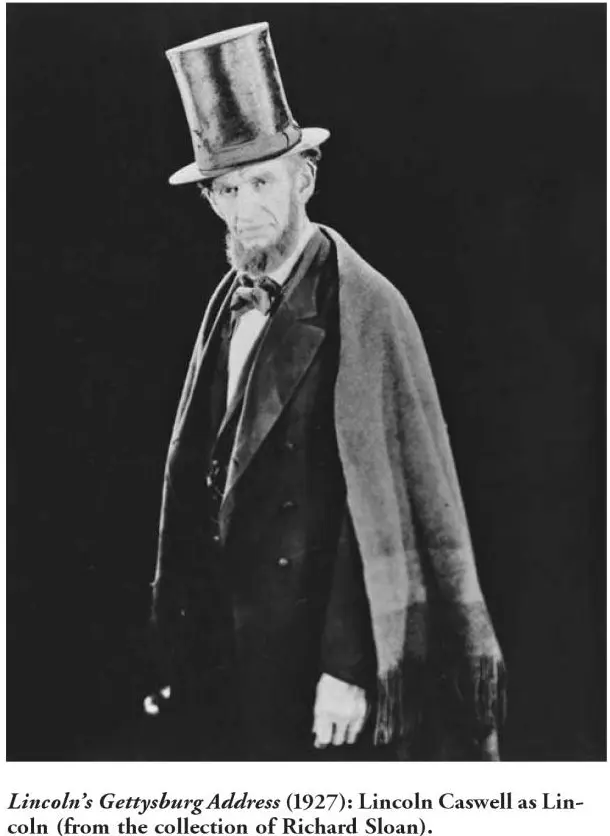
Is 'Lincoln's Gettysburg Address' worth watching today? Short answer: Yes, but with significant caveats that speak more to historical curiosity and academic interest than traditional cinematic entertainment.
This film is an absolute must for historians, film studies scholars, and anyone fascinated by the very nascent stages of filmmaking and political performance, but it offers little for casual viewers seeking traditional narrative or dramatic engagement. It exists as a time capsule, a fleeting glimpse into a past era of media and public address.
To truly appreciate 'Lincoln's Gettysburg Address', one must recalibrate expectations, shedding the modern lens of narrative complexity and high production value. This isn't a story in the conventional sense; it’s a captured moment, a visual record of a performance.
This film works because it provides an unparalleled, if rudimentary, glimpse into how historical figures were brought to life on screen in the silent era, capturing a performance that aims for gravitas through sheer impersonation. It’s an invaluable historical artifact.
This film fails because its technical limitations and singular focus on a monologue, devoid of context or character development, render it an archival piece rather than a compelling watch for modern audiences. Its simplicity, while authentic to its time, makes it a challenging viewing experience.
You should watch it if you are deeply invested in the evolution of cinema, American history, or the art of historical re-enactment, particularly the early forms of celebrity impersonation. It’s a foundational text for understanding media's relationship with history.
'Lincoln's Gettysburg Address' is, first and foremost, a showcase for Lincoln Caswell, an actor whose primary claim to fame was his uncanny physical resemblance to Abraham Lincoln. In an era before sophisticated makeup or digital effects, an actor's natural likeness was a powerful tool, often the sole reason for their casting in historical roles. Caswell embodies this perfectly, providing a living, breathing tableau of the 16th President.
His performance isn't 'acting' in the dramatic sense we understand it today. There's no character arc, no emotional journey to portray beyond the inherent solemnity of the speech itself. Instead, Caswell delivers a masterclass in impersonation, relying on his physical attributes, his posture, and perhaps a practiced oratorical style to evoke the spirit of Lincoln.
The film’s entire runtime is dedicated to this singular performance. We see Caswell, presumably in period attire, standing before a static camera, delivering the iconic words. His gestures are likely minimal, deliberate, designed to convey gravitas and sincerity in the absence of spoken dialogue. This required a profound understanding of silent communication, where every subtle movement was amplified.
It’s fascinating to consider how audiences of the time would have perceived this. Was it a novelty? A respectful historical recreation? A precursor to the documentary? It certainly stands in stark contrast to the burgeoning narrative films of the era, such as The Eternal Grind or The Shuttle, which were already exploring more complex storytelling structures. 'Lincoln's Gettysburg Address' opts for direct presentation over dramatic interpretation.
Caswell's presence is the film’s central pillar. His ability to conjure Lincoln through sheer physical resemblance is the 'special effect' of its day. The power of the film lies in the audience's willingness to suspend disbelief, to see not just an actor, but a fleeting echo of a historical giant. This isn't a nuanced portrayal; it's an iconic tableau brought to life, if only for a few silent minutes.
With no credited director or writer, 'Lincoln's Gettysburg Address' raises intriguing questions about intent and authorship. Was this a deliberate artistic endeavor, or simply a pragmatic effort to capture a popular impersonation of a historical figure for public consumption? The evidence leans heavily towards the latter.
The 'filming' of this piece feels more like a direct transcription than a directorial vision. The camera is static, likely placed at a respectful distance, framing Caswell from the waist up or in a full shot, allowing his presence to dominate. There are no dramatic cuts, no shifts in perspective, no innovative camera angles to enhance the speech's emotional impact.
This minimalist approach suggests a focus on documentation. The goal wasn't to interpret the Gettysburg Address through cinematic language, but to present it as faithfully as possible, given the technology. The 'director,' if one could call them that, was primarily a recorder, an archivist of a performance.
Compare this to even slightly more sophisticated early films like Angel Child or The Sawdust Doll, which, despite their simplicity, displayed rudimentary attempts at scene composition, editing, and dramatic staging. 'Lincoln's Gettysburg Address' eschews these entirely, opting for a purity of presentation that is both its strength and its limitation.
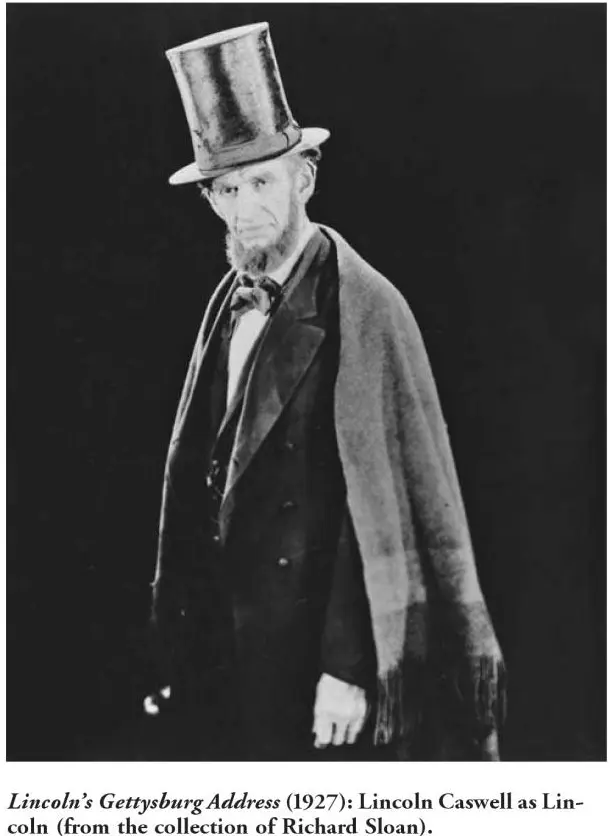
One could argue that the absence of overt directorial interference allows the weight of Lincoln's words, and Caswell's physical embodiment, to speak for themselves. This decision, whether conscious or simply pragmatic, creates a sense of directness, an unmediated encounter with a historical echo. It's a raw, unfiltered piece of early media, more akin to a filmed lecture than a dramatic narrative.
The visual language of 'Lincoln's Gettysburg Address' is one of stark simplicity, dictated by the technological constraints of its era. Shot in black and white, likely on grainy film stock, the image quality would have been far from pristine. This rawness, however, lends an authentic, almost ghostly quality to the proceedings, emphasizing its status as a historical artifact.
The cinematography is defined by its static nature. The camera remains fixed, capturing Caswell in a single, sustained take. This lack of movement or varied perspective places the entire burden of engagement on the performer. There are no close-ups to emphasize a key emotional beat, no tracking shots to follow a dramatic movement. It’s a single-point perspective, forcing the viewer into a role of passive observer, much like an audience member in a theater's balcony.
The challenge of conveying an oratorical masterpiece without sound is immense. The Gettysburg Address is renowned for its rhythm, its cadence, its powerful pauses and climactic pronouncements. In a silent film, these auditory elements are entirely absent. Caswell had to rely solely on his facial expressions, his body language, and the imagined power of the words to convey their weight.
How does one 'speak' a phrase like 'four score and seven years ago' silently? Caswell's delivery would have been a carefully choreographed dance of gestures and expressions, timed to the internal rhythm of the speech. His solemn demeanor, perhaps a slight furrow of the brow, or a deliberate hand movement, would have been the only indicators of the profound meaning he was attempting to convey.
This silent interpretation is a fascinating study in non-verbal communication. It asks the audience to fill in the gaps, to bring their own knowledge of the speech and its historical context to the viewing experience. The film becomes a canvas upon which the viewer projects the missing sonic dimension, making it an unusually interactive, albeit passive, encounter. It's an argument that the visual medium, even in its infancy, could evoke profound ideas through sheer presence.
The pacing of 'Lincoln's Gettysburg Address' is, by modern standards, glacially slow. It unfolds at the natural rhythm of a public address, unhurried and deliberate. There are no quick cuts, no montages, no shifts in scene to break up the monologue. For contemporary audiences accustomed to rapid-fire editing and constant visual stimulation, this pace can feel challenging, even tedious.
The tone is undeniably reverent, educational, and deeply historical. There's an inherent solemnity to the subject matter and Caswell's portrayal. It feels less like a piece of entertainment and more like an archival document, a preserved moment intended to inform and commemorate. This gravitas, while appropriate for the speech, doesn't translate into dynamic cinematic engagement.
This film, therefore, tests the patience of a modern viewer. It demands a different kind of attention, one that values historical preservation over dramatic immediacy. It’s a stark reminder of how much cinematic language has evolved, how our expectations for visual storytelling have been reshaped by a century of innovation.
One could make the unconventional observation that this film is less a 'film' and more a proto-YouTube video, a raw capture of a performance for a mass audience. It exists as a record, a moment frozen in time, rather than a narrative designed to transport or transform. Its primary value isn't its rewatchability as entertainment, but its singular existence as a historical artifact.
The film’s enduring power, if it has any for a general audience, comes from the sheer weight of the words being spoken, even silently. The Gettysburg Address itself is a monumental piece of rhetoric, and seeing it 'delivered' by a figure so closely resembling its author carries a certain, almost spiritual, resonance that transcends the technical limitations of the production. It’s a snapshot of history, interpreted through the then-new medium of moving pictures.
Is 'Lincoln's Gettysburg Address' worth watching today? Yes, for specific audiences. It is an invaluable historical document, offering a rare glimpse into early cinematic techniques and the cultural reverence for historical figures. It’s a foundational piece for film studies and American history enthusiasts.
However, for general viewers seeking engaging narrative or dynamic entertainment, it will likely prove to be a difficult watch. Its extreme simplicity and singular focus may not hold attention. It serves primarily as an educational artifact rather than a compelling story.
'Lincoln's Gettysburg Address' is undeniably a significant piece of cinematic history, yet it struggles to hold up as a piece of engaging entertainment for a contemporary audience. Its value is almost entirely academic and historical, serving as a fascinating time capsule of early media and public performance. Caswell’s physical embodiment of Lincoln is its most compelling feature, a testament to the power of likeness in a pre-CGI world. It exists. And that is its primary virtue.
While it may not captivate in the way a modern film does, its importance cannot be overstated. It’s a foundational text, a silent whisper from the past, reminding us of where cinema began and how much it has evolved. Approach it with the right mindset – as a historical document, not a drama – and you’ll find a surprising amount to ponder. But don't expect the thrills of Scratch My Back or the narrative depth of The Secret Formula. This is a different beast entirely.
IMDb —
1926
Community
Log in to comment.