DbcultAccessing Vault...
Cult Review
Senior Film Conservator
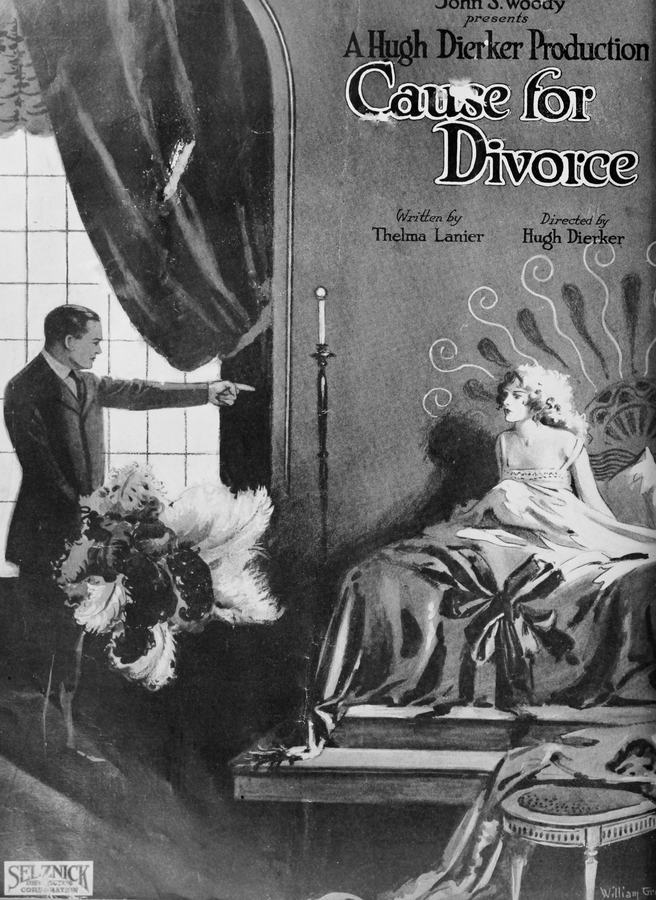
Stepping back into the cinematic landscape of 1923, one encounters 'Cause for Divorce,' a film that, despite its age, offers a surprisingly nuanced and often disquieting look at the moral complexities and societal pressures of its era. This isn't merely a quaint period piece; it's a meticulously crafted exploration of human frailty, illicit desire, and the intricate dance between personal longing and public decorum. The title itself serves as both a stark declaration and a tantalizing invitation, promising a narrative steeped in marital discord, yet delivering far more than a simple account of spousal separation. Instead, it presents a kaleidoscopic view of two intertwined romantic entanglements, each threatening to dismantle the established established order of two seemingly respectable families.
At the heart of the initial conflict lies Laura Parker, portrayed with a delicate blend of vulnerability and quiet resilience by the luminous Helen Lynch. Laura is a young wife, seemingly settled, yet her world is irrevocably disrupted by the reappearance of Martin Sheldon, a wealthy college sweetheart whose affections, it appears, have only intensified with time. Sheldon, embodied by Harmon MacGregor with a compelling blend of charm and relentless entitlement, represents a significant external threat to Laura's marital peace. His pursuit is not merely persistent; it is an aggressive, almost predatory campaign, unburdened by any regard for Laura's existing vows. The film, through Lynch's subtle expressions and MacGregor's imposing presence, masterfully illustrates the suffocating nature of such unwanted attention, especially for a woman in an era where societal expectations often limited avenues for outright resistance. Laura’s struggle is palpable, a silent battle against a force that views her marital status as a mere inconvenience rather than an unbreakable bond. This dynamic, though decades old, resonates with a timeless anxiety about boundaries and agency, setting a tense stage for the unfolding drama.
What truly elevates 'Cause for Divorce' beyond a straightforward tale of temptation is the profound, almost poetic irony woven into Martin Sheldon's own life. While he relentlessly endeavors to dismantle Laura Parker's marriage, he remains utterly oblivious to the seismic shifts occurring within his own household. This narrative parallel is not merely a plot device; it's a scathing commentary on human hypocrisy and the often-blind self-absorption of those in positions of power. Sheldon, so consumed by his own desires, cannot perceive the burgeoning crisis involving his daughter, Ruth. Harmon MacGregor's portrayal of Sheldon is crucial here; he projects an aura of self-assuredness that inadvertently underscores his profound lack of self-awareness. It's a performance that, through its very confidence, highlights the character's tragic flaw – an inability to see beyond his immediate gratification. This thematic mirroring is a strength of the screenplay, penned by the talented duo Thelma Lanier and Dorothy Yost, who demonstrate an acute understanding of character-driven drama and the often-unseen connections between seemingly disparate events. The film quietly asks: how can one judge the moral compass of another when one's own ethical bearings are so profoundly adrift?
The second, equally compelling, narrative strand introduces Ruth Sheldon, Martin's daughter, brought to life with a captivating blend of naiveté and burgeoning rebellion by Fritzi Brunette. Ruth, married to a young lawyer, finds herself increasingly captivated by the enigmatic figure of "Count" Lorenz, a character explicitly identified as a criminal. This attraction isn't just a dalliance; it's a profound infatuation that pushes her to consider abandoning her conventional, stable life for the perilous unknown. "Count" Lorenz, played by Pat O'Malley with a magnetic, slightly sinister charisma, represents the allure of the forbidden, the dangerous romanticism that can blind one to rational consequence. The contrast between Ruth's lawyer husband – presumably a figure of respectability and lawfulness – and the shadowy "Count" is stark, creating a powerful tension. This storyline delves into the psychology of attraction to danger, a theme that echoes in other cinematic explorations of crime and passion, such as The Great Diamond Robbery or The Curse of Greed, though 'Cause for Divorce' focuses more on the emotional and social fallout rather than the mechanics of the crime itself. Brunette skillfully conveys Ruth's internal conflict, torn between duty and a powerful, perhaps self-destructive, desire. Her choices are not merely scandalous; they are a direct challenge to the very fabric of societal expectations for women of her standing.
The true genius of 'Cause for Divorce' lies in the way these two seemingly separate narratives are not merely juxtaposed but intricately interwoven. The audience is privy to the dramatic irony of Martin Sheldon's actions – his relentless pursuit of Laura while his own daughter flirts with disaster. This structural choice elevates the film from a simple melodrama to a more profound commentary on the human condition. The film subtly suggests that moral failings, much like ripples in a pond, extend far beyond the initial transgression, impacting families and reputations in unforeseen ways. The screenplay by Thelma Lanier and Dorothy Yost demonstrates an impressive command of parallel plotting, ensuring that each storyline gains depth and resonance from the other. The writers craft a world where personal decisions, however clandestine, possess a gravitational pull, inevitably drawing others into their orbit. The impending "complications" teased in the plot summary are not just external events but are deeply rooted in the characters' choices, reflecting a karmic feedback loop that feels both inevitable and tragic. This narrative sophistication, especially for a film of its vintage, is truly commendable, showcasing a keen understanding of dramatic tension and character development.
IMDb —
1928
Community
Log in to comment.