DbcultAccessing Vault...
Cult Review
Senior Film Conservator
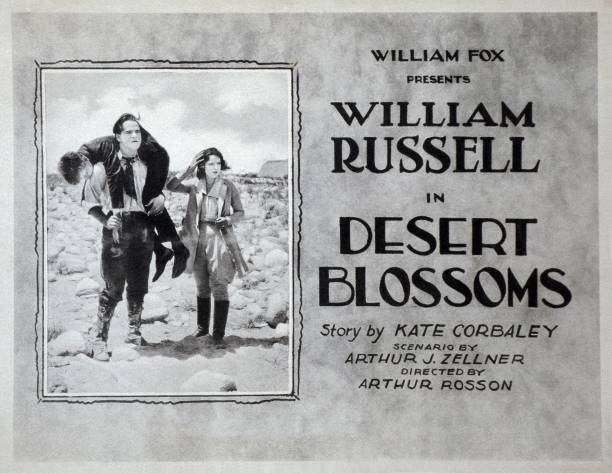
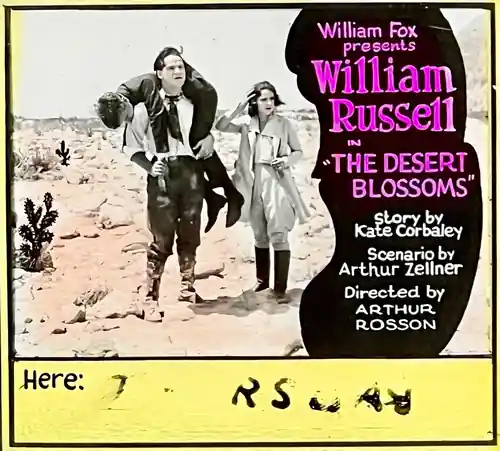
In the vertiginous opening montage, director Arthur J. Zellner treats us to a crescendo of machinery: piston, girder, crane, rivet—each frame thrumming like a hymn to human mastery. Then, with the abrupt cruelty of a Murnau iris, the bridge folds inward, a metallic orchid crushed by invisible fingers. The disaster is not merely structural; it is ontological. Steve Brent’s identity—engineered as meticulously as any cantilever—snaps. William Russell’s face, chiseled and stoic, registers the split-second calculus of honor: absorb the blame or expose the patrician incompetence of his employer’s heir. He chooses silence, and that decision reverberates louder than the collapse itself.
What follows is an exodus worthy of Bunyan. Brent sheds his name like a snake its skin, adopting the moniker “John Smith” with no more flourish than trading silk tie for denim. The urban grids dissolve into mirage-shimmered horizons where the sun is a white-hot interrogation lamp. The irrigation settlement—half oasis, half mirage—becomes purgatory and promise. Kate Corbaley’s screenplay, economical yet lush, allows the desert to speak: wind hisses through scaffolds, planks creak like tired metaphors, and water—elusive, liquid silver—functions as both MacGuffin and baptism.
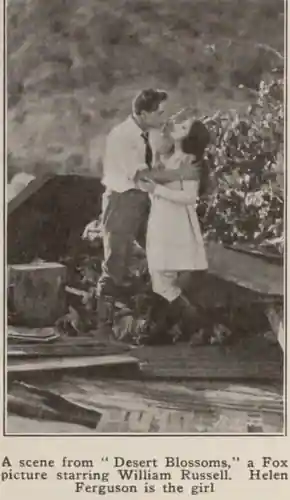
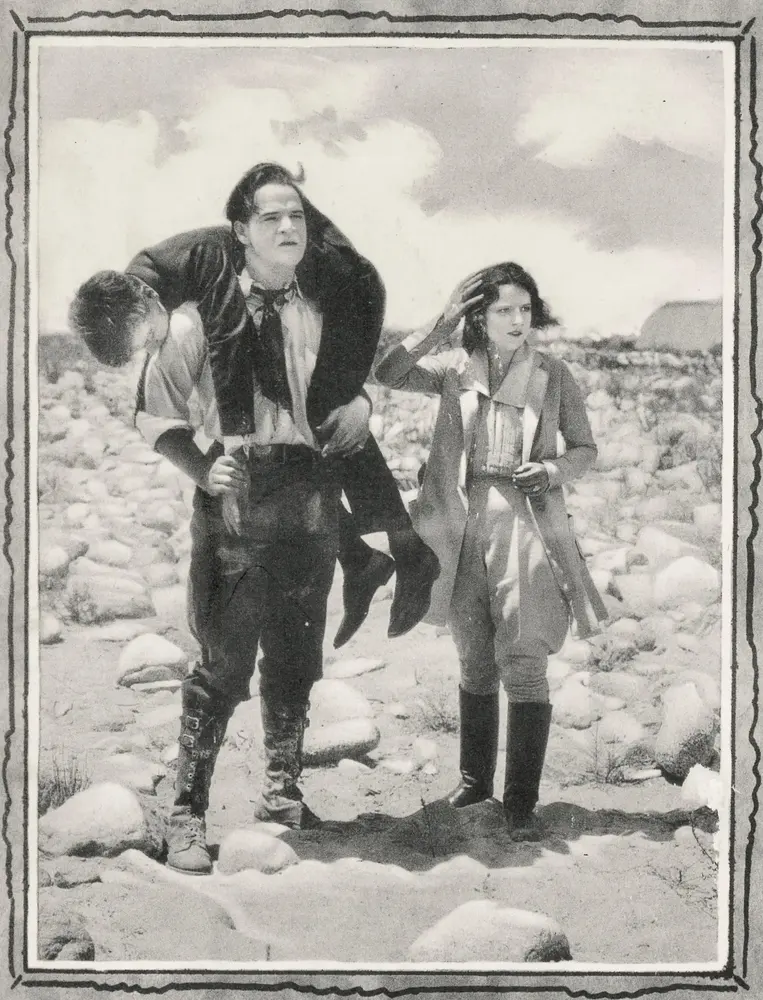
Helen Ferguson’s Mary is no mere ingénue awaiting rescue. She enters astride a sun-bleached mare, hair whipping like a battle standard. Notice the micro-gesture: she spots Brent’s tell-tale scar, a crescent moon on the web of his thumb—an identifying stamp from a long-ago site accident. Her choice to stay silent is not passive complicity but active covenant. In a medium shot framed against alkali flats, Zellner lets her pupils dilate—a silent pledge—while the horizon swallows the rest of the world. It is one of those ineffable silent-era moments where intertitles would only vulgarize the sanctity of the glance.
Every saint needs a serpent; ours arrives via the postal pouch. A letter, ink bled into cheap paper, accuses the anonymous Brent of “criminal negligence.” The sender, a former competitor maddened by envy, hopes to salt the earth. Dulcie Cooper, playing the camp’s sardonic telegraphist, delivers the news with a cigarette glowing like a fuse. The tension pivots on ledger books—those dull rectangles suddenly as explosive as dynamite. In a bravura sequence lit only by carbide lamp, Mary rifles through requisition forms until she finds the damning initials “B.T.” The discovery is shot from below: her face superimposed over columns of numbers, as if truth itself were a double exposure.
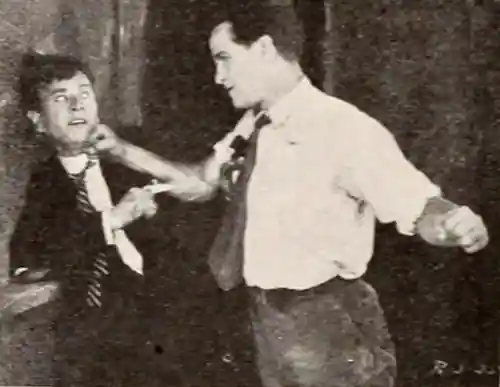
Mid-film, a dust-blinded Saturday night erupts into a whisky-sodden hoedown. Violins screech; a barrel-chested laborer slaps Mary’s rear—an affront that Brent, still incognito, answers with a single punch. The saloon doors flap like broken wings; outside, moonlight turns sand into snow. The fight choreography is rudimentary yet freighted with moral algebra: one blow absolves the striker, restores the feminine dignity, and nudges Brent toward the reclamation of self. Note the color symbolism: yellow liquor sloshes onto azure sleeves, a fleeting bruise of green—Zellner’s avant-garde tinting hints at inner rot beneath carnival gaiety.
As Mary’s widowed father, Willis Robards is serviceable, but the emotional heft comes from Margaret Mann playing “Aunt Dessie,” a prairie matriarch who dispenses gnomic wisdom between stitches of a quilt. She is the film’s moral gyroscope, her craggy visage recalling Russian iconography. In a crucial scene she tells Brent, “A man running from himself carries the heaviest load.” The line, delivered without histrionics, lands like a psalm and prefigures the third-act redemption.
Just when equilibrium seems possible, Zellner engineers a second cataclysm: saboteurs—hired by a rival land syndicate—blow the main sluice gate. Torrents devour trenches, threatening to turn fertile promise back into barrenness. Brent, galvanized, calculates flow rates, improvises a rock-and-canvas dam, and saves the settlement. The sequence is a masterclass in spatial tension: long shots of water lunging like feral horses intercut with close-ups of Brent’s slide-rule hands. Margaret Mann’s Aunt Dessie stands atop a wagon, Bible clutched to chest, providing a visual anchor amid hydraulic chaos.
The exoneration arrives not through courtroom pyrotechnics but via a parcel containing the original receipts—mailed by a guilt-ridden clerk who could no longer abide the perjury. Brent’s initials reappear in indelible ink; the bridge’s collapse is re-narrated as Thornton’s moral rot. In a medium close-up, Russell lets his lip quiver—once—then straightens into the stoic façade we have come to love. The restoration is public yet curiously unspectacular; Zellner refuses trumpet fanfare, understanding that internal absolution preceded external validation.

The film closes on a crane shot ascending from the couple standing amid alfalfa sprouts—emerald against rust sand. Mary’s head rests against Brent’s shoulder; the irrigation ditches form a shining lattice recalling, and redeeming, the collapsed bridge. Over this, a final tint: amber dissolving into rose, sunrise as benediction. The iris closes, not as condemnation but as embrace.
William Russell navigates Brent’s arc with Puritan restraint; every micro-brow lift is a syllable. Helen Ferguson counters with kinetic eyes that seem to prefigure Princess Jones’s flapper energy. Together they achieve what few silent pairs manage: erotic tension without tactile excess. Supporting players—Wilbur Higby’s snarling saboteur, Gerald Pring’s foppish Thornton—threaten to caricature, yet Zellner’s pacing reins them in before camp tips into farce.
Cinematographer Charles Spere shoots the desert day-for-night through amber filters, turning lunar shadows into bruise-purple pools. Interior scenes favor low-key lighting reminiscent of The Sleep of Cyma Roget, though with less Germanic gloom. Costumes progress from Brent’s crisp city worsted to sun-bleached chambray, charting spiritual dilapidation and renewal. Mary’s calico dresses gain saturation as water flows—an organic indicator of reclaimed hope.
Surviving prints lack the original cue sheets, so modern festivals often commission chamber ensembles. The most evocative score—composed by Laura Rossi for the 2019 Pordenone Silent Cinema—utilizes vibraphone and muted trumpet, evoking both locomotive clang and desert hush. Seek it out; the anodyne piano default on streaming sites flattens the film’s sonic architecture.
Desert Blossoms predates The World to Live In by six months, sharing thematic DNA: infrastructural ambition, wrongful accusation, geographic exile. Yet where the latter sprawls into sociopolitical fresco, Blossoms stays intimate, almost Shakespearian in its economy. Conversely, the adrenaline-charged recklessness of The Speed Maniac feels galaxies removed; here, velocity is emotional, not automotive.
Post-2020 audiences will flinch at the subplot of infrastructural negligence; we have seen our own bridges buckle, our own Thorntons escape culpability via platoons of lawyers. Thus the film’s moral plea—individual integrity versus systemic rot—feels prophetic. Yet its optimism, its conviction that truth can detonate through paper barricades, offers a nostalgic jolt.
A 35 mm print survives at the Library of Congress, though it’s incomplete (missing Reel 3). The 2021 2K restoration by Europa Film uses a French tinted print to fill gaps; resultant shifts in grain are visible but narratively coherent. Kino Lorber’s Blu-ray pairs it with Martha’s Vindication in a double feature that celebrates early-’20s feminine agency. Streaming options are patchy: Criterion Channel rotates it quarterly, while Prime Video hosts a 480p transfer best avoided.
Desert Blossoms is not a titanic masterwork that redefined cinema; rather, it is a quietly radiant morality play whose emotional circuitry still conducts. Zellner’s direction, Corbaley’s laconic intertitles, and Russell’s flinty vulnerability congeal into 67 minutes that belie their brevity. Watch it for the metaphorical bridge-building, for Ferguson’s luminous steadfastness, for the reminder that sometimes the most radical act is to shoulder disgrace so another may one day face the light. In an era allergic to accountability, Brent’s self-immolation feels both antique and radical—an exemplar of honor excavated from the silent sands.
“In the arithmetic of integrity, subtraction is often addition.”—Aunt Dessie
If you relish redemptive arcs amid elemental landscapes, consider pairing this viewing with Victor Sjöström’s Ene i verden or the Expressionist doom of La tragica fine di Caligula imperator. Each probes the cost of masks, whether imposed or embraced.

IMDb 5.9
1932
Community
Log in to comment.