DbcultAccessing Vault...
6.2/10
Senior Film Conservator
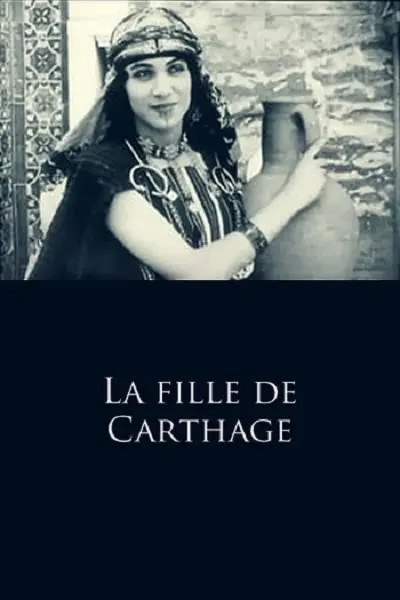
A definitive 6.2/10 rating for a film that redefined the boundaries of cult cinema. The Girl from Carthage remains a cornerstone of transgressive art.
To watch The Girl from Carthage (1924) is to witness the very birth of a cinematic consciousness. Long before the globalized industry turned its gaze toward North African shores, Albert Samama-Chikly and his daughter, the formidable Hayde Chikly, were already crafting a visual vernacular that was simultaneously indigenous and revolutionary. This film, a precious relic of the silent era, stands as a monolith of early Maghrebian artistry, resisting the easy categorizations of 'orientalism' that plagued Western productions of the same period, such as the grandiosely scaled Michael Strogoff. Instead, Chikly offers an internal perspective, a gaze that understands the dust, the heat, and the intricate social hierarchies of the land.
The plot, while ostensibly a melodrama of forbidden love, functions as a sharp scalpel, dissecting the economic disparities of early 20th-century Tunisia. The daughter of the local authority—played with a haunting, understated intensity by Hayde Chikly—is trapped in a socio-political vice. Her love for the poor minaret crier (Abdelgassen Ben Taleb) is an act of class treason. In the silent cinema of the 1920s, such themes were often handled with the slapstick cynicism seen in Le peripezie dell'emulo di Fortunello e compagni, but here, the stakes are treated with a gravity that borders on the operatic. The rich suitor from Tunisia is not merely a romantic rival; he represents the encroaching urban modernity and the cold, transactional nature of wealth that threatens to extinguish the spiritual purity of the rural protagonist.
The cinematography is a revelation of natural light. Samama-Chikly, a pioneer who had already experimented with aerial photography and underwater filming, brings a documentary-like precision to the fictional narrative. The ruins of Carthage are not merely backdrops; they are silent characters, echoing the faded glory of an empire while the protagonists navigate the ruins of their own lives. There is a textural quality to the film that reminds one of the ethnographic depth found in Armenia, the Cradle of Humanity under the Shadow of Mount Ararat, yet The Girl from Carthage possesses a narrative urgency that keeps it from becoming a mere travelogue.
The use of space is particularly evocative. The minaret, where the lover calls the faithful to prayer, represents an aspirational, vertical axis—a connection to the divine that transcends the terrestrial greed of the pasha. Conversely, the interiors of the wealthy Tunisian suitor’s home are framed with a claustrophobic opulence. The shadows here are longer, the air thicker with the scent of stagnant tradition. This visual dichotomy reinforces the central conflict: the choice between a life of spiritual elevation in poverty or a gilded cage of material comfort. It is a theme that echoes through the decades, found in various iterations in films like Her Moment, yet rarely with such raw, unadorned sincerity.
It is impossible to overstate the importance of Hayde Chikly, who not only starred in the film but also penned the screenplay. In an era where female agency in cinema was often restricted to the 'damsel in distress' or the 'femme fatale,' Chikly’s protagonist is a beacon of quiet resolve. She lacks the manic energy of the flapper era seen in June Madness or the comedic flightiness of Don't Call Me Little Girl. Instead, she possesses a 'gazelle-like' grace—hence the title Ain el-Ghazal—that masks a core of tempered steel. Her resistance to the wealthy suitor is not a temper tantrum; it is a calculated refusal to be a pawn in a patriarchal chess game.
Her performance is characterized by its economy of movement. In the silent era, actors often leaned into hyperbolic gesticulation to convey emotion, a technique necessary for the back rows of nickelodeons. Yet, Chikly understands the power of the close-up. Her eyes convey the crushing weight of familial duty and the flickering hope of a life shared with the muezzin. It is a performance that anticipates the psychological depth of later neorealism. When compared to the archetypal heroines in Beatrice Fairfax Episode 9: Outside the Law, Chikly feels remarkably modern, grounded in a reality that is both specific to her culture and universal in its yearning for freedom.
The film operates on multiple layers. On the surface, it is a tragedy of star-crossed lovers, but beneath that lies a subtle critique of the colonial-era social structures. The 'local authority' (Hadj Hadi Dehali) represents the intermediary power—the local elite who maintain order and tradition under the shadow of French protectorate rule. By insisting on a marriage of wealth, he is attempting to consolidate power in a world that is rapidly changing. The 'rich man from Tunisia' represents the new bourgeoisie, a class that has benefited from the colonial economy and seeks to replicate its hierarchies.
The muezzin, however, represents the soul of the people. He is the 'poor' man, but he is the one who speaks to the heavens. His presence in the film is a reminder of the spiritual and cultural identity that remains untouched by the transactional nature of the city. This tension between the sacred and the profane, the rural and the urban, is a recurring motif in Maghrebian literature and cinema, and The Girl from Carthage serves as its foundational text. Even the pacing of the film, which alternates between the slow, rhythmic life of the village and the more frantic, high-stakes negotiations of the marriage deal, reflects this cultural friction. It lacks the frenetic, almost desperate energy of Call a Taxi, opting instead for a contemplative tempo that allows the gravity of the situation to settle in the viewer's mind.
One might find it strange to compare a Tunisian silent drama to the American Western, but there are striking parallels in the way both genres utilize landscape to define character. Much like the rugged protagonists in Bull Arizona - The Legacy of the Prairie or the hard-bitten survivors in Pure Grit, the characters in The Girl from Carthage are products of their environment. The harshness of the sun and the scarcity of the land dictate a certain moral toughness. However, while the Western often celebrates the conquest of the land, Chikly’s film suggests a harmony with it—or a tragic inability to escape its traditionalist grip.
Furthermore, the film’s exploration of fate and mysticism bears a thematic resemblance to The Fortune Teller. In both films, there is a sense of an invisible hand guiding the characters toward a predetermined end. In The Girl from Carthage, this 'fate' is not written in the stars, but in the rigid laws of the pasha and the expectations of the community. The tragedy lies in the protagonist's awareness of her fate and her subsequent attempt to rewrite it, even if the cost is her own annihilation. This is a far cry from the lighthearted social maneuvering found in A Pair of Sixes or the workplace antics of Monty Works the Wires. This is cinema as a life-and-death struggle for the soul.
For decades, The Girl from Carthage existed as a fragmented memory, a series of stills and anecdotes in the annals of film history. Its restoration has allowed modern audiences to appreciate the technical sophistication that Samama-Chikly achieved with limited resources. The tinting of the film—the sepia tones of the desert, the deep blues of the Mediterranean night—creates an immersive atmosphere that transcends the silence of the medium. We do not need to hear the muezzin’s call; the visual rhythm of the film provides its own soundtrack.
The film also serves as a crucial document of Tunisian costume and architecture before the mid-century modernization. The intricate jewelry, the heavy fabrics of the pasha’s household, and the stark simplicity of the muezzin’s attire are all captured with a keen eye for ethnographic detail. It reminds us that cinema, at its best, is a time machine. It allows us to step into a 1924 Carthage that is simultaneously alien and intimately familiar. The emotional core—the desire for love, the fear of losing one's autonomy, the tension between father and daughter—remains as potent today as it was a century ago. This is not a film to be watched as a mere historical curiosity; it is a film to be felt.
In the grand arc of global cinema, The Girl from Carthage is a vital link. It bridges the gap between the primitive experiments of the Lumière brothers and the sophisticated narrative cinema that would follow. It proves that the language of film is universal, capable of expressing the specific pains of a Tunisian girl with a clarity that resonates across borders and decades. Whether compared to the high-stakes drama of What Love Will Do or the mystery of Fantomas - On the Stroke of Nine, Chikly's work holds its own, offering a unique, poignant, and visually arresting experience that demands to be seen by every serious student of the moving image.
Final Thought: A masterpiece of restraint and cultural pride, The Girl from Carthage is a shimmering oasis in the vast desert of silent film history.
IMDb 6.1
1923
Community
Log in to comment.