DbcultAccessing Vault...
Cult Review
Senior Film Conservator

Ah, the roaring twenties! A decade of unprecedented change, flapper dresses, jazz, and, in the cinematic realm, a burgeoning art form finding its voice even without sound. Amidst this vibrant tapestry, films like Desert Blues emerge as fascinating artifacts, offering a window into the narrative conventions, cultural perspectives, and sheer adventurous spirit that captivated audiences of the era. This particular gem, featuring the spirited Virginia Vance and the dashing Cliff Bowes, transports us to an exotic landscape, far removed from the urban bustle, where ancient mysteries collide with modern derring-do.
Our story commences with Cliff, a veritable Jack Tar, a sailor seeking respite from the usual maritime haunts. His quest for a drier clime leads him, quite literally, into the heart of Egypt’s vast, sun-drenched desert. One can almost feel the scorching sun and the gritty sand underfoot as he embarks on his camel-back excursion, a stark contrast to the bounding main he usually navigates. This initial setup immediately establishes a fish-out-of-water scenario, a classic narrative trope that often fuels both humor and dramatic tension. Cliff isn’t just a tourist; he’s an adventurer, an individual yearning for something beyond the mundane, and the desert promises just that – an arena for self-discovery and perhaps, an unexpected romance.
It is amidst this arid grandeur that Cliff's path intersects with Virginia, the bright and resourceful daughter of Professor Newton. The professor, a man of singular archaeological obsession, is on a rather peculiar mission: to locate the elusive kneecaps of King Tut’s first wife. This detail, while seemingly whimsical, grounds the narrative in a pseudo-historical context, a common device in adventure serials of the time. Virginia, presumably aiding her father or perhaps merely accompanying him on his eccentric quest, represents a different kind of curiosity, a spirit of intellectual adventure that complements Cliff's physical prowess. Their meeting is serendipitous, a moment of quiet connection before the storm.
The burgeoning camaraderie between Cliff and Virginia is beautifully underscored by a rather charming, if somewhat anachronistic, detail: Cliff’s attempt to entertain Virginia with his performance on an Egyptian tootle-pipe. It’s a moment of delightful innocence, a testament to the simple pleasures and budding affections that often form the bedrock of silent film romance. His dedication to mastering ‘Red Rot Mamma’ on this unfamiliar instrument speaks volumes about his character – persistent, charming, and eager to impress. These small, human touches are what elevate a mere plot outline into a memorable cinematic experience, even a century later.
However, the tranquility is shattered by the dramatic entrance of Chief Alababa, the formidable leader of the Desert Brigands. Alababa, a character embodying the often-problematic 'exotic villain' trope prevalent in early cinema, sets his sights on Virginia. His motivation, to make her 'Mrs. Alababa No. 43,' is both a darkly humorous detail and a clear indication of the stakes involved. This abduction instantly transforms the leisurely desert excursion into a high-stakes rescue mission. The transition from romantic idyll to perilous predicament is swift, a characteristic pacing of silent-era adventures designed to keep audiences on the edge of their seats.
Cliff's reaction to Virginia's snatching is immediate and visceral. His 'war cry of the gobs' is a powerful declaration, a primal scream of allegiance and determination. It’s a call to arms that resonates with his naval background, signaling that the placid Jack Tar has transformed back into a formidable fighting force. The arrival of a quartet of 'Jackies' – presumably his fellow sailors or loyal comrades – amplifies the sense of impending heroism. This collective effort underscores the importance of camaraderie and brotherhood in the face of overwhelming odds, a theme often explored in films of this period, much like the ensemble dynamics seen in adventure serials such as The Sons of Satan or the swashbuckling escapades found in The Phantom Fortune.
The pursuit of Alababa and his brigands leads our intrepid heroes to an underground tomb, a setting ripe with atmospheric potential. Ancient tombs, with their labyrinthine passages and hidden dangers, provided an ideal backdrop for suspense and action in early cinema. One can imagine the flickering torchlight, the ominous shadows, and the claustrophobic tension as Cliff and his Jackies navigate this subterranean world. The visual storytelling required in silent film meant that such settings had to be meticulously crafted to convey mood and narrative progression without dialogue.
The ensuing confrontation between Cliff's loyal crew and Alababa's brigands is the film's undeniable climax. The description of the tomb gaining 'several more permanent residents' after the dust settles is a euphemism that speaks volumes about the brutal realities of justice in these cinematic worlds. It implies a definitive, violent resolution, a clear victory for the forces of good over evil. This kind of unambiguous ending was often preferred by audiences, providing a satisfying sense of closure and moral clarity. The hero's triumph, the villain's defeat, and the damsel's rescue are all neatly packaged, reinforcing traditional narrative structures.
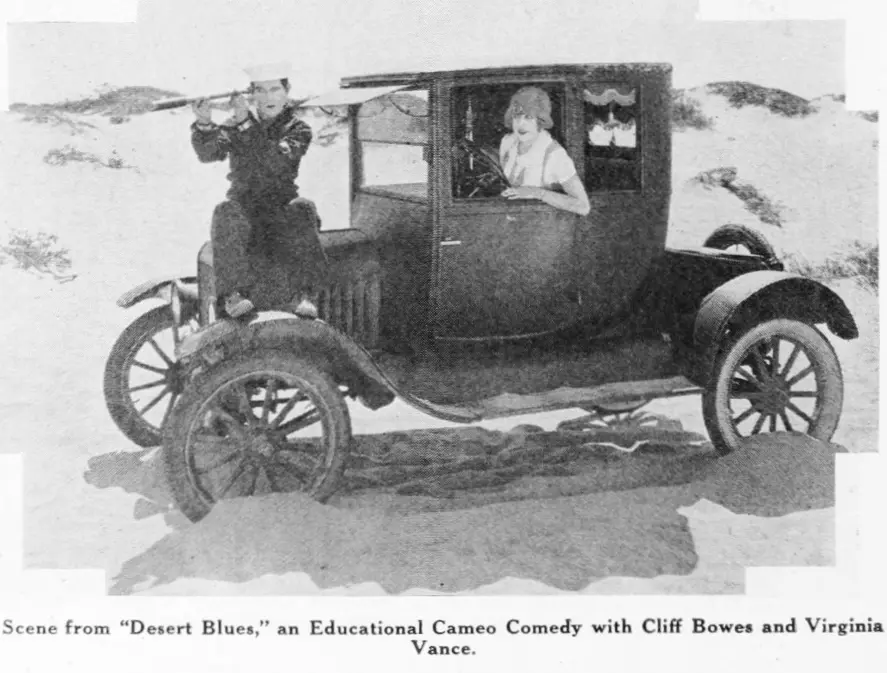
Virginia Vance, as the beleaguered but resilient Virginia, delivers a performance that would have been crucial for the film's success. In silent cinema, actresses often had to convey a wide range of emotions through exaggerated facial expressions and physical gestures. Her portrayal would have needed to balance vulnerability with an underlying strength, making her a heroine worth saving, not merely a passive victim. Her intelligence, hinted at by her association with her professor father, would have added layers to her character beyond just being a romantic interest.
Cliff Bowes, in the role of Cliff, embodies the quintessential silent film hero. His transformation from a leisure-seeking sailor to a determined rescuer showcases the versatility expected of leading men. His physicality, his ability to convey courage and resolve without a single spoken word, would have been paramount. The 'gobs' war cry, though described, would have been a moment of intense visual and gestural communication, a testament to Bowes's command of the silent screen. His previous work, perhaps echoing the maritime themes of His Briny Romance, would have prepared him for the blend of adventure and burgeoning affection required here.
The pacing of Desert Blues, typical of its era, would have likely moved with a brisk efficiency, punctuated by moments of suspense and high-octane action. Silent films, often shorter than their sound counterparts, relied on visual dynamism to maintain audience engagement. The narrative thrust from peaceful encounter to abduction, pursuit, and climactic battle would have been tightly choreographed, ensuring that no moment felt extraneous. This economy of storytelling, while sometimes criticized for lacking psychological depth, allowed for a direct, impactful narrative that resonated with early filmgoers.
Desert Blues is more than just an adventure story; it’s a cultural artifact that reflects early 20th-century perceptions of the exotic 'Other.' Chief Alababa, the polygamous brigand, is a character drawn from a well-worn cinematic playbook that often sensationalized non-Western cultures. While viewed through a modern lens, these portrayals can appear simplistic or even stereotypical, it’s important to understand them within the historical context of their creation. Films like this often served to both entertain and, perhaps inadvertently, reinforce prevailing societal views, much like the more overtly dramatic portrayals of villains in films such as The Devil-Stone.
Upon Virginia's safe return, the narrative culminates in a promise of a future with her rescuer, 'a husband on the bounding main.' This resolution neatly ties Cliff's initial quest for a drier clime with his ultimate destiny: a life intertwined with the very element he sought to escape, but now shared with the woman he loves. It's a romantic full circle, suggesting that true adventure lies not just in exotic locales but in the shared journey of life itself. The film, in its quiet way, suggests that true belonging is found not in geography, but in companionship.
While Desert Blues may not be as widely discussed as some of its more famous silent contemporaries, its existence is a vital part of cinematic history. It represents the craftsmanship, the adventurous spirit, and the foundational elements of storytelling that would pave the way for future generations of filmmakers. For those interested in the evolution of cinema, and particularly the silent era's unique blend of melodrama, adventure, and nascent romanticism, this film offers a fascinating glimpse. It stands as a reminder that even without spoken dialogue, the power of visual narrative, compelling performances, and a well-structured plot can transport audiences to distant lands and stir the deepest emotions. Much like the intricate plots and character dynamics in films such as The Catspaw or the dramatic flair of The Humming Bird, Desert Blues contributed to the rich tapestry of early filmmaking, solidifying the genres and tropes that would continue to captivate audiences for decades to come.
The enduring appeal of these early films lies in their simplicity and their direct emotional impact. They speak a universal language of action, reaction, and raw human feeling. Desert Blues, with its blend of exotic setting, daring rescue, and blossoming romance, serves as a charming testament to the captivating power of silent cinema. It invites us to appreciate the artistry of a bygone era, where a tootle-pipe tune, a war cry, and a determined pursuit could weave a tale as compelling as any modern epic, leaving an indelible mark on the sands of time.
IMDb —
1920
Community
Log in to comment.