DbcultAccessing Vault...
Cult Review
Senior Film Conservator
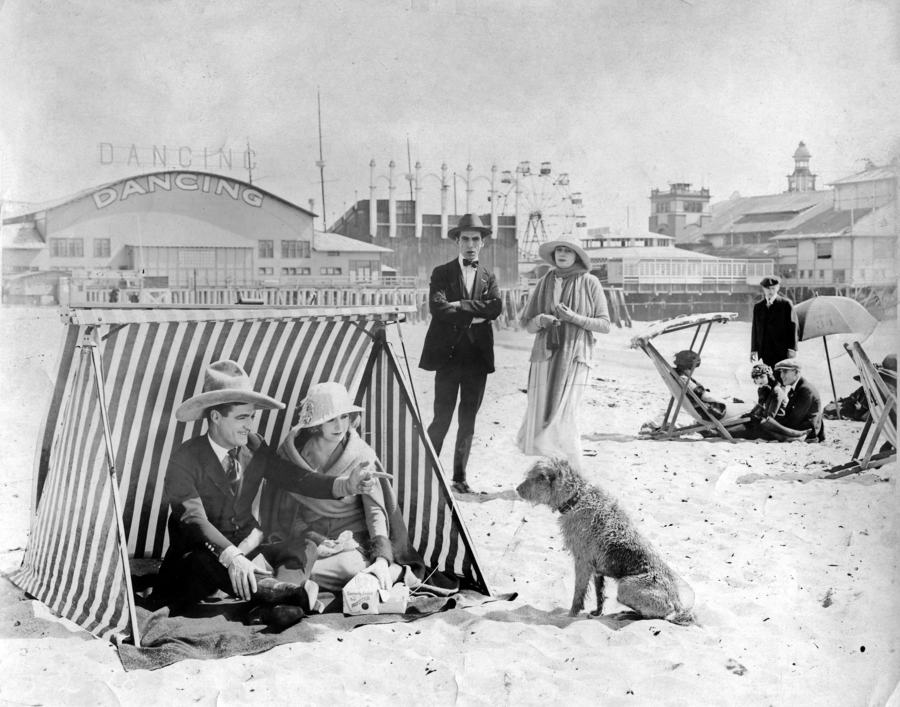
The silver screen of the early 20th century pulsated with tales of heroism, villainy, and the untamed spirit of the American West. Among these cinematic pioneers, few figures loomed as large or captivated audiences as profoundly as Tom Mix. His 1920 vehicle, Desert Love, co-written by Mix himself alongside Jacques Jaccard, stands as a quintessential example of the era's Westerns, a thrilling mélange of relentless pursuit, familial loyalty, and the kind of dramatic misunderstanding that could only unfold amidst the vast, unforgiving landscapes it depicts. It's a film that, despite its age, retains a certain raw vitality, a testament to the enduring power of its narrative archetypes and the magnetic presence of its star.
The story of Desert Love is rooted in a primal act of violence, a foundational tragedy that sets the entire narrative in motion. We are introduced to Sheriff Buck Marston, Sr., a man of principle who dares to defy the notorious bandit known as the Wolf. This defiance costs him and his wife their lives, leaving an orphaned son to be raised in the shadow of this profound loss. The film, in its silent yet potent imagery, effectively conveys the brutal finality of this opening salvo, establishing the Wolf as an antagonist of true malevolence. This initial sequence is crucial, for it imbues the younger Buck Marston with an almost mythic purpose: not just to uphold the law, but to avenge a sacred wrong. It’s a classic Western trope, certainly, but one executed here with a directness that resonates. The upbringing of young Buck by the kind-hearted rancher Jack Remington provides a stark contrast to the violence that orphaned him, suggesting a nurturing environment that tempers the fires of vengeance with a sense of justice and community. This duality is critical to understanding Buck’s character, preventing him from becoming a mere instrument of revenge and instead portraying him as a figure striving for balance in a chaotic world.
Years later, the mantle of sheriff falls upon the shoulders of Buck Marston, Jr., portrayed with characteristic dynamism by Tom Mix. This isn't merely a career choice; it's a destiny. His oath to serve and protect is inextricably linked to his vow to avenge his family. Mix, with his athletic prowess and commanding screen presence, embodies this role perfectly. His Buck is a man of action, capable of both thoughtful deduction and swift, decisive force. The film meticulously charts his relentless pursuit of the Wolf, a chase that speaks to the unyielding nature of justice in the frontier. The Wolf, initially elusive, eventually finds himself cornered, a testament to Buck's persistence. However, the narrative introduces a compelling complication in the form of the Wolf's son, the Whelp. This younger outlaw, inheriting his father's cunning and ruthlessness, executes a daring rescue, underscoring the generational nature of conflict and the insidious cycle of violence. This twist elevates the stakes, transforming a straightforward manhunt into a more complex struggle against a persistent, hydra-headed evil. The dynamic between Buck and the Wolf/Whelp duo is a central pillar of the film, providing ample opportunities for thrilling chases, tense standoffs, and the kind of physical derring-do for which Mix was legendary. One might draw a thematic parallel to the unwavering resolve seen in characters from films like The Pale Pack Train, where frontier justice is often personal and hard-won, though Desert Love amplifies the familial and generational aspects of the conflict.
Just as Buck's pursuit reaches its fever pitch, the narrative masterfully weaves in a parallel thread of romantic entanglement and dramatic misunderstanding that threatens to unravel everything. The domestic sphere of Jack Remington becomes a crucible for this new conflict. His younger daughter, Dolly, confides in her sister Barbara—Buck's fiancée—about her secret affair with the Whelp. In a classic instance of dramatic irony, Remington overhears only fragments of this confession, leading him to a grave misinterpretation. He believes Barbara, his own daughter and Buck’s intended, has been betrayed and compromised by the Whelp. This mistaken assumption, born of fragmented information and a father's protective instincts, drives him to an drastic decision: he insists Barbara marry the outlaw, an act intended to restore her honor but which, in reality, plunges her into an unimaginable predicament. This plot device, while perhaps melodramatic by modern standards, functions perfectly within the conventions of early silent cinema, providing high emotional stakes and propelling the story toward its climactic resolution. The sudden shift in Barbara's fate, from fiancée to unwilling bride of an outlaw, introduces a powerful element of tragic irony and personal stakes for Buck. It transforms his quest from mere vengeance into a desperate race against time to save his beloved from a fate worse than death. The narrative here showcases a fascinating confluence of personal honor, societal expectations, and the cruel hand of fate, reminiscent of the romantic entanglements and misunderstandings that drive the plots of films like The Pride of Jennico, albeit with a distinctly Western flavor.
The news of Barbara's forced marriage reaches Buck just as he closes in on the Wolf. This revelation forces a wrenching choice: continue the hunt for his family's killer or rescue the woman he loves. The decision is swift and unequivocal. Buck's immediate pivot from pursuing the Wolf to racing to the Whelp's den underscores the depth of his love and the urgency of Barbara's plight. This sequence is where Tom Mix truly shines, his character driven by a potent blend of fury and devotion. The final confrontation in the outlaw's den is the film's spectacular crescendo. Mix, a master of stunt work and physical acting, delivers a thrilling performance as Buck battles the Whelp and, ultimately, the Wolf. The action is fast-paced, visceral, and expertly choreographed for the silent era, relying on dynamic camera work and powerful physicality to convey the intensity of the struggle. This isn't just a shootout; it's a symbolic clash between justice and lawlessness, order and chaos. The resolution is satisfyingly definitive: Buck not only saves Barbara but brings the reign of the Wolf and Whelp to a decisive end. He achieves both his long-sought vengeance and secures his romantic future, tying a neat, albeit hard-won, bow on the narrative. This dual victory reinforces the hero's journey, making Buck Marston a figure of unwavering moral fortitude and effective action, much like the resolute protagonists found in adventure tales such as Maciste atleta, where physical prowess is intrinsically linked to moral triumph.
The cast of Desert Love, while anchored by the star power of Tom Mix, contributes significantly to its enduring appeal. Lester Cuneo, as the elder Sheriff Marston, Sr., though brief in his appearance, establishes the moral backbone of the family line, making his tragic demise all the more impactful. Francelia Billington, as his wife, provides a poignant, if silent, portrayal of frontier resilience before her untimely end. Eva Novak, as Barbara, Buck's fiancée, navigates the complexities of her character's predicament with a blend of vulnerability and inner strength. Her expressive eyes and gestures convey the emotional turmoil of being caught in a web of misunderstanding and forced into an abhorrent union. Charles K. French and Hans Unterkircher embody the menace of the Wolf and the Whelp, respectively, creating antagonists who are genuinely threatening. French's Wolf is a figure of grizzled authority, a seasoned outlaw whose defiance of the law is absolute. Unterkircher's Whelp, on the other hand, brings a youthful, almost feral energy to his villainy, making him a dangerous and unpredictable foil to Buck. Jack Curtis, as the well-meaning but misguided Jack Remington, plays a crucial role in propelling the plot's romantic complications, his performance highlighting the devastating consequences of incomplete information. The silent film era demanded a different kind of acting, one that relied heavily on exaggerated expressions, grand gestures, and physical storytelling to convey emotion and plot. The cast of Desert Love rises to this challenge, delivering performances that, while perhaps theatrical by today's standards, were perfectly attuned to the sensibilities of their time and remain remarkably effective in communicating the narrative's emotional core. Tom Mix, of course, is the undisputed master here, effortlessly blending heroic stoicism with moments of intense passion and daring physicality. His ability to convey complex emotions without dialogue, relying solely on his face, body language, and the occasional intertitle, is a testament to his skill and his iconic status in early cinema. This level of physical storytelling and character embodiment is a hallmark of many adventure films of the period, finding echoes in the robust portrayals seen in films like A Texas Steer, where the leading man's charisma was paramount.
The collaborative effort between Tom Mix and Jacques Jaccard in writing Desert Love is evident in its tightly structured plot and its adherence to the successful formulas of the Western genre, while also introducing engaging twists. The narrative moves with a brisk pace, a necessity for silent films which often relied on constant forward momentum to maintain audience engagement. The direction, likely a shared vision, effectively utilizes the vast desert landscapes, transforming them from mere backdrops into active participants in the drama. The wide-open spaces emphasize the isolation of the characters and the relentless nature of the chase, while the rugged terrain provides ample opportunities for thrilling stunt work and dramatic standoffs. The use of intertitles is judicious, providing necessary exposition and dialogue without bogging down the visual storytelling. The cinematography, while constrained by the technology of the era, manages to capture the raw beauty and harshness of the Western frontier, enhancing the film's authenticity. The choice of shots, the editing rhythm, and the overall visual grammar work in concert to tell a compelling story without the aid of spoken words. The film's ability to build suspense, develop characters, and deliver a satisfying resolution through purely visual means is a testament to the skill of its creators. It's a masterclass in silent storytelling, demonstrating how effective narrative can be crafted through careful visual composition and dynamic physical action. The influence of Mix, not just as an actor but as a creative force, is palpable throughout the film, showcasing his understanding of what captivated audiences of the time and how to deliver it with maximum impact. This creative control and clear vision for genre storytelling finds its parallels in other early cinematic trailblazers who shaped their respective genres, much like the ambitious narrative construction seen in Civilization, though in a vastly different thematic context.
More than a century after its release, Desert Love remains a valuable artifact of early American cinema, offering a window into the narrative conventions, star power, and technical achievements of its time. It’s a film that encapsulates the essence of the silent Western, a genre that helped define American mythology and provided audiences with escapist fantasies of courage, justice, and adventure. Tom Mix's performance is, of course, the central draw, showcasing his iconic persona as the virtuous cowboy hero, a template for countless Western protagonists to follow. But beyond Mix's star power, the film offers a compelling story of intergenerational conflict, the complexities of justice, and the unexpected twists of fate that shape human lives. The themes of vengeance, honor, and the pursuit of love against overwhelming odds are universal, allowing the film to resonate even with modern viewers who might be unaccustomed to the silent film format. Its blend of high-stakes action, emotional drama, and a touch of romantic melodrama makes it a thoroughly engaging experience. While it shares the adventurous spirit of many films of its period, such as Eastward Ho!, Desert Love distinguishes itself through its specific focus on frontier justice and the personal vendetta that drives its hero. It is a testament to the enduring appeal of well-told stories and the timeless nature of classic cinematic archetypes. For enthusiasts of early film, Westerns, or simply compelling drama, Desert Love is a journey worth taking, a reminder of the foundational narratives that shaped the art form and continue to influence storytelling to this day.
The true power of Desert Love lies not just in its thrilling plot or its iconic star, but in its ability to transport the viewer to a bygone era, to a world where moral lines were often starkly drawn and heroes emerged from the dust and grit of the frontier. It’s a film that, despite its lack of spoken dialogue, speaks volumes about the human condition: the drive for justice, the pain of loss, and the unwavering hope for love. The intricate dance between Buck's quest for vengeance and the surprising romantic entanglement provides a richness to the narrative that elevates it beyond a simple action flick. The misunderstanding orchestrated by Remington's partial hearing of Dolly's confession is a brilliant stroke of dramatic irony, forcing the hero into a race against time not just for justice, but for the heart of his beloved. This narrative complexity, coupled with the raw, physical performances, makes Desert Love a compelling watch. It demonstrates how silent cinema, through its unique visual language and the expressive power of its actors, could create narratives that were both grand in scope and deeply personal in their emotional impact. The enduring legacy of Tom Mix and the Western genre itself owes much to films like this, which cemented the archetypes and narrative structures that would dominate American cinema for decades. It’s a powerful reminder that sometimes, the most resonant stories are told not with words, but with the universal language of action, emotion, and the vast, silent canvas of the desert. The film's dramatic tension and resolution, where personal and public justice intertwine, can be seen as a precursor to the more psychological thrillers that would emerge later, such as Spellbound, demonstrating how foundational narratives of right and wrong, and the fight to correct injustice, are timeless, irrespective of genre or cinematic era.

IMDb 6
1924
Community
Log in to comment.