DbcultAccessing Vault...
Cult Review
Senior Film Conservator
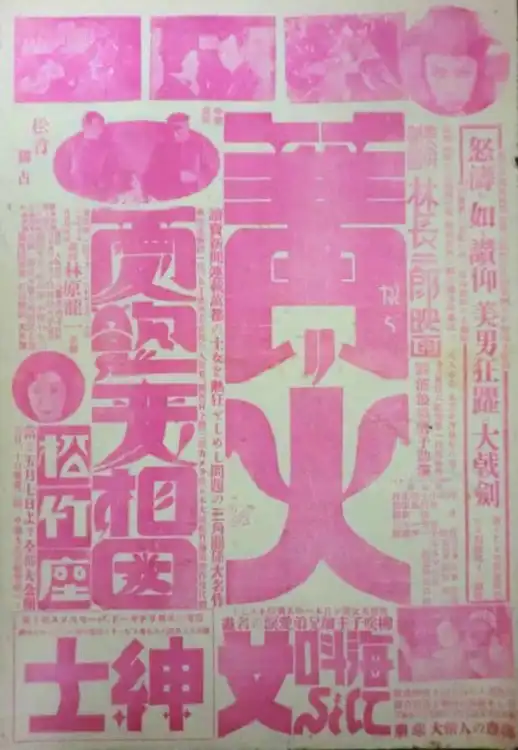
So, Aiyoku-hen aizu – it's one of those films that just sits with you, doesn't it? If you're into quiet, character-driven dramas with a real sense of time and place, you'll probably find a lot to love here. But if you’re looking for something with a fast pace or big, splashy moments, this one might feel like a bit of a slog. It’s definitely not for everyone, particularly those who prefer a clear hero’s journey.
The film, set in the Meiji era, plunges us into the world of Sato Hikaru, played by Utako Suzuki. She's supposed to marry into a good family, keep things proper, you know the drill. But then she meets this artist, Koji, portrayed by Hideo Fujino, and suddenly everything she thought she knew gets kinda blurry.
Suzuki's performance as Hikaru is just *magnetic*. There’s a scene early on where she’s practicing calligraphy, and her mother (Nanako Shirakawa) just glances at her from the doorway. You see Hikaru’s hand almost imperceptibly tremble. It's such a tiny thing, but it tells you everything about the pressure she's under, all without a single word being spoken. ✍️
And Koji. Fujino plays him with this weary charm. He's not some dashing hero; he's just a guy who sees Hikaru for more than her family name. Their first real conversation, by the river, feels so natural. It almost made me forget I was watching a movie, that's how real it was.
The way they use silence in this film is something else. There are stretches where it’s just the sound of the wind, or distant cicadas, and it lets the emotions just *breathe*. Sometimes it felt a bit long, sure, but mostly it works. That one shot of Hikaru staring out at the garden for what must have been 45 seconds? It could have been cut, but it really makes you feel her loneliness.
I did notice one particular scene, where Hikaru is with her intended suitor (Ichirō Yūki). He’s trying to impress her, talking about his family’s land, and his laugh just felt so *off*. Not bad acting, just… unsettling. It made me genuinely uncomfortable, which I guess was the point, but it still kinda sticks in my craw.
The pacing sometimes felt a little uneven too. There’s a montage of seasons passing that goes by in about thirty seconds, but then we get these long, drawn-out scenes of people just sitting and drinking tea. It’s a choice, for sure, but it means you really have to lean into the film's rhythm.
Another thing: the costumes are beautiful, absolutely stunning, but there’s this one detail on one of the background extras' kimonos during the festival scene – a very bright, almost neon yellow sash. It pulled me right out of the period feel for a second. It just looked too new, too vivid, you know?
The setting itself, the Aizu region, really comes alive. The way the light hits the tatami mats, or the steam rises from a teacup. It feels lived-in, not just a set. You get a real sense of a world on the cusp of change, where old traditions are still strong but new ideas are bubbling up.
The film doesn't really give us much action. It’s all internal conflict and subtle negotiations. Keiichi Kondo and Tokusaburō Murakami’s script trusts the audience to pick up on the unsaid things. It’s a bold move, and mostly, it pays off. You can almost feel the weight of expectation on Hikaru’s shoulders in every frame.
I found myself thinking about the film days later, especially Hikaru’s final decision. It’s not neat or tidy, and that’s what makes it so powerful. It doesn’t tell you what to feel, just presents a situation and lets you sit with it. Definitely a slow burn, but one that leaves a lasting warmth.

IMDb 7.1
1932
Community
Log in to comment.