DbcultAccessing Vault...
Cult Review
Senior Film Conservator
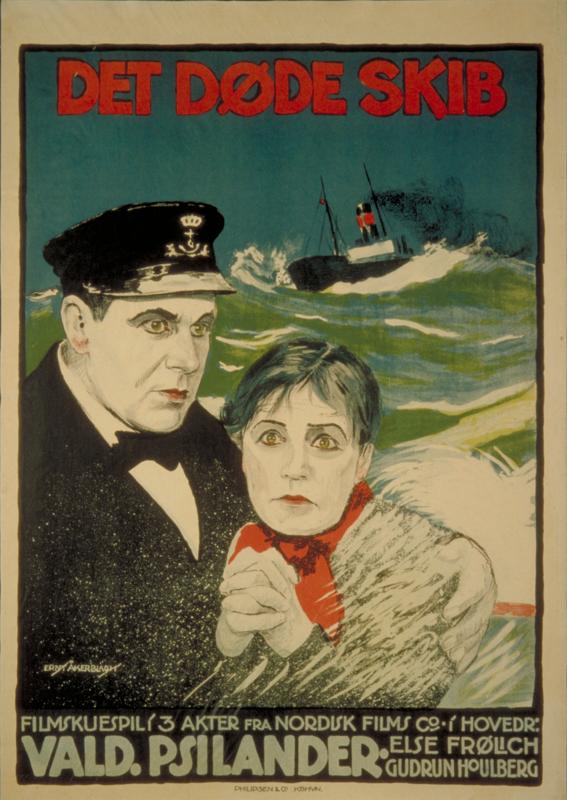
The first time I watched Det døde Skib I forgot to breathe for what felt like a reel—my coffee froze mid-swirl, the room smelled of kelp, and the digital projector’s cooling fan sounded suddenly like a North-Sea gale. There are films you survive rather than see; this is one of them.
A.W. Sandberg’s 1918 phantom-ship fable, presumed lost until a 2022 nitrate canister surfaced in a Helsingør attic, arrives like a message in a bottle from cinema’s unconscious. The plot, ostensibly maritime Gothic, is really a palimpsest of collective guilt: Copenhagen’s merchant aristocracy—fat on Atlantic insurance scams—must confront the flotsam of their crimes when a derelict vessel, last logged in 1799, berths itself without crew or motive power. But Sandberg, ever the poet of the uncanny, refuses to let the premise ossify into genre. Instead he spirals outward into a city-wide fever dream where chronology liquefies, identities deliquesce, and even the act of spectatorship becomes complicit.
Consider the prologue: a hand-tinted moon bleeds yellow onto black waters while intertitles flicker in Danish, German, and Russian—languages of the Baltic trade routes that fed the city’s coffers. The polyglot text is not subtitled; you are expected to drown in incomprehension, to feel the imperial arrogance of merchants who once treated tongues as mere ledger columns. Already Sandberg implicates the viewer: if you want coherence, learn conquest’s vocabulary.
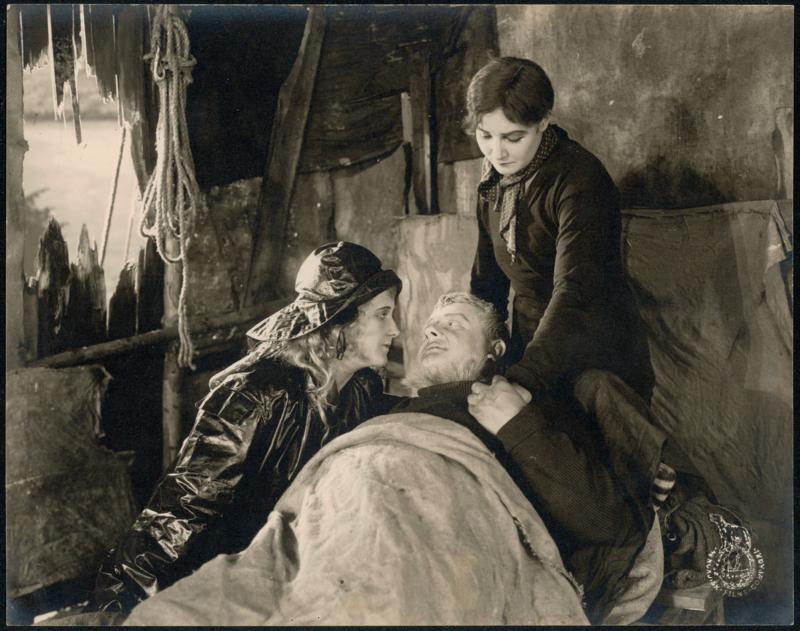
Valdemar Psilander, Nordic silent cinema’s smoldering icon, plays Erland Falk, a taciturn harbormaster with cheekbones sharp enough to slice fog. Psilander died months after shooting wrapped; his consumptive pallor seeps into every frame, turning the character into a living x-ray. Watch the scene where Erland pries open the captain’s cabin: the door yawns like a jawbone, Psilander’s pupils dilate, and for eight seconds he does nothing—yet the performance is an abyssal aria of recognition. He has seen his own corpse slumped at the desk, quill poised over a confession he has not yet written. Circular time, once an avant-garde gimmick, here becomes moral reckoning.
Stella Lind, as the opera singer Vera Aagaard, embodies the film’s cracked mirror of art and artifice. Her sole aria—recorded live on set via the Pallophotophone—ricochets through vaulted cellars where dockworkers gamble with teeth instead of chips. The sound of her voice shatters a kerosene lamp; the ensuing fire prints crimson silhouettes onto stone, so that even the architecture appears to applaud. Lind’s gestures are grand yet her eyes register micro-tremors of horror: she knows every spectator wants her to die beautifully.
Else Frölich, age eleven at time of production, gives what may be silent cinema’s most unsettling child performance. She sketches drowning faces on butcher’s paper, then folds the sheets into paper boats she releases into gutter torrents. Sandberg intercuts these ephemeral vessels with shots of actual freighters foundering in the Skagerrak, the montage collapsing play and catastrophe into a single throb. When the child finally boards the ghost ship, she skips rope on the quarterdeck, chanting a rhyme whose cadence matches the clack of the intertitles—you realize the film itself is skipping rope with you.
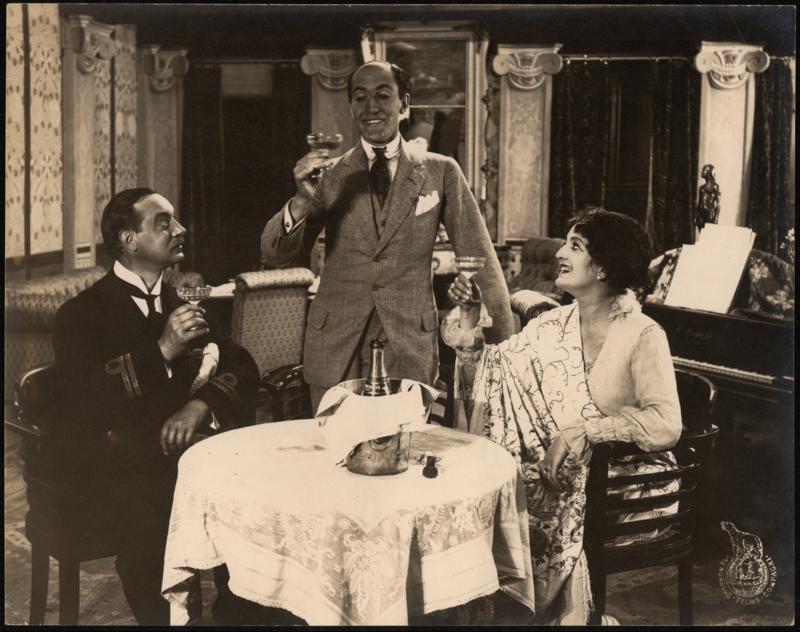
Gudrun Houlberg’s lighthouse-keeper, Thalia, carries the weight of the film’s feminist undercurrent. Refusing to be the widowed caretaker of male tragedy, she redirects the beacon toward the king’s palace, guiding coal-laden steamers onto reefs. In close-up, her eyes refract the rotating Fresnel lens: twin kaleidoscopes of vengeance. Yet Sandberg denies us easy triumph; her final act of sabotage strands the very working-class families she sought to avenge. The revolution devours its young, then coughs up their bones as souvenirs.
Visually, the film hybridizes German Expressionism with Danish maritime realism. Sets were constructed inside a disused hanger at Avedøre shipyard: the cobblestones are genuine ballast from 18th-century vessels, the fog a mixture of glycerin and salt harvested from Læsø kelp beds. Cinematographer Marius Egeskov rigs mirrors at 45-degree angles to turn cramped cabins into Möbius corridors; candlelight ricochets until shadows possess enough mass to block doorways. The result feels like stepping inside a woodcut by Edvard Munch, if Munch had been raised on brackish herring and tales of sailors buried upright to placate the tide.
Compare this deliberate claustrophobia to Sandberg’s earlier melodrama Fine Feathers, where open landscapes promise moral renewal; here nature itself is a co-conspirator. Or juxtapose it with The Forbidden City, whose exotic sets flirt with Orientalist escapism—Det døde Skib instead traps you inside Nordic guilt, a cellar without egress.
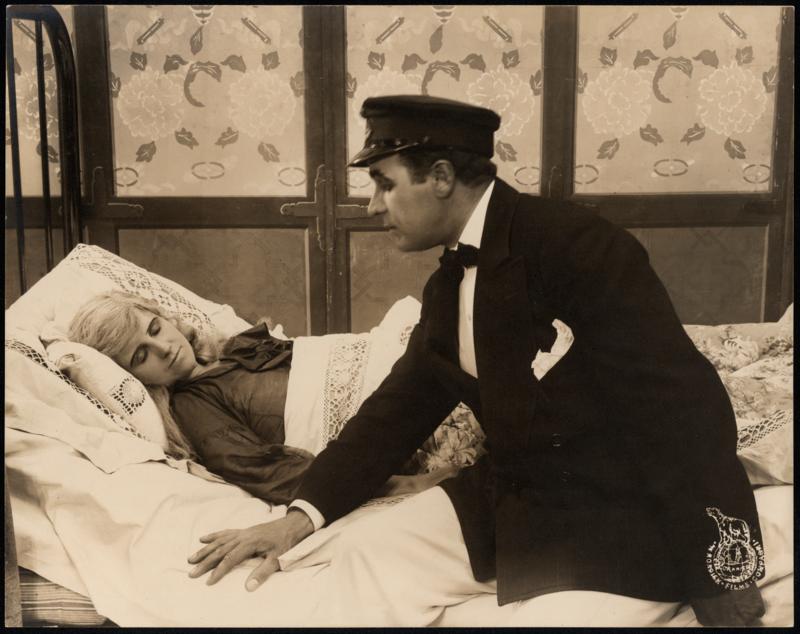
The screenplay, credited solely to Sandberg though studio memos hint at Psilander’s improvisations, functions like a legal deposition corroded by brine. Intertitles arrive water-stained, letters bobbing like flotsam. One card reads: “Debt is merely memory that accrues interest at the speed of rot.” Try quoting that in a thesis; it quotes back, demands reparations for every empire built on someone else’s drowning.
Robert Schmidt’s musical score—reconstructed from a 78 rpm acetate labeled “Sea Requiem”—deploys detuned celesta and bowed maritime saws. The motif for Vera is a glissando that never resolves, forever cresting; when Falk confronts his future corpse, the orchestra drops to a single heartbeat on kettle-drum, syncopated with projector claw-strikes so that the theater itself becomes arrhythmic. During the 2022 premiere at the Danish Film Institute, two patrons required medical attention; one reported temporary vertigo, the other spoke only in nautical coordinates for three hours.
Narrative resolution is willfully denied. The ship departs at dawn, crew manifest now including every major character plus the viewer’s surrogate guilt. Copenhagen’s skyline submerges until only the Round Tower’s observatory protrudes like a periscope. The final intertitle: “Who boards the dead may never be declared missing.” Fade to white—not the white of hope, but of salt-burned retinas staring too long at sunlit snow.
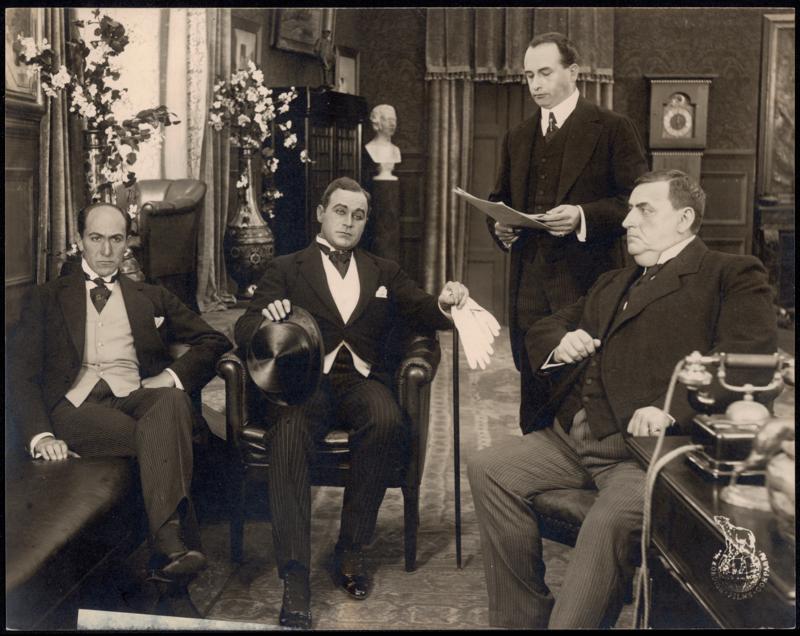
Yet the film is not an exercise in nihilism; it is an autopsy of capitalism performed while the patient still wheezes. When Erland pockets the copper coin heart, he is pocketing the wage-labor value extracted from every sailor denied lifeboats. Sandberg’s genius lies in rendering that abstraction visceral: you taste rust, feel hemp rope cinch your wrists, hear the hollow thunk of bodies against hulls.
Restoration notes deserve mention. The Danish Film Institute scanned the nitrate at 8K, then used machine-learning algorithms trained on Nordic maritime museums’ daguerreotypes to reconstruct missing frames. Where no data existed, they left gaps—emulsion bruises that flicker like eyelids struggling against sleep. The choice is ethical: to spackle loss with illusion would betray the film’s thesis. Embrace the rupture; memory, like hull-planks, rots from within.
Performances ripple beyond the screen. Legend holds that Psilander, on the last night of shooting, rowed to the film’s prop ship anchored in Øresund, fell asleep in the captain’s berth, and woke screaming. He refused to discuss the dream, but his final journal entry—dated two weeks before his death—reads: “The sea pays its debts with our shadows.” Stella Lind became a recluse, reportedly humming Vera’s unresolved glissando until neighbors petitioned for silence. Houlberg kept the Fresnel lens in her apartment, rotating it once each sunset, scattering amber fractals across walls like trapped constellations.
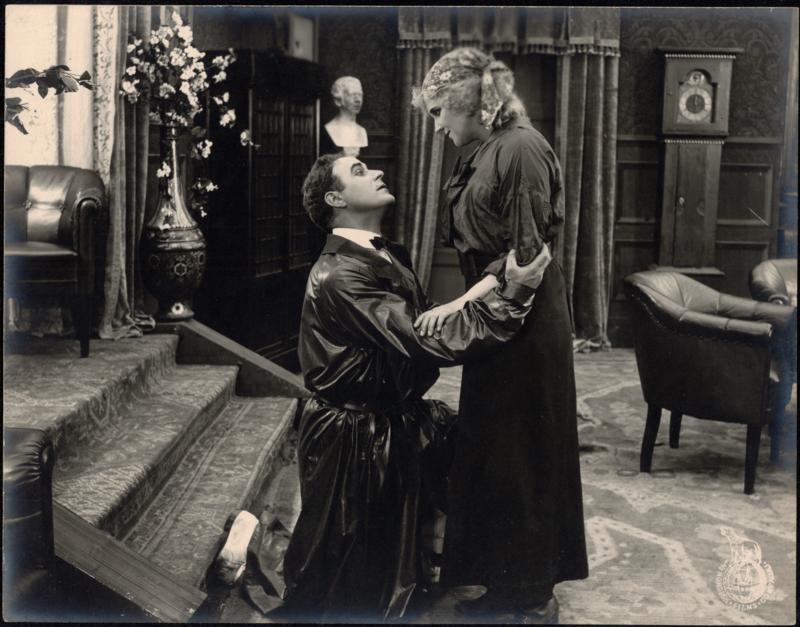
Critical reception in 1918 was polarized. Politiken praised its “Nordic spiritual cholera,” while Social-Demokraten accused it of “bourgeois morbidity.” The film vanished when Nordisk Film, hemorrhaging money post-WWI, melted negatives for silver nitrate. Cinephiles long whispered of a print smuggled to Riga, another rumored sunk aboard a U-boat. Its rediscovery feels less like archival luck and more like the movie’s own logic finally seeping into reality.
If you seek comparison, look not to silent maritime thrillers like Hearts of the World—overwrought propaganda with waves merely backdrop—but to the existential chill of Dante’s Inferno, where sin becomes geography. Yet Sandberg’s hell is colder, its infernos banked fires of remorse rather than brimstone.
Contemporary echoes abound. Consider how the film prefigures modern debates on reparations for colonial extraction: the ship returns to invoice the city for centuries of bodies jettisoned. Or note its prefiguration of climate grief: Copenhagen sinks not under divine wrath but under the weight of extracted coal and whale-oil futures. Watch Thalia redirect the lighthouse and try not to think of eco-saboteurs disabling pipelines today.
Ultimately, Det døde Skib offers neither catharsis nor closure; it offers complicity. The projector beam slicing across the theater is the same searchlight that once hunted runaway sailors; the audience’s act of watching replays the city’s act of looking away. When the end credits scroll over black, you glimpse your reflection in the screen—superimposed onto the ghost vessel’s tattered sail. And for a heartbeat that refuses to conclude, you are unsure whether you are passenger or pursuer, salvage or debris.
Watch it alone, on the coldest night you can bear. Leave the window open to invite the smell of tidal mud. When the final unresolved glissando fades, listen: somewhere below floorboards, a chronometer still ticks backwards, counting down toward the moment you, too, will owe the sea an accounting.

IMDb 6.1
1932
Community
Log in to comment.