DbcultAccessing Vault...
Cult Review
Senior Film Conservator
Spoiler-rich excavation ahead—enter the vault at your own legal peril.
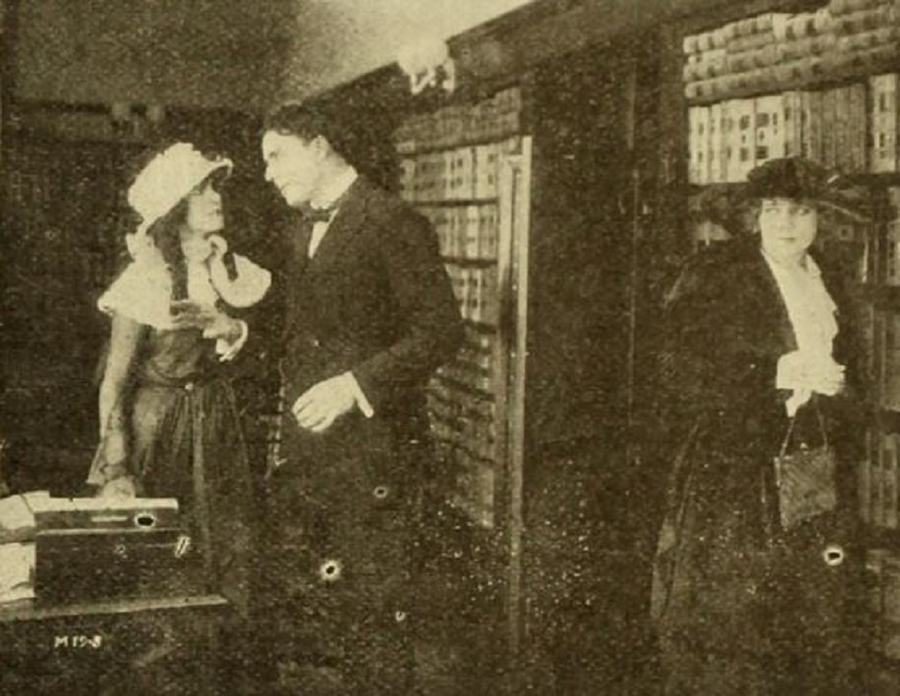
Picture, if you can, a world where wills are written in invisible ink and skin is parchment. When the odious banker Curtis exhales his last ledger-lined breath, he bequeaths more than bullion; he releases a contagion of curiosity powerful enough to make the very walls rotate. The safe in his mahogany tomb must not be opened for thirty days—an abstinence that proves unbearable to Lady Mabel, whose nostrils flare at the scent of deferred wealth like a thoroughbred at the starting gun.
Enter Protea—sleuth, chameleon, proto-feminist icon—played by Josette Andriot with the feral poise of a cat who has memorised every law only to break them gracefully. With a handheld lantern that ejaculates ultraviolet rays (a proto-black-light that turns human pupils into lunar craters), she deciphers the banker's palimpsest: directions to the mine are incomplete, the remaining syllables etched, somewhere, on the deltoid of Fred Sharp, the late financier’s valet. The tattoo has been excised—skin replaced by scar—yet cinema, ever the voyeur, will not be denied. A photograph, snapped when Sharp’s trunks were still damp from river water, becomes the new epidermic text; fracture the frame and the map re-emerges like a ghost from shattered glass.
Meanwhile Count Skettitch—Maurice Vinot channeling both Mephistopheles and stockbroker—has already bugged the mansion with human furniture: his spy Haligan masquerades as a butler whose gloves absorb fingerprints instead of leaving them. Skettitch’s calling card should read “I take what I cannot earn, then apologise in cursive.” He drugs Protea’s boudoir air with miniature chloroformed spheres, a flourish so baroque it edges the narrative into pharmacological surrealism. While she swoons, he pilfers the coordinates, but not before stealing her ring—an act less larceny than betrothal in reverse.
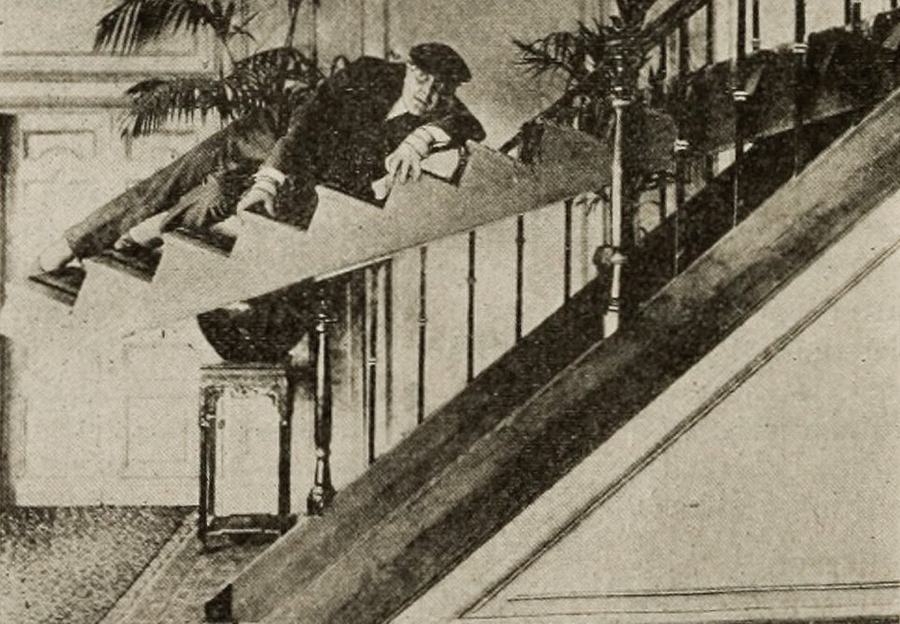
What follows is a travelogue of entrapments. Redwood Manor swivels its own staircase, pitching the Count into a brick womb where Protea demands restitution. He retaliates with dynamite—because nothing says “gentlemanly disagreement” like high explosives—obliterating the ancestral pile in a spray of splinters and gilt. Yet detonation is merely the overture to a more baroque revenge: Protea feigns death, Mabel is abducted into a coach lined with velvet and menace, and Skettitch retires to a mountain encampment where champagne flows and courtesans gyrate like coins spun on marble.
Here the film pirouettes into proto-camp. Tommy, Protea’s loyal factotum, responds to a theatrical casting call advertising “a sensation.” Cue Electra: Protea in mid-riff veils, hips speaking a language older than subpoenas. Skettitch, panting, presses his suit; she demands he bring Mabel as dowry. The moment the trio share a drawing-room, the camera lingers on a silent Mexican-standoff of gazes—then handcuffs snap, the Count is trussed like a pheasant, and the gold mine reverts to Mabel, who has learned that ownership and self-possession are conjugations of the same verb.
Director Édouard Pinto treats every set-piece like a cubist’s daydream. The ultraviolet close-up renders human irises as opalescent moons; the river rescue is staged with an overhead mirror, water doubling sky, so when Protea falls she appears to plummet upward. Explosions are hand-tinted amber, frame by frame, giving fire the texture of blooming marigolds against monochrome night. Intertitles—rare as rubies—arrive just long enough to flirt, never to explain.

Andriot’s Protea anticipates theNew Woman: she is equally comfortable in dinner jacket or chiffon, her desire never defined by the gender of whom she rescues or seduces. When she peels off Electra’s veils, the reveal is not flesh but authority—she indicts with a smile more lethal than any revolver. Contemporary viewers reportedly argued whether Protea was man, woman, or “something else entirely,” proof that the film had already hacked the binary before the word existed.
The mine itself—never shown—functions like Conrad’s heart of darkness, a geographic abscess whose wealth flows only to those willing to flay cartography into flesh. By making the map a tattoo, then a scar, then a photograph, the film whispers that colonisation is a succession of surfaces: skin, paper, celluloid. Skettitch’s greed is merely the latest empire to demand epidermal tribute.
Released only months after the first Protéa, this sequel refuses the episodic reset button. Mansions stay exploded; heroines remain handcuffed to narrative momentum. Each cliff-hanger—lasso above burning abyss, narcotic orb rolling across parquet—delivers what the poet Apollinaire called “la volupté du presque-mort,” the orgasm of almost-dying. Survival is not redemption; it is foreplay for the next scrape.
Where Fantômas luxuriates in urban gaslight, Protea II prefers mineral gloom: shafts, caves, candlelit tents. If Pauline is innocence fastened to railroad tracks, Protea is complicity wearing spurs. And unlike the saintly tableaux of From the Manger to the Cross, salvation here is transactional—antidote for intel, handcuff for mine deed—administered by a woman who has read the small print on salvation’s contract and struck the devilish clauses.
Seen today, the film crackles like a Tesla coil: its gender politics feel contemporaneous, its special-effects ethos—do it in-camera, make it beautiful—shames CGI overkill. The print’s chemical decay (bubbling emulsion, violet mould) only heightens the narrative’s obsession with erasure and return. What survives is a blueprint for every later anti-heroine who refuses to choose between wit, weapon, and wile.
Rating: 9.2/10 — a nitrate comet streaking across early cinema’s sky, still too hot to handle with bare historiography.
For further archaeological digs, compare The Mystery of the Rocks of Kador (1912) for more ultraviolet skulduggery, or Les Misérables Part 1 for another narrative where law and skin are parchment.
IMDb 5.5
1923
Community
Log in to comment.