DbcultAccessing Vault...
Cult Review
Senior Film Conservator
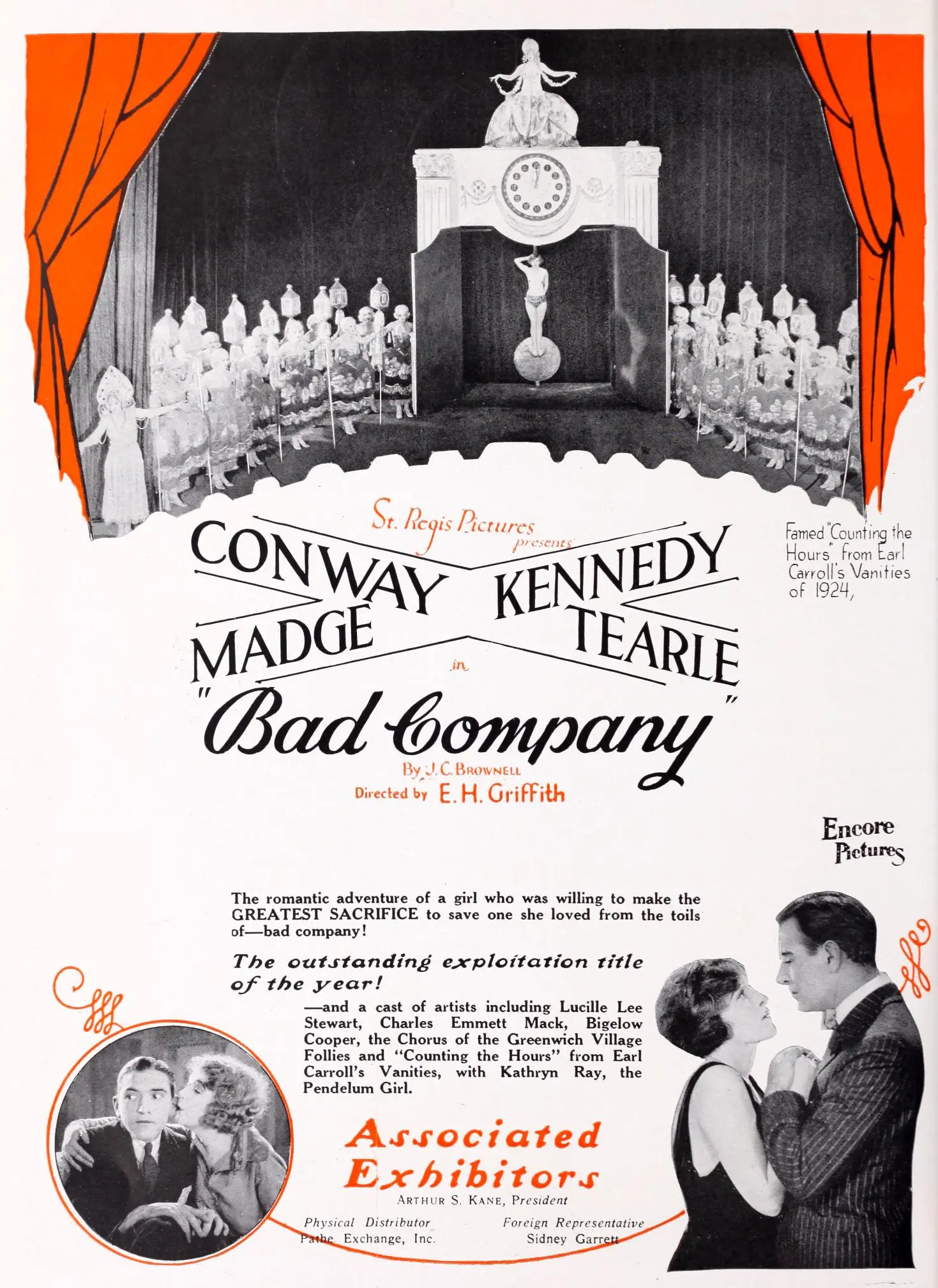
Short answer: Is this film worth your time today? Yes, but only if you appreciate the slow-burn psychological tension of the silent era over modern spectacle.
This film is for enthusiasts of early 20th-century social dramas and those who enjoy watching a protagonist make objectively bad decisions for the right reasons. It is NOT for those who require fast-paced action or a clear-cut hero to root for.
1) This film works because: The central dynamic between Gloria and Hamilton subverts the typical 'damsel in distress' trope by making her a thief and him a complicated enabler.
2) This film fails because: The brother’s character is so thinly written that it’s hard to care if he gets swindled or not.
3) You should watch it if: You want to see a 1920s take on inheritance law that feels surprisingly cynical about the legal profession.
In the landscape of 1925 cinema, characters were often painted in broad strokes of virtue or vice. Bad Company dares to step into the grey. Gloria Waring, played with a frantic energy by Madge Kennedy, isn't stealing for greed. She is stealing for protection. This distinction is vital. When she breaks into James Hamilton’s office, the camera lingers on her trembling hands, not to show weakness, but to emphasize the weight of her choice. It’s a scene that mirrors the high-stakes tension found in The Teaser, but with a much darker undercurrent.
The film treats the 'will' not just as a legal document, but as a physical manifestation of the Waring family's soul. By removing it from the attorney's vault, Gloria effectively removes her family from the protection of the law. This is where the film gets interesting. The law, represented by Hamilton, is not an objective force here. It is a tool. And Hamilton is a master at wielding it. Unlike the more straightforward romantic entanglements in The Fate of a Flirt, the relationship here is built on a foundation of mutual blackmail and hidden trauma.
Conway Tearle delivers a performance as James Hamilton that is unsettlingly calm. When he discovers Gloria in his office, there is no outburst of righteous indignation. Instead, there is a chilling sense of recognition. He sees in Gloria a kindred spirit—someone willing to break the rules to achieve a specific outcome. This is a debatable point, but I would argue that Hamilton is the true antagonist of the piece, despite his 'sympathy.' He doesn't help Gloria out of the goodness of his heart; he helps her because her crime gives him ownership over her.
The pacing in the second act slows down significantly as the film explores Hamilton's motivations. Some might find this tedious. I find it essential. It transforms the movie from a simple melodrama about a gold-digger into a proto-noir character study. The way the shadows fall across Hamilton's face during his confession scene is a masterclass in silent-era lighting. It’s far more effective than the more theatrical lighting seen in The Pretty Sister of Jose.
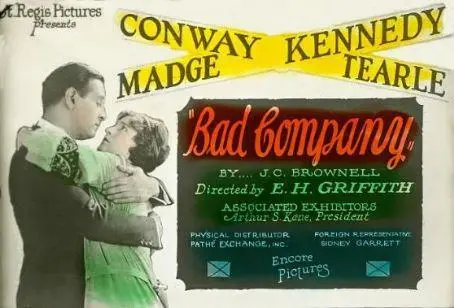
Yes, Bad Company is worth watching for its unique moral ambiguity. It stands out among 1920s films for its refusal to provide easy answers. While the plot involves a classic gold-digger trope, the focus remains on the psychological toll of the cover-up. It is a compelling look at the lengths one will go to to preserve a legacy.
Madge Kennedy was known for her comedic timing, but here she pivots to a more grounded, desperate tone. There is a specific moment when she realizes Hamilton has caught her—a flicker of pure terror that dissolves into a weary resignation. It is a subtle piece of acting that anchors the entire film. Compare this to the broader performances in Tillie's Punctured Romance, and you see the evolution of the craft in real-time.
Charles Emmett Mack, as the brother, is unfortunately the weak link. He plays the role with a level of naivety that borders on the absurd. It’s hard to believe that a man of his standing would be so easily manipulated by Teddy Lamont. However, his lack of depth actually serves to highlight Gloria’s isolation. She is truly alone in her fight, which adds a layer of pathos to her criminal acts. The film works. But it’s flawed.
The cinematography in Bad Company is surprisingly modern in its use of close-ups. The director understands that in a silent film, the eyes do the heavy lifting. The scenes inside the Waring estate feel claustrophobic, filled with heavy drapes and ornate furniture that seem to press in on Gloria. It’s a sharp contrast to the more open, adventurous feel of films like The Rescue or California or Bust.
The use of title cards is also restrained. The film trusts the audience to follow the emotional beats without constant textual intervention. This is a sign of a confident production. It doesn't over-explain the 'complications' that ensue; it lets the tension build through visual storytelling. The final confrontation in the attorney's office is a perfect example of this, where the power dynamic shifts through blocking and gaze rather than dialogue.
Pros:
Cons:
When viewing Bad Company, one must consider the era's obsession with class and the 'new woman.' Gloria represents a shift—a woman who takes the law into her own hands to protect the patriarchy she belongs to. It’s a fascinating contradiction. It lacks the exoticism of Miss Suwanna of Siam, but it replaces it with a gritty, urban anxiety that feels quite prescient.
The film also touches on the idea of 'reputation' as a currency. Hamilton’s secret isn't just a plot point; it’s a commentary on how everyone in this high-society world is hiding something. It shares this DNA with The Masked Heart, though it handles the reveal with more subtlety. The 'bad company' of the title doesn't just refer to the gold-digger; it refers to the entire social circle Gloria is trying to navigate.
Bad Company is a sophisticated piece of silent cinema that deserves more than its current obscurity. While it suffers from some of the structural weaknesses of its time—namely a lackluster supporting cast—the central conflict is timeless. It’s a story about the high cost of protection and the dangerous reality that those who help us often expect a payment we can't afford. It’s not a 'masterpiece,' but it is a sharp, cynical, and ultimately rewarding watch for anyone willing to look past the grain of the film stock. It’s a reminder that even in 1925, the world was far from black and white.
IMDb 7.5
1922
Community
Log in to comment.