DbcultAccessing Vault...
Cult Review
Senior Film Conservator
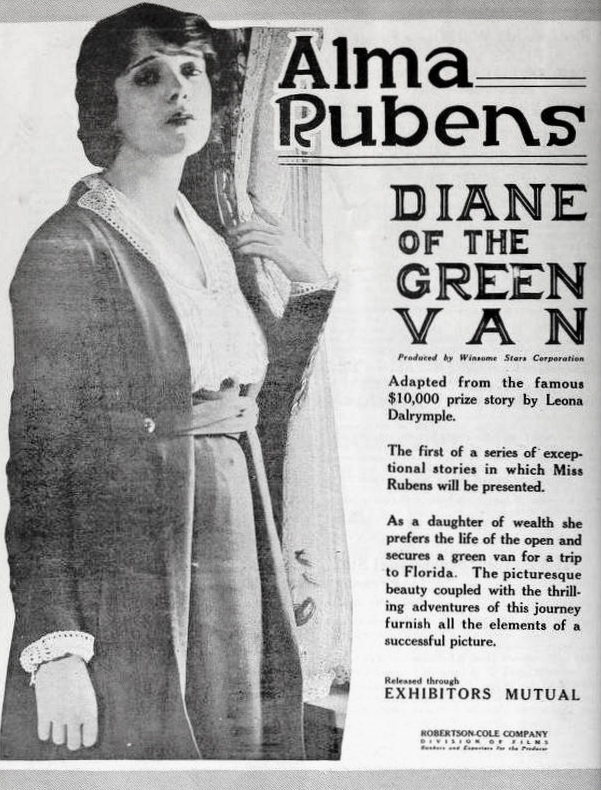
In the annals of silent cinema, some narratives shimmer with an enduring allure, transcending their era to speak to universal human desires. 'Diane of the Green Van', a cinematic gem from 1919, is unequivocally one such creation. It isn't merely a film; it's a vibrant tapestry woven with threads of adventure, romance, and geopolitical machination, all against the backdrop of a woman's audacious quest for self-discovery. Released during a period of profound societal flux, particularly for women, this film offers more than just escapist entertainment; it presents a fascinating commentary on independence, inheritance, and the unforeseen consequences of breaking free from gilded cages. Directed by Francis J. Grandon and penned by Thomas J. Geraghty and Leona Dalrymple, it adapts Dalrymple's popular novel, bringing to life a narrative that pulses with a captivating energy, even a century after its premiere. It compels us to consider the timeless human yearning for authenticity, a desire that often propels individuals into the most extraordinary circumstances.
At the heart of this intricate narrative is Diane Westfall, portrayed with a compelling blend of youthful naivete and burgeoning resolve by Josephine Crowell. Diane is not merely a wealthy heiress; she is a soul stifled by the opulent monotony of her existence. Her inherited fortune, rather than providing liberation, has become a gilded cage, a barrier separating her from the raw, unvarnished experiences of life that she so desperately craves. Her decision to abandon her palatial confines and embark on an adventure in a humble green van isn't a whimsical flight of fancy; it's an existential rebellion, a profound declaration of independence against the suffocating expectations of her social standing. This impulse resonates deeply, echoing the spirit of other adventurous heroines of the era, though Diane's specific choice of conveyance lends a charmingly unconventional touch to her escapade. It's a testament to the burgeoning spirit of female autonomy that was slowly, yet inexorably, gaining traction in the post-Victorian landscape. Her journey is less about a destination and more about the process of becoming, shedding the skin of her inherited identity to forge one truly her own. This yearning for authentic experience, for a life lived on one's own terms, is a powerful engine for the ensuing drama, setting in motion a chain of events far grander and more perilous than she could ever have imagined.
Diane's impulsive departure inadvertently casts her as the unsuspecting nexus of converging, often conflicting, male desires and ambitions. Four distinct figures, each with their own compelling motivations, are drawn into her wake, transforming her personal quest into a thrilling, multi-layered pursuit. First, there is Carl, her calculating cousin, whose avarice paints him as a conventional villain. His pursuit is driven purely by the cold, hard logic of inheritance, a stark contrast to Diane's romantic idealism. His presence introduces a familiar element of greed-fueled treachery, a common trope in melodramas of the era, yet expertly woven into the larger tapestry of the plot.
Then, the narrative takes an unexpected turn into the realm of geopolitical intrigue with the introduction of Baron Tregar of Houdania. Portrayed with a gravitas that suggests deep-seated loyalty, Tregar represents an ancient, almost forgotten claim. His belief that Diane might be the rightful heir to the Houdanian throne elevates the stakes considerably, transforming a personal adventure into a matter of national destiny. This element injects a fascinating blend of fairy-tale romance and political realism, reminiscent of European court dramas, but with an American heiress at its core. Tregar's pursuit is one of protection and restoration, a stark counterpoint to Carl's selfish machinations. This intricate dance of motives and loyalties brings a depth to the narrative that elevates it beyond a simple chase film.
Further complicating matters is Prince Ronador, another Houdanian claimant, whose ambition knows no bounds. Ronador's desire for the throne is absolute, and his willingness to eliminate any potential rival, particularly Diane, casts a menacing shadow over her journey. He embodies the ruthless pragmatism of power politics, a dark mirror to Tregar's noble intentions. The tension between Tregar and Ronador, both vying for control of Houdania and, by extension, Diane's fate, creates a compelling dynamic that keeps the audience on edge. This intricate web of political maneuvering, where a young woman's identity holds the key to a nation's future, is a masterstroke of storytelling, demonstrating the sophisticated plotting often found in the best silent films. The urgency of their respective quests, one to protect and one to destroy, forms the very backbone of the film's suspense.
Finally, there is Philip Poynter, the young American friend of Baron Tregar, whose pursuit is born of a far more personal and profound motivation: love. Having met Diane before her escapade, Philip has fallen deeply for her, and his subsequent quest is driven by an unwavering desire to protect her from the myriad dangers that now surround her. Nigel Barrie imbues Philip with a chivalrous charm, making him the romantic hero whose devotion stands in stark contrast to the self-serving motives of the others. His journey is one of selfless dedication, a beacon of genuine affection amidst the surrounding greed and political intrigue. Philip's role anchors the film's emotional core, reminding us that even amidst grand adventures and dangerous conspiracies, the human heart remains a powerful, guiding force. His pursuit is not for gain, but for safeguarding the woman he loves, adding a timeless romantic dimension to the thrilling chase.
The fictional Balkan country of Houdania serves as more than just a plot device; it provides a rich, albeit imagined, backdrop for the film's more ambitious themes. In the post-World War I era, the geopolitical landscape of Europe was in constant flux, with new nations emerging and old monarchies crumbling. This historical context lends a palpable sense of relevance to Houdania's plight and the battle for its throne. The idea of a lost heir, particularly an American one, adds a layer of romantic exoticism and democratic idealism to what might otherwise be a straightforward royal drama. The film cleverly taps into contemporary anxieties and fascinations surrounding European monarchies and the shifting balance of power, making Diane's potential claim not just a personal matter but one of international significance.
Baron Tregar's earnest efforts to locate and protect Diane speak to a profound loyalty to his nation and its legitimate succession. His character embodies a sense of duty and tradition, contrasting sharply with Prince Ronador's cynical ambition. Ronador's willingness to commit regicide, or at least prevent a legitimate heir from taking the throne, underscores the darker side of power struggles. This political chess game, played out across continents and intersecting with Diane's personal journey, elevates 'Diane of the Green Van' beyond a mere adventure story. It becomes a commentary on the nature of leadership, the corrupting influence of power, and the enduring allure of rightful succession, themes that resonate from Shakespearean tragedies to modern political thrillers. The very notion of a 'rightful heir' being an unsuspecting American heiress is a delightful twist, blending Old World mystique with New World pragmatism.
The craft of silent filmmaking, often underestimated in our sound-saturated era, is on full display in 'Diane of the Green Van'. Without the luxury of dialogue, the film relies heavily on visual storytelling—exaggerated facial expressions, dramatic gestures, evocative cinematography, and the judicious use of intertitles. Francis J. Grandon's direction demonstrates a keen understanding of this visual language, guiding the audience through complex plot points and emotional arcs with remarkable clarity. The pacing, though occasionally deliberate by modern standards, allows for a meticulous unfolding of the various pursuit threads, ensuring that each character's motivation and movement is clearly understood.
The cinematography, while perhaps not groundbreaking for its time, effectively captures the contrasting worlds Diane inhabits: the suffocating grandeur of her estate, the liberating anonymity of the open road, and the shadowy intrigue of the international pursuit. Close-ups are employed to convey intense emotions, while wider shots establish the scope of the chase and the vastness of Diane's unexpected odyssey. The intertitles, far from being mere expository text, often serve to enhance the mood, provide crucial exposition, and even inject moments of humor or pathos. They are an integral part of the narrative, carefully placed to maintain engagement without disrupting the visual flow. This delicate balance between visual action and textual explanation is a hallmark of well-executed silent cinema, and 'Diane of the Green Van' manages it with commendable skill. The film's ability to create suspense and emotional resonance without a single spoken word is a powerful reminder of the artistry inherent in this early form of cinematic expression.
The cast of 'Diane of the Green Van' rises to the challenge of silent acting, delivering performances that are both expressive and nuanced. Josephine Crowell, as Diane Westfall, carries the emotional weight of the film with grace. Her initial portrayal of boredom and restlessness is palpable, making her subsequent transformation into a resourceful adventurer believable and engaging. She conveys her character's internal struggles and external courage through subtle shifts in posture, gaze, and gesture, allowing the audience to empathize with her journey of self-discovery. Her performance is central to the film's success, grounding the fantastical elements of the plot in a relatable human experience.
Nigel Barrie, as Philip Poynter, embodies the ideal romantic hero of the era. His earnestness and unwavering devotion to Diane are conveyed through his heroic actions and protective demeanor, without resorting to melodrama. He projects an aura of dependable strength, making his character a reassuring presence amidst the chaos. Ed Brady, as Carl, skillfully portrays the cousin's greed and duplicity, his expressions and body language clearly communicating his villainous intentions. Alma Rubens, Lamar Johnstone, and Wedgwood Nowell, among others, contribute solid supporting performances, each carving out distinct personalities within the ensemble. The film's success in portraying such a diverse range of characters and motivations without dialogue speaks volumes about the talent of this ensemble. Their ability to communicate complex emotions and intricate plot details through purely visual means is a testament to their skill and the unique demands of silent cinema. The emotional depth they achieve, particularly in moments of peril or tenderness, is genuinely impressive.
When we delve into the thematic landscape of 'Diane of the Green Van', it's impossible not to draw parallels with other cinematic endeavors of the silent era that explored similar motifs of pursuit, hidden identity, and the clash between personal desire and external forces. The breathless chase sequences and the underlying tension of being hunted might evoke memories of films like Gambler's Gold or Kiss or Kill, where characters are often entangled in dangerous games of cat and mouse, their fates hanging precariously in the balance. However, where those films might focus predominantly on the thrill of the chase or stark moral dilemmas, 'Diane of the Green Van' layers these elements with a more profound quest for self-realization, a journey that begins with a deliberate act of breaking away from societal constraints.
The intricate political intrigue surrounding the Houdanian throne, with its factions vying for power and the search for a legitimate heir, could find conceptual echoes in the grander historical epics or dramas of the period, though perhaps with less direct comparison to specific titles like The Chosen Prince, or the Friendship of David and Jonathan which explores themes of loyalty and succession in a different context. Here, the political maneuvering is less about biblical allegory and more about the immediate, tangible threat to Diane's life and the future of a fictional nation. This blend of personal peril and national destiny gives the film a unique flavor, distinguishing it from simpler adventure narratives. Furthermore, Diane's initial dissatisfaction with her wealthy existence and her yearning for something more authentic resonates with social commentaries found in films like A Nine O'Clock Town, which often critiqued the superficiality of urban life and the constraints placed upon individuals by societal expectations. While 'A Nine O'Clock Town' might focus on the daily grind, 'Diane of the Green Van' extrapolates this dissatisfaction into a grand, cross-country escape.
The romantic subplot, with Philip Poynter's unwavering devotion and protective instincts, aligns with the heroic male archetypes prevalent in silent-era romances, but it's grounded by the genuine danger Diane faces, making their connection feel earned rather than merely contrived. Unlike the often-exaggerated melodrama of some romantic thrillers, the stakes here are genuinely high, lending credibility to Philip's heroic efforts. The film masterfully juggles these disparate elements—the personal journey, the thrilling pursuit, the political conspiracy, and the blossoming romance—into a cohesive and engaging whole, proving that silent cinema was capable of intricate, multi-faceted storytelling that could hold its own against any later productions. It's a testament to the film's enduring power that these themes, and the skillful way they are interwoven, continue to captivate viewers today, offering a window into both the cinematic techniques and societal concerns of a bygone era.
'Diane of the Green Van', despite its age, remains a remarkably engaging and relevant film. Its central themes—the quest for personal freedom, the search for identity beyond inherited circumstances, the corrupting influence of power, and the enduring strength of love—are timeless. Diane's journey is a powerful metaphor for anyone seeking to break free from the constraints of their predetermined path, daring to chart a new course against all odds. Her story resonates with a universal desire for authenticity and self-determination, a desire that continues to drive individuals in every generation.
The film also serves as an important historical document, offering insights into the social mores and anxieties of the early 20th century. The idea of a strong, independent female protagonist, even one who finds herself in need of protection, speaks to the evolving role of women in society during this transformative period. It subtly challenges traditional notions of female fragility, presenting Diane as resourceful and resilient, even if initially naive. The intricate plotting, with its multiple layers of pursuit and intrigue, showcases the sophisticated narrative capabilities of silent cinema, proving that a lack of spoken dialogue did not equate to a lack of depth or complexity. It reminds us that storytelling, at its core, is about compelling characters, engaging conflicts, and the universal human experiences that bind us all.
In conclusion, 'Diane of the Green Van' is far more than a historical curiosity; it is a vibrant, thrilling adventure that continues to captivate. It is a testament to the power of visual storytelling, the enduring appeal of a compelling mystery, and the timeless nature of human desires. For those willing to immerse themselves in the artistry of the silent era, this film offers a richly rewarding experience, a journey into a world where a green van can lead to an unexpected throne, and a bored heiress can discover her true self amidst a flurry of international intrigue. Its legacy lies not just in its entertainment value, but in its ability to spark contemplation about personal liberation and the intricate dance of fate and free will. A true classic that deserves to be rediscovered and celebrated by new generations of cinephiles.
IMDb —
1924
Community
Log in to comment.