DbcultAccessing Vault...
Cult Review
Senior Film Conservator
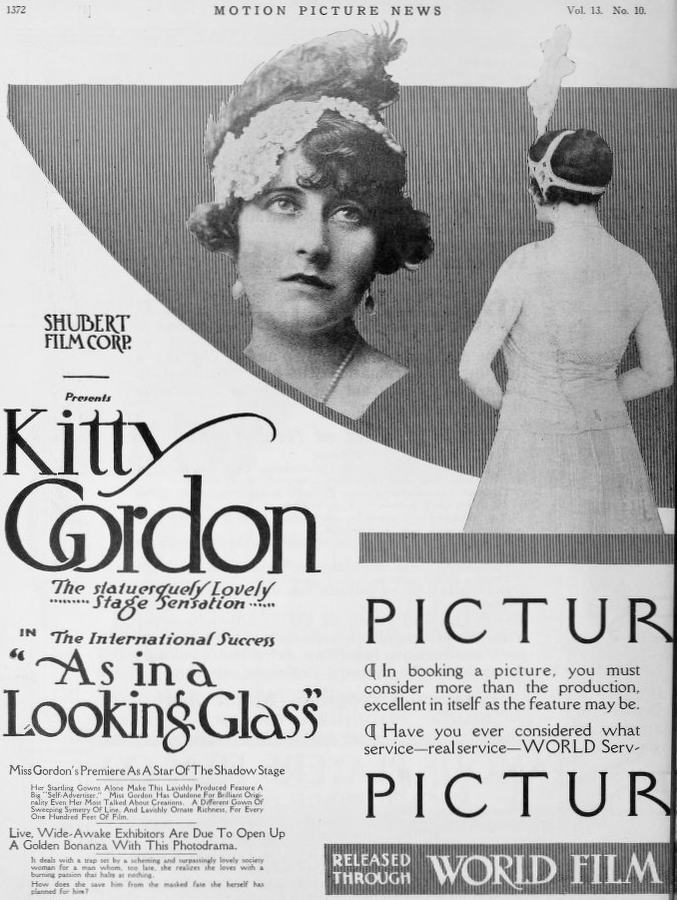
Step back into the nascent days of cinematic storytelling, to a time when melodrama reigned supreme and the silent screen spoke volumes through gesture, expression, and the potent power of narrative suggestion. Francis Charles Philips’s 'As in a Looking Glass' (1916) emerges from this era as a compelling, if melancholic, exploration of identity, redemption, and the inescapable tendrils of a shadowed past. It's a film that, even a century later, retains a certain magnetic pull, drawing us into a world where moral compromises are made under duress, and love blooms in the most treacherous of soils. Kitty Gordon, in the pivotal role of Lila Despard, anchors this emotional maelstrom with a performance that transcends the limitations of the medium, conveying a woman caught between societal condemnation and an yearning for genuine connection.
The narrative unfurls with Lila Despard, a figure cloaked in European scandal, fleeing the continent and the clutches of her criminal paramour, Jack Firthenbras. Her journey across the Atlantic is not merely a physical displacement but a desperate attempt at a spiritual and social rebirth. This trope of the 'fallen woman' seeking absolution in a new land was a potent narrative device in early cinema, often explored in films like The Straight Road, where characters wrestle with the indelible marks of their past. Lila's encounter with the respectable Andrew Livingston, a United States Navy planner, and the esteemed Senator and Mrs. Gales, feels like a serendipitous intervention, offering her a tantalizing glimpse of a legitimate, untainted existence. Their immediate acceptance, their willingness to introduce her into the rarefied air of Washington, D.C. society, speaks volumes about Lila's charm and her capacity to project an image of elegant innocence. One can almost feel the fragile hope that flickers within her, a hope for a life unburdened by the ghosts of yesterday.
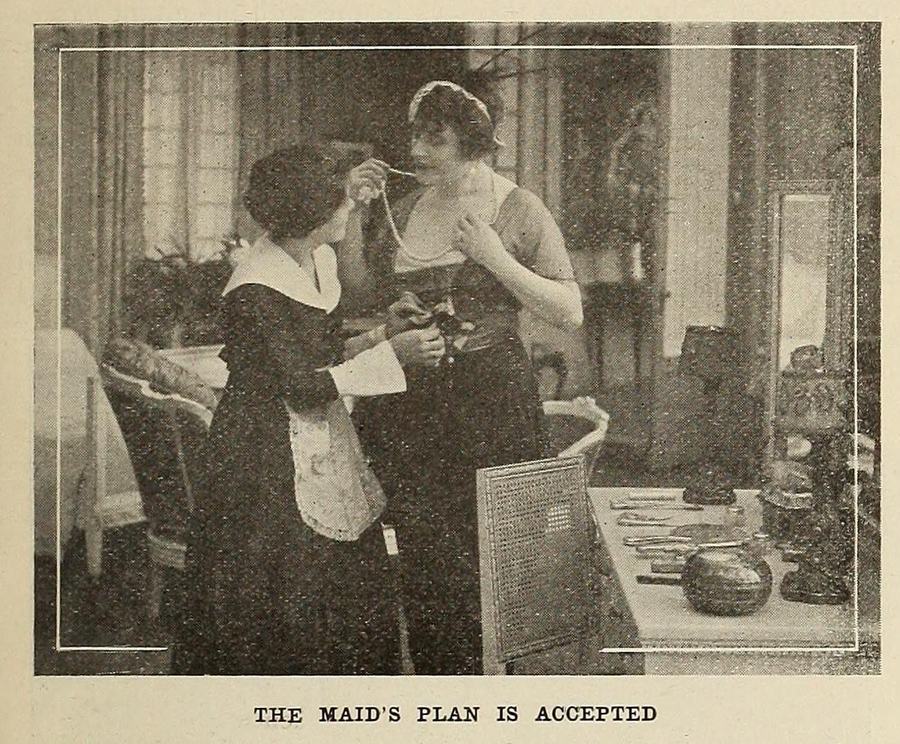
The film masterfully establishes this initial period of grace, allowing the audience to invest in Lila's potential for redemption. Eugenie Woodward and Lillian Cook, as Mrs. Gales and another socialite, respectively, provide the backdrop of genteel society against which Lila's internal drama plays out. Lumsden Hare, as Andrew Livingston, embodies the quintessential American hero of the era: honorable, earnest, and somewhat naive to the complexities of the world beyond his naval blueprints. Their burgeoning connection is painted with a delicate brush, suggesting a romance built on genuine admiration, a stark contrast to the transactional nature of Lila's past relationships.
Yet, the very title, 'As in a Looking Glass,' hints at the reflective, inescapable nature of truth. The mirror, after all, shows not just what we wish to see, but what truly is. Lila’s carefully constructed new reality is shattered by the arrival of Dromiroff, a spy whose sinister presence personifies her past transgressions. Gladden James, as Dromiroff, delivers a chilling portrayal of a man who thrives on manipulation and fear. His demand – that Lila steal Andrew's secret naval plans – thrusts her into an impossible moral quandary. The stakes are astronomically high: her future with Andrew, her newfound respectability, all hang precariously in the balance against the threat of public exposure and utter ruin. This kind of moral labyrinth, where a protagonist is forced into an ethically compromising position, finds echoes in the intricate plots of films like The Labyrinth or even The Edge of the Abyss, where characters teeter on the brink of profound moral failure.
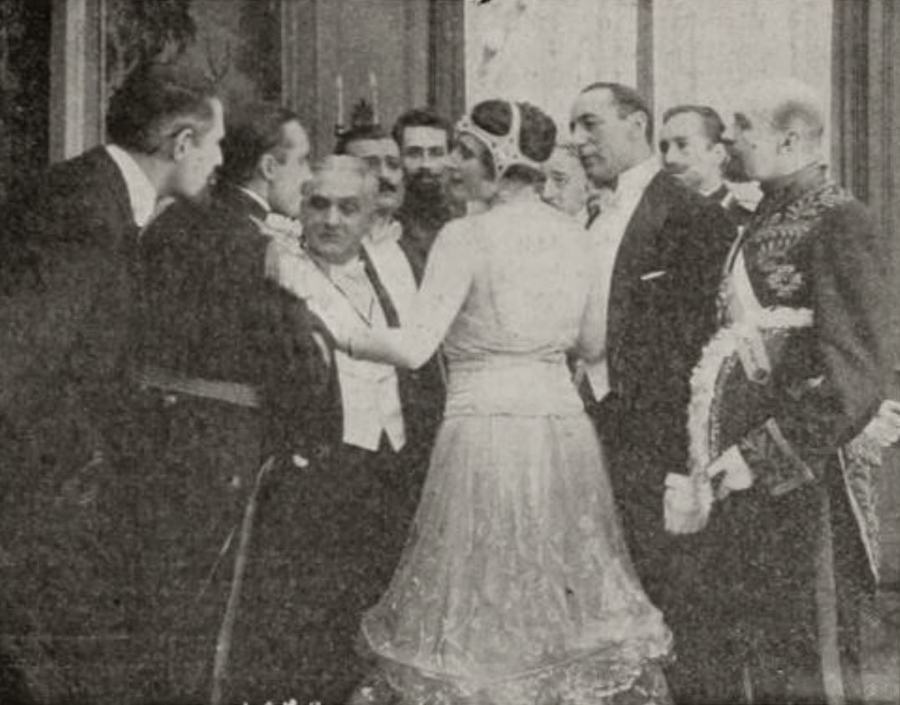
The film excels in depicting Lila's internal conflict. Kitty Gordon’s expressive eyes and subtle gestures convey the torment of a woman forced to choose between self-preservation and the destruction of the man she has grown to love. The act of seducing Andrew, initially a calculated maneuver to gain access to the plans, transforms into a crucible for her soul. It is here that the film truly earns its dramatic weight. The blossoming of genuine affection, the unexpected tenderness that develops between them, complicates her mission exponentially. The line between performance and reality blurs, and Lila finds herself genuinely falling for Andrew, an unforeseen consequence that elevates the narrative beyond simple espionage thriller into a poignant character study.
The decision to marry Andrew, while seemingly a joyous occasion, is fraught with unspoken tension. It represents Lila’s desperate grasp at happiness, a fragile shield against the storm she knows is brewing. The honeymoon, a symbol of new beginnings, becomes the stage for the inevitable confrontation with her past. Dromiroff’s brutal abduction from the bridal suite is a shocking and effective plot twist, ripping Lila away from the very sanctuary she had sought to build. This moment underscores the relentless nature of her predicament, a reminder that some pasts cannot be outrun.

The climax at the conspirators' headquarters is a masterclass in silent film suspense. Lila, cornered and desperate, makes a choice that redefines her character. Her act of destroying the documents, even as she takes a fatal bullet, is a profound statement of sacrifice and ultimate redemption. It’s a moment that resonates with the tragic heroism seen in films like Her Bitter Cup, where female protagonists often face dire consequences for their choices, yet emerge, often posthumously, as figures of immense moral fortitude. The telephone call to Andrew, her dying confession, is heartbreakingly poignant. It’s a final, desperate attempt to reconcile her complicated life, to reveal the truth of her love and the depth of her sacrifice, even as it shatters his perception of her. The conspirators' subsequent demise, their car plunging from a cliff, provides a rather convenient, albeit dramatically satisfying, resolution to the external threat, ensuring that justice, in its own cinematic way, is served.
Kitty Gordon’s portrayal of Lila Despard is arguably the film's greatest strength. She navigates the character's complex emotional landscape with remarkable nuance, conveying vulnerability, cunning, love, and ultimately, tragic heroism, all without uttering a single word. Her ability to project such a rich inner life through expression and movement is a testament to the power of silent acting. Lumsden Hare, as Andrew Livingston, provides a strong, if somewhat less complex, counterpoint. His earnestness makes Lila's betrayal all the more impactful, and his eventual heartbreak feels genuinely earned. Gladden James's Dromiroff is a memorable villain, exuding menace and control, a necessary foil for Lila's journey. The ensemble cast, including Philip W. Masi, Charles Eldridge, Teddy Sampson, George Majeroni, and Frank Goldsmith, contribute effectively to the film's atmosphere, even in smaller roles, helping to build the world of political intrigue and social decorum.
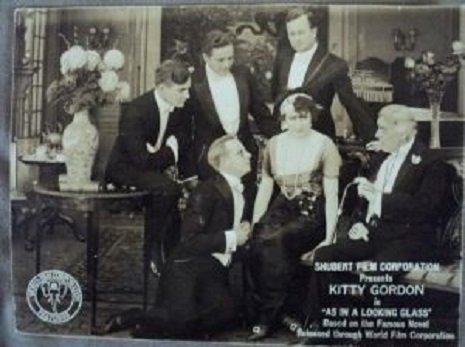
'As in a Looking Glass' delves into themes that remain perennially relevant. The idea of a scandalous past haunting an individual, the societal judgment often harsher for women, and the desperate yearning for a second chance are all powerfully explored. The film is a commentary on the restrictive social mores of its time, where a woman’s reputation could be irrevocably tarnished, and redemption often came at an exorbitant personal cost. It touches upon the insidious nature of espionage, where personal lives become pawns in larger geopolitical games, a theme echoed in later thrillers, even if the silent era's portrayal was more overtly melodramatic.
Francis Charles Philips, as the writer, crafted a narrative that, while perhaps not entirely original in its individual components, weaves them into a compelling tapestry. The pacing, typical of the era, allows for moments of quiet reflection balanced with bursts of dramatic action. While the film may not possess the grand scale of some contemporary epics, its focus on the internal world of its protagonist gives it an intimate power. It's a reminder that even in the absence of spoken dialogue, cinema could articulate profound human experiences.
In the grand tapestry of early cinema, 'As in a Looking Glass' stands as a poignant testament to the enduring power of classic melodrama. It is a film that asks us to look beyond the surface, to peer into the complex motivations and moral struggles of its characters. Lila Despard's journey, fraught with peril and punctuated by sacrifice, resonates not just as a tale of espionage and love, but as a timeless exploration of identity and the elusive pursuit of redemption. It’s a film that, like a looking glass itself, reflects the light and shadow of the human condition, inviting us to contemplate the choices we make and the price we pay for them.

IMDb 5.5
1931
Community
Log in to comment.