DbcultAccessing Vault...
5.4/10
Senior Film Conservator
A definitive 5.4/10 rating for a film that redefined the boundaries of cult cinema. Die Gespensterstunde remains a cornerstone of transgressive art.
The silent era, often erroneously relegated to the dusty annals of cinematic history, frequently unfurls narratives of profound psychological depth and intricate human drama that resonate with surprising intensity even today. Among these forgotten gems stands Die Gespensterstunde (The Ghost Hour), a compelling work by the prolific Urban Gad, a filmmaker whose contributions to early cinema are perhaps not as widely celebrated as they ought to be. This particular feature, a masterclass in atmospheric tension and familial intrigue, transports its audience into the gothic grandeur and moral ambiguities of Castle Medan, the ancestral seat of the noble de la Porte family. It's a world where ancient stone walls bear witness to contemporary anxieties, and the specter of the past looms as large as the promise of future wealth.
From the outset, Gad establishes a palpable sense of unease, a quiet disquietude that permeates the very fabric of the de la Porte household. Life at Castle Medan, though outwardly steeped in aristocratic decorum, pulses with an undercurrent of unspoken desires and carefully concealed ambitions. This delicate balance is abruptly, almost violently, shattered by the unexpected return of August, the long-lost heir. His reappearance is not a joyous reunion but rather an intrusion, a living phantom from a past deemed conveniently forgotten. Nils Olaf Chrisander, in the role of August, conveys this spectral quality with a nuanced performance, his very presence a challenge to the established order, a silent accusation against the comfort found in his absence. He is less a prodigal son and more a disruptive force, a wrench thrown into the meticulously calibrated machinery of inheritance.
The true architect of the unfolding drama, however, emerges in the formidable figure of Countess Herm, portrayed with chilling precision by Olga Engl. Her character is a study in maternal ambition curdled by avarice, her every gesture and expression a testament to a singular, relentless purpose: safeguarding her daughter's future. As the mother-in-law of Johann, the younger de la Porte brother, Countess Herm perceives August’s return not as a familial blessing but as an existential threat to her carefully laid plans. Engl’s performance is a tour de force of silent acting, her eyes conveying volumes of calculating intent, her posture radiating an iron will. She embodies the classic archetype of the manipulative matriarch, but with a subtlety that elevates her beyond mere caricature. The very air around her seems to thicken with her schemes, her silent machinations serving as the narrative's primary engine.
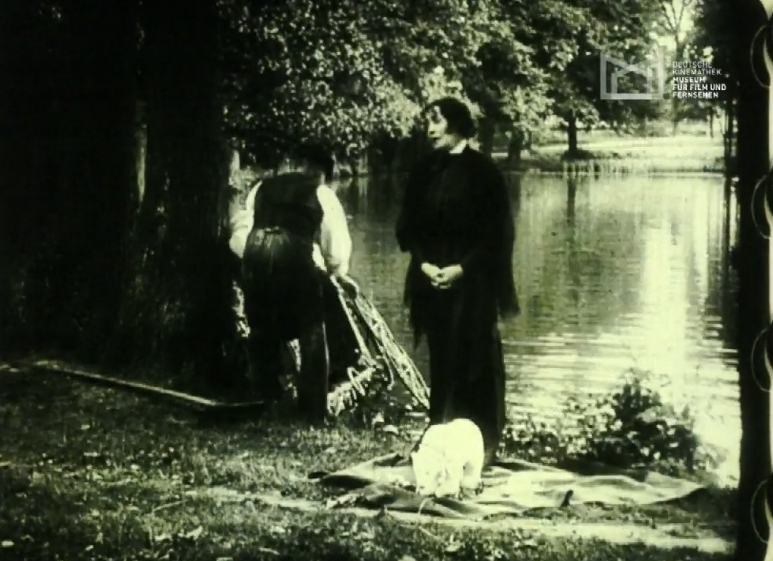
Gad’s direction excels in crafting an environment where the physical setting mirrors the internal turmoil. Castle Medan itself becomes a character, its sprawling corridors and cavernous chambers serving as a labyrinth of secrets and shadows. The cinematography, though characteristic of its era, manages to imbue the estate with a gothic grandeur that enhances the sense of foreboding. One can almost feel the chill in the air, the weight of generations of history pressing down on the current inhabitants. The stark contrasts between light and shadow, a hallmark of early cinema, are employed here to great effect, emphasizing moments of revelation and concealment, hope and despair. The visual language speaks volumes, a testament to the power of non-verbal storytelling.
The narrative, while seemingly straightforward in its premise of inheritance dispute, delves into deeper psychological waters. The 'ghost hour' of the title hints at more than just a literal haunting; it suggests a time when hidden truths emerge, when the specters of guilt, fear, and unresolved conflicts manifest. August’s return forces every character to confront their own moral compass, revealing the cracks in the façade of nobility and respectability. Viktor Senger, as Johann, navigates the difficult position of being caught between his brother’s unexpected return and his mother-in-law’s relentless pressure. His performance, though perhaps less overtly theatrical than Engl’s, portrays a man wrestling with loyalty, duty, and the insidious influence of ambition. The film subtly explores how the pursuit of wealth can corrupt even the most sacred familial bonds, transforming affection into suspicion and trust into treachery.
The supporting cast, including Carl Dibbern, Carl Zickner, Maria Widal, Senta Eichstaedt, and Hans Adalbert Schlettow, contribute significantly to the film's rich tapestry. Each actor, through carefully modulated gestures and expressions, helps to populate this world with believable characters, reacting to the central conflict in ways that underscore the film’s exploration of human nature under duress. Their collective performances demonstrate the sophisticated artistry of silent cinema, where emotion and intent had to be communicated with unparalleled clarity and nuance, devoid of spoken dialogue. It is a powerful reminder that the absence of sound often amplified the visual storytelling, demanding a higher degree of expressiveness from its performers.
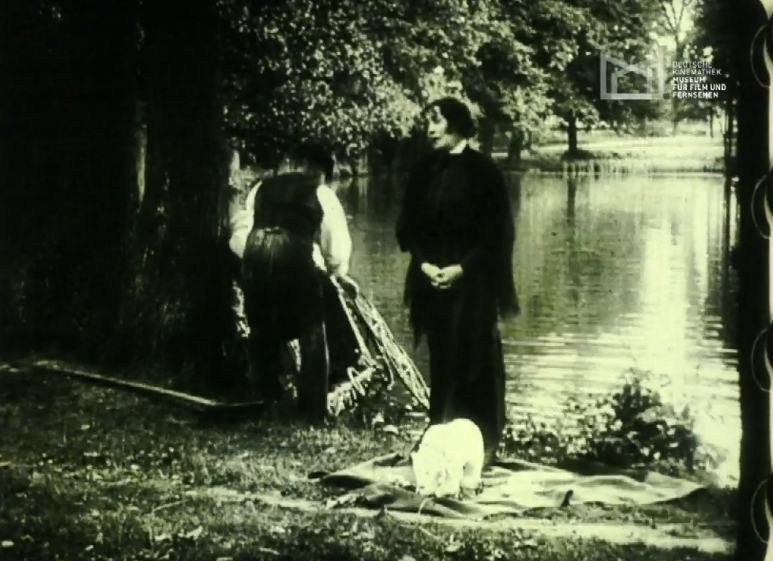
Comparing Die Gespensterstunde to other films of its period illuminates its particular strengths. While it shares thematic echoes with other dramatic narratives of the era, such as the intricate family power struggles occasionally hinted at in films like Farkas, Gad’s film distinguishes itself through its relentless focus on internal psychological tension rather than grand external spectacle. Unlike the more adventurous or romantic narratives, like The Cowboy and the Lady, it roots its drama firmly in the claustrophobic confines of a single, aristocratic setting, allowing the emotional stakes to escalate with a suffocating intensity. Similarly, while exploring moral quandaries akin to those in The Supreme Temptation, Die Gespensterstunde places the impetus squarely on the corrosive nature of greed within the family unit, rather than broader societal pressures or individual moral failings in isolation. This concentrated focus allows for a deeper, more penetrating examination of character motivations.
Urban Gad, as a writer and director, demonstrates a profound understanding of pacing and dramatic build-up. The narrative unfolds with a measured cadence, each scene adding another layer to the intricate web of deceit and suspicion. He avoids sensationalism, opting instead for a slow burn that allows the audience to become deeply invested in the characters' plight. The intertitles, far from being mere plot devices, are crafted with an elegance that complements the film's sophisticated tone, providing necessary exposition without disrupting the visual flow. They are integral to the storytelling, guiding the viewer through the labyrinthine twists of the plot and the complex emotional landscapes of the characters. The psychological unraveling, particularly of Countess Herm, is handled with a deft touch, revealing the fragility beneath her formidable exterior.
The film's exploration of inheritance is not merely a plot device; it's a commentary on the societal values of the time. Wealth and lineage were paramount, often dictating the course of human relationships and moral choices. Die Gespensterstunde lays bare the inherent dangers of placing material gain above familial love and ethical conduct. It is a cautionary tale, rendered with stark realism, about how the pursuit of ancestral wealth can transform a noble house into a battleground for survival, where allegiances are fluid and trust is a luxury few can afford. The tension is almost unbearable at times, a testament to Gad's skill in manipulating audience emotions without a single spoken word.
What makes Die Gespensterstunde particularly captivating is its ability to evoke a sense of the uncanny. The 'ghost' in the title might not be a literal apparition, but rather the specter of past actions, the haunting consequences of decisions made in desperation or greed. August's return triggers a chain reaction that forces the family to confront its own metaphorical ghosts – the secrets, lies, and suppressed resentments that have festered beneath the veneer of respectability. This psychological haunting is far more potent than any supernatural entity, creating an atmosphere of dread that is both subtle and pervasive. The film demonstrates a remarkable prescience in its understanding of human psychology, anticipating themes that would later be explored in more explicit terms by subsequent cinematic movements.
The enduring legacy of Die Gespensterstunde lies in its masterful blend of dramatic tension, astute character study, and atmospheric storytelling. It serves as a vital reminder of the artistic sophistication present in the silent era, challenging any notion that early cinema was simplistic or unsophisticated. Urban Gad, through his precise direction and Urban Gad's insightful writing, crafts a narrative that is both timeless in its exploration of human foibles and historically significant as a document of cinematic evolution. For those who seek to understand the origins of dramatic storytelling on screen, or simply wish to experience a truly engaging and thought-provoking piece of forgotten cinema, Die Gespensterstunde offers an immensely rewarding viewing experience. It is a testament to the power of visual narrative, proving that the most profound stories can be told without uttering a single sound, allowing the audience to truly immerse themselves in the 'ghost hour' where all truths are eventually laid bare.
The film invites repeated viewings, each time revealing new layers of meaning, new subtleties in the performances, and new appreciations for Gad's directorial choices. It's a journey into the heart of a troubled family, a journey into the shadows of human ambition, and ultimately, a journey into the timeless power of cinema itself. The intricate dance of power and paranoia, played out against the backdrop of an imposing castle, remains as compelling today as it must have been upon its initial release. This is not merely a historical artifact; it is a vibrant, living piece of art that continues to speak to the enduring complexities of the human condition, making it an essential entry in the canon of early European cinema. Its quiet power resonates long after the final frame fades to black, leaving an indelible mark on the discerning viewer.
IMDb 6.3
1913
Community
Log in to comment.