DbcultAccessing Vault...
6.2/10
Senior Film Conservator
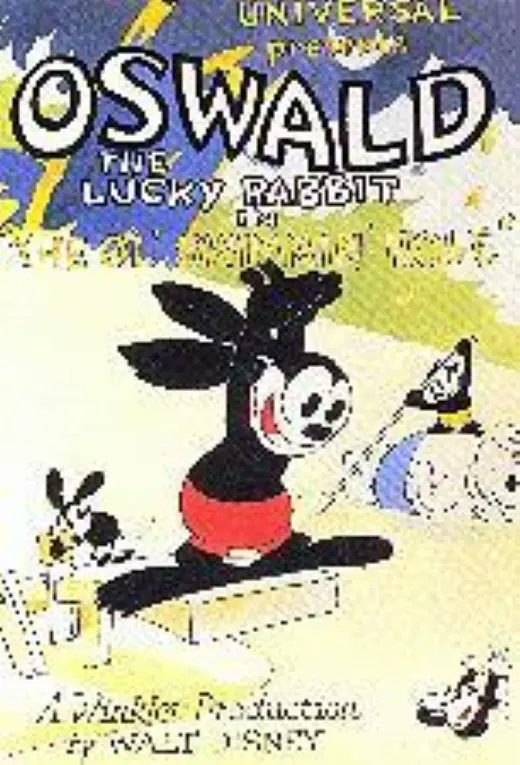
A definitive 6.2/10 rating for a film that redefined the boundaries of cult cinema. Rickety Gin remains a cornerstone of transgressive art.
Is Rickety Gin worth watching today? Short answer: Yes, but only if you view it as a fascinating archaeological dig into the foundations of modern animation. This film is for the animation historian and the lover of raw, unpolished slapstick; it is absolutely not for those who require a cohesive narrative or the sanitized polish of later Disney features.
1) This film works because it showcases the sheer kinetic energy of the Ub Iwerks and Walt Disney partnership before they became a corporate machine. 2) This film fails because the plot is a razor-thin excuse for a series of repetitive drinking gags that feel dated by modern pacing standards. 3) You should watch it if you want to see the 'edgy' Disney that existed before the Hays Code and Mickey Mouse's eventual sanitization.
To understand Rickety Gin, you have to understand that in 1927, Oswald was the king of the mountain. He wasn't the corporate mascot Mickey would become; he was a rascally, somewhat libidinous rabbit who felt more like a real person than a symbol. In this short, his role as a cop is played purely for irony. It is the classic 'authority figure is actually a mess' trope that resonated during the Prohibition era.
The animation here, while primitive, is surprisingly fluid. Iwerks was known for his speed, and you can see it in the way Oswald moves. There is a weight to the character's jumps and a rubbery elasticity to his ears that predates the more rigid styles seen in other shorts of the time like The Little Boy Scout. It works. But it's flawed.
The most striking element of Rickety Gin is its casual relationship with alcohol. In 1927, the United States was in the thick of Prohibition, and yet here is a cartoon cop getting absolutely plastered on 'rickety gin.' This isn't just a background detail; it is the central engine of the plot. The way Pete uses the bottle as a weapon of sabotage is a darkly funny reflection of the era's anxieties about bootlegging and moral decay.
Consider the scene where Oswald’s uniform is literally peeled off him. In modern animation, this would be a clean transition. Here, it feels like a messy, frantic struggle. The 'gin' itself is animated as a sentient, swirling chaos. It’s a surprising observation, but the alcohol in this film is more of a character than the nurse herself. The nurse is a mere prop, a prize to be won, which is a disappointing but expected limitation of the 1920s narrative structure, much like the archetypes found in Chickens.
Pete is the ultimate antagonist. Long before he was 'Peg-Leg Pete' or Mickey's neighbor, he was a hulking, predatory force of nature. In Rickety Gin, his villainy is grounded in a very human kind of jerkiness. He doesn't want to destroy the world; he just wants to steal your job and your girl. It is brutally simple.
There is a moment in the park where Pete mimics Oswald’s gait. It is a subtle piece of character acting that you don't often see in 1920s shorts. It shows that Disney and Iwerks were thinking about personality, not just movement. This rivalry feels more visceral than the ones depicted in The Big Adventure, where the stakes felt less personal.
Yes, Rickety Gin is worth watching for anyone interested in the evolution of visual comedy. While the plot is dated, the technical execution of the character movement remains impressive for a nearly century-old film. It offers a rare glimpse into a time when animation was experimental and unrestrained by strict moral codes.
We cannot discuss Rickety Gin without discussing the sheer speed of Ub Iwerks. It is documented that Iwerks could produce hundreds of drawings a day, and that frantic pace is visible in the frame. In the scene where Oswald is spinning after his first drink, the frame rate seems to struggle to keep up with the rabbit's motion. This is 'action' cinema in its most embryonic form.
Compared to other contemporary works like The Lost City, which relied on static framing and grand sets, Rickety Gin finds its scale in the micro-movements of its characters. A twitch of a tail or the widening of an eye tells the whole story. It’s a masterclass in economy of motion. I would argue that Oswald is actually a more compelling protagonist than Mickey Mouse ever was. Mickey is a symbol; Oswald is a survivor. He loses. He gets drunk. He gets tricked. That makes him human.
Rickety Gin is a relic, but it isn't a dusty one. It pulses with a weird, drunken energy that still manages to elicit a few chuckles. While it lacks the emotional depth of later animated milestones, its importance in the lineage of the medium cannot be overstated. It is a raw, unrefined shot of gin in a world that would soon be forced to drink milk. Watch it for the history, stay for the rabbit's resilience. It's a short, sharp shock of 1920s rebellion.
"In the world of 1927 animation, Rickety Gin was the equivalent of a punk rock demo tape—fast, messy, and totally unapologetic."
IMDb 5.9
1937
Community
Log in to comment.