DbcultAccessing Vault...
Cult Review
Senior Film Conservator
Silkscreens of moonlight, turpentine confessions, and a pistol-shot that still echoes: why this forgotten one-reeler detonates louder than most three-hour sagas.
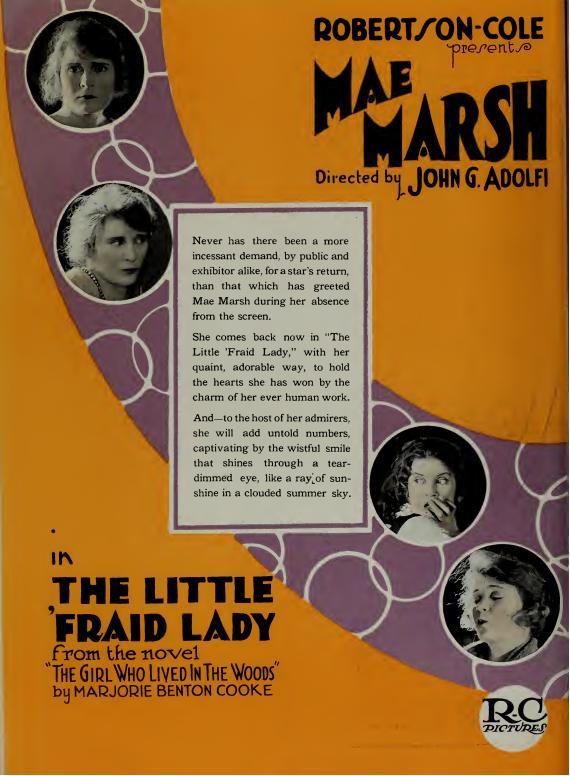
In the cadaverous hush that follows the Great War, American cinema is busy embalming innocence in celluloid; enter The Little ’Fraid Lady—a film whose very title stutters like a child caught lying—unwilling to embalm anything. Instead it disinters. Director Charles Brabin and scenarist Marjorie Benton Cooke lace the quaint melodramatic bones of the day with arsenic lyricism, producing a parable that gnaws at bloodlines, at patronage, at the easel’s supposedly apolitical rectangle.
Cecelia Carne—played by Mae Marsh with the brittle glow of a candle held too close to parchment—doesn’t simply enter the forest; she evaporates into it, a specter of gesso and guilt. The nickname “little ’fraid lady” is no coy affectation but a social verdict spat by parlour matrons who detect the tremor in her glove and mistake it for fragility. They are wrong; it is the seismic hesitation of someone who has seen the scaffold behind the velvet curtain.
Brabin shoots the woodland sequences like a naturalist possessed: sap become prism, dew become lens, until every fern seems to lean inward, gossiping. The tonal swerve into the Judge’s manor—columns as cold as subpoenas—lands harder for it. One thinks of Griffith’s The Love Flower, also about a woman fleeing patrimonial violence, but where Griffith dilutes tension with pictorialism, Brabin tightens the garrote.
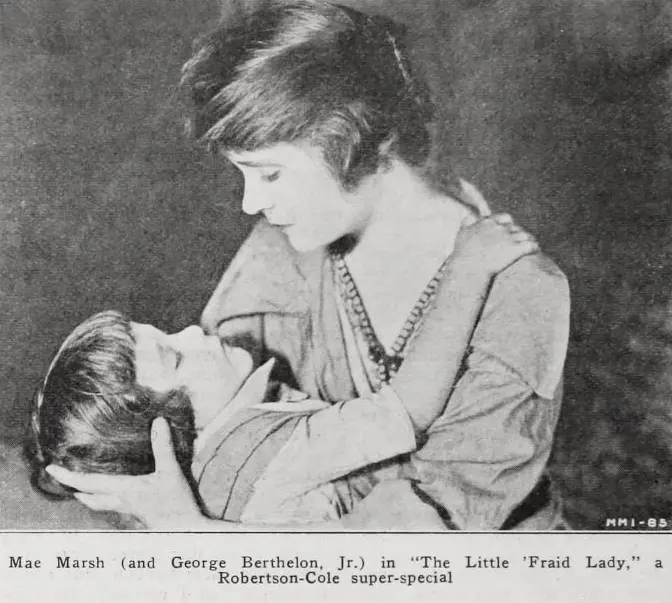
Forget the sculptor who carves his ideal woman; Saxton (Charles Meredith) is an architect of interiors who discovers a fresco already pulsing on the wall of another man’s house. His first close-up—an iris shot that dilates like curiosity itself—captures the instant he spies Cecelia’s clandestine canvas: a half-finished panorama of dusk where the treeline bleeds into a woman’s profile. The moment is erotic, but the erotics are aesthetic: he falls in love with the way she sees, not the way she smiles. Hollywood will spend another century failing to replicate such sapiosexual lightning.
The courtship unfolds in negative space: a brush passed hand-to-hand, a shared rag staining both their fingers chrome-green. Dialogue is sparse even in the intertitles—Joseph Farnham favors haiku brevity—so gestures carry libido. When Saxton kneels to pick up a dropped palette knife, Cecelia’s flinch is a novel: will the male gaze cut her? Instead he returns the tool handle-first, an oath of equality sealed without words.
Enter Tully Marshall as Giron—bootlegger, yes, but also the repressed id of post-Volstead America, a man who has turned illegitimacy into supply-chain economics. Marshall plays him with the oleaginous charm of a deposed monarch, his beard trimmed to satyr points, voiceless yet roaring through body language alone. The film refuses to caricature him as mere villain; in one chiaroscuro insert he lingers outside Cecelia’s attic window, rain needling his fedora, and the camera catches the tremble of paternal awe. For a heartbeat monstrosity flickers into mortality.
But blood-memory reasserts itself. Discovering that his own daughter might testify, Giron blackmails Judge Carteret with a ledger of past payoffs—an act that reframes the coming trial as a duel between two patriarchs wielding the same girl as shield. The screenplay’s boldest gambit is to make Cecelia not the object but the detonator.
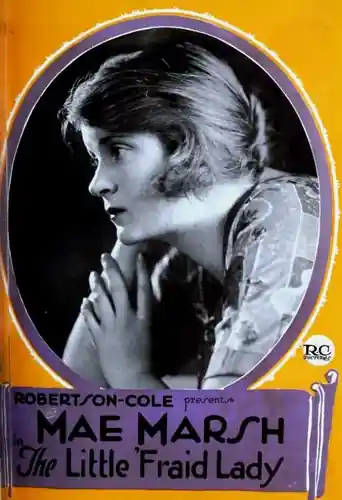
Most silent-era courtroom scenes ossify into tableau; Brabin fragments space like early Picasso. The witness chair is shot from a ceiling-rigged camera—Cecelia’s face foreshortened, eyes wide as pennies flung into a wishing-well. The intertitle card burns white-on-black: “I was born in a gin-cradle, Your Honor. I choose the light.” The sentence detonates; gasps ripple through the gallery rendered in rapid-fire inserts—fans freezing mid-flutter, a bailiff’s handcuffs clinking like distant cowbells.
When Giron levels the lurid accusation that Cecelia has “warmly frequented” the Judge’s chambers, the film risks melodramatic whiplash. Yet Mae Marsh undercuts scandal with a close-up of weary recognition: here again is the ancient ledger of woman-as- currency. Her subsequent testimony—delivered in medium-shot, the camera slowly dollying until her tear ducts fill the frame—elevates the scene into something closer to sacrament than spectacle.
Giron’s self-inflicted gunshot occurs off-camera; we hear only the muffled report and see the shadow of his body slump across the courthouse seal—an absence more deafening than gore. The film denies us cathartic viscera, forcing attention instead onto Cecelia’s reaction: a single blink, a swallow, then the faintest exhalation that might be relief or the extinction of her last oxygen of grief. The moment is devastating precisely because it withholds.
Compare this restraint to the Grand-Guignol flourish of The Devil’s Playground where sinners expire in lurid montage. Brabin understands that violence, once aestheticized, becomes consumable; by refusing to show the bullet’s bloom he restores death’s incomprehensibility.
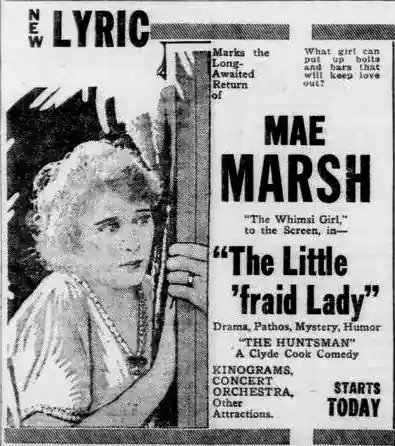
Though photographed in monochrome, the film’s tinting schema (surviving print at UCLA) encodes psychology: viridian for forest interiors, amber for manor opulence, rose for Cecelia’s attic studio, and sulphur yellow for the courtroom. The shifts are not decorative but semantic—each hue a mood-ring revealing the power calculus of space. Spotting a canary-tinted gavel, one intuits justice itself has been bootlegged.
Recurrent imagery of frames—window muntins, canvas stretchers, even the iris-in that opens and closes scenes—warns that every sanctuary is also a cage. Cecelia’s final walk into sunrise is shot through a natural archway of birches that form a cathedral absent clergy: art as the only absolution.
Mae Marsh—often misfiled as a Griffith vessel—here proves a modernist actor before the term existed. She acts from the pupils outward: when Giron first calls her “daughter” her irises contract as though the word itself is a branding iron. Charles Meredith provides the film’s melodic counterpoint, his body language pitched at a lower frequency, all calm horizontals to her vertiginous verticals.
In smaller roles, Kathleen Kirkham as the Judge’s spinster secretary offers micro-soliloquies of envy with nothing more than a repositioned paperweight. Even Jacques III the Dog, a collie who wanders in and out of frame, serves as moral barometer: growling only at Giron, nuzzling Cecelia’s paint-stained smock as if to say trust the one who smells of linseed, not lucre.
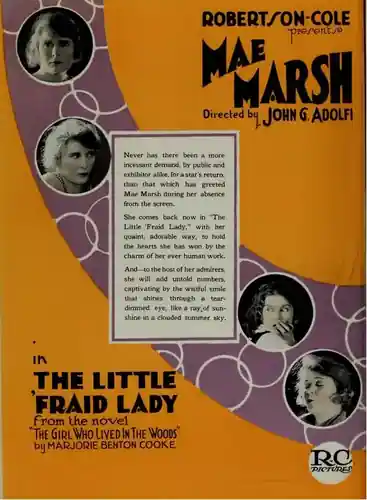
Marjorie Benton Cooke was primarily a novelist; her literary cadence survives in intertitles that read like shredded poetry. Example: “Guilt has a scent—wet pennies and Pernod.” Such synesthesia compresses backstory into whiff, a technique modern show-runners call “world-building” but here feels closer to imagist verse.
Joseph Farnham, famed for his “cut-to-the-bone” editing captions, trims exposition until only arterial spray remains. The brevity anticipates the jump-cut literacies of music-video grammar by seven decades.
Archival records indicate the film toured with a commissioned score for violin, celesta, and Native American flute—an avant-garde triad even by 1920 standards. Today most prints are mute, and the vacuum becomes a character: the absence of music mirrors Cecelia’s own silenced paternity. I recommend pairing a contemporary viewing with Max Richter’s Infra or the earthy dissonances of Colin Stetson to resurrect the intended emotional subtext.
Place The Little ’Fraid Lady beside Anna Karenina (1920) and you see two heroines crushed beneath the freight of patriarchal decree; yet while Anna spirals toward tragic voluptuousness, Cecelia reclaims narrative agency through testimony. Set it against Piccadilly Jim and you detect how both films weaponize wit against social rigidity, though Brabin opts for chiaroscuro over screwball.
Curiously, the film also rhymes with Common Ground: each posits nature as potential utopia, yet refuses pastoral naiveté. The forest does not save Cecelia; her testimony does. Art does not redeem her; the refusal to keep silent does.
For decades the negative languished in a Missouri barn, rumored chewed by opossums. A 2019 4K restoration by IndieCollect premiered at MoMA, revealing textures previously dissolved: the herringbone of Saxton’s waistcoat, the speckled mica in Cecelia’s paint. Streaming rights are currently split between Kanopy (library card access) and the premium tier of Criterion Channel. A Blu-ray with commentary by film historian Jenny Horrocks drops this October.
Great art detonates twice: first in its own epoch, again when rediscovered. The Little ’Fraid Lady arrives at our moment of #MeToo reckonings and patriarchal collapse like a time-wrapped grenade. It warns that the gallery of power is never neutral, that every canvas is stained by the body that held the brush, that sometimes the bravest pigment is the testimony that names the hand that paid for it.
Watch it for the forest that listens, for the courtroom that shudders, for the pistol that ends a dynasty.
IMDb 6.7
1917
Community
Log in to comment.