DbcultAccessing Vault...
Cult Review
Senior Film Conservator
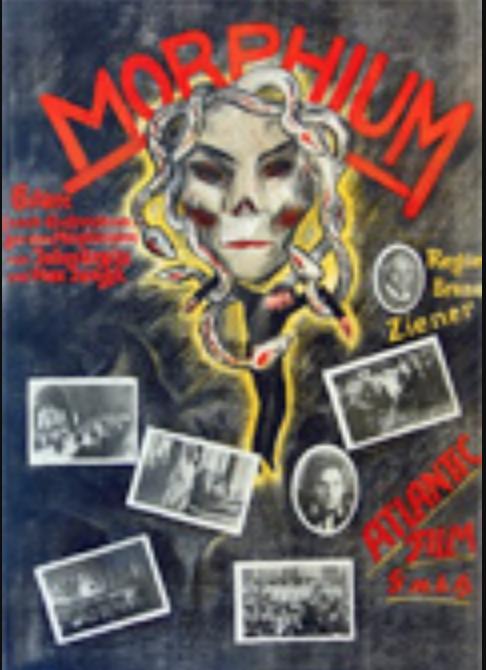
Stepping into the shadowy corridors of early 20th-century cinema, one often encounters narratives that, despite their age, resonate with an astonishing contemporaneity. Such is the case with 'Morphium,' a 1919 silent film that delves into the harrowing depths of human vulnerability, betrayal, and the seductive, destructive allure of escapism. It’s a powerful, if melancholic, journey that explores the fragility of the human psyche when confronted with profound emotional trauma, ultimately painting a stark portrait of a life unravelling under the weight of despair. This film, crafted by writers Max Jungk and Julius Urgiss, doesn't merely tell a story; it performs an autopsy of a broken spirit.
At its core, 'Morphium' chronicles the tragic trajectory of a brilliant composer, a man whose world, once replete with artistic inspiration and marital bliss, is irrevocably shattered by the revelation of his wife's infidelity. The film masterfully portrays the insidious erosion of his self-worth and creative impetus as he grapples with this devastating betrayal. His initial shock and disbelief gradually give way to a profound, soul-crushing anguish, an emotional maelstrom that leaves him adrift and vulnerable. It's a testament to the era's storytelling prowess that such complex emotional landscapes could be conveyed without a single spoken word, relying instead on the nuanced performances and evocative visual language.
The descent into morphine addiction, the film's central tragic arc, is depicted with an unflinching honesty that must have been quite daring for its time. What begins as a desperate search for solace, a fleeting escape from the incessant torment of his wife's promiscuity, rapidly spirals into a suffocating dependency. The drug becomes both his jailer and his false liberator, offering momentary oblivion while simultaneously stripping away his identity, his talent, and ultimately, his will to live. It's a cautionary tale, yes, but one imbued with a deep empathy for its protagonist, avoiding simplistic moralizing in favor of a profound psychological examination. The film doesn't judge; it observes the slow, agonizing process of self-destruction.
The cast, a veritable ensemble of silent film talent, contributes immensely to the film's somber atmosphere and emotional weight. While specific roles aren't detailed in the plot, one can imagine the gravitas brought by actors like Rudolf Klein-Rogge, known for his intense and often villainous portrayals in films like 'Dr. Mabuse the Gambler' and 'Metropolis.' His presence, even in a supporting capacity, would undoubtedly infuse scenes with a palpable tension or a brooding sense of menace, perfectly complementing the film's dark themes. Similarly, the contributions of Irmgard Bern, Toni Zimmerer, and Gustav Botz would have been crucial in etching out the various facets of this tragic narrative, from the suffering composer to the faithless wife and the broader societal figures who populate their world. The silent era demanded a particular brand of expressive acting, where every gesture, every facial contortion, had to convey volumes, and this ensemble, under the direction, would have been tasked with delivering such powerful, non-verbal performances.
The thematic resonance of 'Morphium' extends far beyond its immediate plot. It's a powerful meditation on the destructive nature of betrayal, the corrosive effects of unaddressed grief, and the perilous allure of artificial paradises. The composer's artistic sensitivity, once his greatest strength, becomes his Achilles' heel, rendering him acutely vulnerable to the emotional wounds inflicted by his wife's actions. This fragility of the artistic temperament, often romanticized, is here depicted as a double-edged sword, capable of both sublime creation and profound suffering. The film subtly suggests that for certain individuals, the line between intense feeling and utter breakdown is perilously thin.
Comparing 'Morphium' to other films of its era, one finds kindred spirits in narratives exploring moral ambiguities and personal dissolution. For instance, the destructive power of love and obsession seen in a film like Lyubovta e ludost (Love is Madness) shares a certain thematic gravity with 'Morphium,' both portraying relationships that lead to tragic outcomes, albeit through different mechanisms. Where 'Lyubovta e ludost' might focus on the irrationality of passion, 'Morphium' zeroes in on the rational response to irrational pain – and its subsequent irrational solution. Similarly, the theme of a person's life unraveling due to personal failings or external pressures echoes in films such as Philip Holden - Waster, which likely explores a similar trajectory of self-destruction, though perhaps from a different social or moral vantage point. The concept of a 'waster' aligns directly with the composer's descent from productive artist to an addict, a tragic squandering of potential.
The portrayal of the wife's character, though perhaps less central to the composer's internal struggle, is nonetheless critical. Her promiscuity acts as the initial catalyst, the spark that ignites the inferno of her husband's suffering. In silent cinema, female characters were often depicted in ways that reflected societal anxieties or moral judgments of the time. One might draw parallels to the portrayal of women in films like Sapho, which often explored themes of societal condemnation, unconventional relationships, or the moral complexities surrounding female desire and independence. The wife in 'Morphium' is not just a plot device; she represents the shattering of an ideal, the betrayal of a sacred bond, and the profound ripple effects such actions can have on another's life. Her actions, whether born of malice, desperation, or simply a different moral compass, are the precipice from which the composer falls.
The film's visual style, while largely lost to time for many, would have been paramount in conveying its weighty themes. German silent cinema, particularly in the years leading up to Expressionism, was renowned for its atmospheric lighting, dramatic set designs, and innovative camera work that sought to externalize inner psychological states. One can imagine dimly lit rooms, stark shadows playing across the composer's anguished face, and perhaps even hallucinatory sequences brought to life through early special effects, all contributing to the sense of a mind succumbing to its darkest impulses. The power of suggestion, the art of showing rather than telling, would have been at its zenith, compelling audiences to engage deeply with the characters' emotional journeys.
Furthermore, the film's exploration of addiction is remarkably prescient. Long before the modern understanding of substance abuse as a disease, 'Morphium' presents it not merely as a moral failing but as a devastating consequence of emotional trauma. The composer doesn't choose addiction; he succumbs to it as a desperate coping mechanism, a tragic attempt to self-medicate a wound too deep to bear. This nuanced perspective elevates the film beyond a simple cautionary tale, transforming it into a poignant study of human fragility and the complex interplay between psychological pain and physical dependency. The slow, inexorable nature of his decline is what makes it so heartbreaking, a gradual extinguishing of a vibrant spirit.
The writers, Jungk and Urgiss, deserve credit for crafting a narrative that, despite its melodramatic premise, manages to delve into profound psychological territory. Their screenplay, stripped of dialogue, must have relied heavily on visual storytelling cues and character arcs that were clear yet complex. The film's enduring impact lies in its ability to transcend its specific setting and time, touching upon universal themes of love, loss, betrayal, and the human capacity for both immense suffering and the desperate search for relief. It’s a testament to their vision that 'Morphium' continues to be a point of discussion for those interested in the history of cinema and the evolution of narrative forms.
In an era where films like The Crime and the Criminal explored the darker aspects of human morality and societal transgression, 'Morphium' offers a more internal, psychological 'crime' – the self-inflicted harm brought about by profound emotional injury. It's less about breaking laws and more about breaking oneself. The film stands as a significant artifact, not just for its historical context in German cinema, but for its timeless examination of the human condition. It reminds us that even in the absence of sound, the most profound stories can be told, and the deepest emotions can be stirred. The film’s silent screams are perhaps more deafening than any spoken lament.
The tragedy of 'Morphium' is not merely the composer's addiction, but the systemic breakdown of his entire existence. His creativity withers, his relationships crumble, and his very essence is consumed by the chemical fog. It’s a powerful argument for the corrosive nature of unchecked despair and the vital importance of emotional fortitude in the face of life’s inevitable cruelties. This film captures a specific kind of agony, one born from intimacy and shattered trust, and projects it onto a canvas of a man’s ultimate undoing. The final frames, one can only imagine, would have left audiences with a haunting sense of loss, a poignant reminder of the preciousness of mental well-being and the devastating price of its erosion. It’s a cinematic experience that lingers long after the projector lamp dims, forcing a contemplation of our own vulnerabilities and the shadows that lurk within the human heart.
The artistic and psychological depth of 'Morphium' ensures its place as a compelling, albeit bleak, entry in the annals of early cinema. It’s a film that, through its masterful use of visual storytelling and the raw, unvarnished performances of its cast including John Gottowt, Eva Brock, Emil Albes, Ernst Wendt, Margarete Kupfer, Olga Engl, Bruno Decarli, Erwin Biswanger, Ria Witt, and Agnes Straub, manages to convey a profound sense of human tragedy. It's a testament to the enduring power of silent film to evoke deep emotional responses and to tackle complex themes with a clarity and intensity that remains impactful even a century later. For those seeking to understand the psychological currents running through early 20th-century art, 'Morphium' offers an indispensable, albeit unsettling, window into the soul.
The film’s examination of the composer’s internal world, his retreat from a painful external reality into a chemically induced stupor, mirrors a timeless human struggle. It resonates with anyone who has ever sought an escape from unbearable circumstances, highlighting the double-edged sword of such solace. While the immediate pain may be dulled, the fundamental problems remain, often exacerbated by the very means of escape. This makes 'Morphium' not just a historical curiosity but a perpetually relevant commentary on coping mechanisms, self-deception, and the devastating cost of avoiding confronting one's deepest wounds. Its legacy is not just in its cinematic technique, but in its unflinching gaze into the darker corners of the human experience, a gaze that continues to challenge and provoke thought even today. The echoes of its despair are still audible, a century on.
IMDb 5.7
1930
Community
Log in to comment.