DbcultAccessing Vault...
Cult Review
Senior Film Conservator
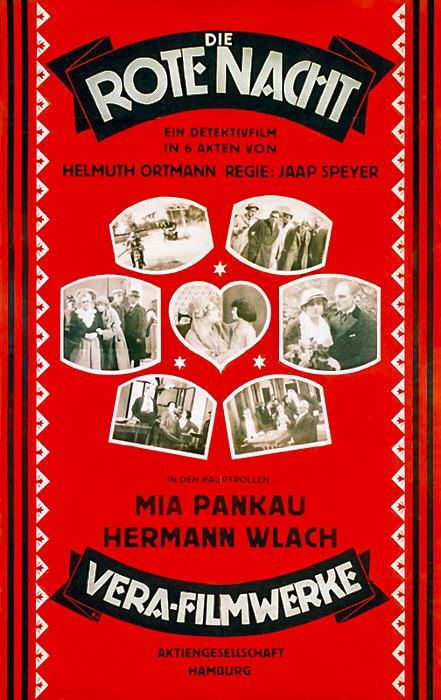
Die rote Nacht, or The Red Night in its anglicized title, is a film that breathes in the same rarefied air as the works of Fritz Lang and Billy Wilder—a blend of noir sensibility and social critique, yet distinct in its unflinching examination of moral erosion under authoritarian shadows. Released in the twilight of the Weimar Republic, the film’s narrative is both a product of its time and a timeless meditation on the fragility of conscience. Julius Kobler’s performance as the tormented journalist is the emotional anchor, his every glance a map of silent suffering, his every line a tremble of suppressed rage.
The screenplay, penned by Helmuth Orthmann, weaves a tapestry of interwoven fates—resistance fighters, opportunistic collaborators, and the ordinary citizens caught in the crossfire—all rendered with a stark realism that feels both visceral and poetic. The film’s structure is deceptively simple: a series of encounters in dimly lit bars and fog-choked alleyways, yet its themes are anything but. It’s a story about the cost of idealism in a world where compromise is the price of survival.
Orthmann’s script does not merely present a conflict between good and evil; it dismantles the very notion of binary morality. The resistance movement, led by Fred Markussen’s stoic revolutionary, is not portrayed as saviors but as desperate souls clinging to a crumbling ship. Their methods, as morally gray as the regime they oppose, blur the line between heroism and fanaticism. This ambiguity is most poignantly captured in a scene where the protagonist, after witnessing the execution of a fellow activist, asks, "What do we do now?" Markussen’s reply—"We keep moving, one foot in front of the other"—is a chilling testament to the futility of resistance in a system designed to crush dissent.
The film’s visual language, overseen by an unnamed but masterful cinematographer, mirrors this thematic duality. The use of chiaroscuro lighting casts characters in perpetual shadow, their faces half-hidden as if to suggest the duality of their identities. A standout sequence involves a chase through a rain-slicked Berlin street, the camera gliding like a phantom through neon reflections, the city itself a character of oppressive indifference.
Hermann Wlach, as the aging patriarch of the resistance, delivers a monologue that lingers long after the credits roll. His voice cracks with the weight of decades of unfulfilled hopes, a performance that echoes the tragic gravitas of Charles Laughton in The Last Volunteer, yet transcends mere imitation. Equally compelling is Margarete Otto-Körner’s portrayal of a woman torn between loyalty to her family and her burgeoning political awakening. Her quiet, wordless scenes—a trembling hand, averted eyes—are masterclasses in nonverbal storytelling.
The supporting cast, including Ludwig Max as a conflicted informant and Gerhard Ritterband as a morally bankrupt official, adds layers of complexity. Each character is a mirror reflecting the central moral quandary: how to act with integrity when every choice is a compromise. The film’s greatest triumph lies in its refusal to offer easy answers, leaving viewers to grapple with the same existential questions its characters face.
Die rote Nacht’s aesthetic choices are inextricable from its historical setting. The interwar period, with its political upheaval and cultural ferment, provides a fertile ground for the film’s exploration of societal decay. The score, a haunting blend of piano and strings, underscores the tension between hope and despair, while the editing—jittery and staccato during moments of crisis—creates a sense of disorientation that mirrors the characters’ mental states.
Comparisons can be drawn to The Purple Dress (1938), which similarly delves into the personal toll of political upheaval, but Die rote Nacht distinguishes itself through its unrelenting bleakness. Unlike the more romanticized struggles in The Moon Riders, which leans into escapism, this film offers no catharsis, only a stark confrontation with the harsh realities of its time.
Decades after its release, Die rote Nacht remains a hauntingly relevant work. Its themes of individual agency versus systemic oppression resonate in an age of renewed political polarization. The film’s unflinching portrayal of moral ambiguity challenges modern audiences to confront uncomfortable truths about complicity and resistance. For cinephiles, it is a masterclass in visual storytelling and thematic depth, while for historians, it is a vital document of a world on the brink.
In the pantheon of German cinema, Die rote Nacht occupies a unique niche—a bridge between the expressionist excesses of the silent era and the gritty realism of post-war filmmaking. Its legacy is not just in its narrative but in its ability to provoke, to unsettle, and to endure as a testament to the enduring struggle for meaning in a chaotic world.
IMDb 5.8
1931
Community
Log in to comment.