DbcultAccessing Vault...
Cult Review
Senior Film Conservator
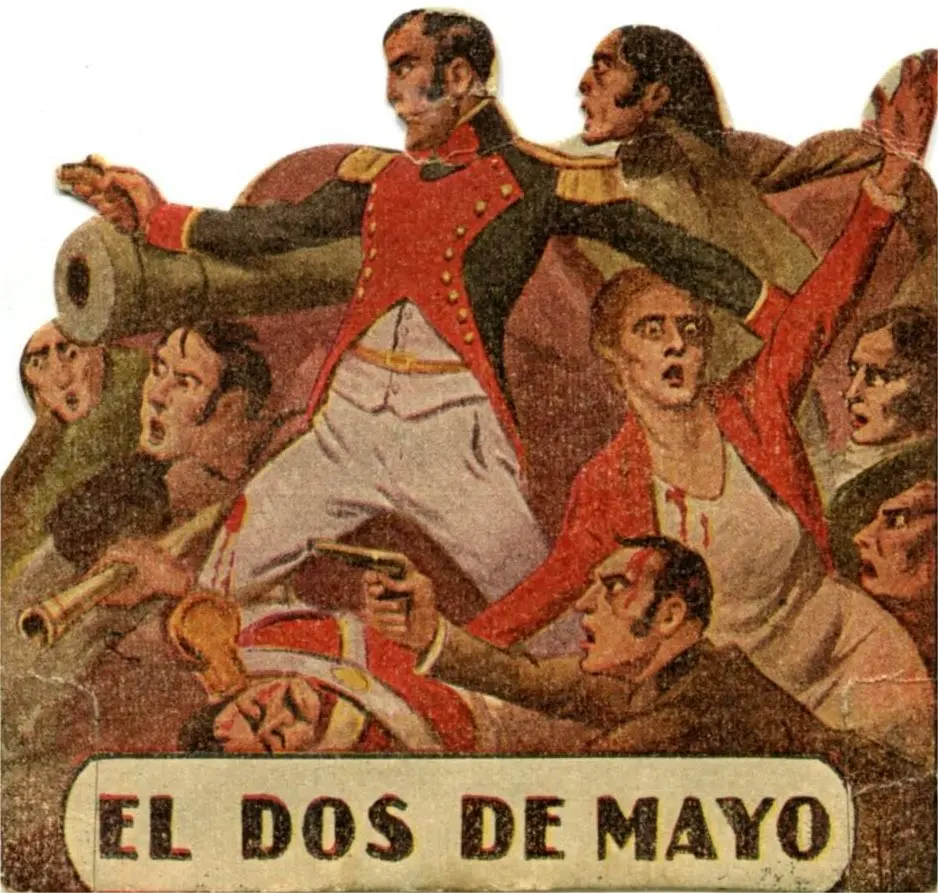
Is El dos de Mayo worth watching today? Short answer: yes, but with significant caveats. This isn't a film for the casual viewer seeking modern pacing or narrative polish; it's an essential, if arduous, journey for those deeply interested in historical cinema and the foundational myths of Spanish national identity.
It's a film for history buffs, students of early 20th-century filmmaking, and anyone who appreciates the raw, unfiltered depiction of a pivotal historical moment. It is decidedly not for audiences accustomed to contemporary blockbusters or those who find silent-era conventions tedious.
"El dos de Mayo," a collaborative effort between Federico de Oliván and José Buchs, stands as a monumental, if somewhat unwieldy, cinematic artifact. Its ambition to chronicle the bloody uprising of May 2, 1808, against Napoleon's forces in Madrid is palpable, even through the lens of early 20th-century filmmaking. It's a film that demands patience and a certain degree of historical literacy from its audience, yet rewards those willing to engage with its unique rhythm.
This film works because it provides an unparalleled, if dramatized, window into a critical moment in Spanish history, captured with an earnestness that transcends its technical limitations. It acts as a primary cinematic document, preserving a national narrative with fervent patriotism.
This film fails because its pacing is glacial by modern standards, its character development is rudimentary, and the technical execution, while pioneering for its time, can feel jarringly primitive to contemporary eyes. The emotional impact often gets lost amidst the broad strokes of historical reenactment rather than individual plight.
You should watch it if you are fascinated by the origins of Spanish national cinema, wish to understand the historical context of the Peninsular War through an early 20th-century lens, or possess an academic interest in how historical events are mythologized on screen. It's a challenging watch, but an important one for specific audiences.
José Buchs and Federico de Oliván faced an unenviable task: to translate the chaotic, spontaneous combustion of a city into a coherent narrative. Their directorial approach is less about individual heroism and more about the collective spirit. We see Madrid itself as the protagonist, a sprawling canvas where acts of defiance erupt like scattered embers before igniting a full-blown conflagration. The scale of the crowd scenes, for its era, is genuinely impressive, showcasing a commitment to depicting the sheer volume of human bodies involved in the insurrection.
One particular sequence that stands out, even with its dated execution, is the initial confrontation outside the Royal Palace. The suddenness with which the populace turns on the French Mamelukes, driven by a desperate fury, feels authentic. It’s a moment of visceral, unscripted violence that Buchs captures with a raw urgency, even if the camera work is static and the editing rudimentary. This isn't polished combat; it's a messy, desperate street brawl.
The directors, however, struggle to maintain this energy throughout. The narrative often shifts between broad historical strokes and brief, almost tableau-like vignettes of individual suffering or heroism. This episodic structure, while perhaps necessary to cover the breadth of the events, prevents a deep emotional connection with any single character arc. It feels more like a series of historical illustrations than a cohesive drama.
It works. But it’s flawed. The ambition is clear, the execution often clunky, yet the historical weight anchors it.
The cast, featuring names like Felipe Reyes, Amelia Sánchez, and José de la Fuente, operates within the conventions of early silent cinema. Their performances are often broad, relying on exaggerated gestures and facial expressions to convey emotion, a necessity before synchronized sound. This can feel theatrical and even melodramatic to modern viewers, but it was the lingua franca of the screen at the time.
Felipe Reyes, as one of the prominent figures, embodies a certain stoic defiance that would have resonated strongly with contemporary Spanish audiences. His portrayal isn't about psychological depth, but rather about representing the collective will and suffering of the Madrid population. Similarly, Amelia Sánchez delivers a performance rich in silent pathos, particularly in scenes depicting the anguish of mothers and wives amidst the chaos. Her silent screams are more potent than any dialogue could have been.
However, the sheer number of characters and the film's focus on the collective means that individual performances rarely get the chance to truly shine. Most actors serve as archetypes – the brave rebel, the grieving woman, the tyrannical soldier – rather than fully fleshed-out individuals. This is a common trait of historical epics from this period, prioritizing scope over intimacy. One might draw a parallel to the ensemble nature of The Pride of New York, where individual stories are subsumed by a larger urban tapestry, albeit with a different historical context.
The film's strength lies in its ability to paint a broad historical mural, even if its individual brushstrokes are less refined than we'd expect today. It's a testament to the power of collective memory, filtered through the nascent art of cinema.
The cinematography of "El dos de Mayo" is a fascinating study in early film techniques. While largely static, the camera often captures wide, expansive shots of the bustling Madrid streets and the unfolding battles. There's a raw, almost documentary-like quality to some of these scenes, particularly those depicting the street skirmishes and the grim aftermath. The use of natural light, combined with the black and white palette, lends a stark, almost timeless quality to the suffering depicted.
The pacing, however, is the film's most significant hurdle for modern viewers. It unfolds with a deliberate, almost reverential slowness, characteristic of silent epics. Scenes linger, allowing the audience to absorb the visual information and the emotional weight of the moment, often without the rapid cuts and dynamic camera movements we've come to expect. This can make the nearly two-hour runtime feel considerably longer, demanding a different kind of engagement from the audience. It's a far cry from the snappy narrative of something like Short Change, which prioritizes quick, punchy storytelling.
One particularly challenging aspect is the reliance on intertitles. While essential for conveying dialogue and narrative exposition, their frequent appearance interrupts the visual flow, forcing the viewer to constantly shift between reading and observing. This is a convention of its time, of course, but it undeniably adds to the film's perceived slowness and can break immersion for those unaccustomed to it.
The tone of "El dos de Mayo" is overtly patriotic and deeply somber. It's a film steeped in national pride and a sense of collective grievance. The message is clear: the Spanish people, even in their disunity and vulnerability, possess an indomitable spirit when faced with foreign oppression. It emphasizes sacrifice, unity in the face of tyranny, and the birth of a nation through blood and fire. There's an almost elegiac quality to its portrayal of the fallen, turning them into martyrs for a nascent national cause.
The film resonates as a powerful piece of historical myth-making. It doesn't just present facts; it shapes them into a narrative of heroism and ultimate vindication, even if that vindication came at a terrible cost. This makes it an invaluable resource for understanding how Spain viewed its own history in the early 20th century, reflecting anxieties and aspirations of that era through the lens of a past struggle.
One might argue that its unwavering focus on nationalistic fervor overshadows the complex geopolitical realities of the time, presenting a simplified good-versus-evil dichotomy. This is a debatable point, as many historical films, especially those produced during periods of nationalistic fervor, tend to streamline complex events for emotional impact. However, it's a valid criticism for those seeking a more nuanced historical perspective. It certainly doesn't pull its punches in depicting the brutal efficiency of the French military, contrasting it sharply with the desperate, often disorganized, resistance of the Madrileños.
Absolutely, but only for a specific kind of viewer. "El dos de Mayo" is not an easy or universally entertaining experience. Its value lies in its historical significance as an early Spanish epic and its unflinching, if melodramatic, depiction of a pivotal event. It offers a unique window into the cinematic conventions and nationalistic sentiment of its time. If you approach it as a historical document and a foundational piece of Spanish cinema rather than a modern entertainment product, you will find it profoundly rewarding. It's a challenging watch, but one that offers rich insights into both history and the history of film itself.
"El dos de Mayo" is less a film to be enjoyed in the conventional sense and more a film to be studied and appreciated for its historical and cultural weight. It is a cinematic time capsule, offering an unfiltered look at a nation's defining moment, as interpreted by its filmmakers nearly a century ago. While it demands significant patience and a willingness to engage with its archaic style, its importance to Spanish cinema and history cannot be overstated. It's not a film I'd recommend for a relaxed Friday night, but for those committed to understanding the roots of cinematic storytelling and national myth-making, it is an essential, if challenging, viewing experience. It's a testament to the power of cinema, even in its nascent form, to capture and immortalize a people's struggle for freedom. It’s a foundational piece. Period.
IMDb 6.5
1919
Community
Log in to comment.