DbcultAccessing Vault...
Cult Review
Senior Film Conservator
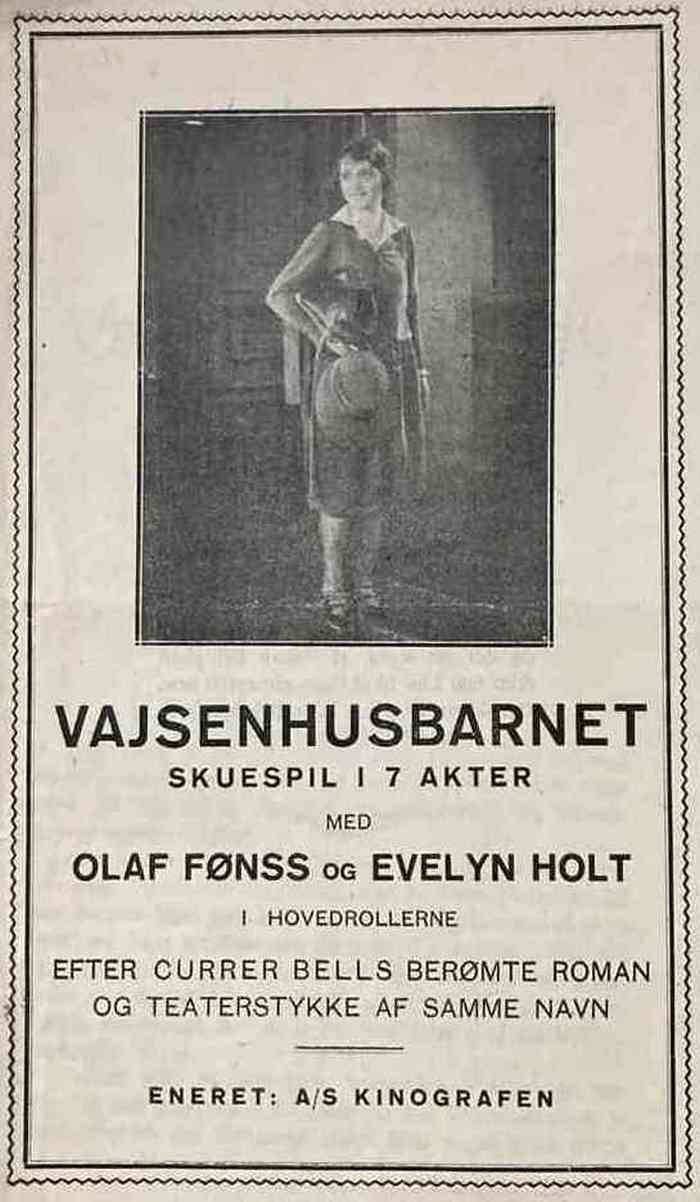
Is Die Waise von Lowood worth watching today? Short answer: absolutely, particularly if you harbor an appreciation for early cinematic ambition and the often-overlooked artistry of the silent era. This 1926 German film offers a fascinating, if sometimes challenging, window into a pivotal era of filmmaking, serving as a compelling, albeit stilted, adaptation of Charlotte Brontë’s timeless novel.
It is a film for those who relish the opportunity to witness the birth of a narrative medium, for cinephiles who understand that 'classic' doesn't always equate to 'easy viewing.' Conversely, it is decidedly not for casual viewers accustomed to modern pacing, crisp dialogue, or straightforward emotional arcs. This is an artifact, a piece of history that demands patience and a willingness to engage with its unique language.
Henry Koster's Die Waise von Lowood, a German silent film adaptation of Charlotte Brontë's seminal novel, Jane Eyre, arrives almost a century after its initial release as a curiosity, a relic. Yet, within its faded frames and reliance on intertitles, there pulses a surprising vitality. The film, released in 1926, stands as a testament to the universal appeal of Brontë’s narrative and the nascent power of cinema to translate complex literary worlds onto the silver screen.
The plot, as outlined, follows the familiar trajectory: Jane Eyre, an orphan scarred by a brutal childhood, finds employment at Thornfield Hall. Here, she encounters Edward Rochester, the estate’s enigmatic master, and is tasked with caring for his young ward. What the summary omits, and what the film strives to convey, is the intense psychological drama underpinning this seemingly simple premise. It’s a battle of wills, a clash of social strata, and a slow burn of forbidden romance, all played out against a backdrop of gothic mystery.
Koster, later to find fame in Hollywood with films like Harvey, was a young director here, and his early vision for Brontë’s world is both ambitious and constrained by the technology and conventions of his time. The film is less about literal translation and more about capturing an essence, a mood. It’s a bold undertaking for the silent era, where internal monologues and nuanced character development often struggled against the limitations of visual storytelling.
For those with a penchant for film history, literary adaptations, or the specific aesthetic of German silent cinema, Die Waise von Lowood offers a rich, if sometimes challenging, viewing experience. It's a window into how complex narratives were distilled for a pre-sound audience, relying heavily on visual metaphor, exaggerated performance, and the emotional weight of its source material.
It works as a historical document, showing the evolving techniques of storytelling. It works as an early attempt to grapple with a literary giant. It works. But it’s flawed. Its antique charms are undeniable, yet they come with the baggage of nearly a hundred years of cinematic evolution.
Henry Koster's direction in Die Waise von Lowood is a fascinating study in early cinematic adaptation. He faced the monumental task of translating Brontë's dense, first-person narrative, rich with internal monologue and psychological depth, into a purely visual medium. The strategies employed are indicative of the period: dramatic staging, symbolic mise-en-scène, and the ubiquitous intertitle.
Koster’s vision for Thornfield Hall is particularly strong. He understands that the house itself is a character, a gothic cage for its secrets. The use of deep shadows, stark contrasts between light and dark, and imposing architectural angles imbues the manor with an oppressive, foreboding presence. This is evident in scenes where Jane first explores her new home; the camera often frames her as small and vulnerable against the vast, dark corridors, a visual echo of her precarious position.
However, the film often struggles with the novel’s more subtle character dynamics. The unspoken connection between Jane and Rochester, a cornerstone of the book, is conveyed through longing gazes and dramatic gestures, which can feel somewhat simplistic to a modern eye. While effective for the period, it sometimes lacks the profound emotional complexity that a novel can achieve through direct access to thought.
The decision to emphasize Jane’s harsh childhood, hinted at by the German title Die Waise von Lowood (The Orphan of Lowood), gives the film a strong foundation for her later resilience. The opening sequences, depicting her suffering at Lowood, are stark and impactful, establishing her fortitude early on. This commitment to Jane's backstory grounds her character, even if the later narrative sometimes rushes past crucial developments.
The success of any silent film hinges largely on the expressive power of its actors, and Die Waise von Lowood is no exception. Jesta Berg as Jane Eyre delivers a performance that, while adhering to the broader gestures of silent cinema, manages to convey an inner strength and quiet dignity that is compelling. Her eyes, often downcast but capable of flashing with conviction, are her most potent tool. In moments of defiance against Mrs. Reed or during her growing affection for Rochester, Berg’s subtle shifts in posture and gaze speak volumes.
Olaf Fønss, as Edward Rochester, embodies the brooding, Byronic hero with a theatrical flourish. His Rochester is a man burdened by secrets, his face a canvas of shifting emotions – suspicion, tenderness, and ultimately, despair. Fønss uses his imposing stature and intense stare to great effect, particularly in the scenes where he attempts to gauge Jane's feelings or wrestle with his own conscience. His performance, while undeniably grand, captures the essence of a man both powerful and deeply flawed.
The supporting cast, including Harry Nestor and Wilhelm Diegelmann, provide solid if less nuanced performances. They largely serve to underscore the main drama, their characters often painted with broader strokes typical of the era. One notable mention must go to the actress portraying Bertha Mason, whose brief, terrifying appearances are genuinely unsettling, a testament to the power of visual horror in the silent age. Her wild eyes and disheveled appearance are truly memorable, a stark contrast to the film's otherwise restrained gothic elegance.
The cinematography of Die Waise von Lowood is perhaps its greatest strength, particularly for those familiar with the German cinematic landscape of the 1920s. While not a full-blown Expressionist film like The Last Laugh, it certainly borrows elements from that movement, particularly in its use of light and shadow. The film employs dramatic chiaroscuro to heighten the gothic atmosphere, especially within Thornfield Hall.
Shadows stretch long and distorted across walls, hinting at unseen dangers and psychological turmoil. Close-ups are used sparingly but effectively, drawing attention to the actors' facial expressions during pivotal emotional beats. The framing often emphasizes isolation, with Jane frequently positioned alone in large, empty spaces, visually reinforcing her status as an outsider. For example, a shot of Jane walking through the vast, empty grounds of Thornfield, dwarfed by the imposing architecture, perfectly encapsulates her solitude and vulnerability.
The set design, though perhaps minimalist by today's standards, is effective in creating distinct environments. Lowood is bleak and institutional, while Thornfield is grand yet unsettling. The attention to period detail in costumes also adds to the film's authenticity, transporting the viewer back to the 19th century without relying on lavish, overwhelming visuals. This restraint, surprisingly, enhances the film's impact, forcing the audience to focus on the human drama unfolding within these carefully constructed spaces.
The pacing of Die Waise von Lowood is characteristic of silent cinema: deliberate, unhurried, and reliant on visual storytelling to convey shifts in mood and narrative progression. This can be a challenge for modern audiences accustomed to faster cuts and constant dialogue. However, for those willing to adjust their expectations, this slower pace allows for a deeper immersion into the film's gothic tone.
The film takes its time establishing Jane's character and the oppressive atmosphere of her early life, making her eventual arrival at Thornfield feel like a significant turning point. The gradual unfolding of the mystery surrounding Rochester and his household builds suspense effectively, even if some of the more dramatic reveals are delivered through intertitles rather than pure visual spectacle. The tone is consistently melancholic, tinged with romance and a pervasive sense of unease.
There are moments of genuine emotional resonance, particularly in the quiet interactions between Jane and Rochester. The film understands the power of a lingering glance or a hesitant touch in a world where words are limited. While some might find the melodrama occasionally overblown, it's an inherent part of the silent film aesthetic, a necessary exaggeration to convey emotion without sound. The film’s commitment to its tone is unwavering, creating a consistent, if somber, cinematic experience.
Die Waise von Lowood is more than just a historical curiosity; it’s a surprisingly potent, if imperfect, early attempt to bring a literary giant to the screen. It demands an investment of patience and an appreciation for the unique language of silent film, but for those willing to engage, it offers rich rewards. Koster's film, while showing its age, carries a distinct, melancholic charm that is hard to shake. It’s a foundational piece, a stepping stone in the grand narrative of cinematic adaptation, and a testament to the enduring power of Jane Eyre’s story. It might not be a flawless adaptation, but it is undeniably a fascinating one, a whisper from the past that still resonates with an understated power. Its artistry, while not always polished, is undeniable. This is a film that should be sought out, studied, and appreciated for its ambition and its enduring spirit.

IMDb —
1932
Community
Log in to comment.