DbcultAccessing Vault...
Cult Review
Senior Film Conservator
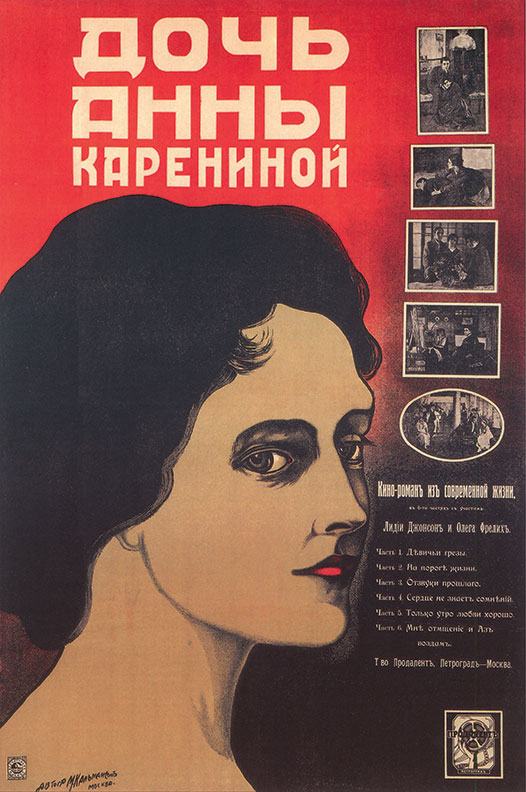
The cinematic landscape, particularly the rich tapestry of early 20th-century Russian cinema, often gifted audiences with narratives of profound emotional resonance, films that dared to probe the intricate machinations of the human heart against the backdrop of an unyielding society. Among these treasures, 'Doch Anny Kareninoy' stands as a particularly poignant and intellectually stimulating work, a film that doesn't merely retell a familiar tragedy but ingeniously extends its tendrils into the subsequent generation. It's a masterclass in inherited trauma and the relentless pursuit of individual agency, painting a vivid portrait of a young woman caught between the ghost of her mother's scandal and the burgeoning desires of her own soul. The film's brilliance lies in its nuanced exploration of how societal judgment, once unleashed, can cast a long and chilling shadow, impacting lives far beyond its immediate target.
From its opening frames, 'Doch Anny Kareninoy' establishes an atmosphere thick with melancholic beauty and simmering tension. The narrative, as crafted by its anonymous but undoubtedly gifted writers, doesn't shy away from the weighty themes it inherits. We are introduced to Anya, a character imbued with a quiet intensity, whose every gesture and silent gaze speaks volumes of an internal struggle. Her upbringing, meticulously detailed through subtle visual cues and the restrained performances of the supporting cast, underscores the suffocating expectations placed upon her. This isn't merely a story of forbidden love; it's an intricate psychological study of a daughter grappling with a destiny seemingly pre-ordained by the tragic choices of her mother. The film cleverly uses the absence of Anna Karenina herself to amplify her presence, making her a spectral force that shapes Anya's world, a constant, unspoken comparison.
The discovery of Anna's diaries serves as the pivotal turning point, a narrative device that feels both authentic and dramatically potent. It's through these pages, rendered with evocative intertitles and Anya's expressive reactions, that the audience gains a deeper understanding of Anna, moving beyond the simplistic caricature often painted by society. This intellectual and emotional journey of discovery for Anya is mirrored in the audience's own engagement, challenging preconceived notions and fostering a profound sense of empathy. The diaries are not just plot exposition; they are a conduit for Anya's burgeoning self-awareness, a catalyst for her defiance against a life circumscribed by others' fears and prejudices. It’s a moment reminiscent of the internal conflicts explored in The Mysteries of Souls, where characters are forced to confront the hidden depths of their own consciousness.
The ensemble cast of 'Doch Anny Kareninoy' delivers performances that are nothing short of captivating, each actor contributing to the film's rich emotional tapestry. Yuliya Bakhmachevskaya, in the demanding role of Anya, is simply luminous. Her portrayal is a delicate balance of vulnerability and nascent strength, her eyes often conveying the torrent of emotions she is forced to suppress. She navigates Anya's transformation from a compliant, almost ethereal figure to a woman asserting her own desires with remarkable grace and conviction. Bakhmachevskaya’s ability to communicate profound internal conflict without uttering a word is a testament to her mastery of the cinematic medium, a performance that echoes the raw, unadorned emotionality seen in films like Naked Hearts.
Oleg Frelikh, as Sergei, the revolutionary, brings a compelling blend of idealism and grounded passion to his character. His presence injects a much-needed spark of hope and defiance into Anya's somber world. Frelikh avoids the pitfalls of caricature, presenting Sergei as a man of genuine conviction, whose love for Anya is intertwined with his broader vision for a more just society. The chemistry between Bakhmachevskaya and Frelikh is palpable, a silent dialogue of longing and shared ideals that forms the beating heart of the film's romantic subplot. Their interactions are imbued with a quiet intensity, making their connection feel both inevitable and perilous.
Leonid Jost, portraying Anya’s intended, a figure of societal respectability, masterfully embodies the suffocating rigidity of the era. His performance is subtle yet impactful, conveying a man who, while perhaps not malicious, is utterly incapable of understanding or nurturing Anya's spirit. Jost’s restrained demeanor effectively highlights the stark contrast between the life Anya is expected to lead and the life she yearns for. A. Insarov and Lydia Johnson, in their supporting roles, further flesh out this world of societal expectation and judgment. Insarov, perhaps as a stern authority figure or a judgmental relative, brings a chilling authenticity to the forces of convention, while Johnson, in a role that could be a sympathetic confidante or another figure of societal pressure, adds layers to Anya's isolated existence. Their contributions, though perhaps less central, are crucial in building the intricate web of social pressures that Anya must either conform to or rebel against, similar to the pervasive societal critiques found in Tyrannenherrschaft.
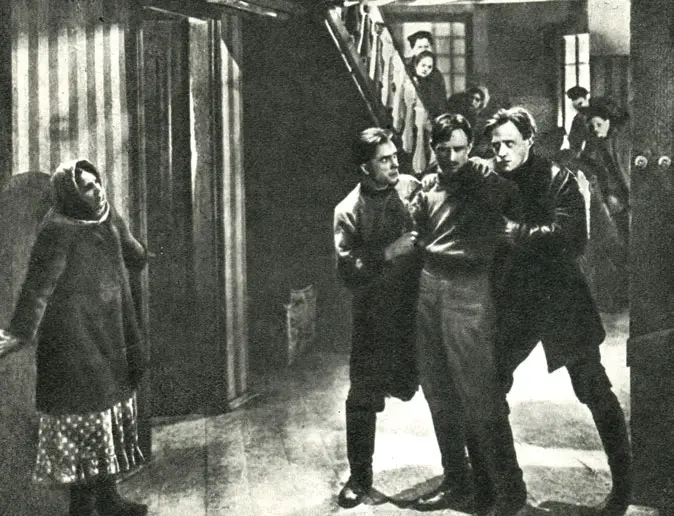
The cinematography of 'Doch Anny Kareninoy' is a character in itself, utilizing stark contrasts and evocative compositions to mirror Anya's internal state and the oppressive external world. The use of shadow and light, particularly in intimate scenes and moments of profound reflection, imbues the film with a painterly quality. The grand, yet often empty, aristocratic settings underscore Anya's isolation, while the bustling, more chaotic scenes of Sergei's world offer glimpses of a vibrant, albeit dangerous, alternative. The visual storytelling is so potent that it transcends the limitations of its silent era, communicating complex emotions and narrative nuances with remarkable clarity. This visual eloquence contributes significantly to the film's status as a work of art, allowing its themes to resonate deeply without reliance on extensive dialogue.
"Doch Anny Kareninoy" is not merely a film; it is a profound meditation on the echoes of the past, a defiant whisper against the roar of societal expectation, and a testament to the enduring human spirit's quest for authentic connection.
The film's thematic core delves into the perennial conflict between individual desire and societal dictate, a struggle that feels timeless despite its specific historical setting. Anya's journey is not just about finding love; it's about finding her voice, her identity, distinct from the tragic shadow of her mother. The writers, though unnamed, demonstrate a profound understanding of human psychology, crafting a narrative that explores the nuances of choice, sacrifice, and the often-unseen battles waged within the confines of the heart. The film questions the very fabric of societal morality, asking whether true virtue lies in conformity or in the courage to live authentically, even if it means facing ostracization. This thematic depth positions it alongside other introspective dramas that challenge convention, such as Sein schwierigster Fall, which similarly explores difficult moral quandaries.
'Doch Anny Kareninoy' engages in a fascinating dialogue with its literary predecessor, offering both a continuation and a subtle reinterpretation. While it acknowledges the tragic inevitability that often accompanies passionate defiance in a rigid society, it also hints at the possibility of a different outcome, a glimmer of hope born from self-awareness and a deeper understanding of past mistakes. Anya's struggle is a poignant commentary on the societal 'walls' that entrap individuals, reminiscent of the barriers depicted in The Walls of Jericho. Her mother's story serves not as a blueprint for her own downfall, but as a cautionary tale and, paradoxically, a source of inspiration for a more conscious and deliberate path.
The film also subtly critiques the patriarchal structures prevalent in society, not just through Anya's immediate circumstances but by reflecting on the broader implications for women seeking agency. The pressure for Anya to enter an advantageous marriage, to secure her social standing above all else, highlights the limited choices afforded to women of her era, a theme that resonates with the domestic struggles depicted in The Master of the House. The film's strength lies in its ability to present these critiques without resorting to heavy-handed didacticism, allowing the narrative and performances to speak for themselves.
'Doch Anny Kareninoy' is more than just a historical drama; it's a timeless exploration of identity, love, and the courage to forge one's own destiny. Its artistic merits are undeniable, from the compelling performances that breathe life into its complex characters to the evocative cinematography that transports viewers to another era. The film's nuanced approach to a well-known narrative, extending its reach into the next generation, offers a fresh perspective on themes of passion, societal judgment, and personal liberation. It serves as a powerful reminder of how the past, both personal and collective, shapes our present and informs our future choices.
For cinephiles and enthusiasts of classic cinema, 'Doch Anny Kareninoy' remains an essential viewing experience. It's a film that lingers in the mind long after the credits roll, prompting reflection on the weight of legacy and the resilience of the human spirit. Its profound emotional depth and its daring narrative choices solidify its place as a significant achievement in early Russian cinema, a work that continues to speak to contemporary audiences with its universal themes of struggle and self-discovery. It stands as a testament to the power of cinema to not only entertain but to provoke thought, challenge perspectives, and offer a window into the enduring complexities of the human condition. Much like Emmy of Stork's Nest, it delves into the intricate dynamics of family and societal expectations, but with a unique, tragic undercurrent that defines its narrative voice.
In conclusion, 'Doch Anny Kareninoy' is a cinematic jewel, a film that, despite its age, feels remarkably current in its exploration of themes that continue to resonate. The performances are exquisite, the visual storytelling is masterful, and the narrative's emotional intelligence is truly exceptional. It's a film that doesn't just ask us to observe a story; it invites us to contemplate the profound impact of history on individual lives and the enduring quest for authenticity in a world often resistant to it. Its legacy is secure, not just as a historical artifact, but as a vibrant, living work of art that continues to inspire and challenge.
IMDb 6.6
1925
Community
Log in to comment.