DbcultAccessing Vault...
Cult Review
Senior Film Conservator
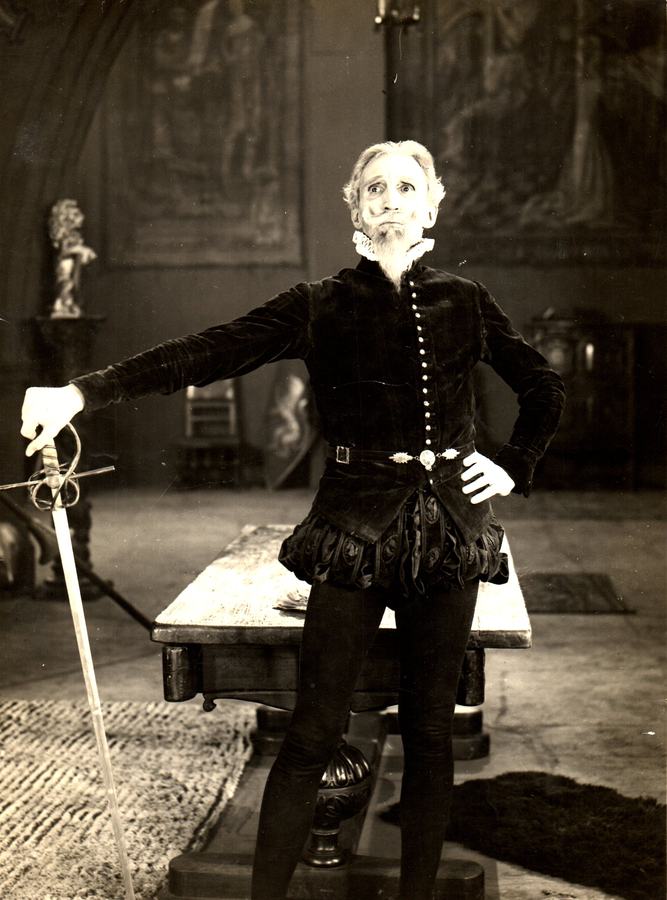
In the annals of cinematic history, certain adaptations stand as monumental undertakings, not merely for their ambition but for the sheer audacity of translating a sprawling literary masterpiece into the nascent language of film. Sinclair Hill's 1923 silent rendition of Miguel de Cervantes y Saavedra's Don Quixote is precisely one such venture. Emerging from an era where storytelling was still largely visual, devoid of spoken dialogue, this film dared to tackle a narrative rich in internal monologue, philosophical musings, and a satirical edge that challenged the very fabric of its society. It’s a fascinating artifact, offering a window into how early filmmakers grappled with the complexities of a text that, even today, continues to inspire and confound. The challenge wasn't just in depicting the episodic misadventures of a man who believes himself a knight; it was in conveying the profound psychological depth and the delicate balance between tragedy and comedy that defines Cervantes' original work.
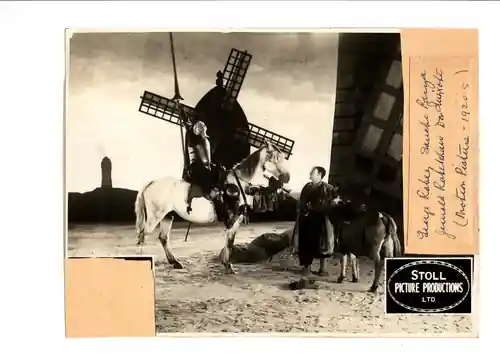
The inherent difficulties in adapting Don Quixote for the screen, particularly in the silent era, are manifold. Cervantes’ novel thrives on its narrative voice, its extensive dialogues, and the intricate interplay of delusion and reality that often unfolds within Quixote’s own mind. How does one convey the interiority of a character so profoundly lost in his own fantasy without the benefit of spoken words or extensive intertitles that risk bogging down the pacing? Hill and co-writer Sinclair Hill (yes, sharing a name with one of the writers for the film) were tasked with distilling the essence of this sprawling epic, an undertaking that would test the limits of cinematic expression in 1923. Unlike more straightforward narratives of the time, such as those exploring societal machinations in films like The Money Changers, Don Quixote demands a nuanced portrayal of idealism clashing with a harsh, unromantic world. The episodic structure, while lending itself to a series of visual vignettes, also posed a challenge in maintaining a cohesive emotional arc for the audience. The film had to rely heavily on visual cues, exaggerated acting typical of the period, and carefully crafted mise-en-scène to communicate the satire, the pathos, and the sheer absurdity of Quixote’s world. It’s a testament to the filmmakers’ ambition that they even attempted such a feat, demonstrating a belief in cinema’s capacity to transcend mere spectacle and engage with profound literary themes.
At the heart of any successful adaptation of Don Quixote lies the central performance, and Edward O'Neill rises to the occasion with a portrayal that is both physically commanding and subtly nuanced. His Quixote is not merely a figure of ridicule, but a man imbued with an almost tragic dignity, even in his most outlandish moments. O'Neill's physical presence, coupled with his expressive eyes and gestures, masterfully conveys the knight's unwavering conviction, whether he is charging windmills or mistaking an innkeeper for a feudal lord. The performance captures the character’s blend of nobility and profound delusion, a difficult tightrope walk that could easily tip into farce. Instead, O'Neill evokes a genuine sense of sympathy for this aging idealist. The supporting cast, while less central, also contributes effectively to the narrative fabric. Minna Leslie, for instance, in her various incarnations as the idealized Dulcinea, brings a fleeting grace that justifies Quixote’s fantastical vision, even if only in his mind. Adeline Hayden Coffin, Sydney Fairbrother, and Bertram Burleigh, among others, populate Quixote's world with the bewildered or exploitative figures who interact with his peculiar brand of chivalry. George Robey as Sancho Panza, in particular, provides a crucial grounding force, his pragmatic, corpulent figure serving as a stark, often humorous, contrast to Quixote's ethereal dreams. Their dynamic, a cornerstone of the novel, is rendered with a visual clarity that transcends the silent medium, relying on their contrasting physicalities and reactions to drive much of the film's humor and underlying pathos. The ensemble collectively manages to evoke the spirit of Cervantes' world, creating an environment where the fantastic and the mundane constantly collide.
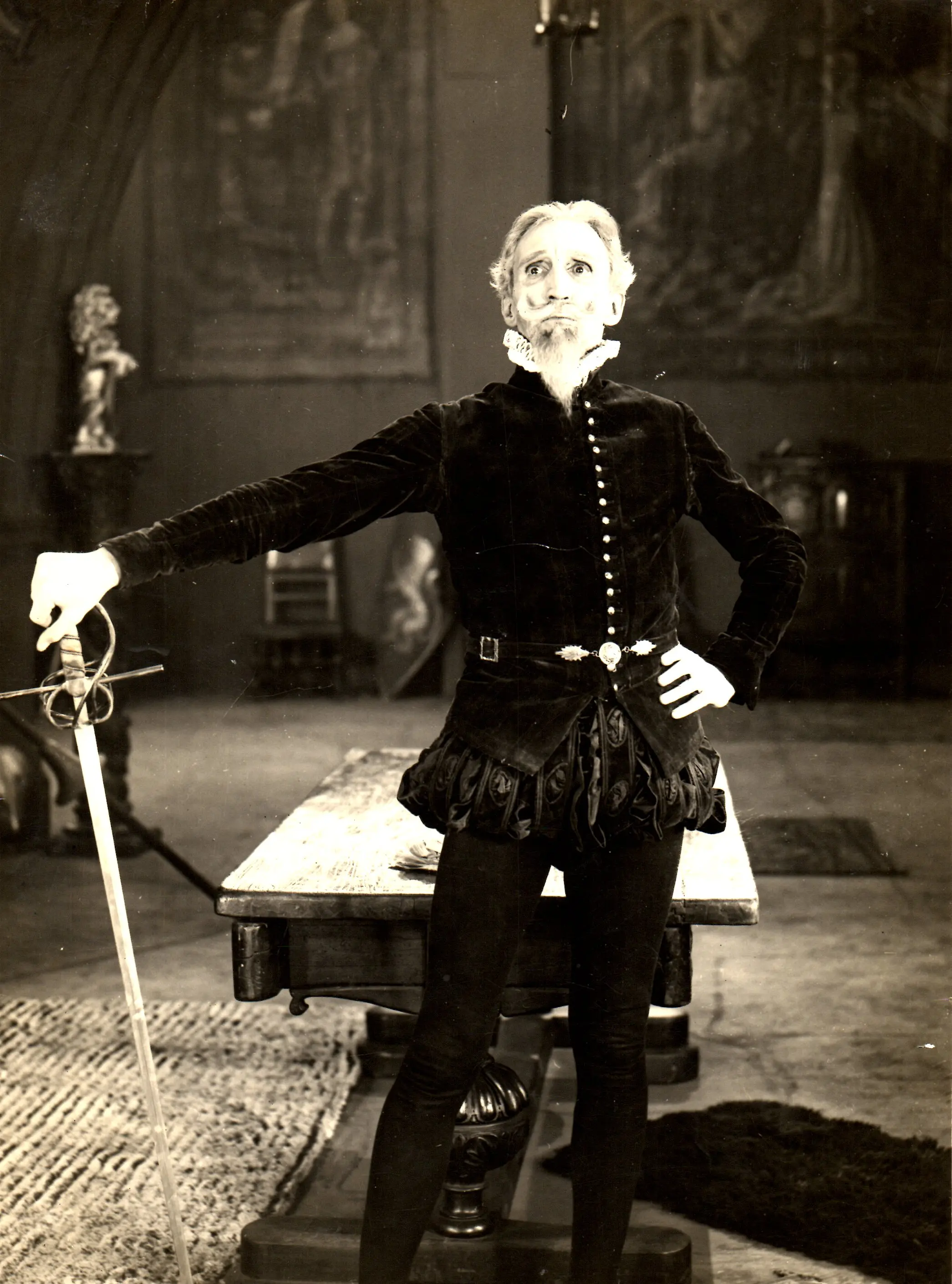
Sinclair Hill’s direction demonstrates a keen understanding of silent cinema’s strengths in visual storytelling. While the film may feel somewhat static by modern standards, it leverages the expressive power of composition, set design, and the actors' pantomime to convey its narrative. The cinematography, though rudimentary compared to later eras, effectively captures the arid, sun-baked landscapes of La Mancha, juxtaposing the harsh reality of the Spanish countryside with the ornate, often theatrical, staging of Quixote's imagined world. There's a deliberate visual contrast between the starkness of reality and the flourishes of Quixote's internal fantasy, often conveyed through the heightened expressions of his face or the dramatic angles employed during his 'battles.' Hill employs a relatively straightforward narrative approach, allowing the episodic nature of the source material to dictate the flow. This choice, while perhaps sacrificing some of the novel's intricate philosophical layering, makes the film accessible to an audience accustomed to visual narratives. The costumes, while reflecting the period’s theatricality, are suitably evocative, particularly Quixote's cobbled-together armor, which immediately signals his anachronistic presence. The director's ability to maintain a consistent tone, oscillating between genuine affection for Quixote and a wry commentary on his madness, is commendable. It avoids descending into pure slapstick, instead finding humor in the incongruity of Quixote’s actions and the bewildered reactions of those around him. This visual coherence is crucial in a silent film, where every frame must speak volumes, and Hill largely succeeds in building a believable, if fantastical, world for his deluded knight to inhabit. The visual grandeur, even with early cinematic technology, aims to elevate the material beyond mere spectacle, much like how films such as Maytime sought to capture the elegance of stage musicals on screen, albeit with different thematic goals. Hill’s approach, however, prioritizes the psychological landscape over pure aesthetic opulence, a subtle but significant distinction.
Beyond the surface-level adventures, Hill's Don Quixote, even in its silent incarnation, manages to touch upon the profound themes that make Cervantes’ novel a timeless masterpiece. The central conflict between idealism and realism, the power of imagination versus the harshness of truth, resonates deeply. Quixote’s madness isn’t merely a comical affliction; it’s a chosen reality, a desperate attempt to imbue a mundane world with meaning and nobility. His insistence on seeing giants where there are windmills, or castles where there are inns, is a poignant commentary on humanity’s need for grandeur and purpose in an often indifferent universe. The film subtly explores the nature of heroism – is it defined by objective deeds, or by the unwavering conviction in one's own noble intentions, however misguided? Quixote, despite his failures, never loses his moral compass, always striving for justice and honor as he perceives them. This unwavering commitment, even in the face of constant humiliation and physical injury, elevates him beyond a mere caricature of madness. The film also touches upon themes of social commentary, albeit through a less overt satirical lens than the novel. The reactions of the common people to Quixote, ranging from amusement to fear to outright exploitation, reflect broader societal attitudes towards those who deviate from the norm. Unlike the clear-cut moralities often presented in films of the era like The Honor of His House, Don Quixote presents a more ambiguous, complex world where 'right' and 'wrong' are often filtered through subjective perception. The film, in its own way, asks us to consider the value of dreams, even impossible ones, and the quiet tragedy of their inevitable collision with reality. It’s a testament to the enduring power of Cervantes' narrative that even a silent film, limited by its technological constraints, can still evoke such rich philosophical resonance.
Sinclair Hill’s Don Quixote occupies a peculiar but significant place in early cinema. It is an ambitious, if not entirely flawless, attempt to bring one of literature's most iconic figures to the screen during a period of rapid cinematic evolution. While it may not possess the technical sophistication of later adaptations, or the narrative fluidity of films produced even a decade later, its historical importance is undeniable. It represents a bold step in demonstrating that cinema could tackle high literature, moving beyond simple melodramas or adventure serials. In an era that also saw films like The New Exploits of Elaine focusing on thrilling, episodic narratives, Don Quixote offered a different kind of episodic journey, one driven by character psychology rather than pure plot mechanics. It showcased the potential for character-driven storytelling even without spoken dialogue, relying instead on the visual language of performance and mise-en-scène. Its legacy lies not just in its existence as an early adaptation, but in its earnest effort to capture the spirit of a character so deeply ingrained in the cultural consciousness. For silent film enthusiasts and literary scholars, it offers a fascinating case study in the challenges and triumphs of early cinematic interpretation. It reminds us of a time when filmmakers were pioneers, carving out new ways to tell stories, and in doing so, laid the groundwork for the rich tapestry of cinematic adaptations we enjoy today. While perhaps not as widely known as other silent era classics, its significance as a bridge between literary tradition and emerging film art cannot be overstated. It stands as a brave, if sometimes unwieldy, monument to the enduring power of Cervantes' creation and the nascent ambition of the motion picture medium. Its very existence is a testament to the belief that the grand narratives of human experience could find a new, powerful voice on the silver screen, proving that even the most complex tales could be rendered with visual eloquence, paving the way for future generations of storytellers.
Sinclair Hill’s 1923 Don Quixote is, ultimately, a film of its time – a product of early cinematic techniques and storytelling conventions. It is not without its imperfections; the pacing can feel deliberate, and some of the nuances of Cervantes' biting satire are understandably diluted by the constraints of the silent medium. Yet, to judge it solely by modern standards would be to miss its profound historical and artistic value. It is a courageous, heartfelt attempt to bring a literary giant to life, and in Edward O'Neill, it finds a lead actor who embodies the tragicomic spirit of the deluded knight with remarkable conviction. The film serves as a compelling reminder of cinema's nascent power to translate complex narratives and explore universal themes of idealism, reality, and the human spirit. For those interested in the evolution of film, the art of adaptation, or simply the enduring allure of Cervantes' timeless tale, this silent Don Quixote offers a unique and valuable viewing experience. It may not be the definitive adaptation, but it is undoubtedly a significant and noble endeavor, a cinematic echo of a knight who dared to dream beyond the confines of his own reality. Its legacy is one of ambition, a pioneering spirit that sought to elevate the nascent art form of cinema to the heights of literary achievement, proving that even in silence, a grand story could resonate with profound emotional and intellectual depth. It remains a fascinating chapter in the long and varied history of bringing Cervantes' immortal masterpiece to the screen, a testament to the enduring power of a madman's dream.
IMDb —
1925
Community
Log in to comment.