DbcultAccessing Vault...
6.5/10
Senior Film Conservator
A definitive 6.5/10 rating for a film that redefined the boundaries of cult cinema. The Disciple remains a cornerstone of transgressive art.
Barren Gulch is less a place than a state of soul—an alkali purgatory where the sun seems to probe for soft tissue and every shadow carries the scent of cordite and cheap whiskey. Into this crucible strides Jim Houston, the so-called “Shootin’ Iron” Parson, belt bristling with cartridges and Bible alike, convinced that salvation can be ramrodded into the ribcage of a frontier town the way lead forces obedience into recalcitrant iron.
William S. Hart, granite-faced and hawk-eyed, lets the silence speak first: a long, deliberate survey of the street where scorpions scuttle between wagon ruts and the church bell’s tongue has long since been sold for scrap. That silence is Hart’s native tongue; he wields it the way opera tenors wield high C, and it announces that The Disciple will be no rootin’-tootin’ rodeo but a slow, stately dirge for the moral ligaments that once held America together.
Director Thomas H. Ince, ever the frontier pessimist, frames Houston’s arrival in a dusk so thick it feels powdered. You can taste the dust; it powders the parson’s collar like ecclesiastical dandruff. Ince’s visual grammar—low horizon, sky oppressing two-thirds of the frame—recalls The Heart of the Blue Ridge, yet here the mountains are not Eden but implacable jury, granite jurors who have already judged man’s antics absurd.
At the narrative’s molten core sits Mary Houston, essayed by Dorothy Dalton with the brittle radiance of a china doll hurled against a faro table. Dalton’s Mary aches with fin-de-siècle ennui; she recites scripture without hearing it, fondles lace collars as if they were passports to elsewhere. When Robert McKim’s Dr. Hardy tips his ivory Stetson, revealing eyes that have calculated the price of every soul in the room, the film’s true sermon begins. Hardy is no cardboard villain—he dispenses morphine to miners with the same unruffled elegance with which he palms aces—and McKim gifts him a languid cruelty that whispers rather than shrieks.
The seduction unfolds off-screen, a masterstroke of Victorian reticence. We glimpse only the aftermath: a candle guttering beside a lace garter, rain drumming on the tin roof like God’s impatient fingers. Ince knows that the audience’s imagination will conjure a more lascivious tableau than any camera could legally print in 1920. Consequently, Mary’s fall feels existential, not merely salacious—a cosmic shrug that asks whether virtue can survive anywhere west of the Mississippi.
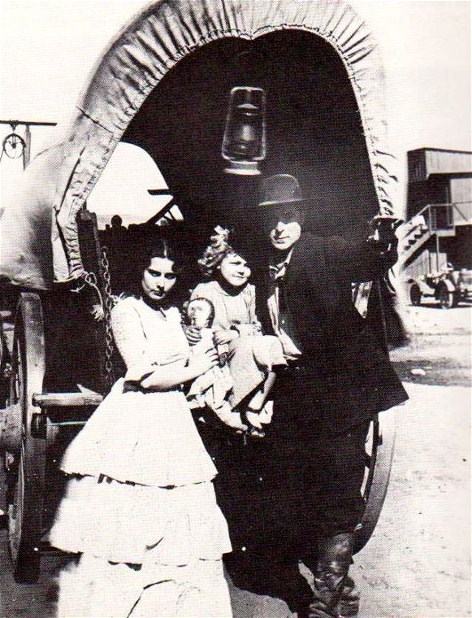
Cast out of his own Eden, Houston retreats to a log cabin wedged so high among spruces that clouds snag on the chimney. Hart’s physicality shifts: the shoulders that once squared against sinners now curve like a question mark. He milks a goat, splits cedar, and murmurs psalms to an infant who can offer no absolution. The film’s midpoint is a tone poem of penitence—snowfall muffling the world, Hart’s gloved hands trembling as he rocks a cradle, wind rattling the stovepipe like a devil seeking re-entry.
Cinematographer Joe August, who would later lens The Typhoon, captures the cabin’s interior in chiaroscuro so extreme that faces appear carved from tallow and shadow. When the child’s fever spikes, Hart’s eyes become twin furnaces reflecting the single kerosene lamp; the close-up is so intimate you expect breath to fog the lens. Silent cinema rarely risked such psychological proximity, and the gamble pays off: we feel the pastor’s re-conversion from wrath to mercy one heartbeat at a time.
The climax arrives like an Old Testament anecdote shot through with nickelodeon adrenaline. A midnight cloudburst lashes the cabin; Mary, lost in the maelstrom, stumbles back into the narrative carrying contrition like wet cement. She does not know her child is dying; she seeks only shelter. Fate, that inveterate jester, has already dispatched Hardy on the same trail. When the gambler-physician steps across the threshold, the cabin becomes an altar where three adult sins weigh against one small life.
What follows is a ten-minute sequence that scalds the memory. Hart lays aside neither gun nor gospel; he circles Hardy with the lethargic precision of a wolf that has read Leviticus. The child’s wheeze is the metronome; thunder supplies the timpani. Dalton’s Mary, mascara streaked into warpaint, must choose between the men who embody her competing damnations. She walks not to either male but to the cot where her daughter’s ribs flutter like trapped moth wings—a choice that redefines fidelity as maternal rather than marital.
In any other Western of the era—say, Neal of the Navy or The Marconi Operator—the final reel would demand blood restitution. The Disciple dares otherwise. Houston uncocks the hammer, tells Hardy to “go while your shadow still has a head,” and turns toward the shattered remnant of his family. The gambler exits into rain that looks oily, sinful, yet weirdly cleansing. No duel, no sheriff’s posse, no deus-ex-rifle—only the austere recognition that vengeance is another idol, and idols, like saloons, close eventually.
The last shot is a dolly-back through the cabin doorway as dawn ignites the peaks. Inside, Houston and Mary kneel beside the cot, their silhouettes fused into a single penitent gargoyle. The camera retreats until the cabin shrinks to a matchbox of light amid an ocean of evergreens, suggesting that forgiveness, though microscopic, may yet be the brightest spot in an unlit continent.
Hart’s restraint is legendary; he could still the Rio Grande with a frown. Here he adds a new octave: paternal terror. Watch the moment he realises the child’s medicine is gone—his shoulders sag as if the continent itself shifted a centimeter. Dalton, often dismissed as merely ornamental, delivers a masterclass in silent shame; her eyes flicker like faulty lanterns, never quite meeting the lens, as though the audience itself were jury and executioner. McKim counterbalances with serpentine charm; his smile arrives a half-second late, like a card dealt from the bottom of the deck.
In support, Bob Kortman’s Sheriff Bivens provides laconic ballast, his comic timing so dry it could desiccate cactus. Jean Hersholt cameos as a Norwegian miner whose rheumy faith in Houston anchors the parson’s self-loathing. Each face—weathered, stubbled, sun-puckered—feels excavated from the very landscape, giving the film the anthropological verisimilitude later prized by Jess of the Mountain Country.
Though released in 1920, The Disciple anticipates the chiaroscuro fatalism of 1940s film noir. August’s lighting carves moral abysses under every eye; characters emerge from darkness already half-corrupt. The cabin’s rafters cast prison-bar shadows across Mary’s cheekbones, while Hardy’s silhouette looms twelve feet tall on the wall—a trick that would resurface in The Secret Orchard two years later. Intertitles, penned by S. Barret McCormick, eschew flowery Victorian circumlocution for the terse poetry of punch-drunk psalms: “Between the thunder and the cradle, a man learns the weight of his own pulse.”
Modern viewers may bristle at Mary’s apparent reduction to moral weathervane, yet Dalton’s performance complicates the indictment. Her transgression reads less libidinal than existential; she flees not Houston’s body but the suffocating vacuum of a town that mistakes sanctimony for salvation. The film quietly suggests that frontier womanhood is a crucible where every desire—sexual, maternal, intellectual—must be forged into male-approved shapes. Mary’s ultimate return to the child’s bedside is less capitulation than reclamation of agency on maternal terms, a nuance often obliterated in contemporaneous reviews that labelled her “wayward.”
Surviving cue sheets recommend pairing the climactic storm with Tchaikovsky’s “Andante Maestoso” transposed for theatre organ, followed by a hush so absolute the audience hears only the projector’s sprocket-claw. Exhibitors in Tulsa reported patrons sobbing into Stetsons, while a Denver house claimed three separate viewers fainted during the uncocking of Houston’s Colt—hyperbole typical of ballyhoo sheets, yet indicative of the film’s visceral voltage. Today, Kino’s Blu-ray offers a newly commissioned score by the Mont Alto Motion Picture Orchestra that interpolates Protestant hymns into minor keys, sustaining the tension between damnation and grace.
Unlike The Patchwork Girl of Oz or The Infant at Snakeville, The Disciple was never remade during the sound era, perhaps because its moral ambiguities defy the shoot-first ethos of classical Westerns. Yet echoes reverberate: John Ford’s 3 Godfathers borrows the sick-infant-in-the-desert trope; Clint Eastwood’s Pale Rider reworks the preacher-gunman dichotomy; even Paul Schrader’s First Reformed revisits the crisis of faith in a barren moral landscape. Hart’s final close-up—eyes swollen with tears that never fall—predicts the stoic agony of later anti-heroes from Ethan Edwards to William Munny.
As of 2024, The Disciple streams in 2K restoration on Criterion Channel and Kanopy (library card required). A 4K UHD is rumoured for 2025 from Kino Lorber, paired with Hart’s The Whistle. For purists, MoMA circulates a 35mm tint print that retains the amber candlelight and cyan storm sequences per Ince’s original specifications. Avoid the Alpha Video bargain-bin disc; its public-domain transfer resembles a snowstorm inside a coal scuttle.
Final verdict: 9.2/10—a transcendent, thorny morality play that lodges in the craw like cedar smoke. Watch it when the world feels too certain of its own righteousness, and let William S. Hart teach you the terror of a man who discovers that forgiveness is the only bullet he cannot fire.
IMDb 6.2
1932
Community
Log in to comment.