DbcultAccessing Vault...
6.5/10
Senior Film Conservator
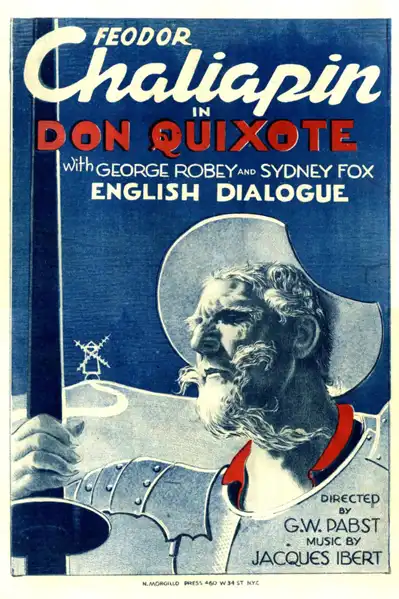
A definitive 6.5/10 rating for a film that redefined the boundaries of cult cinema. Don Quixote remains a cornerstone of transgressive art.
Alright, so, this 1933 take on Don Quixote? It’s a definite watch if you’re into really old movies or just curious how they did grand stories back then.
If you’re expecting something fast or super polished, you’ll probably find yourself a bit bored. But for those who like a slow burn and some really unique performances, it's worth a peek.
The movie itself, it's pretty much what you'd expect from 1933. The sound is… very 1933. Sometimes the voices feel a little distant, like they’re coming from another room. But it has a charm, you know?
Feodor Chaliapin Sr. as Don Quixote is something else entirely. He’s got this booming voice, naturally, from his opera background. When he delivers those passionate speeches about chivalry, it's commanding. You really believe this man has gone utterly, beautifully mad. It’s not just an act; it's a conviction.
George Robey as Sancho Panza, he’s a good contrast. A bit more grounded, but still clearly devoted to this crazy old man. Their dynamic is the heart of it, really.
Those scenes where Quixote is rambling about knights and Sancho is just nodding, trying to keep up, they work surprisingly well.
One thing that really stuck with me was the windmill scene. You’d think it’d be a big, dramatic moment. And it is, in its own way. But the special effects, or lack thereof, make it feel almost quaint. He charges, and the windmills just… are there. No big fight, just a sudden fall. It’s a reminder of the era's limitations, but it also makes Quixote’s delusion feel more stark.
And those sheep! Oh man, the sheep. He sees an army, right? And the film shows you a flock of sheep. The way the camera just sits there, watching them graze, while Quixote is going on about battling Saracens… it’s actually quite funny. A subtle visual gag, I think. 😂
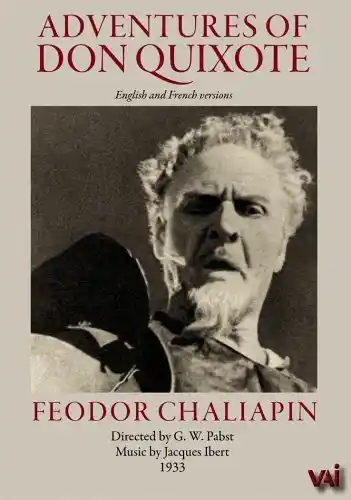
The bit about Dulcinea. The script, or maybe the original book, paints her in a specific light. In the movie, it’s more about his ideal. You don't really see much of her, it’s all in his head, which is probably the right call for a film from this time.
The whole 'getting him home' subplot with the niece and priest, it felt a little rushed towards the end. Like they suddenly remembered they needed to wrap things up. It’s not as compelling as Quixote’s actual adventures.
There's this moment where Quixote is talking to the convicts. He genuinely believes they are wronged nobles. The sincerity in Chaliapin’s eyes, even when he's completely wrong, is powerful. You feel for him, even as you shake your head.
The sets are sparse sometimes, but they manage to evoke the feeling of Spain. A dusty road here, a simple inn there. It’s not lavish, but it gets the job done. The costumes, though, are pretty great. Quixote’s armor looks suitably battered and cobbled together.
I think the film struggles a bit with its own pace. There are stretches where it just slows right down. You find yourself waiting for the next big delusion. But then Chaliapin will have another monologue, and you're pulled right back in.
It's not a perfect film, by any stretch. It has its clunky moments, sure. But it captures the spirit of Quixote, this pure, unshakeable belief in a bygone era. And that's something, you know? ✨
Sometimes the dialogue feels a little too theatrical, but then, it's an opera singer playing a character who thinks he's in a play. So maybe it fits? There's a scene in an inn, and the extras just stand there, kinda looking at the camera. A small detail, but it breaks the spell for a sec.
I liked how the film didn't try to make the windmills look like monsters. It just trusts you to understand Quixote's mental state. Less is more, sometimes.
IMDb —
1919
Community
Log in to comment.