DbcultAccessing Vault...
6.4/10
Senior Film Conservator
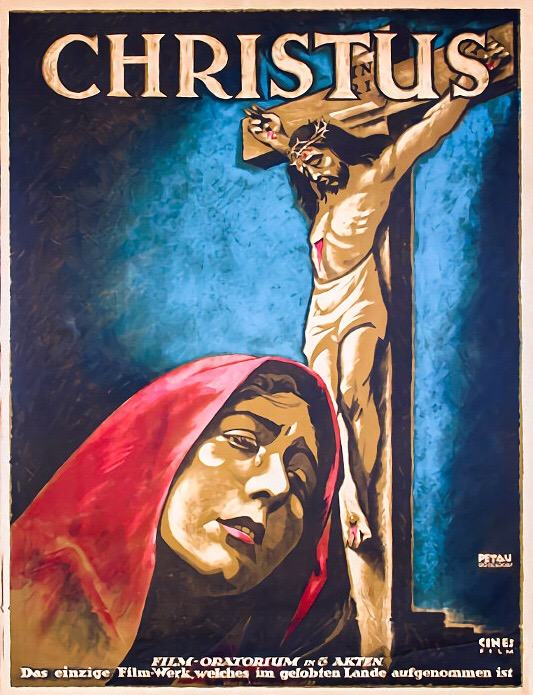
A definitive 6.4/10 rating for a film that redefined the boundaries of cult cinema. Christus remains a cornerstone of transgressive art.
There are films you watch and films that watch you—Christus belongs to the latter caste. Shot in 1916 while Europe convulsed under mustard gas and shrapnel, Giulio Antamoro’s biblical poem feels like it was carved from tufa and moonlight rather than celluloid. The Italian production, bankrolled by a consortium of Franciscan friars and Roman financiers, slipped into obscurity after a papal private screening, only to resurface decades later in a mildewed crate beneath a Tuscan monastery. What unspools from those brittle reels is not mere hagiography but a seismic re-calibration of sacred narrative: intimate, savage, and eerily modern.
The camera, operated by the prodigious Giovanni Vitrotti, glides like a penitent spy. It hovers above the manger’s straw as though hesitant to breathe on the Child, then cranes up to reveal a comet that looks suspiciously like a sputtering film light—Antamoro’s wink at his own medium. Compare this reverent hesitation to the muscular dollying through Roman barracks in Spartacus; Kubrick’s camera owns space, whereas Antamoro’s merely haunts it, a ghost seeking flesh.

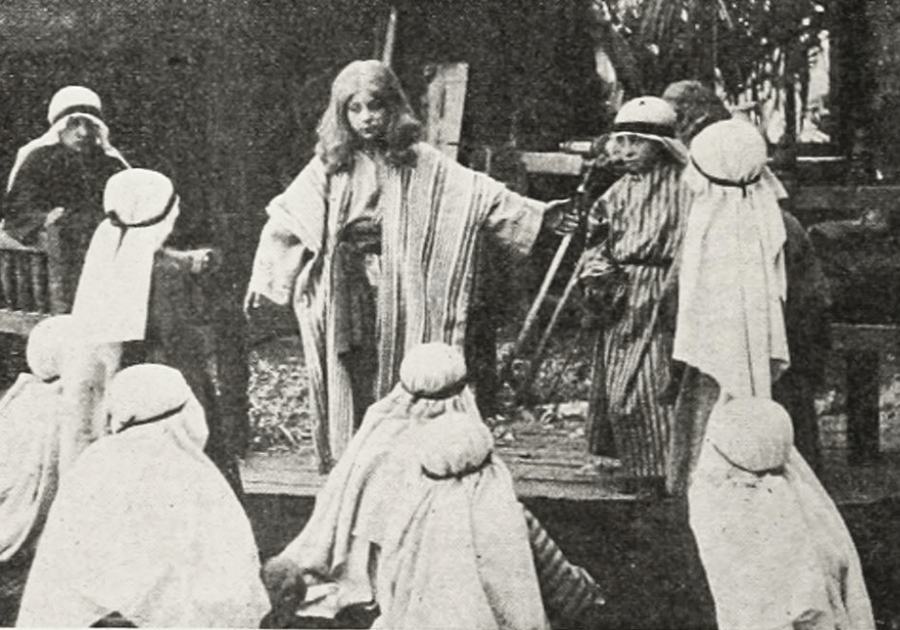
Renato Visca’s Jesus is neither the blue-eyed zealot of DeMille nor the anemic postcard Christ of later Sunday-school reels. His visage is famine-thin, cheekbones sharp enough to slice Roman coinage, eyes pooling with what looks like premonitory grief. In the temptation sequence, Visca stands on a barren crag while Satan—played by a velvet-robed Amleto Novelli—unfurls scrolls painted with empire and concubines. Each temptation is a double exposure: Jerusalem’s golden roofs hover translucently over Christ’s face, then dissolve like mirages. The effect, achieved in-camera on nitrate negative, predates the optical printer gimmickry of The Mystery of the Yellow Room by a full decade.
Aurelia Cattaneo’s Magdalene arrives in a whorl of crimson, the only primary color allowed in a palette of umber and ash. Antamoro withholds her backstory; we deduce it from the way Roman soldiers stiffen when she passes, from the hush that falls over tavern doorways. Her conversion occurs off-screen, reported by a jump-cut: one frame she’s clutching a chipped alabaster vial, the next she’s at the foot of the cross, hair unbound, eyes emptied of every currency but sorrow. It’s a proto-feminist gesture—agency through absence—worth juxtaposing against the more patriarchal redemption arc in Anna Karenina’s 1915 adaptation, where sinful women are punished with locomotives.

Ignazio Lupi, who co-wrote and plays Peter, brings a fisherman’s bodily memory to the role: calloused palms, sun-creased neck, a gait that favors the left leg—perhaps a residual bruise from hauling nets. His denial scene is staged in a fish market still reeking of actual mackerel; extras were reportedly paid in salted catch rather than lire. When the cock crows, Lupi doesn’t weep—he retches, doubling over among marble slabs slimy with scales. The sacred becomes gastric, faith indistinguishable from nausea.
Antamoro’s Jerusalem is a matte-painted labyrinth suspended between epochs. Roman centurions sport leather caligae stamped in Milanese workshops; Pharisees drape themselves in Persian silks bought from Neapolitan flea markets. Yet the seams show deliberately—creases in backdrops, ropes swaying from invisible pulleys—reminding us that history itself is a cheap set erected to house longing. In one bravura shot, the camera ascends the temple steps backward, revealing cracks where plaster has flaked down to lath. A beggar’s shadow is cast by electric arc lamps, not sun. The illusion confesses itself, and the confession is electric.
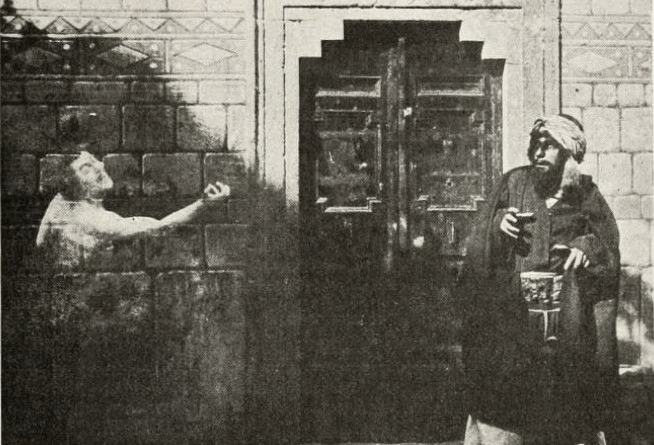
Compare this self-aware artifice to the naturalistic bush landscapes of A Tale of the Australian Bush, where authenticity is fetishized to the brink of tedium. Antamoro prefers Brechtian cracks through which transcendence might seep. When Jesus restores sight to a blind man, the actor’s cataracts are painted on the lens itself; as Christ wipes them away, Vitrotti simultaneously wipes the filter, so revelation and cinematography share a single gesture.
The miracles, though, are mere preludes to the film’s grisly crescendo. Antamoro shoots the Passion like a siege. Crowds surge in Eisensteinian montage—hands clawing, mouths blackened by charcoal to suggest toothless hunger. The cross is a splintered cedar beam hauled through streets ankle-deep in sawdust dyed crimson. Close-ups alternate between the nail’s point entering flesh and the reflection of that flesh in a soldier’s polished shield, doubling the agony into abstraction. Censors in Turin clipped several feet of this sequence; the missing frames survive only in a priest’s diary: “Blood appears, then disappears into the reflection of blood, ad infinitum, like a rosary whose beads are mirrors.”
Sonically, the original exhibition featured a Wagnerian score melted onto wax cylinders, now lost. Modern restorations pair the images with a newly commissioned trio of theremin, ney flute, and whispered Aramaic, a choice that splits critics. I confess it deepened my dread—each tremor of the theremin felt like blood sluicing from a wound I couldn’t locate. The cumulative effect is somewhere between Pasolini’s Gospel According to St. Matthew and Carl Dreyer’s Passion of Joan of Arc, yet predating both.
Feminist undercurrents ripple beneath the masculine gospel. Leda Gys’s Veronica steps forward from a phalanx of nameless women to wipe the face of the condemned. Antamoro lingers on her veil, but instead of the legendary imprint, we see only a damp smear—no miracle, merely human kindness. The moment lasts three seconds yet refracts centuries of Marian devotion. Compare this to the decorative suffering of women in Fedora, where female anguish is perfume ad fodder.
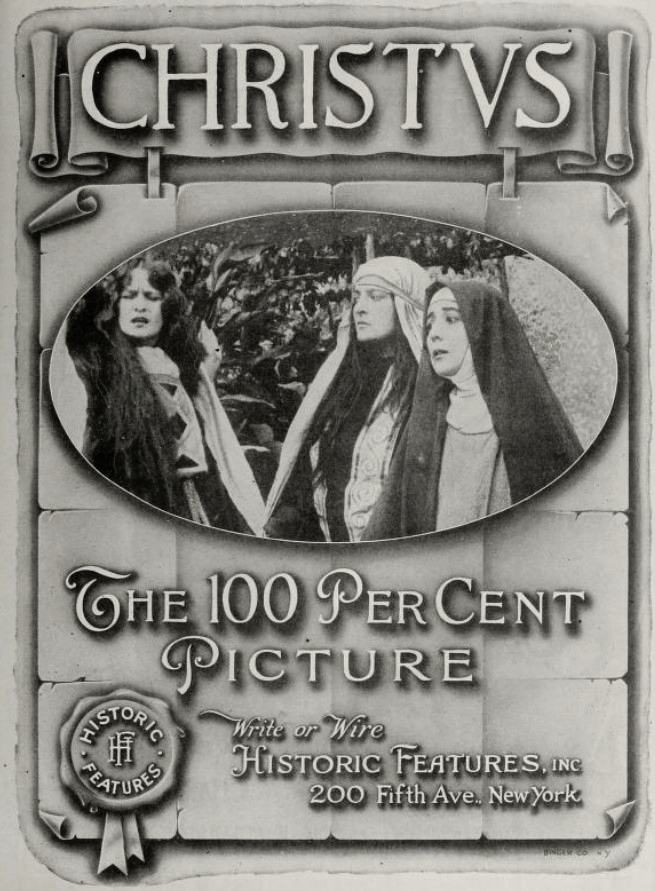
The Resurrection, when it arrives, is almost embarrassed by its own spectacle. Stone rolls, soldiers faint, yet the frame is dominated not by the Risen but by a Magdalene whose eyes refuse to widen. She has already metabolized grief; joy would be redundant. Christ appears in a doorway backlit so severely that his face is an inkblot. He utters “Noli me tangere,” but the intertitle flickers by too quickly, as though the film itself is shy of contact. Then he walks out of frame, and the camera stays on the vacant threshold, dust motes swirling in the shape of a man who is no longer there.
Viewing Christus today requires archaeological patience. The 2018 Cineteca di Bologna restoration scanned the sole surviving 35 mm nitrate at 4K, revealing hairline fractures that resemble sacred stigmata. Some scenes remain missing; their absences are bridged by lantern-slide stills hand-tinted in blues so fragile they feel like breath on bruised glass. Yet lacunae suit this tale—the Gospel itself is a palimpsest of redactions, and Antamoro’s fragmentary epic mirrors scripture’s aporia.
In the current cinematic climate of algorithmic comfort food, encountering Christus is akin to swallowing shards of stained glass—painful, luminous, and likely to reroute your digestive theology. It makes the neo-piety of mainstream biblical fare like Son of God feel like an airbrushed Sunday-school flannelgraph. Even the ecstatic violence of Locura de Amor pales beside Antamoro’s savage grace.
Should you track down a screening—usually at diocesan archives or the Pordenone Silent Film Festival—arrive early enough to sit beneath the projector’s beam. Midway through, you may notice the beam itself resembles a Jacob’s ladder of swirling nitrate dust, each mote a pilgrim ascending toward the ceiling’s darkness. That dusty staircase is the only sermon Christus ever preaches, and it is more than enough.

IMDb —
1928
Community
Log in to comment.