DbcultAccessing Vault...
6.4/10
Senior Film Conservator
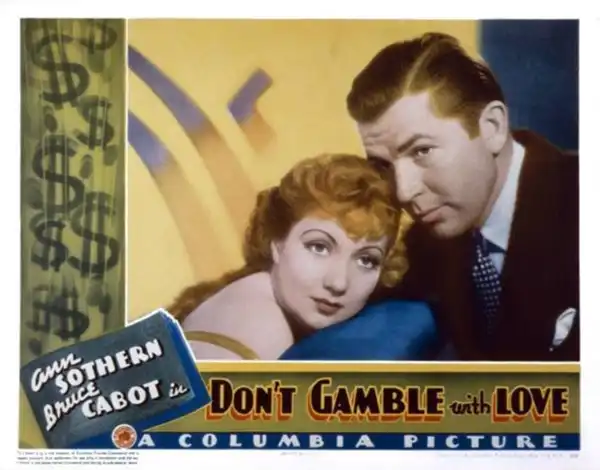
A definitive 6.4/10 rating for a film that redefined the boundaries of cult cinema. Don't Gamble with Love remains a cornerstone of transgressive art.
Honestly, if you're a fan of those snappy 1930s dramas that clock in at barely over an hour, you'll find something to like here. It's perfect for a rainy afternoon when you don't want to think too hard. If you hate movies where the husband is a complete moron who ignores his common sense, you might end up yelling at your screen.
I sat down to watch this mostly because of Ann Sothern. She has this way of looking at a man like she knows exactly how he's going to fail her, but she's going to try and save him anyway. It's a trope, sure, but she does it better than most.
The movie starts with Jerry (Bruce Cabot) and Ann getting married. Jerry is a gambler—and a good one—but he promises to go straight. You know how this goes. Nobody actually goes straight in these movies until the third act, and even then, it’s usually because they lost their shirt first.
Bruce Cabot plays Jerry with this sort of heavy-handed sincerity. You can almost see the gears grinding in his head when he looks at a deck of cards. He’s not a subtle actor, but in a movie called Don't Gamble with Love, you aren't really looking for subtle. You want a guy who looks like he’s physically pained by the sight of a roulette wheel.
There is this one scene early on where they're setting up their new life. Everything is bright and hopeful. It feels a bit like the domestic bliss in The Bitter Tea of General Yen, though obviously way less intense and weird. But you just know the other shoe is going to drop.
The absolute best part of this movie has almost nothing to do with the plot. The Nicholas Brothers show up. If you don't know who they are, you should stop reading this and go look up their dance numbers. They are incredible. They just appear, do this mind-blowing routine, and then the movie goes back to Jerry being a loser.
It’s one of those things about old movies I love. They’ll just pause the story for five minutes to show you the best dancers in the world. It doesn't matter if it fits the pacing. It’s just... there.
The way the tension builds is actually kind of effective. You see Jerry starting to lie about where he’s been. He comes home late, he’s got that look in his eye. It reminds me a bit of the desperate energy in A Lady of Chance, where everyone is trying to grift everyone else.
There’s a moment where Jerry is back at the table, and the camera focuses on his hands. They’re shaking just a little bit. It’s a small detail, but it felt real. Like, he’s not just gambling for money; he’s addicted to the feeling of almost losing everything.
Ann Sothern’s character is a bit frustrating, though. She’s so patient. Too patient. At one point, she’s just sitting there waiting for him, and you want to reach into the film and tell her to just leave. But that wasn't really the vibe of 1936 movies, I guess. The wife stays until the house is literally on fire.
The movie is only 63 minutes long. By the time the stakes actually get high, the movie realizes it’s running out of film. The resolution happens so fast you might blink and miss it. One minute Jerry is in deep trouble, and the next, there’s a moral lesson and we’re heading for the credits.
I wish they had spent more time on the fallout. The script moves from "everything is fine" to "everything is ruined" to "everything is fine again" in about fifteen minutes. It’s a bit of a whiplash. It’s not quite as well-paced as something like When Ladies Meet, which handles its drama with a bit more breathing room.
Also, Ian Keith is in this. He’s got such a villainous face. Every time he’s on screen, I expect him to twirl a mustache, even when he doesn't have one. He plays the guy who lures Jerry back into the game, and he does it with this oily charm that’s fun to watch.
"A man who can't say no to a bet is a man who's already lost."
I think someone says something like that in the movie. Or maybe I just wrote it in my notes because it felt like something they should have said. The dialogue is snappy but very much of its time. Lots of "Listen, baby" and "I’m through with the rackets."
If you enjoy seeing how the 1930s viewed "vice," this is a good case study. It’s very moralistic. Gambling isn’t just a bad habit; it’s a character flaw that threatens the very fabric of the American home. It’s a bit heavy-handed, but that’s the charm of these B-pictures.
I noticed a weird continuity error in the scene where Jerry is looking at his bankbook. The amount of money changes between shots. It’s a tiny thing, but once you see it, you can’t unsee it. It just goes to show how fast they were pumping these movies out back then. No time for a second take!
Anyway, it’s not a masterpiece. It’s not going to change your life. But if you want to see some great dancing, some good hats, and Bruce Cabot looking stressed out, it’s worth the hour. Just don't expect it to be as deep as a modern drama. It’s a product of its time, and it wears that on its sleeve.
I’d probably watch it again if it came on TV, but I wouldn't go hunting for the DVD. It’s a solid maybe for your watchlist. If you've seen things like Too Tough to Kill, you know exactly the level of quality we're talking about here. Reliable, slightly clunky, but ultimately harmless fun.
IMDb 5.6
1934
Community
Log in to comment.