DbcultAccessing Vault...
Cult Review
Senior Film Conservator
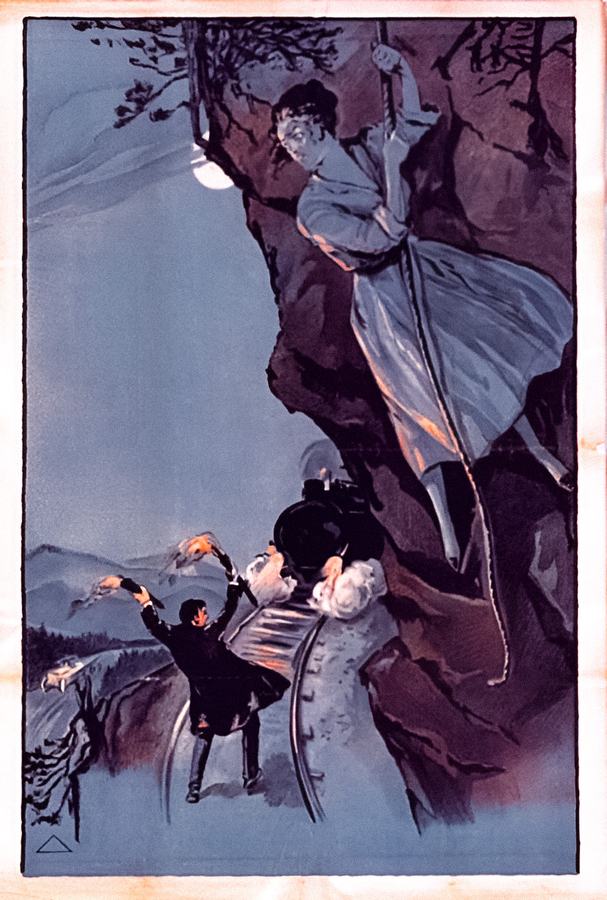
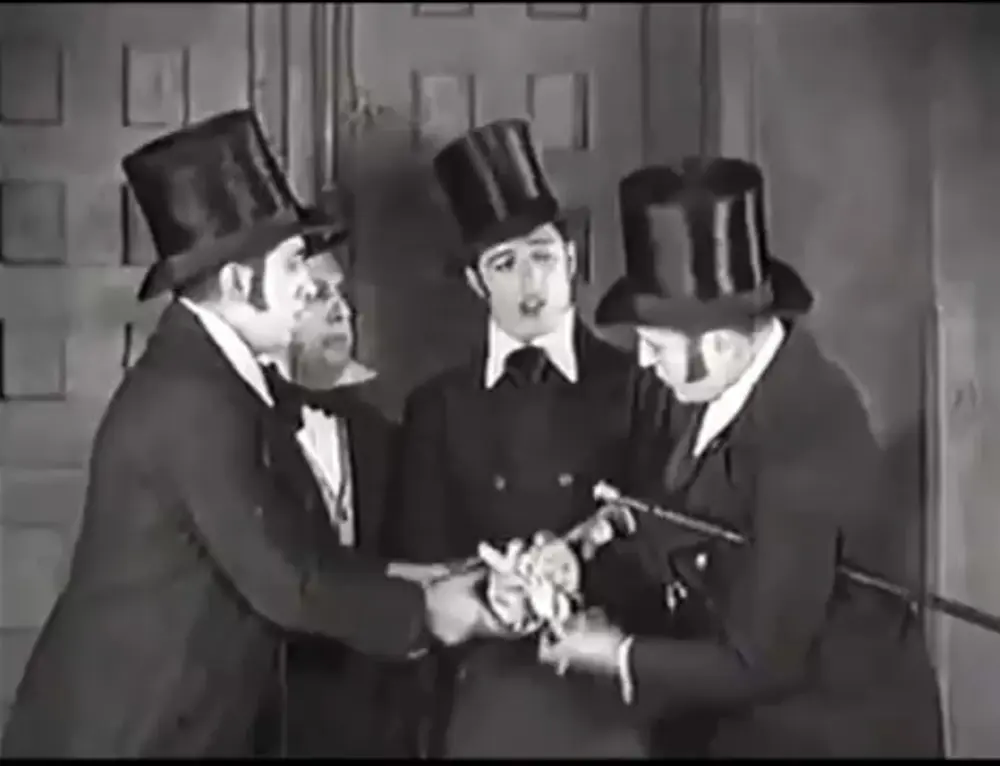
To witness Fortunato, 3. Teil - Der letzte Atemzug is to step into a vanishing world of shadow and silence, a realm where the cinematic language was still in its turbulent adolescence, yet capable of articulating depths of despair that modern digital clarity often fails to capture. As the concluding chapter of a trilogy that gripped German audiences in 1921, this film represents a pivotal moment in the evolution of the crime thriller. It is not merely a sequel; it is a funeral pyre for its own narrative conceits. While many films of the era, such as The Girl Who Couldn't Grow Up, focused on the saccharine or the whimsical, Koffler’s work plunges headlong into the abyss of the human condition.
The cinematography in 'Der letzte Atemzug' is nothing short of revolutionary for its time. The camera, though largely static by contemporary standards, is positioned with a surgical precision that creates a sense of voyeuristic entrapment. We are not just watching Fortunato; we are complicit in his undoing. The use of light is particularly striking—a precursor to the full-blown Expressionism that would soon dominate the UFA studios. Unlike the pastoral brightness found in God's Country and the Law, the world of Fortunato is one of ink-blot shadows and jagged angles. Every alleyway feels like a throat, every room a cage. The visual texture of the film stock itself, with its organic grain and occasional flickering, adds a layer of mortality to the proceedings, as if the film is decaying in real-time alongside its characters.
At the heart of this cinematic machine lies the performance of Oscar Marion. Marion possesses a face that seems carved from the very anxieties of the post-war German psyche. His portrayal of a man at the end of his tether is a masterclass in subtlety—a rare feat in an era often defined by histrionic gesticulation. Beside him, Gustav Birkholz provides a grounded, almost oppressive presence. Their interactions are characterized by a heavy, atmospheric tension that reminds one of the legalistic weight in The Witness for the Defense, yet here, the stakes are not merely social standing or legal exoneration, but the very survival of the soul. Peggy Longard’s presence offers a flickering candle of humanity in this otherwise bleak landscape, though her character is ultimately subsumed by the overarching gloom of Koffler’s vision.
Leo Koffler, as both writer and architect of this finale, demonstrates a sophisticated understanding of the 'serial' format. He avoids the pitfalls of repetitive cliffhangers that plagued works like Die Herrin der Welt 8. Teil - Die Rache der Maud Fergusson. Instead, Koffler opts for a slow-burn escalation. The screenplay is lean, stripped of the melodramatic fat that often bloated early 20th-century dramas. There is a sense of rhythmic inevitability here; the plot beats are like the tolling of a distant bell. This is a story about the weight of history—how the actions of the first two parts have created a gravity from which Fortunato cannot escape. It mirrors the relentless momentum of A Fugitive's Life, but replaces the physical pursuit with a psychological one.
"The genius of 'Der letzte Atemzug' lies in its refusal to offer the audience the catharsis they crave. It is a film that understands that some breaths are not taken in triumph, but in a weary, final acceptance of the dark."
When we look at the broader landscape of 1910s and 1920s cinema, Fortunato, 3. Teil stands as a fascinating outlier. It lacks the ironic detachment of The Man Who Could Not Lose and the moralizing sentimentality of The Lesson. Instead, it shares a DNA with the more visceral, proto-noir elements of Kiss of Death. There is a coldness to the film that is remarkably modern. It doesn't ask for your pity; it demands your attention. The pacing, which some might find languid, is actually a deliberate construction of dread. It shares more with the atmospheric fog of The Voice in the Fog than with the high-octane action of Sure Fire.
The production design of the film deserves significant praise. The sets—likely built on the limited budgets of the era—utilize forced perspective and heavy drapery to create an environment that feels both expansive and stifling. This is a far cry from the open-air authenticity of A Vermont Romance or the rugged landscapes of The Savage. In 'Der letzte Atemzug', the setting is a psychological projection. The crumbling walls and dusty parlors are the externalization of Fortunato’s conscience. Even the costume design, particularly the stiff, formal attire of Paul Ludwig and Heinz Flerko, serves to emphasize the rigidity of the social structures that are ultimately failing the characters. The film’s rhythmic editing, though primitive by today’s standards, shows an early grasp of how to manipulate audience anxiety through duration and cut-points.
One cannot discuss this film without addressing the power of its silence. In the absence of a synchronized score (in its original form), the visual storytelling had to be impeccable. The 'last breath' of the title is a silent one, yet it resonates more loudly than many of the orchestral swells in Hearts and Flowers. There is a specific kind of bravery required to end a trilogy on such a somber note. While contemporary American films like Bucking Broadway were leaning into the myth of the triumphant individual, German cinema—and Koffler specifically—was exploring the myth of the doomed one. This cultural divergence is what makes Fortunato, 3. Teil such a vital piece of film history. It is a document of a nation’s collective subconscious, grappling with the concepts of guilt and finality.
Ultimately, Fortunato, 3. Teil - Der letzte Atemzug is a triumph of mood over artifice. It is a film that lingers in the mind long after the final intertitle has faded. It lacks the populist appeal of Fürst Seppl, but it possesses a gravitas that few of its peers can claim. For the modern viewer, it requires a recalibration of the senses—a willingness to sit with the stillness and find the movement within it. It is a testament to the power of the early masters like Koffler, Birkholz, and Marion that nearly a century later, the 'last breath' of their protagonist still carries the weight of a thousand unspoken words. It is not just a conclusion to a story; it is a profound statement on the ephemeral nature of life itself, captured in the flickering silver halides of a medium that was just beginning to understand its own power to haunt.
A somber, masterfully paced conclusion to one of the era's most intriguing serials. While its bleakness may deter those seeking light entertainment, its visual sophistication and emotional depth make it an essential watch for any serious student of the silent screen. A haunting reminder that in the world of Fortunato, the only escape from the past is the finality of the present.
IMDb —
1919
Community
Log in to comment.