DbcultAccessing Vault...
Cult Review
Senior Film Conservator
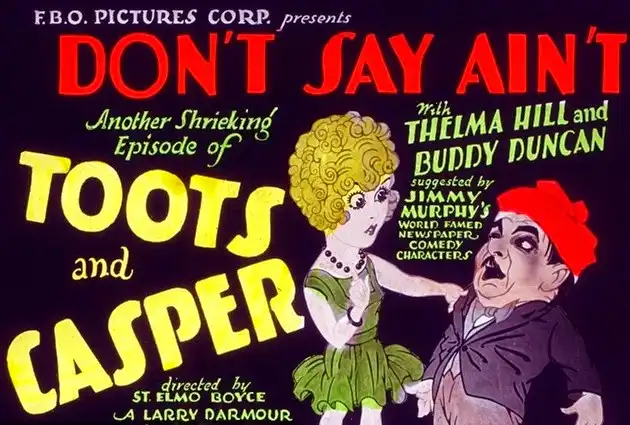
So, you’re thinking about watching Don't Say Ain't? Well, if your idea of a good time is digging into early sound-era shorts, the kind that feel like a play recorded on film, then sure, give it a whirl. It's a quick peek into comedy from 1930. But if you're looking for slick pacing or jokes that really hit hard today, you’ll probably want to skip this one. 🤷♀️
The whole thing is basically built around this one word. You guessed it: "ain't." Bud Duncan plays this character who, for whatever reason, just cannot stop using it. It's like a verbal tic that drives everyone else around him absolutely batty. Especially Thelma Hill's character, who seems to be constantly on the verge of pulling her hair out.
It's not exactly high concept. The humor comes from the sheer repetition and the escalating frustration. One moment, Duncan is casually dropping an "ain't" into conversation, and the next, he's practically shouting it, defiant. You can almost feel the movie trying to convince you this linguistic rebellion matters.
The sound quality, obviously, is exactly what you’d expect from something made in 1930. There's a persistent hiss, and some of the dialogue feels a bit muffled. But honestly, that’s part of the charm, isn't it? It just adds to the feeling of time travel. 🕰️
There's a scene where Duncan is trying to explain something, and he keeps catching himself, almost correcting, but then the "ain't" just slips right out again. It goes on about 20 seconds too long, and the silence that follows, before Thelma Hill finally reacts, starts to feel awkward rather than emotional. It's a bit much, you know?
Thelma Hill really shines in her reactions. She has this fantastic range of exasperated looks. Sometimes it’s a slow blink, other times a quick, sharp glare. It's very expressive, especially for the time. She does a lot with very little.
And Bud Duncan, well, he commits. He really leans into the stubbornness of his character. It’s not subtle acting, but then again, what was in those days? It's all very broad, very theatrical. You can tell they're playing to the back row of a vaudeville stage, not a camera lens right in front of them.
One small thing I caught: a quick shot of a newspaper headline that briefly flashes something completely unrelated to the "ain't" problem. It's super fast, blink and you miss it, and just kind of there. No real reason for it, I guess. Just a random prop. 📰
The movie gets noticeably better once it stops taking itself seriously, which, for a comedy about a single word, is a funny thing to say. But there are moments early on where it feels like they’re trying to set up some kind of deeper conflict, and it just falls flat. Then they remember it’s a short about grammar and just go for the silly.
It’s a peculiar little piece of film history. Not exactly a must-see, but if you’re into the quirks of early cinema, or just want to see how a simple premise could carry a whole short back then, it’s worth a quick watch. Just don’t expect a masterpiece. It's more like a curious artifact. ✨
IMDb 5.9
1930
Community
Log in to comment.