DbcultAccessing Vault...
Cult Review
Senior Film Conservator
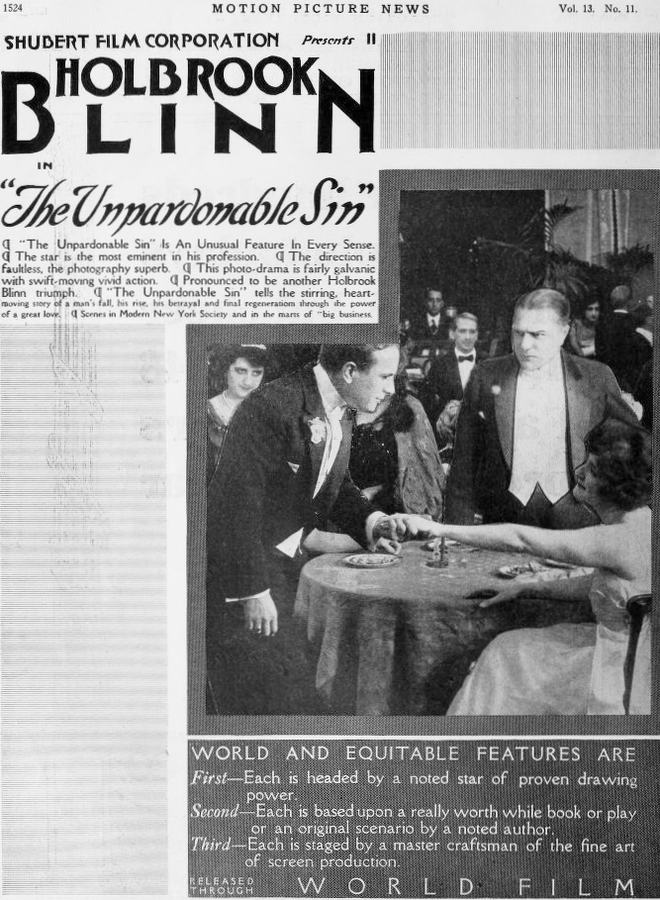
Moonlit decks, ticker-tape temples, and penitentiary corridors braid together in The Unpardonable Sin, a 1919 melodrama that treats addiction like a lit fuse and redemption like a roulette wheel. George Kerr O’Neill’s screenplay—lean, pitiless, almost Jacobean—hands us Walter Norman, a man whose charm is as burnished as the silver flask he clutches, and then watches the metal corrode in real time.
The narrative vaults across three moral climates: the claustrophobic parlours of a minor American metropolis where excess is a competitive sport; the aqueous exile of Grant’s yacht, a liminal space equal part rehab and confessional; and finally Manhattan’s vertical Babylon, a playground where fortunes crystallize overnight and morals can be day-traded. Each leap widens the frame, turning a private failing into a public spectacle, a technique that prefigures the tabloid culture the Roaring Twenties will soon perfect.
Notice how O’Neill withholds the clichéd “moment of clarity.” Norman’s sobriety arrives off-screen, conveyed only by a hard cut from trembling hands gripping a bottle to the same hands signing contracts in a skyscraper. The ellipsis is brutal; it implies that salvation, like relapse, is less epiphany than muscle memory.
Walter Greene, tasked with the mercurial title role, modulates between foppish magnetism and skeletal desperation without leaning on the histrionic crutches so common to silent-era portrayals of dipsomania. His gaunt cheekbones in the skid-row reels become a silent indictment of metropolitan glamour—every rib is a moral ledger. Opposite him, Charles Mackay’s Richard Grant radiates the steadfast warmth of a human lighthouse, though the script wisely denies him sainthood; his insistence on maritime cold-turkey borders on authoritarian.
Helen Fulton’s Julia Landis carries the film’s moral gyroscope. Watch her pupils dilate when she first detects liquor on Norman’s resurrected breath: the moment is less disgust than existential vertigo, as though she has caught Death adjusting his mask in a mirror. Holbrook Blinn’s Royce oozes the vanilla malice of old money—his smiles never crest into Snidely Whiplash territory, which makes his machinations chillier.
Director (unattributed in surviving prints) weaponizes chiaroscuro the way a surgeon wields a scalpel. When Norman succumbs to Harker’s proffered glass, the camera tilts slightly—just enough to make the whiskey’s amber swirl overlap the white of his collar, a chromatic confession before a single intertitle. Later, Royce’s paneled office is rendered in vertiginous high-angle: ticker-tape ribbons resemble bars caging him inside his own avarice.
The yacht sequences feel documentary by 1919 standards—salt-stiffened canvas, tarpaulin flapping like a flag of contrition. Compare this to the opulent abstraction of Cleopatra’s Egypt or the expressionist alleyways of Fantomas; The Unpardonable Sin grounds its redemption arc in brackish reality, suggesting that reformation is a matter of knots and nautical miles, not miracles.
Julia’s verdict—excess drinking is the “unpardonable sin”—sits at the film ideological core. While modern viewers may bristle at the absolutism, contextualize it within pre-Volstead America, when temperance rhetoric painted alcohol as the solvent dissolving patriarchal order. Julia’s unyielding stance weaponizes the language of moral contagion: to love a drunk is to risk becoming one, socially if not physiologically.
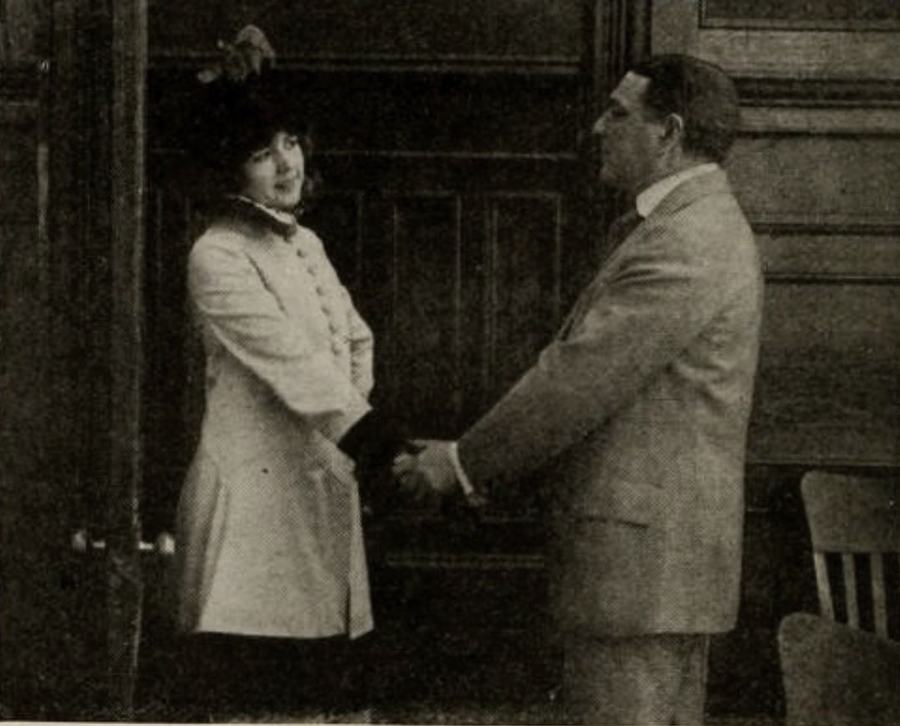
Yet the film complicates her purity. After learning of the frame-up, she storms into Norman’s garret not to rescue but to negotiate—her contrition is conditional, transactional. In that moment she, not Royce, becomes the market-maker of forgiveness, upending the era’s gendered assumptions about penance and power.
Norman’s climb from card-shark anonymity to ticker-tape supremacy literalizes the Calvinist parable of the elect: riches signal grace. The montage—gambling den, back-room brokerage, then granite-columned boardroom—compresses the Protestant work ethic into a few hundred feet of nitrate. But Kerr O’Neill undercuts triumphalism: every stock-quote is a double-edged sword, capable of slicing the wielder. When Norman turns the blade on Royce, the film asks whether revenge, not liquor, is the more corrosive addiction.
Cinephiles tracking capitalism-on-celluloid will note parallels with The Pit’s wheat-market carnage, though The Unpardonable Sin predates it, trading Chicago’s commodities floor for Manhattan’s paper empires.
Surviving prints clock in at roughly 68 minutes, suggesting up to 20 minutes may be lost. Intriguingly, the gap occurs between Norman’s courtroom conviction and Harker’s wife’s eleventh-hour confession. Modern restorers have spliced in a synopsized intertitle; purists argue this lacuna actually amplifies tension—we languish with Norman on death row, time elasticized by absence. Compare to Unjustly Accused, where exoneration arrives via comedic coincidence, undercutting stakes.
Though originally scored for a small pit orchestra, most contemporary screenings rely on improvised digital accompaniments. Try mentally overlaying Saint-Saëns’ Danse Macabre during Norman’s descent into skid-row; the chromatic shivers sync with the character’s danse with delirium tremens. Conversely, the rebound sequences practically beg for ragtime’s jaunty optimism, a sonic sleight that renders uplift without saccharine aftertaste.
The film vanished from repertory after 1925, eclipsed by flashier fare like The Masqueraders. Yet its DNA resurfaces in everything from The Lost Weekend’s clinical despair to Wall Street’s cautionary bacchanalia. Note also the pre-noir tropes: the frame-up, the femme fatale who isn’t, the urban labyrinth as moral crucible—ingredients simmering here a full decade before von Sternberg’s Underworld.
For all its Victorian scaffolding—temperance sermons, last-minute reprieves—The Unpardonable Sin pulses with modern ambivalence. It understands that addiction is not a demon exorcised but a tenant who knows the spare key’s hiding place. It recognizes that Wall Street’s bulls and bears feed on the same marrow as the bottle’s oblivion. And it admits—rare for 1919—that forgiveness can be as ethically slippery as sin itself.
Seek out any archival screening, any 16-mm basement print. Should you glimpse Walter Greene’s hollow eyes flickering against brick, you’ll confront a mirror nearly a century old yet disconcertingly unclouded. Raise a glass—water, preferably—to a film that dares suggest the gravest unpardonable sin might be our eagerness to brand others beyond redemption.
IMDb 7.4
1934
Community
Log in to comment.