DbcultAccessing Vault...
6.8/10
Senior Film Conservator
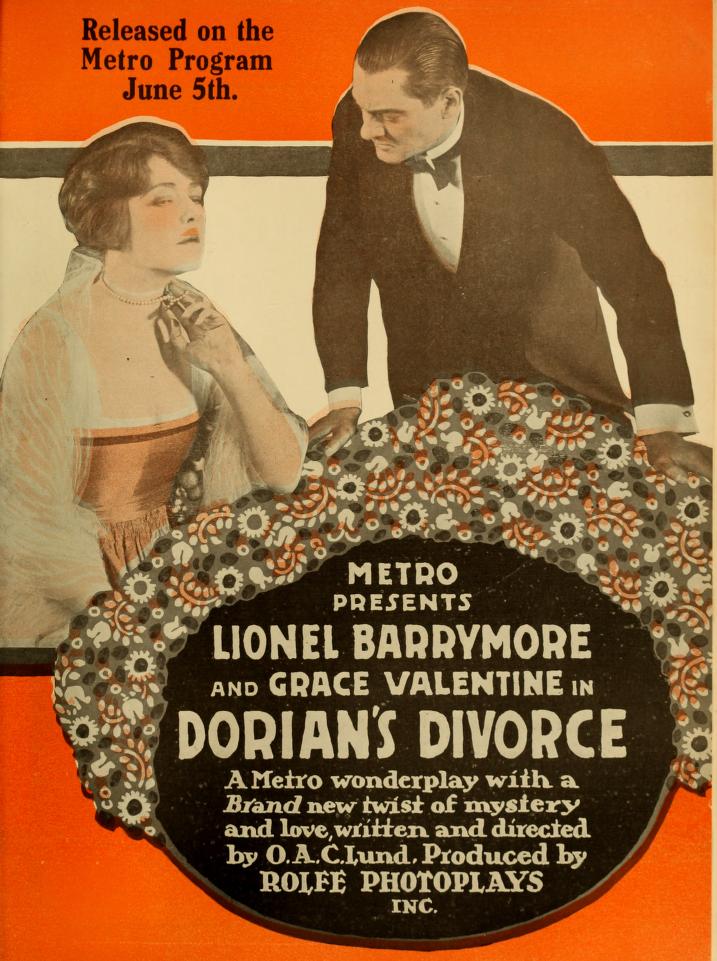
A definitive 6.8/10 rating for a film that redefined the boundaries of cult cinema. Dorian's Divorce remains a cornerstone of transgressive art.
There are films that merely tell a story, and then there are those, like Dorian's Divorce, that weave a tapestry so intricate, so fraught with human frailty and indomitable spirit, that they transcend mere entertainment to become a profound commentary on the human condition. This isn't just a tale of marital discord; it's a sprawling epic of sacrifice, mistaken identity, and a relentless pursuit of redemption against a backdrop of financial ruin and moral decay. From the opening frames, we are plunged into a world where the gilded promises of Wall Street have turned to ash, and personal loyalties are tested in the crucible of desperation.
The narrative commences with Dorian Keene, portrayed with a compelling gravitas by William B. Davidson, a broker whose once-stout financial edifice has crumbled under the weight of market volatility. His world, already reeling from fiscal collapse, is further destabilized by his wife, Florence, brought to life with a nuanced blend of frustration and burgeoning independence by Grace Valentine. Florence, weary of their straitened circumstances and perhaps swayed by the insidious whispers of others, seeks a divorce. It’s a moment of profound vulnerability for Dorian, whose 'great love' for her compels him to accede, a decision that ignites a chain reaction of events both tragic and ultimately redemptive. This initial premise, while seemingly straightforward, immediately sets a tone of impending doom, reminiscent of the societal pressures and marital strife explored in films like The Country That God Forgot, where external forces profoundly impact domestic harmony.
Just as the ink on the divorce papers is poised to dry, a confession from Sanders, Florence's godfather (a suitably conflicted Edgar L. Davenport), introduces a layer of ethical complexity that elevates the film beyond a simple domestic drama. Sanders reveals his malfeasance, having embezzled Florence's funds, and fears exposure once the divorce necessitates an accounting. Dorian, in a move that defines his character's unwavering devotion, pledges to protect him. This act of loyalty, almost quixotic in its selflessness, is the first major pivot in Dorian’s tragic journey. It’s a decision born of love, yes, but also of a deeply ingrained sense of honor, even when that honor demands protection of the dishonorable. This moral dilemma, where personal ethics clash with legalities and familial bonds, echoes the intricate legal and moral quandaries found in According to Law, though here, the stakes are far more intimately personal.
The hunting lodge sequence is a masterclass in escalating tension. What begins as a negotiation quickly descends into a maelstrom of accusations and violence. Sanders, his guilt gnawing at him, cracks under pressure, revealing his betrayal to Florence. Her reaction, a tempest of 'violent temper,' is perfectly understandable, yet it leads to an irreversible tragedy. The sound of a gunshot, the maid's discovery of Sanders' lifeless body, and her immediate accusation of Florence create a crucible of crisis. Here, the film truly tests the boundaries of Dorian's love. Without hesitation, he shoulders the blame, a profound act of self-sacrifice that defines the core of his character. This selfless act, taking the fall for a crime he didn’t commit to shield the woman he loves, is a thematic through-line that resonated deeply with audiences of the era, mirroring the grand, often melodramatic, gestures of devotion found in narratives like The Bondman, where characters frequently endure immense personal suffering for the sake of others.
Dorian's subsequent escape, though born of desperation, quickly morphs into a twist of fate that redefines his existence. His encounter with a highwayman, a classic cinematic trope, is executed with a surprising economy of narrative. The highwayman, taking Dorian's clothes and car, inadvertently provides Dorian with a new, albeit penniless, identity. When the stolen vehicle, with the highwayman inside, plunges over an embankment and burns beyond recognition, the world presumes Dorian Keene dead. This mistaken identity, while convenient for the plot, is handled with a deftness that allows for Dorian’s transformation from a disgraced broker and accused murderer to an anonymous wanderer. It’s a narrative device that frees him from his past, offering a clean slate, albeit one fraught with peril. The dramatic irony here is palpable: a man sacrifices his reputation and freedom for love, only to be granted a bizarre form of liberation through an accident that erases his very identity. This kind of dramatic irony and the theme of a 'new beginning' through extraordinary circumstances are often explored in films like Notorious Gallagher; or, His Great Triumph, where characters reinvent themselves after significant setbacks.
The second act of Dorian's Divorce shifts gears dramatically, moving from domestic melodrama to a thrilling tale of espionage and international crime. Dorian, now a ghost of his former self, drifts to the New York waterfront, contemplating escape to Europe. It's here that fate, or perhaps the meticulous hand of O.A.C. Lund's writing, intervenes once more. He discovers that Henry Morgan (the superb Lionel Barrymore, embodying villainy with relish), the very broker who had poisoned Florence's mind against him, has purchased his beloved yacht, the 'Sea Gull,' for a nefarious smuggling operation. Morgan, like Dorian, has fallen on hard times, but his desperation has led him down a far darker path: trafficking Chinese immigrants for a thousand dollars a head. This introduces Louis Wolheim as a formidable presence, likely as part of the smuggling crew, adding a layer of brute force to Morgan's schemes.

Dorian, seeing an opportunity for both survival and retribution, infiltrates Morgan's crew as a stoker. This transformation from a refined broker to a grimy, working-class operative is a testament to his resilience and newfound resolve. The 'Sea Gull' puts to sea, and the sequence where the Chinese immigrants are transferred from another vessel is charged with tension and moral gravity. The film doesn't shy away from depicting the grim realities of such an illicit trade, adding a layer of social commentary to the thrilling adventure. Dorian's journey through these 'thrilling incidents' aboard the yacht is not just a quest for survival; it's a moral reclamation, a journey from passive sacrifice to active justice. He is no longer merely reacting to circumstances but actively shaping them. His ultimate act of seizing control of the wireless apparatus to notify Federal authorities is the culmination of this transformation, a daring move that places him squarely in the role of a hero, echoing the brave, covert actions seen in films like Four Feathers, albeit in a more contemporary setting.
The climax of the smuggling plot is swift and satisfying. A revenue cutter intercepts the 'Sea Gull,' leading to the arrest of the captain and crew. The captain, under interrogation, points directly to Morgan as the 'man higher up,' neatly tying the criminal enterprise back to the instigator of Dorian's initial misfortunes. This moment of justice is particularly gratifying, given Morgan's earlier role in sowing discontent in Dorian's marriage. It's a testament to Lund's careful plotting that these disparate threads ultimately intertwine so effectively.
While Dorian is battling high-seas criminals, Florence's own journey of self-discovery unfolds. Believing her husband dead, she has been relentlessly pursued by Morgan. His suit, initially perhaps charming, quickly devolves into a crude proposition for her to 'come to him without a ceremony.' This reveals Morgan's true, predatory nature, a stark contrast to Dorian’s selfless devotion. Florence, now disillusioned by Morgan's lack of genuine affection and respect, begins to re-evaluate her past choices and turns her thoughts back to Dorian, a subtle but powerful indication of her growth. Grace Valentine's portrayal here is crucial, conveying Florence's evolving understanding of love and commitment, moving beyond superficial attractions to a deeper appreciation of character.
The final moments of Dorian's Divorce are a symphony of revelation and reconciliation. The government agents arrive to arrest Morgan, and simultaneously, Florence learns the astonishing truth: her husband is alive. The emotional impact of this revelation, coming after such a long period of presumed widowhood and moral confusion, must have been profound for contemporary audiences. Florence, with a heart full of renewed love and profound regret, sends for Dorian. Their reunion is not just a happy ending; it's a profound act of forgiveness and understanding. Together, they tear up the divorce papers, symbols of a past marred by misunderstanding and external pressures, but now redeemed by sacrifice, loyalty, and an enduring love. This resolution, while perhaps leaning towards the melodramatic, is deeply satisfying, offering a powerful message about the resilience of love and the possibility of second chances, a theme universally appealing and particularly resonant in the era's cinema, much like the triumphant re-establishment of moral order in The Flames of Justice.
O.A.C. Lund's script (and presumed direction, given the era's common practice) is a marvel of intricate plotting, balancing elements of domestic drama, murder mystery, mistaken identity, and high-seas adventure. The pacing is relentless, each twist building upon the last, never allowing the audience to settle. The characters, particularly Dorian and Florence, undergo significant arcs of development, moving from initial states of despair and discontent to ultimate understanding and reunion. William B. Davidson delivers a performance of quiet strength and unwavering devotion, making Dorian's almost unbelievable acts of sacrifice entirely believable. Grace Valentine, as Florence, navigates her character's journey from dissatisfaction to profound realization with grace and conviction. Lionel Barrymore, as the villainous Morgan, is a delightfully despicable foil, his performance adding a necessary edge of malevolence to the proceedings.
The thematic richness of Dorian's Divorce is undeniable. At its core, it's a testament to the enduring power of love, even in the face of overwhelming adversity. It explores the nature of sacrifice, asking how far one would go for another. It delves into the corrosive effects of greed, both in the financial markets and in the human smuggling trade, contrasting Morgan's avarice with Dorian's selflessness. The film also touches upon the fragility of reputation and identity, and the surprising ways in which fate can intervene to offer both despair and redemption. While not a documentary like Rescue of the Stefansson Arctic Expedition or a historical epic like Temblor de 1911 en México, it captures a different kind of historical truth: the enduring human struggles for love, justice, and personal integrity in a rapidly changing world.
In conclusion, Dorian's Divorce stands as a compelling example of early cinematic storytelling, a film that deftly juggles multiple genres and complex character arcs to deliver a truly engaging and emotionally resonant experience. It reminds us that even when all seems lost, and the world has declared us dead or defeated, there remains the possibility of fighting for what is right, for those we love, and for a chance at a renewed life. It’s a film that asks us to consider the true cost of loyalty and the priceless value of redemption, leaving a lasting impression that transcends its era and speaks to universal human experiences. The intricate plot, the powerful performances by William B. Davidson and Grace Valentine, and the masterful weaving of dramatic threads by O.A.C. Lund make this a compelling watch for anyone interested in the foundational narratives of cinema and the timeless appeal of a hero’s journey through the darkest of trials. This is not merely a film about a divorce; it is a profound exploration of what it means to truly live, to love, and to sacrifice.
IMDb —
1925
Community
Log in to comment.