DbcultAccessing Vault...
Cult Review
Senior Film Conservator
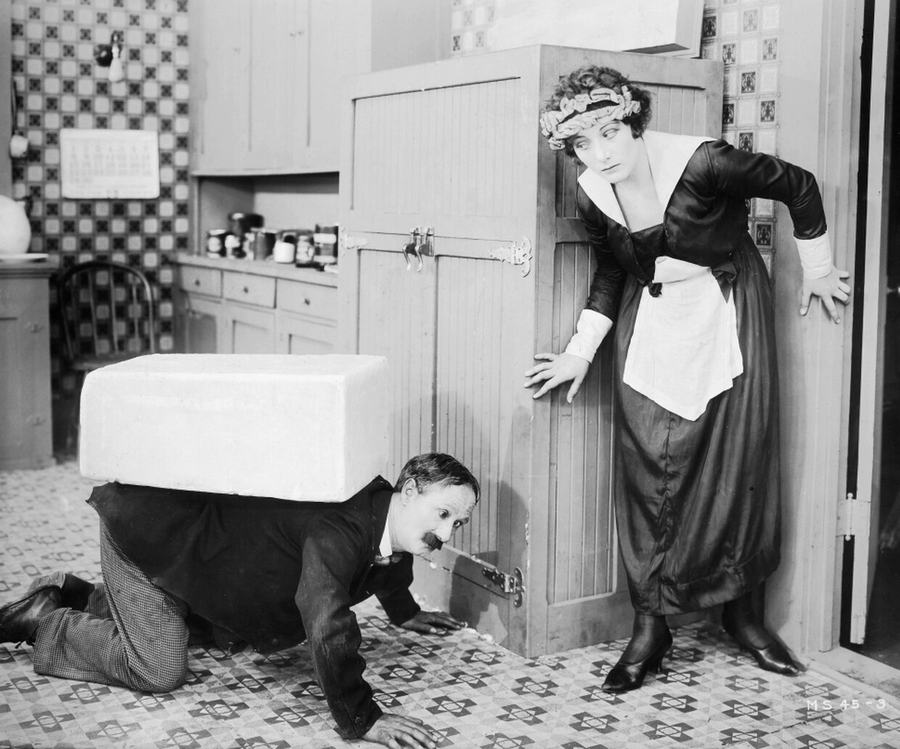
Stepping back into the raucous, yet surprisingly nuanced, world of early 20th-century silent cinema, we encounter a gem that, despite its age, still sparkles with an undeniable comedic verve: Mack Sennett's 'No Mother to Guide Him.' This 1923 production, a testament to the enduring power of physical comedy and character-driven farce, offers a delightful glimpse into the societal anxieties and domestic squabbles that, it seems, transcend the decades. Penned by the legendary Sennett himself, the film orchestrates a symphony of misunderstandings around a central, perpetually flustered figure, delivering a masterclass in the art of the visual gag.
At its core, 'No Mother to Guide Him' is a meticulous study in the comedic potential of marital paranoia. Our protagonist, portrayed with exquisite timidity by Heinie Conklin, is a man seemingly born under an unlucky star, perpetually trapped in the crosshairs of his domineering wife's (Isabelle Keith) unwavering suspicion. The narrative premise is deceptively simple: Conklin's character, a mild-mannered soul, finds himself repeatedly caught in situations that, to an outside observer – especially one predisposed to distrust – appear damningly compromising with various attractive young women. The genius lies not just in the situations themselves, but in the wife's unshakeable conviction, a force of nature that no amount of stammering explanation or earnest protestation can possibly penetrate.
This isn't merely a tale of mistaken identity; it's a profound, albeit hilarious, exploration of perception versus reality, and the often-unbridgeable chasm between the two within the confines of a strained marriage. Conklin's character embodies the everyman caught in an escalating nightmare, a man whose innocence is not just questioned but utterly dismissed, his every gesture and word twisted into further evidence of his supposed perfidy. It’s a theme that, while played for laughs, touches upon the very real anxieties of trust and communication in relationships, albeit exaggerated to a farcical extreme. One might draw a thematic parallel, though vastly different in tone and execution, to the psychological complexities of films like The Witness for the Defense, where the truth itself becomes an elusive, malleable entity in the face of accusation.
Mack Sennett, the undisputed 'King of Comedy,' masterfully directs this domestic chaos, infusing every scene with his characteristic blend of rapid-fire gags, physical slapstick, and perfectly timed visual humor. His influence on early cinema cannot be overstated, and in 'No Mother to Guide Him,' we see the hallmarks of his craft in full display. The film moves with a brisk, relentless pace, each incident building upon the last, escalating the stakes for poor Conklin. The visual language of silent film, relying heavily on exaggerated expressions and physical reactions, is expertly utilized here. Isabelle Keith's stern, accusatory glares and Conklin's wide-eyed, frantic attempts to explain himself are priceless, communicating volumes without a single spoken word.
The 'pretty young women' who inadvertently become instruments of Conklin's torment are not given deep characterizations, nor do they need them. They serve as catalysts, their beauty and proximity to the hapless husband fueling the wife's righteous indignation. This streamlined approach to character, typical of Sennett's output, allows the focus to remain squarely on the comedic mechanics of the situation. The humor derives not from intricate plot twists, but from the sheer, unadulterated spectacle of human folly and the inescapable grip of circumstance.
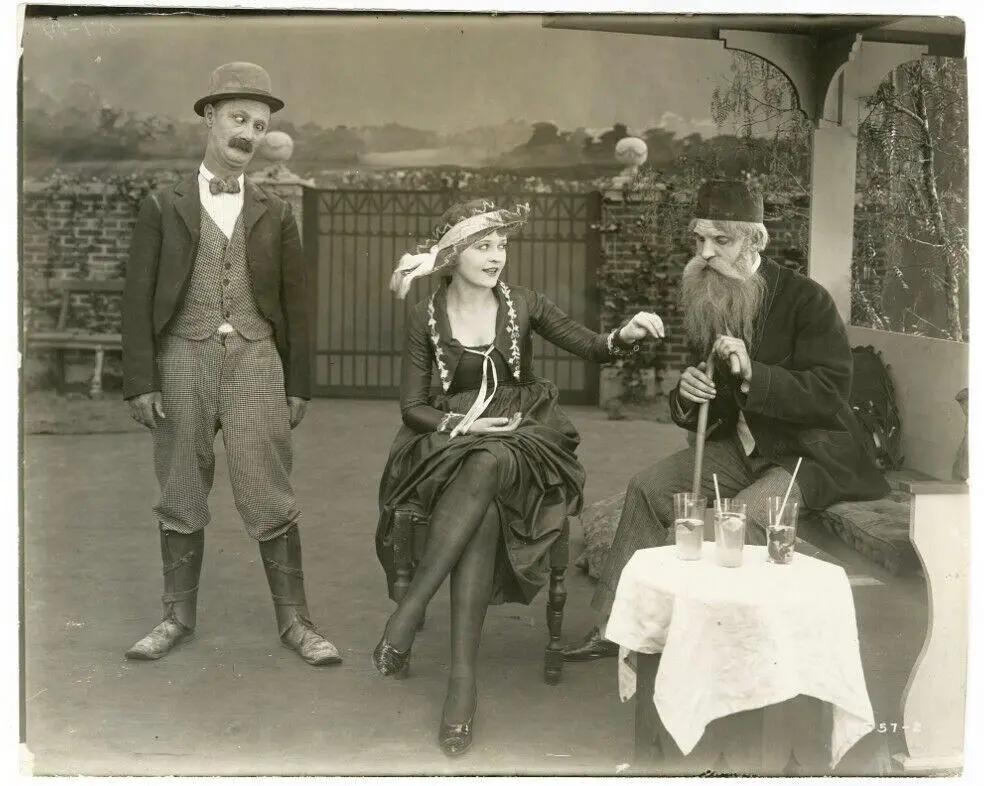
Beyond the central duo, the film benefits immensely from a cadre of Sennett regulars, each bringing their unique brand of comedic genius to the screen. Ben Turpin, with his famously crossed eyes, often provides a visual punchline simply by existing within a frame, his presence alone capable of eliciting chuckles. Edgar Kennedy, a master of the slow burn and exasperated double-take, adds layers of observational humor, often playing the bewildered bystander or the unwitting participant in the escalating mayhem. Joseph Belmont, Myrtle Lind, Fanny Kelly, and Billy Armstrong round out the cast, each contributing to the bustling, energetic atmosphere that defines Sennett's work.
The chemistry among these performers, honed through countless collaborations under Sennett's watchful eye, is palpable. They understand the rhythm of silent comedy, the precise timing required for a pratfall, a chase sequence, or a perfectly executed reaction shot. This collective understanding elevates the material beyond mere slapstick, transforming it into a finely tuned comedic machine. Their performances are a vibrant historical record of an acting style that prioritized physical expressiveness and the universal language of body humor, a stark contrast to the more dialogue-driven performances of later eras. This troupe's ability to convey complex emotions and intricate comedic beats without uttering a single word is nothing short of remarkable, a skill that could be seen as a precursor to the ensemble brilliance in films like The Whirlpool, albeit with a dramatically different comedic intent.
While 'No Mother to Guide Him' is unequivocally a product of its time, its central themes possess a surprising durability. The fear of being misunderstood, the struggle against a predetermined narrative, and the comedic futility of trying to prove one's innocence to an unyielding accuser are all profoundly human experiences. The film taps into a universal wellspring of anxiety: the fear of false accusation and the desire for one's truth to be seen. It's a testament to Sennett's intuitive understanding of human nature that he could distill such complex emotions into a series of uproarious gags.
The film also subtly critiques societal expectations of fidelity and the often-unrealistic demands placed upon marital partners. The wife's immediate leap to the worst possible conclusion, while exaggerated for comedic effect, reflects a deeper societal anxiety about trust and transgression. In a way, it’s a lighthearted mirror to more serious explorations of marital breakdown seen in dramas of the era, though 'No Mother to Guide Him' wisely steers clear of pathos, opting instead for pure, unadulterated mirth. The enduring nature of these themes is why, even a century later, audiences can still find themselves chuckling at Conklin's predicaments, recognizing a sliver of their own relational foibles, however magnified, within the comedic chaos.
Mack Sennett's impact on the evolution of comedy, and indeed cinema itself, is immeasurable. He pioneered the rapid-fire editing, the chase sequence, and the ensemble cast that became staples of the genre. 'No Mother to Guide Him' is a fantastic example of his mature comedic style, showcasing his ability to blend character-driven humor with the broader strokes of slapstick. His films, often featuring his famous Keystone Kops or Bathing Beauties (though less prominent here, the 'pretty young women' certainly evoke that spirit), were training grounds for some of the greatest comedic talents of the silent era, including Charlie Chaplin, Buster Keaton, and Harold Lloyd, who all benefited from Sennett’s innovative approach to filmmaking.
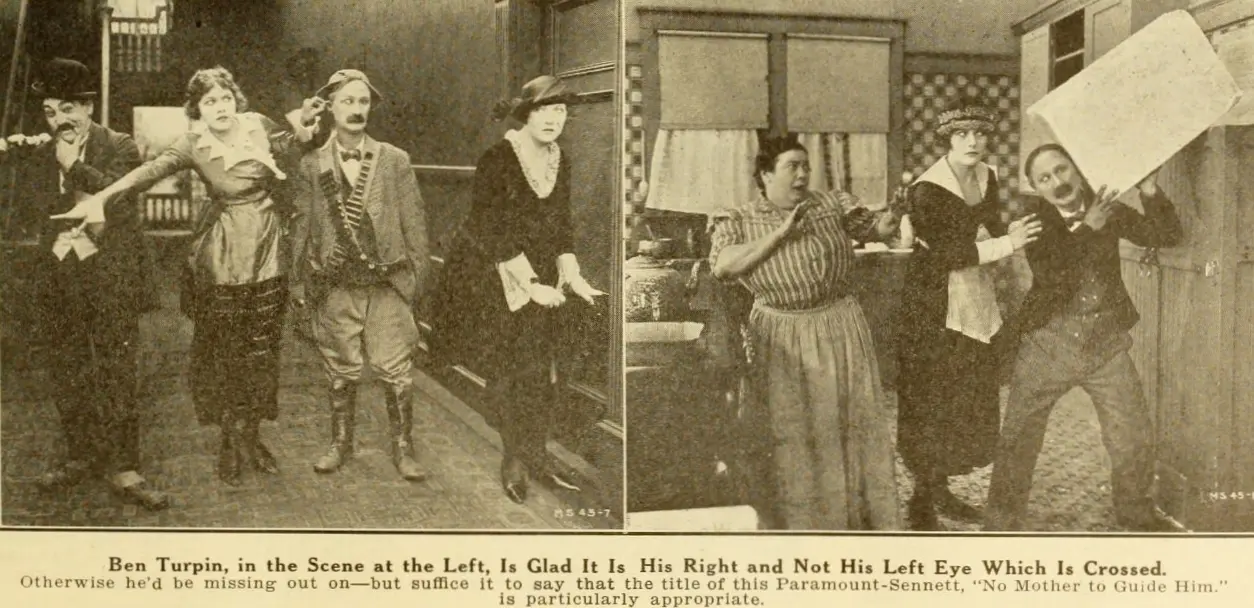
The influence of Sennett's work can be traced through generations of comedians and filmmakers. His understanding of comedic timing, visual storytelling, and the sheer joy of controlled chaos laid the groundwork for countless future productions. Watching a film like 'No Mother to Guide Him' isn't just an exercise in historical appreciation; it's a direct connection to the foundational principles of cinematic comedy. It reminds us that laughter, at its purest, often comes from the simple spectacle of human beings grappling with situations beyond their control, a concept explored in different contexts in films like There Goes the Bride or even the more dramatic Fame and Fortune, where fate plays a significant, if less comedic, hand.
A century after its initial release, 'No Mother to Guide Him' retains a remarkable freshness. Its humor, rooted in universal human foibles, transcends the technological limitations of its era. The expressions, the physical comedy, the escalating predicaments – all remain perfectly intelligible and genuinely funny. In an age saturated with complex narratives and sophisticated visual effects, there's something wonderfully refreshing about the straightforward, unpretentious joy offered by a film like this.
For film enthusiasts and casual viewers alike, it serves as a vital reminder of where cinematic comedy began. It’s a foundational text, demonstrating how much could be achieved with ingenuity, talented performers, and a keen understanding of human behavior. While the specific social mores might have shifted, the underlying dynamics of suspicion, miscommunication, and the hapless individual caught in a web of circumstance remain as relevant and amusing as ever. It's a film that, without needing a guiding mother, guides us through a delightful journey of laughter and reminds us of the timeless power of silent cinema to entertain and provoke thought, however lighthearted that thought may be.
The craftsmanship in 'No Mother to Guide Him' is undeniable. From the concise storytelling to the energetic performances, every element works in harmony to deliver a satisfying comedic experience. It’s a testament to the fact that sometimes, the simplest premises yield the most enduring and resonant humor. As we watch Heinie Conklin's character stumble from one 'compromising' situation to the next, we aren't just observing a relic of the past; we are witnessing a vibrant, living piece of comedic history that continues to charm and amuse, proving that a good laugh truly is timeless. Films like Modern Love and The Education of Mr. Pipp, while perhaps more focused on romance or social satire, share this common thread of exploring relational dynamics through a comedic lens, highlighting the enduring appeal of these narrative structures across different comedic styles.
In conclusion, if you're looking for a delightful dip into the wellspring of early cinematic comedy, 'No Mother to Guide Him' is an absolute must-see. It’s more than just a historical curiosity; it’s a vibrant, hilarious, and surprisingly insightful piece of filmmaking that continues to entertain with its timeless gags and universal themes. It unequivocally earns its place in the pantheon of classic silent comedies, a testament to Mack Sennett's enduring genius.
IMDb —
1926
Community
Log in to comment.