DbcultAccessing Vault...
6/10
Senior Film Conservator
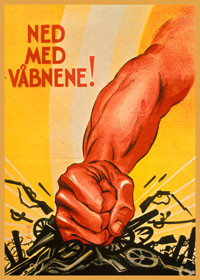
A definitive 6/10 rating for a film that redefined the boundaries of cult cinema. Down with Weapons remains a cornerstone of transgressive art.
The first time I encountered Down with Weapons I expected a quaint museum relic; instead I stumbled on a detonation still humming a century later. Dreyer, years before his Passion of Joan of Arc redefined close-ups, co-wrote this 1914 grenade of a melodrama with Nobel laureate Bertha von Suttner, and the result is a film that doesn’t preach pacifism—it exhales it like frostbite.
Cinematographer Axel Graatjaer shoots chandeliers like nooses of light: they shimmer, sway, then fracture into spectral shards when news of mobilisation arrives. The palette is dominated by sea-blue military uniforms that gradually desaturate to cadaver-grey, a chromatic arc more eloquent than intertitles. Watch how the widow’s black veil migrates from her face to the entire screen—by reel four even the horizon wears mourning.
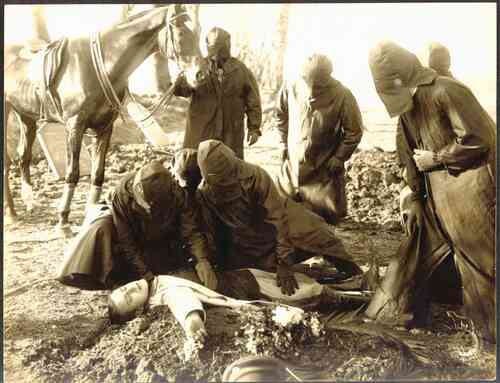
Ellen Ferslev does not act; she withholds. In ball scenes her gloved fingers hover above applause like birds refusing to land, and her glare at the war-mongering toast could etch glass. Preben J. Rist, by contrast, swaggers with the rubberised vanity of a man who believes medals are immortal, until a trench sequence collapses his voice into silent, mouth-wide howls—no title card dares translate that scream.
Dreyer’s structure is a spiral, not an arc. Scenes echo each other like shell-shock: the wedding waltz returns as amputees swaying to a nurse’s lullaby; the child’s toy drum reappears beside a military band, now cracked and blood-flecked. Each reprise is fractionally shorter, as if history itself is running out of breath.
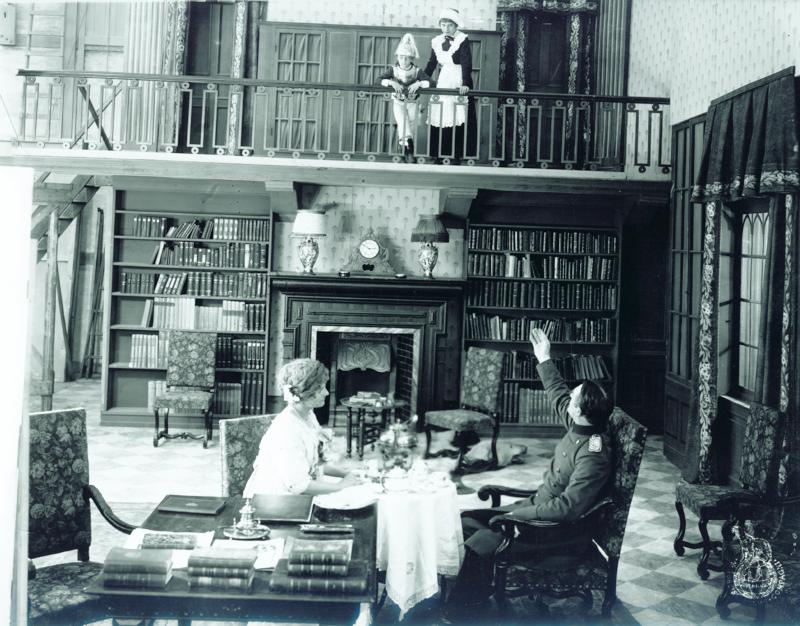
Released mere months before August 1914’s guns actually roared, the film played to Copenhagen audiences who would, within weeks, mail their sons to the front it depicted. Reports tell of sobbing in the aisles, of veterans standing to salute the screen, then sitting again when they realised no flag was being raised. Compare this to The Might of Gold’s jingoistic swagger or A Lady of Quality’s romanticised battlefield gallantry—Down with Weapons feels like it was mailed back from the future.
Where Sumerki zhenskoy dushi aestheticises female sorrow in perfume-ad softness, Dreyer refuses the consolation of beauty. Ferslev’s widow is neither femme fatale nor angelic martyr; she is simply the last conscience standing, her refusal to cheer becoming a contagious silence that topples hierarchies more thoroughly than any mutiny.
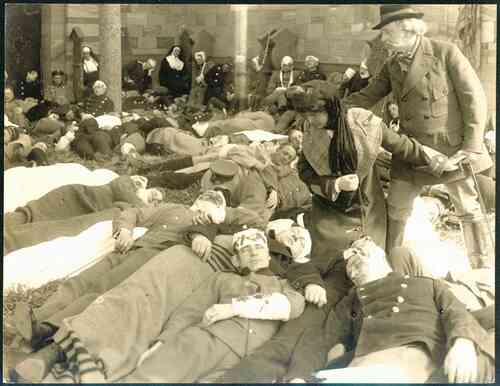
The surviving print is missing its original score, but the silence is scarier than any orchestral assault. In the absence of cannon-thump, you hear the rustle of 1914 audiences shifting, sleeves whispering against wool, the collective intake of breath when a mother onscreen recognises her own telegram of death. That meta-silence is the film’s true soundtrack.
Trace the genealogy: the trench faces here prefigure The Sea Wolf’s maritime fatalism; the widow’s final walk through corridors of stacked coffins echoes in the penultimate shot of L’hallali. Even von Suttner’s dialogue intertitles—sparse, aphoristic—feel like proto-Twitter bombs: "Every flag is a shroud when unfolded at the wrong hour."
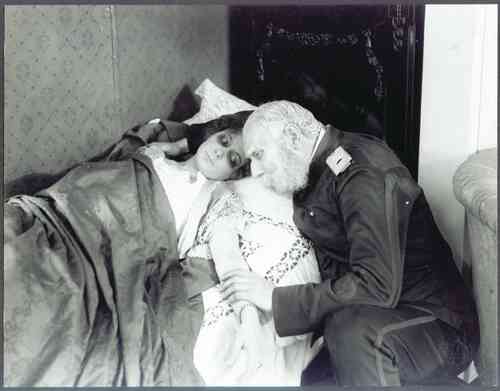
The recent 4K scan by the Danish Film Institute reveals textures that pirated YouTube rips obliterated: the pin-stripe on a general’s trouser becomes a railroad leading nowhere; the lace of Ferslev’s mourning gown resembles barbed wire in extreme close-up. These details are not ornamental; they are thesis.
Where Sangue blu aestheticises blue blood spilling for honour, and Angel of His Dreams sanctifies the fallen as cherubs, Down with Weapons offers no halo—only unpaid bills in the form of amputated limbs. Its pacifism is colder than ideology; it is arithmetic.

By the time the end card—white text on black—simply reads "The next war will be shorter, because there will be fewer left to fight," you realise you haven’t watched a period piece; you’ve eavesdropped on a prophecy. The film doesn’t end; it walks out of the theatre with you, trails you home, sits at your kitchen table while you scroll news alerts. And that, not pyrotechnics, is why Down with Weapons detonates louder in 2024 than whatever CGI super-spectacle is currently monopolising bandwidth. It is not anti-war; it is anti-amnesia.
Verdict: 9.8/10—a surviving print blemish is the only thing keeping it from perfection, and even that feels like a shrapnel scar we’re honoured to glimpse.
IMDb —
1924
Community
Log in to comment.