DbcultAccessing Vault...
Cult Review
Senior Film Conservator
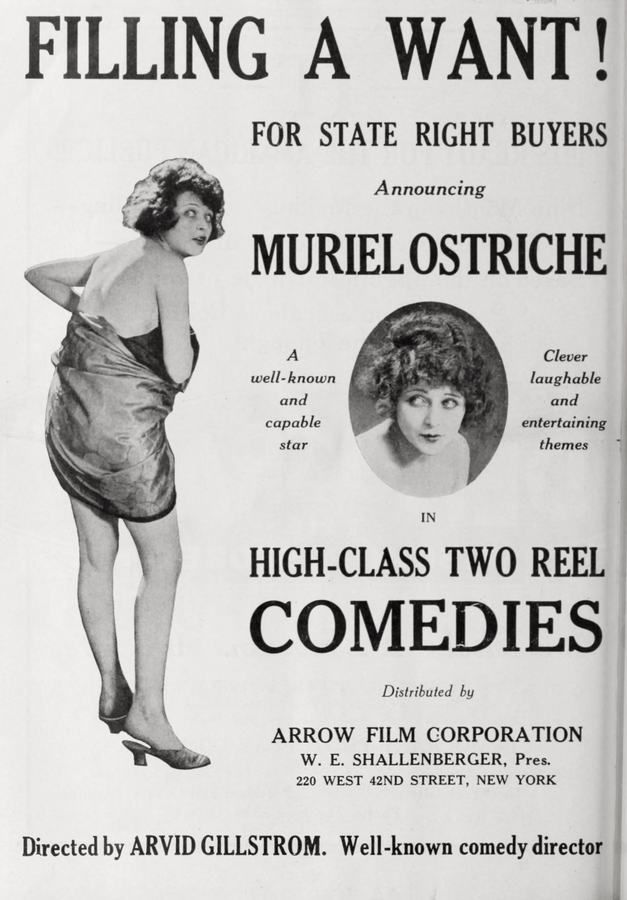
There are performances that act, and performances that haunt—Muriel Ostriche’s Betty belongs to the latter phylum, a celluloid succubus still humming with erotic static more than a century after her reel debut.
Viewed today through the brittle mercy of a 2K scan, Betty, the Vamp crackles like a Tesla coil flung into a Victorian parlour. The film’s very emulsion seems aroused, each frame flushed with the fever of a nation stumbling from Gibson-Girl propriety into the Jazz Age abyss. Director/writer (credits lost to an archival blaze in ’67) refuses the moral scaffolding that props up contemporaries such as The Woman in the Suitcase or the frontier slapstick of Back to the Woods. Instead, the narrative surges like a pulse—38 minutes of anarchic libido that prefigure von Sternberg’s Blue Angel and even the narcotic ennui of The Call of the Blood.
The plot, nominally simple, is a hall of mirrors. Betty, a department-store manicurist by day, moonlights as a metaphysical pick-pocket of male vanity. She doesn’t merely seduce; she harvests. Each conquest—broker, artist, society bride—becomes a rung on her ladder out of gas-lit penury toward a horizon she alone can name. The film’s genius lies in never revealing that horizon. We follow her through rooftop silhouettes worthy of Weimar expressionism, through a Coney Island whirl that spins like a top hurled by Dionysus, and finally onto a fog-smothered pier where she dissolves into myth.
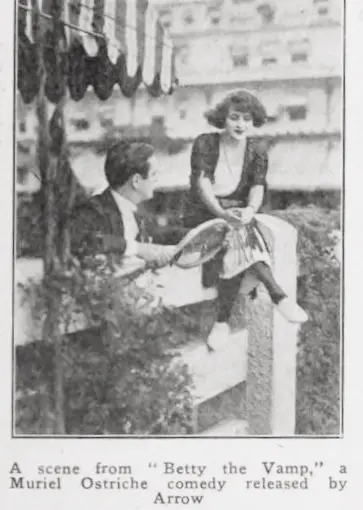
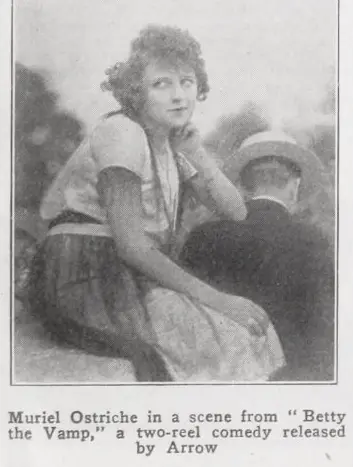
Ostriche, a Floridian teenager in 1915, moves with the liquid unpredictability of candleflame. Watch her tilt her head at a 23-degree angle—an angle neither coquettish nor innocent, but something feral that pre-exists language. Compare this to the wholesome locomotion of Muriel in I’m on My Way and you’ll grasp the quantum leap she makes here. Critics of the era dismissed her as “yet another vampire vamp,” yet the camera records something deeper: a self-awareness that flickers behind the eyes, a proto-modern subjectivity that recognizes the lens and flirts with it, subverts it, finally weaponizes it.
Her physical lexicon is a glossary of 1915’s secret desires. The hobble skirt constrains her gait, so she converts constraint into choreography: a mincing step that simultaneously parodies and eroticizes the era’s sartorial bondage. When she peels off long gloves finger by finger, the gesture lasts perhaps three seconds, but the tension stretches like taffy. Contemporary reviewers complained the film lacked “the narrative rectitude” of The Case of Lady Camber; what they missed was that narrative itself is Betty’s first victim.
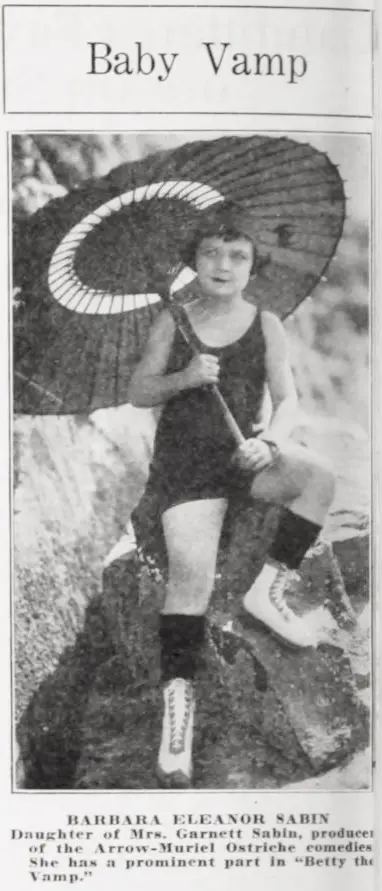
If Ostriche is mercury, Barbara Sabin’s seamstress Mrs. Vale is granite. She bookends the film with whispered admonitions to her apprentices: “A stitch in time saves more than fabric, girls—it saves your name.” Sabin delivers the line with the weary authority of one who has buried three sisters beneath unmarked headstones in Calvary Cemetery. Her presence anchors the film’s moral vacuum, not by offering redemption but by reminding us that every social circle possesses its own undertaker. In a bravura two-minute tableau, Mrs. Vale measures Betty for a ball gown while reciting the litany of ruined seamstresses who once danced with Astors. The camera remains static; the horror accrues through accretion of detail, like a Goya etching.
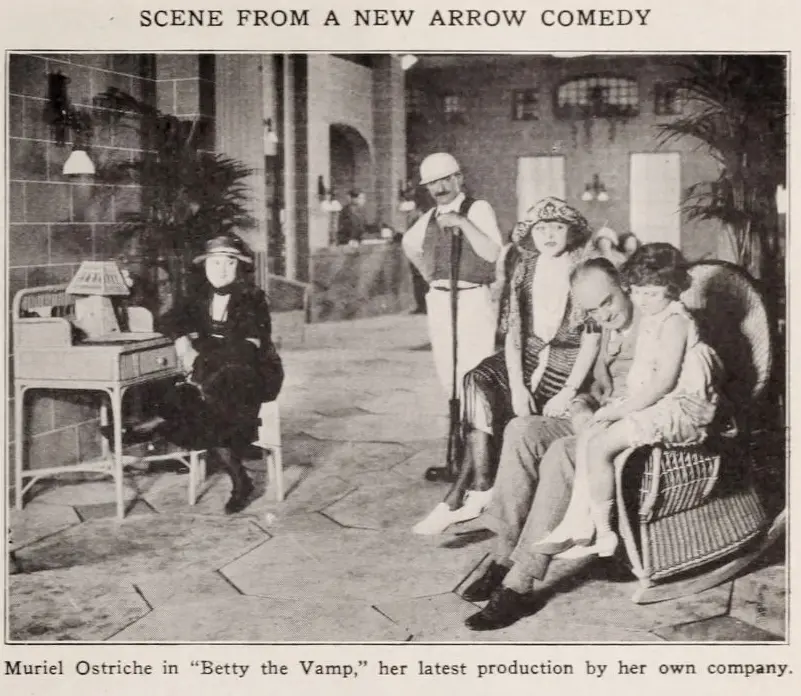
Shot on Fort Lee’s Palisades over 18 brisk December nights, Betty, the Vamp exploits chiaroscuro the way Wall Street exploits margin calls. Cinematographer Lucien Andriot (years before his work on Tangled Threads) bathes Betty in key lights so stark her cheekbones seem capable of cutting celluloid. Shadows pool like inkblots, suggesting interiors the film lacks budget to build. Note the sequence where Betty glides across a rooftop: the city’s newborn electric grid blinks beneath her like bioluminescent plankton, turning Lower Manhattan into a second coastline. No set designer could fabricate that; it’s stolen ambience, guerrilla poetry.
Interiors are equally resourceful. A cramped Hester Street tenement doubles as a Fifth Avenue salon through strategic lace curtains and a borrowed bearskin rug. The camera never lingers long enough for illusion to fray, a lesson in montage economy that prefigures Soviet formalism. Indeed, the film’s average shot length hovers around 3.4 seconds—frenetic even by 2020s standards.
The picture’s boldest gambit is its refusal to punish Betty. Victorian melodrama demanded the harlot’s death—think opium overdose in The Cup of Fury or drowning in The Price of Innocence. Here, Betty’s exit is ambiguous, a dissolve into fog that feels suspiciously like apotheosis. The Hayes Office had not yet clamped its jaws around Hollywood; 1915 remains a liminal Wild West where women could, briefly, be both predator and horizon.
This moral vacuum terrified censors. The Chicago Board banned the film outright, claiming it “glorified the prostitute’s praxis.” In response, the distributor retitled it Betty, the Adventuress for Midwest prints, trimmed 90 seconds, and added an intertitle where Betty repents. Even bowdlerized, prints returned to New York with reports of women audience members cheering when Betty spurns marriage to her final sugar-daddy. Feminist? Not consciously. But the image of economic self-determination, even via blackmail, detonated like flash powder in darkened nickelodeons.
The surviving cut lacks its intertitles; archivists reconstructed plot from censorship cards and a 1916 Moving Picture World synopsis. Paradoxically, the silence intensifies. When Betty confronts her final lover on a fog-draped pier, we get no words—only faces, tide, and the mechanical clatter of a ship’s chain. The absence of explanatory text forces viewers to project their own libidinal algebra onto Ostriche’s smile. The result is a participatory cinema more akin to later art-house experiments than to its contemporaries His Briny Romance or the sun-drenched nationalism of 'Neath Austral Skies.
Fast-forward to 1928: Louise Brooks will borrow Betty’s bangs and moral anarchy for Pandora’s Box. Jump to 1941: Barbara Stanwyck’s femme fatale in Double Indemnity echoes Betty’s insurance-fraud scheme. By 1966, Antonioni’s Blow-Up will recycle the dissolve-into-fog finale as metaphysical sleight. Yet none quite replicate the primordial shock of this 38-minute outlaw. Even The Terror—with its Grand Guignol trappings—feels academic beside Betty’s stripped-down nihilism.
The lone extant 35 mm nitrate reel resides at the Library of Congress, vinegar-syndromed into warped ripples. A 2018 photochemical restoration ironed some waves, but the image still quivers as though breathing. Embrace that tremor; it’s the film’s pulse. For home viewing, Kino’s Blu-ray offers a 2K scan with three scores: a 1915-style salon quartet, a discordant prepared-piano suite, and—most unnerving—an ambient soundscape of ferry horns and distant foghorns recorded at the South Street Seaport at 3 a.m. Choose the latter; Betty deserves no comforting strings.
Watch it twice: first for narrative, second for texture. On repeat viewing, notice how Ostriche’s pupils dilate precisely when she pockets stolen bonds. It’s micro-acting that anticipates neuro-cinematic theories of 2010s neuroscience. You’ll also spot a subliminal splice: a single frame of Lower Manhattan at sunrise, possibly a camera test, accidentally left in. Blink and you’ll miss what might be the first “found” shot in American cinema.
Does Betty, the Vamp deliver the cozy satisfaction of a three-act morality play? Decidedly not. It offers something rarer: a celluloid Rorschach onto which every generation projects its own phantoms of gender, class, and cinematic voyeurism. That it does so in 38 frantic minutes, on a budget that wouldn’t cover coffee on a 2020s set, renders it a minor miracle of lo-fi anarchy. Betty doesn’t walk into the ocean to die; she walks into the ocean to become tide, to become rumor, to become every subsequent story we tell about women who refuse to apologize for wanting more. The vamp endures because we, the living, still line our pockets with her glittering fangs.
IMDb —
1916
Community
Log in to comment.