DbcultAccessing Vault...
Cult Review
Senior Film Conservator

There is a specific, almost spectral quality to the cinematic output of 1917, a year where the medium began to shed its stage-bound infant skin and embrace the raw, kinetic potential of visual storytelling. Frank Lloyd’s When a Man Sees Red stands as a towering example of this transition, a film that pulses with a primal, atavistic energy that few modern blockbusters could hope to replicate. It is a work of maritime grit and moral complexity, led by the indomitable William Farnum, whose screen presence in this era was nothing short of seismic.
The narrative begins not with a whimper, but with a psychological laceration. Larry Smith, played by Farnum with a brooding, muscular intensity, returns from the salt-spray of the ocean only to find his domestic world in ruins. The death of his sister—not merely an passing, but a violation—serves as the film's dark engine. In the silent era, such themes were often handled with a melodramatic flourish, but Lloyd opts for something more visceral here. The grief is palpable, a heavy shroud that Larry carries back to the sea, a domain that offers no comfort, only the cold utility of work.
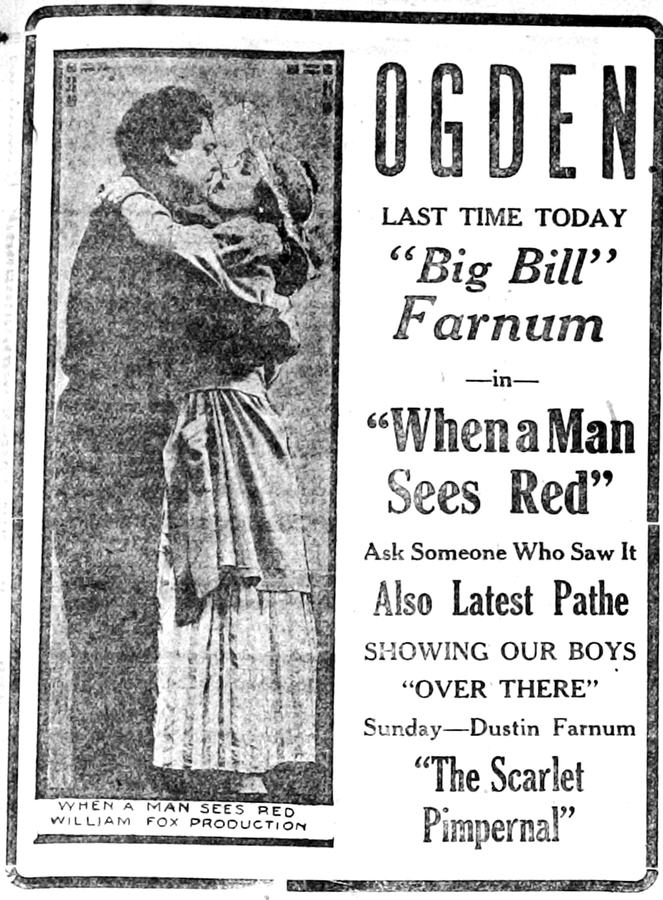
As Larry ships out with Captain Sutton, the film establishes a tension that mirrors the roiling waves. Sutton is a character study in casual cruelty, a man whose authority is absolute and whose morality is non-existent. The friction between Larry and the Captain isn't just a clash of personalities; it's a fundamental conflict between a man seeking justice and a man who embodies the very corruption that destroyed Larry’s family. This thematic weight is reminiscent of the moral dilemmas explored in The Darkening Trail, where the landscape itself seems to judge the transgressions of the protagonists.
When the vessel docks at a South Sea port, the film shifts its visual palette. The cinematography moves from the cramped, shadowy confines of the ship to the overexposed, sweltering brightness of the islands. It is here that we meet Violet North, portrayed by Jewel Carmen. Violet is the quintessential "woman of questionable reputation," a trope that 1917 cinema frequently dissected. She is the mistress of a millionaire named Lewis, a position that grants her luxury but denies her agency. Much like the characters in The Strength of the Weak, Violet is a prisoner of her circumstances, her beauty a currency that has been spent by others.
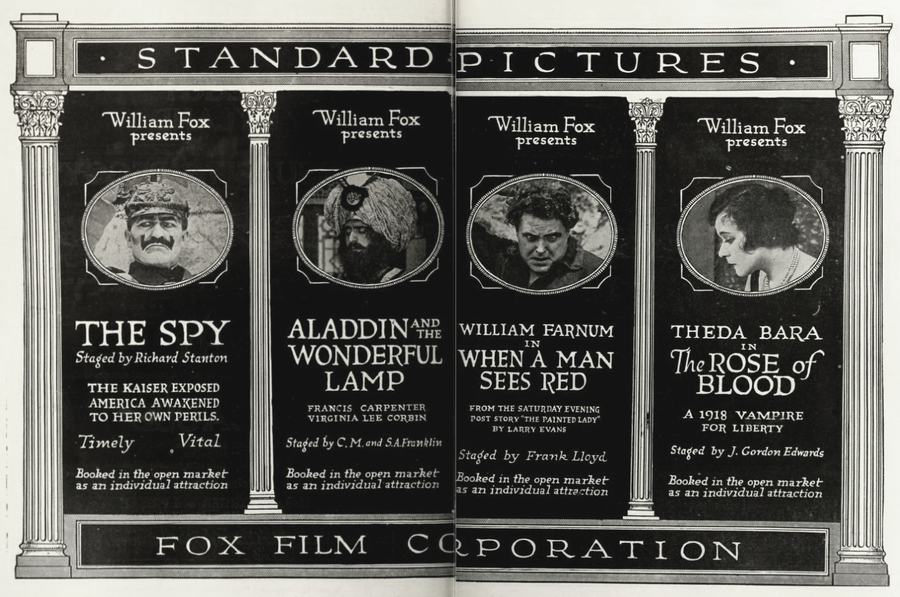
The romance that blossoms between Larry and Violet is fraught with the impossibility of their social stations. When Larry proposes, it isn't just a romantic gesture; it's an invitation to escape the gravitational pull of her past. Yet, the tragedy of the film lies in the delays of fate. Violet sails away with Lewis, leaving Larry in a state of suspended animation, a man twice abandoned by the women he sought to protect.
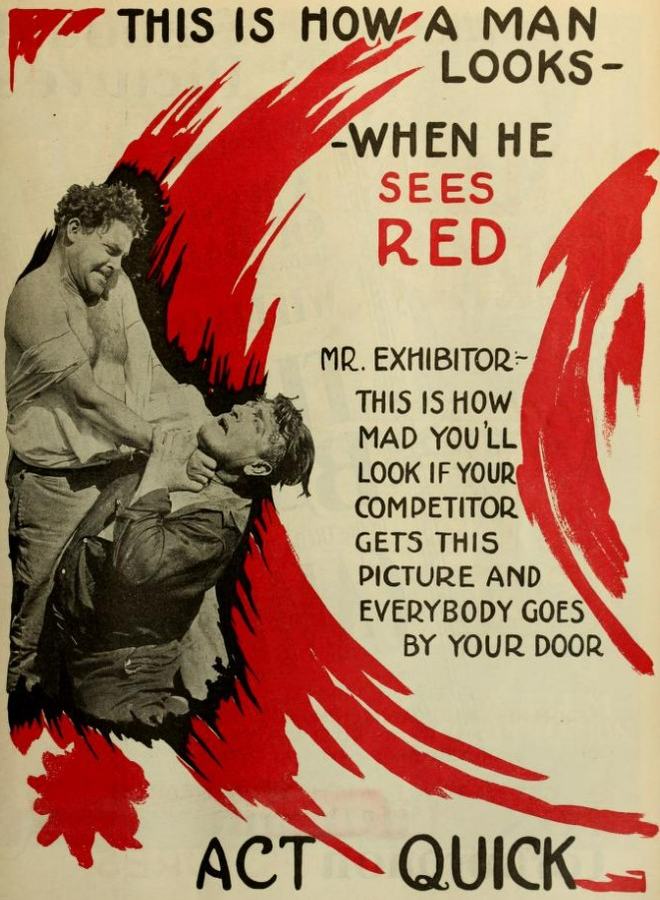
The film’s midpoint is anchored by Logan, an inveterate drunk left behind by Sutton. In the hierarchy of silent film archetypes, the drunkard often serves as the harbinger of truth, his inhibitions dissolved by alcohol to reveal the rot beneath the surface. Logan’s revelation—that Captain Sutton was the man responsible for the violation and death of Larry’s sister—is the moment the film’s title is fully realized. The screen practically vibrates with Larry’s burgeoning rage. This isn't the calculated revenge of a modern thriller; it is an epochal, biblical wrath.

This pivot reminds one of the psychological depth found in Black Friday, where the revelation of a character's true nature acts as a catalyst for total destruction. Larry Smith is no longer a sailor; he is an avatar of vengeance, a force of nature that will not be stilled until the scales are balanced.
Frank Lloyd’s direction truly shines during the sequence involving the wreck of Lewis’ yacht. For 1917, the technical execution of the maritime disaster is staggering. The chaos of the storm, the splintering of the vessel, and Violet being cast upon a remote island provide a harrowing bridge to the final act. When Sutton happens upon the stranded Violet, the film descends into a darker, more primitive territory. Sutton’s attempt to sell her to the natives as a punitive measure for her resistance is a sequence that pushes the boundaries of contemporary sensibilities. It highlights the absolute lawlessness of the setting, a theme also touched upon in the gritty A Man's Law.
The isolation of the island acts as a crucible. There are no laws here, no millionaire protectors, no maritime codes. There is only the predator and the prey. This setting allows the film to strip away the artifice of civilization, leading to a confrontation that is as much about the triumph of the human spirit as it is about physical survival.
Larry’s arrival on the island is timed with the precision of a classical tragedy. The rescue of Violet and the ensuing battle with Sutton is choreographed with a raw, unpolished brutality. William Farnum’s physicality is his greatest asset here; he moves with a heavy, relentless purpose. The death of Sutton is not a clean affair. It is a desperate, messy struggle that reflects the years of accumulated pain Larry has endured. In killing Sutton, Larry doesn't just avenge his sister; he exorcises the ghosts of his past.
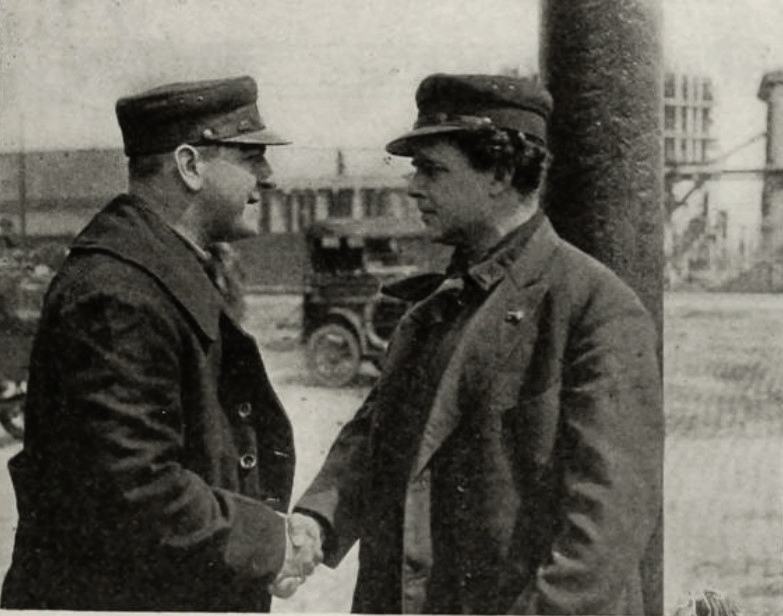
The final transition of the film, from the violence of the island to the domestic peace of Larry and Violet’s marriage, might seem abrupt to modern audiences. However, within the context of 1917 storytelling, it is a necessary restoration of order. The "fallen woman" is redeemed through the love of a good man, and the man who "saw red" is allowed to see the world in color once more. It is a resolution that echoes the sentimentality of Home, Sweet Home, yet it feels harder-earned here because of the sheer volume of blood and salt-water that preceded it.
One cannot discuss When a Man Sees Red without acknowledging the contributions of the writers, Frank Lloyd and Larry Evans. The pacing is remarkably modern, avoiding the sluggishness that often plagues early features. The intertitles are used sparingly, allowing the performances—particularly the expressive eyes of Lulu May Bower and the stern countenance of G. Raymond Nye—to carry the emotional weight. The film avoids the surrealist tendencies of The Golem and the Dancing Girl or the gothic overtones of Voodoo Vengeance, opting instead for a grounded, almost documentary-like realism in its maritime sequences.
Even the supporting cast, including stalwarts like Marc B. Robbins and Horace B. Carpenter, bring a sense of verisimilitude to the world. The port towns feel lived-in, smelling of tobacco and rot, a stark contrast to the sterilized sets of later studio productions. This commitment to atmosphere is what elevates the film above mere melodrama into the realm of high art.
In the broader spectrum of 1917 cinema, where we see works like Motherhood exploring domestic spheres or Shadows of the Moulin Rouge delving into urban intrigue, When a Man Sees Red stands out for its masculine vulnerability. Larry Smith is a man defined by his losses, yet he refuses to be consumed by them. The film’s exploration of the "fallen woman" narrative is also more nuanced than its contemporaries, such as Sündige Liebe, providing Violet with a degree of resilience that makes her more than just a victim.
Ultimately, Frank Lloyd has crafted a film that is as much about the sea as it is about the human heart. Both are vast, occasionally violent, and capable of both destruction and renewal. When a Man Sees Red is a testament to the power of early cinema to tackle complex moral questions with a directness that is both refreshing and profound. It is a journey through the shadows of the human psyche, emerging at last into the light of a hard-won peace. For those interested in the evolution of the revenge thriller, or for those who simply appreciate the mastery of the silent frame, this film is an essential, if harrowing, experience. It reminds us that while vengeance may be a red-tinted lens, the clarity it brings can sometimes be the only way to see the truth.
The film’s endurance is a credit to the Fox Film Corporation’s early vision of cinema as a grand, emotional canvas. It occupies a space between the theatrical traditions of the past and the cinematic innovations of the future, much like The Betrothed did for European audiences a few years prior. It is a work of grit, salt, and soul, and it remains a vital chapter in the history of the moving image.

IMDb 5.5
1931
Community
Log in to comment.